ICEF

Tale 60 · The Vāsiṣṭha Atlas

Aindava: The Brahmā Gītā

Nirvāṇa · second half · Mitra VI.2.176–179 · 6,284 words

Ten brothers thought themselves into worlds while beasts ate their bodies.

Bhūmikā 6 · Padārthābhāvanī (melting of objects)PlenaryYour ally · The Warrior of Light

The essence

Rāma raises two objections. If countless worlds come and go, how can they be null? And how can an intangible intellect move a tangible body, when no one can move a mountain by willing it? Vasiṣṭha first recounts what his father Brahmā once taught him. An atom of Intellect dreamed itself into a living soul, then an ego, then the three worlds, and saw them all in its heart as in a mirror. Then Vasiṣṭha tells again the story of the Aindavas. When the Brahmin Indu died and his wife followed him into death, his ten sons went to the forest. They sat in lotus posture and kept up a single reflection: that they were Brahmā and held the world. Months and years passed. Their bodies dried to skeletons and beasts tore at them, yet they went on thinking, until each bodiless mind became a whole world. The answer to Rāma is that there is no solid body to be pushed. Earth, mountains and flesh alike are the Intellect seen as form, so mind and body never needed a bridge.

What it teaches

  1. 01

    A conviction held without interruption reshapes experience. The brothers' single thought, that they were Brahmā, turned each bodiless mind into a world (VI.2.178.33–41).

  2. 02

    Absorption can outlast bodily injury. While beasts devoured their limbs, the brothers 'continued to reflect' (VI.2.178.38–39). This is both the power of total absorption and its danger.

  3. 03

    The mind–body problem loosens once the body itself is seen as an image in mind: there is no tangible thing for the intangible to push (VI.2.178.21–25; 179.5–6).

  4. 04

    One person holds many selves: 'every body conscious of his being many, either consecutively or simultaneously' (VI.2.179.13).

  5. 05

    Suffering eases when the world is seen as intellect: 'No sooner is this material world, viewed in its aerial and intellectual light, than the distresses of this delusive world betake themselves to flight' (VI.2.178.59).

The Vāsiṣṭha Atlas

This tale’s coordinates

The wound and its virtue

Orphaned when their mother follows their father into death, the ten sons do not mourn: they sit 'believing themselves as Brahma' (VI.2.178.36) and hold the thought so completely that they go on reflecting while beasts devour their bodies (VI.2.178.38), a grand identity that refuses the reality of the body and of the loss. Ease lies in Vasiṣṭha's answer to Rāma, that mind and body never needed a bridge, and that once the world is viewed in its 'intellectual light' its distresses 'betake themselves to flight' (VI.2.178.59).

What it trains

Seeing the body as an image in mind, and every person as 'conscious of his being many' (VI.2.179.13), loosens the fixed identification with one body-self.

In other yogas

  • Patañjali · Yoga Sūtra · YS 1.14

    Patañjali says practice becomes firm when kept up for a long time, without interruption and with devotion. The brothers' single reflection, held through months and years (VI.2.178.36), fulfils all three conditions.

  • Bhagavad Gītā · BG 17.5–6

    Kṛṣṇa criticises those who practise fierce austerities that torment the body. Read beside the brothers' withered skeletons, the Gītā names the danger the tale leaves implicit.

  • Buddhist absorption · MN 36

    In the Mahāsaccaka Sutta the Buddha recalls austerities that wasted his body to bones, and the turn to the middle way that followed. The Aindavas show the power of that extreme, and the Buddha's account shows its limit.

IEAF: Integrative Emotional Alchemy Framework (Gallardo, Frontiers in Psychology, 2026). FP20: the Fundamental Peace Scale. ITM: the Integrative Transformation Model. Parallels in other yogas are contemplative correspondences, not claims of influence.

The tale

Rāma could not accept that the countless worlds, past, present and to come, were nothing. Vasiṣṭha answered that everyone in the assembly knew the likeness between the world and a dream, since both are passing scenes. Then he recounted what his father, the lotus-born Brahmā, had once told him.

In the infinite void, Brahmā had said, there is a vacuous substance, the vacuity of the Intellect, as small as an atom. It saw itself, as in a dream, becoming a living soul, like a breath stirring in empty air. It took itself to be an ego, a unit, and that was its first delusion. Then it dreamed that it had understanding, mind and five senses. Within the atom of its own intellect it found the three worlds in their airy form, mirrored in its heart like a city freshly printed on a plate, with atoms inside atoms and worlds clustered in rings. Seen in ignorance these look like gross bodies. Seen in their essence they are the display of the divine mind, and then there is no viewer, no cause and no duality.

Rāma pressed further. Everyone sees that solid things strike one another. He rejected, he said, the theory of the half-enlightened that the world is produced by will. How could the intangible intellect move the tangible body and carry it about like a porter? If it could, why could a man not move a mountain by willing it? What drives the breath in and out? Vasiṣṭha first answered at the level of the body: the opening and closing of the aorta works the breath as a smith works his bellows, and an inner percipience moves the inner cords. Then he went to the root. There is no solid substance anywhere, he said, only the rare and subtle spirit. Earth, sky, hills and rivers vanish for the absorbed yogi, who sees them in their ideal and intangible forms. To show this, he would tell again a story he had told before.

Once there lived a Brahmin called Indu, known for his austerities, who had ten great-souled sons. When the old man died, his wife followed him onto the pyre. The sons performed the rites and, grieving, left home for the forest. There they took up the practice best suited to intense attention: constant reflection that they were one with Brahma, 'we are the lords of all.' Seated in lotus posture, they thought that they held the whole world over which Brahmā presides, and believed they had become the god of the world in an instant.

They sat on with closed eyes, like figures in a painting, and did not move. Months and years passed over their motionless bodies. Their bodies dried into skeletons. Beasts of prey tore at them, and some limbs vanished like a shadow at sunrise. Still the brothers went on reflecting that they were Brahmā and his creation, with the world and all its parts inside them. At last their ten bodiless minds became ten worlds. Each saw solid earth and hills within his own consciousness.

What else is the triple world, Vasiṣṭha asked, but our knowledge of it? Without consciousness there is no world; with it everything is clear. The Aindavas' wills took the form of worlds, just as the will of Brahmā took the form of this universe. The intellect is a potter that makes the pottery of the world out of the clay of its own body. Even rocks and trees are not wholly without feeling. The moment the world is seen in this intellectual light, its distresses take flight. Until then, miseries crowd in on every side.

In the closing chapter Vasiṣṭha drew the conclusion. The body's hands and head are seats of consciousness. Things can appear without any assignable cause, as they do in dreams. Each Aindava imagined himself a hundred, and every one of his imagined worlds teemed with beings. In the same way, he said, every person knows himself to be many, one after another or all at once, and still remains one.

The text speaks

Passages from Mitra’s translation (1891–99), cited by book, chapter and verse.

“Should the subtile intellect, be capable of moving the solid body at its will; then tell me sir, why cannot a man move a mountain also by his own will?”
VI.2.178.8Rāma states the mind–body problem that the tale is told to answer.
“They practiced the best method for the intensity of their attention, and which is best calculated to secure the consummation of their devotion; and was the constant reflection of their identity with Brahma (in the formula we are the lords of all, about us).”
VI.2.178.33The method is a single repeated formula of identity.
“Believing themselves as Brahma, they sat long with the thought of supporting the world; and remained all along with their closed eyes, as if they were mere figures in painting.”
VI.2.178.36Closed eyes, total stillness and one sustained thought.
“They were reduced to dry skeletons, parts of which were beaten and devoured by rapacious beasts; and some of their <limbs> were at once severed and disappeared from their main bodies, like parts of a shadow by the rising sun.”
VI.2.178.38The body is destroyed while the absorption continues unbroken.
“At last their ten bodiless minds, were thought to be converted to so many different worlds, in their abstract meditation of them.”
VI.2.178.40The outcome: sustained conception becomes a world.
“No sooner is this material world, viewed in its aerial and intellectual light, than the distresses of this delusive world betake themselves to flight, and its miseries disappear from sight.”
VI.2.178.59The therapeutic point of the doctrine.
“So is every body conscious of his being many, either consecutively or simultaneously at the same time; as we think of our multiformity in the different parts and members of our bodies.”
VI.2.179.13Multiplicity of self, sequential or simultaneous, is stated as ordinary experience.

What the trance sees

DIR

Direct suggestion

VI.2.178.33–35

In the textThe brothers' method is 'the constant reflection of their identity with Brahma (in the formula we are the lords of all, about us)'. Holding it, they 'believed themselves to be transformed... in an instant'.

In the clinicThis is self-suggestion through a repeated identity formula, in the line of Coué's repeated autosuggestion and of self-hypnotic affirmation, where repetition plus belief produces the suggested experience.

ABS

Absorption

VI.2.178.35–42

In the textThey 'thought they sustained in them the whole world' and saw 'the solid earth with all its hills &c. in themselves'. Each 'viewed himself as a cosmos' (Mitra's gloss on 178.40).

In the clinicThis is total imaginative absorption (Tellegen & Atkinson 1974), the trait most consistently linked to hypnotizability, carried to the point where the imagined scene replaces the perceived one.

CAT

Catalepsy

VI.2.178.36–37

In the textThey sat 'with their closed eyes, as if they were mere figures in painting', and 'many a month and year glided over their heads and motionless bodies'.

In the clinicProlonged catalepsy: deep-trance immobility kept up without effort, the body left to itself.

ANA

Analgesia / anaesthesia

VI.2.178.38–39

In the textTheir skeletons were 'beaten and devoured by rapacious beasts', and limbs disappeared, 'yet they continued to reflect that they were the God Brahmá and his creation'.

In the clinicHypnotic analgesia through complete dissociation of attention from bodily signals. The tale also warns that such absorption cannot guard the body.

PARTS

Parts / ego states

VI.2.179.12–13

In the text'Each of the Aindavas, thought himself to have become a hundred in his imagination', and 'every body conscious of his being many, either consecutively or simultaneously'.

In the clinicEgo-state theory (Watkins & Watkins): a normal personality is a family of part-selves that may be active in turn or together. The text treats this as ordinary, not pathological.

NEST

Nested trance

VI.2.176.17–21

In the textIn Brahmā's account the atom of Intellect sees the three worlds within itself, and 'minuter atoms subsisting within the minute atoms; and stupendous worlds also on high'. Each Aindava world in turn 'teemed with millions of beings' (179.12).

In the clinicWorlds within worlds, the nested structure of deepening by embedded imagery and embedded metaphor.

Read upward — stage 1 at the bottom, stage 7 at the top

  1. Integration zone
    Perceptual shift — the boundaries of things soften; consciousness expands past its usual partitions.

A note on what this map claims. The alignment between stages of knowledge and trance depths is a clinical map — a heuristic correspondence proposed for research, not a claim of identity between contemplative attainment and hypnotic depth.

Bhūmikā 6 · Padārthābhāvanī

The teaching is that solidity melts: the absorbed yogi 'sees them in their ideal and intangible forms' (VI.2.178.24) and 'there cannot be any gross substance' (178.52). That is padārthābhāvanī. The Aindavas reach creative mastery, becoming worlds, not the release of turyagā, so level 7 overstates it.

Zone · Plenary

Years of immobility with closed eyes, no awareness as beasts devour the body, and the perceived world wholly replaced by the conceived one (VI.2.178.36–41) together mark plenary absorption.

In Mitra’s words

In Calcutta in the 1890s, the translator chose the vocabulary of hypnotism to name these states. More →

  • abstracted / abstractionThe earth and sky, the air and water, and the hills and rivers that appear to sight; are lost sight of by the abstracted yogi; who by means of his abstraction, sees them in their ideal and intangible forms.VI.2.178.24
  • abstract meditationAt last their ten bodiless minds, were thought to be converted to so many different worlds, in their abstract meditation of them.VI.2.178.40
  • reveriesThe noumenon and the phenomenon, are both the one and same state of the Intellect; being the subjectivity of its vacuous self, and the objectivity of its own intellections and reveries; Therefore this world appears as a protracted dream, in the hollow cavity of the sleeping mind.VI.2.179.18

In the therapy room

Indications

  • Teaching self-hypnosis and the power of a sustained, believed formula
  • Psychosomatic and mind–body work, using Rāma's question as the doorway to how imagery and belief act on the body
  • Chronic pain, as a model of attention fully absorbed elsewhere (used carefully)
  • Integrating multiplicity: normalising the experience of being 'many' (ego-state work)
  • Grief after the loss of both parents: the brothers turn bereavement into practice

Cautions

  • Absorption that ignores the body's signals is dangerous: the brothers' bodies were devoured. Never suggest analgesia that masks pain needing medical attention
  • Grandiose identity formulas ('I am the lord of all') are contraindicated where there is mania, grandiosity or psychosis
  • Prolonged immobility practices need limits and a monitor
From the bookThe full clinical note

Indications. Teaching self-hypnosis: the power of a short formula, believed and repeated. Psychosomatic work, using Rāma's question as the doorway: how imagery and belief act on a body that is itself an image in mind. Chronic pain, as a model of attention absorbed elsewhere, used with care. Normalising multiplicity in ego-state work: being many is ordinary. Grief after the loss of both parents: the brothers turn bereavement into practice.

As metaphor. For a client who believes that mind and body are separate kingdoms, the tale offers Vasiṣṭha's two-level answer: first the bellows of the heart, then the realisation that the bellows too are seen in consciousness. For a client who feels fragmented, 179.13 is a permission: everyone is many.

Cautions. Absorption that ignores the body's signals is dangerous; the brothers' bodies were devoured. Never suggest analgesia that masks pain needing medical attention, and always assess pain medically first. Grandiose identity formulas (I am the lord of all) are contraindicated where there is mania, grandiosity or psychosis; screen for these, and use a modest formula. Prolonged immobility practices need time limits and, in a group, a monitor. The tale opens with the mother following her husband onto the pyre (VI.2.178.31). This is suicide-adjacent material; with bereaved clients, or anyone with thoughts of dying to rejoin someone, screen before using it and frame it explicitly.


The practice

The Maker's Seat

  1. Take a steady seat, close your eyes and become still, 'as if... figures in painting' (VI.2.178.34–36).
  2. Choose a world-holding phrase and repeat it silently on each outbreath, for example 'I hold this world' (178.33).
  3. Expand: feel hills, rivers and sky arising inside your awareness, as the brothers did (178.39–42).
  4. Notice that the 'solid' body is also an image in awareness, its hands and head seats of consciousness (178.21–22; 179.6).
  5. Let the different selves of your life appear one by one and then together, all held in one awareness (179.12–13).
  6. Release the formula and rest in quiet consciousness, 'a pure spiritual extension' (179.4).
  7. Return deliberately to the ordinary body: move fingers and feet, feel weight and breath, note any discomfort the absorption covered, then open your eyes.

Practise with a qualified professional if you have a history of dissociation, trauma or psychosis.

From the book · to be read aloudThe full guided script

The Maker's Seat

Read slowly, aloud; about fifteen minutes. Set a timer for the silence.

Before you begin. This is a self-hypnosis practice of absorption. Do not use it if you have, or have had, mania, psychosis or a dissociative disorder. If you have pain that has not been assessed by a doctor, do not use the practice to set it aside. Sit upright; never practise while driving or near water. Keep the silence to the time you set.

How to return at any moment. Say "Body, here," press your feet into the floor, count from one to five and open your eyes.


Take a steady seat. Close the eyes. Let the body become still, like a figure in a painting: not rigid, only still.

Choose a quiet phrase to hold, not grand, only true: This world rests in me. Let it go out on each out-breath.

This world rests in me.

Again. This world rests in me.

Now let the world come into the space of awareness. The ground you sit on. The hills beyond the walls. Rivers you have known. The sky. Let them arise inside, as images, light and clear, without weight.

Breathe out.

Now the body. Feel the hands. They too appear in awareness: warm, tingling, present. Feel the head. Feel the breath, moving like a bellows by itself. These too are seen.

Let the different selves of your life come, one after another. The child. The one who works. The one who grieves. The one who laughs. Let each appear and pass. Then let them all be here at once, held in one awareness, as many lamps make one light.

Now let the phrase go. No words. Rest as the awareness in which world, body and selves appear.

(Silence: two minutes.)


Now return deliberately to the body.

One. Feel your weight on the seat, heavy and real.

Two. Move your fingers and toes.

Three. Scan the body slowly from head to feet. Notice any discomfort, stiffness or pain that the stillness covered. Let it register; it is information.

Four. Hear the room. Take a full breath and stretch.

Five. Open your eyes, fully alert.

Say your name, the date and where you are. Name three things you can see. Stand and walk a few steps before doing anything else. If any pain you noticed is new or strong, attend to it.


Meta Pets World · Your ally · Meta Pet 38

Ten brothers, one vow, and the body

The Warrior of Light card
38The Warrior of LightI am a warrior of light and truth.

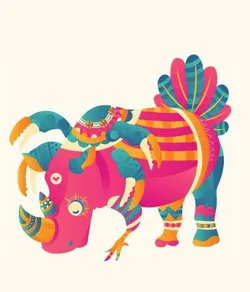
The Warrior of Light walks with the Aindavas because their austerity is a long battle: years of stillness while their bodies wither and beasts tear at them, which is Struggle. They hold their single reflection without wavering: Perseverance. And they carry the vow to its completion, each mind becoming a whole world: Honor. The koan's question, whether the warrior casts a shadow, is answered by the bodies they left behind.

  1. Shadow · what you avoidStruggle

    Struggle: the brothers 'were reduced to dry skeletons, parts of which were beaten and devoured by rapacious beasts' (VI.2.178.38), the cost of a battle fought against the body.

  2. Gift · what is hidden in itPerseverance

    Perseverance: 'believing themselves as Brahma, they sat long with the thought of supporting the world' (VI.2.178.36), holding one reflection through months and years.

  3. Essence · what you embodyHonor

    Honor: the vow is kept to the end, and 'their ten bodiless minds, were thought to be converted to so many different worlds' (VI.2.178.40).

Ten brothers held one thought so steadily that each became a world. Impressive. Also, nobody fed them. Choose one battle worth your steadiness today, and please, eat lunch.

— Felicia
Today’s contemplation

The warrior of light casts no shadow, or does she: what does your perseverance leave in the shade, as the brothers left their bodies to the beasts?

To close the night

Tonight, write one honest sentence about a struggle you kept going today, and whether it was worth what it cost.

The Ally Journey · about 15 minutes

Light trance, eyes open if you prefer. For the full, deeper script, see “The practice” above and its cautions.

  1. Threshold. Sit steadily, back upright, eyes open or lowered. Take three slow breaths, the Umbral, feeling your spine as a firm and kindly support.
  2. The tale in one line: ten brothers sit holding one thought, that they are Brahmā, through years of hardship, until each mind becomes a whole world (VI.2.178.36; VI.2.178.40).
  3. Meet the card. Look at the art of The Warrior of Light and notice where the light falls and where the shadow is. Read the affirmation: 'I am a warrior of light and truth.'
  4. Shadow. Where did life feel like a constant battle this week? Name one fight that drained you, and ask honestly whether it served a real purpose or only habit.
  5. Gift. Choose one battle truly worth fighting. Give it a short phrase, as the brothers did, and repeat it silently on three out-breaths, for example: 'I hold this, steadily.'
  6. Essence. Rest for three breaths in that steady vow, saying: 'I am a warrior of light and truth.' Then notice your body kindly: any ache, hunger or tiredness the effort has been covering?
  7. Return. Move your fingers and feet, feel your weight and your breath, open your eyes fully, and write tonight's honest sentence.

The 30-day Bond

The warrior of light casts no shadow, or does she? Each day of the Bond, name the battle worth fighting and the shadow it casts.

The Sister · Harjit

Sikh · Amritsar, Punjab · Wāhe Gurū · Sat Nām

Visit Harjit, the Sikh warrior-singer of Amritsar, whose 'Wāhe Gurū, Sat Nām' joins the warrior's steadiness to the care of a kitchen where everyone is fed.

Guided Meditation

#38 · The Warrior of Light

Voice & guidance: Prof. Luis Miguel GallardoWatch on YouTube (ES also available)
For facilitatorsA session with “Aindava: The Brahmā Gītā” and The Warrior of Light

Aim. To help the client tell struggle from perseverance, commit to the battles worth fighting, and keep their vow without abandoning the body.

ITM 3 Gift Discovery. The gift to be found is Perseverance that knows which battle is worth it (VI.2.178.33; VI.2.178.36), set against the brothers' disregard for their devoured bodies (VI.2.178.38); discovering that discernment is Gift Discovery.

The session (60–75 min)

  1. Arrival and Umbral (5 min): three slow breaths; ask about any pain or medical condition present today, since the practice involves absorption.
  2. The tale (5 min): Rāma's two objections (why can the will not move a mountain?), Brahmā's teaching, Indu's ten sons sitting with one thought while their bodies waste, the ten worlds. Point to the tale page for the full text.
  3. The card (8 min): The Warrior of Light, its affirmation and koan. Ask what shadow the client's own light casts.
  4. Shadow inquiry (12 min): a struggle inventory: list the client's current battles and sort them into those that serve a real purpose and those kept up out of habit, fear or identity.
  5. Trance practice (20 min): 'The Maker's Seat', from the full guided script on the tale page, at light to medium depth, with no more than fifteen minutes of stillness; include the deliberate return to the ordinary body and check for any discomfort the absorption covered.
  6. Gift and Essence integration (10 min): choose one battle and one world-holding phrase for it; agree one concrete way the client will honour their body while persevering; say the affirmation.
  7. Closing and Bond (5 min): movement, weight, breath, eyes open; assign the 30-day Bond with The Warrior of Light and its daily koan.

Integration questions

  • Which battle did you choose, and what made it worth your steadiness?
  • What did you notice in your body when you came back from the absorption?
  • Where does your perseverance cast a shadow, and how will you tend it?

In a circle

In a circle, tell the tale and pause on Rāma's question about moving a mountain by will. Lead the practice at light depth with about twelve minutes of stillness, with a co-facilitator watching the room. On return, ask everyone to stand, stretch and name aloud one sensation they had not noticed while still. Then, in threes, each person names one battle they will keep and one they will lay down. Close by exploring the koan briefly as a circle: does the warrior of light cast a shadow?

Cautions

  • Absorption that ignores the body's signals is dangerous: the brothers' bodies were devoured. Never suggest analgesia that masks pain needing medical attention.
  • Grandiose identity formulas ('I am the lord of all') are contraindicated where there is mania, grandiosity or psychosis.
  • Prolonged immobility practices need time limits and someone monitoring.

Training and certification in the Meta Pets Method: metapetsworld.org/facilitators ↗

The correspondence between tales and Meta Pets is contemplative: the Yoga Vāsiṣṭha does not contain the Meta Pets; each tale enacts its ally’s arc. Felicia is an artificial-intelligence companion; her words are contemplative reflections, not clinical advice.

The song

From the cycle The Sixty-Four Tales

Ten Worlds in the Forest

Bahu syāṃ prajāyeya

Title: Ten Worlds in the Forest Título: Diez mundos en el bosque

Figure: The ten sons of Indu, the Aindavas, as Vasiṣṭha tells them to Rāma in answer to how the mind can move the body

Where in the text: Book VI (second half, Nirvāṇa-prakaraṇa), Mitra chapters 176–179 (the Aindava narrative and Rāma's question are ch. 178)

Hypnotic phenomenon the song enacts: ABS and ANA — ten voices hold one sentence without wavering while the percussion, which is the body, falls away a strand at a time as the beasts took the limbs: the marvel and the warning in one sound; then the ten lines resolve to one, and the drum comes back as heartbeat and breath.

Mantra: Bahu syāṃ prajāyeya Source: Chāndogya Upaniṣad 6.2.3 (tad aikṣata bahu syāṃ prajāyeyeti), which Mitra cites in his gloss on VI.2.179.14 as aham-bahu-syam. Meaning: "May I be many; may I be born forth."


Lyrics (English)

Performance: verse 1 has the full rhythm section — a heartbeat drum and a shaker breathing like a bellows. From verse 2 the ten voices enter one by one in canon, each on a single held note. In verse 3 the percussion drops out a strand at a time while the voices hold. The second chorus has no percussion at all. In the outro the ten lines resolve to one note, and the heartbeat drum returns.

Verse 1 (Rāma's question) Rāma said: a thought can't push a stone. If the mind could move the flesh, why can't a man will a mountain to move? Vasiṣṭha said: the heart opens and closes like a smith's bellows, and the breath goes in and out. But listen: there is no mountain to push.

Verse 2 (the voices begin to enter) There was a Brahmin, Indu, with ten sons around him like the ten sides of the sky. He died; his wife went with him into the fire as evening follows the day. The sons did the rites, and in their grief they walked into the forest and sat down.

Chorus (ten voices, entering in turn) We hold the world. We are the lords of all. Eyes closed, still as a painting, we hold the world.

Verse 3 (the drums fall away one by one; the voices hold) Months went over their heads, and years. Their bodies dried to bones. Beasts tore at them; a limb was gone like a shadow when the sun comes up. Still they thought: we hold the world. And ten minds with no body became ten worlds, each with its hills, each one thinking itself a hundred.

Chorus (no percussion at all) We hold the world. We are the lords of all. Eyes closed, still as a painting, we hold the world.

Bridge (mantra) (the ten voices, still in canon) Bahu syāṃ prajāyeya (May I be many; may I be born) Bahu syāṃ prajāyeya

Outro (ten lines become one; the heartbeat returns) Many lamps in one room make a single blaze. The drum comes back: the bellows of the heart, in, and out. You are sitting in your hands; you are sitting in your head. Lift a hand. Nothing stood between you. Open your eyes. The forest. Stand up.


Letra (castellano cantable)

Interpretación: el verso 1 lleva toda la percusión: un tambor que late como un corazón y un sonajero que respira como un fuelle. Desde el verso 2 las diez voces entran una a una en canon, cada una en una sola nota sostenida. En el verso 3 la percusión se va retirando hebra a hebra mientras las voces sostienen. El segundo estribillo va sin percusión. En el final las diez líneas se resuelven en una sola nota, y vuelve el tambor del corazón.

Verso 1 (la pregunta de Rāma) Dijo Rāma: un pensamiento no empuja una piedra. Si la mente moviera la carne, ¿por qué no mueve un hombre una montaña con querer? Dijo Vasiṣṭha: el corazón se abre y se cierra como el fuelle del herrero, y el aire entra y sale. Pero escucha: no hay montaña que empujar.

Verso 2 (empiezan a entrar las voces) Hubo un brahmán, Indu, con diez hijos a su alrededor como los diez lados del cielo. Murió; su mujer se fue con él al fuego como la tarde sigue al día. Los hijos hicieron los ritos, y en su pena entraron en el bosque y se sentaron.

Estribillo (diez voces, entrando por turno) Sostenemos el mundo. Somos señores de todo. Ojos cerrados, quietos como un cuadro, sostenemos el mundo.

Verso 3 (los tambores se retiran uno a uno; las voces sostienen) Pasaron meses sobre sus cabezas, y años. Sus cuerpos se secaron hasta el hueso. Las fieras los desgarraron; se fue un miembro como la sombra cuando sale el sol. Y aún pensaban: sostenemos el mundo. Y diez mentes sin cuerpo se hicieron diez mundos, cada uno con sus montes, cada uno creyéndose cien.

Estribillo (sin percusión) Sostenemos el mundo. Somos señores de todo. Ojos cerrados, quietos como un cuadro, sostenemos el mundo.

Puente (mantra) (las diez voces, aún en canon) Bahu syāṃ prajāyeya (Que yo sea muchos; que yo nazca) Bahu syāṃ prajāyeya

Final (las diez líneas se hacen una; vuelve el latido) Muchas lámparas en un cuarto hacen una sola llama. Vuelve el tambor: el fuelle del corazón, dentro, y fuera. Estás sentado en tus manos; estás sentado en tu cabeza. Alza una mano. Nada se interponía. Abre los ojos. El bosque. Ponte en pie.


One line to carry

EN: Think whole worlds if you like; then lift your own hand. ES: Piensa mundos enteros si quieres; luego alza tu propia mano.


Libreto note

If the mind cannot move a mountain, Rāma asks, how does it move a body? Vasiṣṭha answers with a story he has told before. Ten brothers, orphaned in one day, sit down in the forest holding one sentence — we are the lords of all — and hold it while months and years pass and beasts take their limbs, until ten bodiless minds are ten worlds. The purest picture of absorption in the book, and its plainest warning: the trance did not guard the body. Ten voices enter in canon on held notes; the drums, which are the body, fall away strand by strand; then many lamps become one blaze, and the heartbeat returns to the hands.


Source check

Source check (Mitra, Book VI, second half)

  1. "How the intangible intellect moveth the tangible body"; "why cannot a man move a mountain also by his own will?"; "the opening and closing of the mouth of the aorta… as you see the bellows of ironsmiths"; "there is nothing here… what you call as a solid substance" — ch. 178, vv. 7–14, 21.
  2. The Brahmin Indu with ten sons, "surrounded like the world by its ten sides"; his wife followed him "just as the evening twilight follows… the departing daylight"; the sons performed the rites and "retired to the woods" — ch. 178, vv. 28–32.
  3. "The constant reflection of their identity with Brahma (in the formula we are the lords of all…)"; seated in lotus posture "with the thought of supporting the world… with their closed eyes, as if they were mere figures in painting"; "many a month and year glided over their heads and motionless bodies" — ch. 178, vv. 33–37.
  4. "Reduced to dry skeletons… devoured by rapacious beasts; and some of their limbs… disappeared… like parts of a shadow by the rising sun"; "yet they continued to reflect"; "their ten bodiless minds" became "so many different worlds"; "the solid earth with all its hills… in themselves"; "each of the Aindavas, thought himself to have become a hundred" — ch. 178, vv. 38–42; ch. 179, v. 12.
  5. "The hands, the head, and all the members of the body, are seats of consciousness"; aham-bahu-syam (Mitra's gloss); "as the many lighted lamps in a room, combine to emit one great blaze of light" — ch. 179, vv. 6, 14, 21.

Read the full text

Source: Vihari-Lala Mitra, The Yoga-Vasishtha Maharamayana of Valmiki (1891–99), public domain.

Collaborate on this research

Researchers, clinicians and institutions are welcome to write. Replication, data-sharing and site partnerships for the trials in progress are all open conversations.

Educational and scholarly content. Hypnotherapy and regression material is complementary and not a substitute for medical or psychiatric care.