ICEF

Tale 55 · The Vāsiṣṭha Atlas

Vipaścit, the King Who Became Four

Nirvāṇa · second half · Mitra VI.2.106–132 (the story proper VI.2.108.3–132.20) · 44,234 words

Four selves can search forever; only remembering brings one home.

Bhūmikā 3 · Tanumānasā (thinning of the mind)SomnambulisticYour ally · Wormholes and Miracles

The essence

Old, learned and devoted to Agni, King Vipaścit learns that his four generals have fallen and that enemies press on every side. Doubting victory, he cuts off his own head as an oblation and asks the fire for four bodies; four identical kings rise from the flames, rout the invaders and pursue them to the four oceans. Granted by Agni the boon of knowing all that can be known, the four walk across the seas and spend years and centuries as stone, tree, lion, frog, hog and Vidyādhara, freeing one another from curses. All four are killed; as spirits they go on searching for the limit of ignorance. One reaches nirvāṇa, two still wander through worlds without end, and one, after long nearness to the moon's deer-mark, is born a stag: the very stag in Rāma's garden. Vasiṣṭha raises a fire; the stag leaps in, comes out a radiant man, Bhāsa, and remembers everything. The lesson is stark: divided consciousness can explore without limit, but no exploring reaches the end of avidyā; only knowledge does.

What it teaches

  1. 01

    Under overwhelming threat from every side the self can split into equal parts that act separately while remaining one consciousness (VI.2.109.23–31; 124.2, 13).

  2. 02

    Parts heal parts: each Vipaścit released another from tree, stone or animal form, 'as the members of the body assist and supply to the defects of one another' (VI.2.125.2–6, 21).

  3. 03

    One desire, varying in intensity with time and place, sends the parts of one person to very different fates: liberation, endless wandering, an animal life (VI.2.129.6–8).

  4. 04

    Knowledge pursued outward has no end: the search for the limit of avidyā is itself avidyā, and two of the four are still searching (VI.2.128.42; 129.27–29; 132.16).

  5. 05

    The way back runs through the original channel of devotion and a witnessed ritual, and is completed in stillness, when the whole history is remembered as one life (VI.2.130.2–3, 24–25).

The Vāsiṣṭha Atlas

This tale’s coordinates

The wound and its virtue

Under attack on every side, Vipaścit splits into four bodies that scatter to the four oceans and then through worlds without end (VI.2.109.26; 128.42). This is Separation of the self from itself, carried on by Denial: the search for the limit of ignorance that is itself ignorance. Care shows as the parts healing one another, 'as the members of the body assist' each other (VI.2.125.21), and as the stag who remembers the whole history as one life (VI.2.130.24). The tale dramatises Recognising the Shadow's Cost: 'I could not find anywhere, the limit of this Avidyá' (VI.2.132.16).

What it trains

Four self-states that act apart remain one consciousness and are finally remembered as one life, which is emotional coherence across self-states.

In other yogas

  • Patañjali · Yoga Sūtra · YS 4.4–5

    Patañjali allows the yogin many constructed minds, with one mind directing them all. Vipaścit's four bodies of 'one soul and mind' (VI.2.113.2) are that teaching in story form, and their drift apart shows what happens when the directing mind is lost.

  • Buddhist absorption · SN 2.26

    In the Rohitassa Sutta a seer who travelled for a lifetime to reach the end of the world dies without reaching it; the Buddha places that end within this fathom-long body. The two Vipaścits still wandering are Rohitassa, and the stag who stops is the answer.

  • Bhagavad Gītā · BG 18.73

    At the close of the Gītā, Arjuna declares that his delusion is gone and his memory regained. Bhāsa, stepping out of the fire and remembering every former body (VI.2.130.24), speaks the same line through his life.

IEAF: Integrative Emotional Alchemy Framework (Gallardo, Frontiers in Psychology, 2026). FP20: the Fundamental Peace Scale. ITM: the Integrative Transformation Model. Parallels in other yogas are contemplative correspondences, not claims of influence.

The tale

In a world in some corner of infinite space reigned Vipaścit, a learned king who worshipped Agni above all gods. One day a herald brought news: the eastern general had died of fever, and the southern and western generals had been killed. Then the northern chief staggered in, covered in wounds, to say he alone had escaped. Enemies ringed the kingdom on all four sides.

The king bathed and entered his fire-temple. There he reviewed his life, its prosperity, its fame, its balance of duty, wealth and pleasure, and admitted that old age had come and victory was doubtful. He would offer himself. 'Let the four urns of thy fiery furnace, yield four forms of mine,' he prayed, and with one stroke of a dagger he severed his head; his trunk leapt after it into the flames. From the fire rose four kings, identical, armoured and crowned, 'of one soul and mind'. They rode out to the four quarters with the king's wind-weapon, and the invaders fled, drowned, starved or were devoured, until the four had chased them to the shores of the four seas.

There the fighting burnt itself out. The king's companions showed him oceans, mountains, lakes and forests, and talked of crows and cuckoos, swans and bees, and of a traveller who lay on his own funeral pyre unburnt while lost in the rapture of loving his wife, and cried out only when the flames reached him. Restless, the four Vipaścits prayed to Agni to know everything knowable by sense, mind and self-awareness, and not to die before reaching the ways of the siddhas. 'So be it,' said the god.

Leaving their weeping families, the four walked dryshod over the seas. They were swallowed and vomited up by fish, enchanted by a Yakṣī, turned to stone by siddhas for a century; one became king of the land of coconuts for five years before he recovered the memory of his former state. One lay spellbound asleep for seven years in an enchanted wood, then became a stone, a lion, a frog, a hog in a dark hole for a hundred years, a Vidyādhara. The parts rescued one another: the western freed the eastern from seventy years as a tree; the southern freed the western from stone and from a bull's body. Vasiṣṭha explains that they were one self acting as distinct persons, as a man may think himself another in a dream; but they were only half-enlightened, devotees of one god, not knowers of the Self.

At last all four were killed: by an elephant, a Rākṣasa, Indra's curse, a shark. As spirits, still driven by old impressions, they went on looking for the place where ignorance was thickest. The western met Viṣṇu, sat five years in samādhi and passed into nirvāṇa. The eastern sat beside the moon, mourning his lost body. The southern forgot his nature and imagined himself reigning. The northern became a god, climbed the world's boundary mountain, fell into the darkness beyond, was eaten by birds without pain, and travels still through creations and dissolutions without end.

The one beside the moon took the shape of its deer-mark. 'It is the same stag,' Vasiṣṭha told Rāma, 'which has been presented to you by the ruler of the province of Trigarta.' The stag was brought into the court and tried to bite the sapphires, taking them for grass. Vasiṣṭha touched his water-pot, muttered mantras and fixed his mind on Agni, and a smokeless flame rose in the hall. Seeing his god, the stag leapt into it and came out a golden man, whom the court named Bhāsa, 'Lustre'. He sat in meditation and remembered all his past life, then rose from his reverie and saluted Vasiṣṭha as the giver of his life and of the light of self-knowledge. He told of a thousand years as a tree, of lives as stag, jackal, cygnet and raven, of a woman who held the three worlds in her womb and called herself pure Intellect, and of falling asleep while falling through space and seeing the world as if awake. Nowhere, he said, had he found the limit of avidyā.

The text speaks

Passages from Mitra’s translation (1891–99), cited by book, chapter and verse.

“Let the four urns of thy fiery furnace, yield four forms of mine, with brilliant and strong bodies, like that of Náráyana, with his mighty arms.”
VI.2.109.26The division into four is asked for in a moment of besieged exhaustion: parts born of overwhelm.
“These four forms of almighty power, and of one soul and mind; went on conquering the four regions on every side, with one intent and purpose.”
VI.2.113.2At the outset the parts share one mind and purpose; the tale traces how that unity diverges.
“Any person that is conscious of his self identity, and its invariability and indivisibility, may yet think himself as another person and doing different things, as a man does in his dream.”
VI.2.124.2Vasiṣṭha's theory of parts: one indivisible identity that can experience itself as another person, as in dreams.
“These four parts were as so many states or degrees of perfection, which lighted on Vipaschit like the rays of heavenly light; and these states mutually helped and healed each other, as the members of the body assist and supply to the defects of one another.”
VI.2.125.21The text itself names the parts 'states' that help and heal one another, the core of a parts-work reading.
“But the Vipaschitas were not so wholly enlightened as the holy yogis, but being partly enlightened, they remained in the midmost state between the two, as if hanging betwixt both state of enlightenment and ignorance at the same time.”
VI.2.125.24The diagnosis that explains the endless wandering: half-enlightenment.
“He has no cessation from his wanderings, owing to his conviction and assuetude of thinking the reality of the world; nor does he get rid of his ignorance, which is from God also.”
VI.2.128.42Habitual belief in the reality of the world keeps a part travelling forever: the danger of not returning.
“It is the same stag, which has been presented to you by the ruler of the province of Trigarta; and is kept close in your pleasure garden for your sport.”
VI.2.129.46The cosmic saga collapses into the listener's own garden: the lost part is already present.
“He sat in the hall in his meditative mood, and remembered all the incidents of his past life and former body.”
VI.2.130.24Restoration is completed by stillness and total recall.
“I could not find anywhere, the limit of this Avidyá or Ignorance, which showed unto me the visibles only (in my waking and dreaming, and in this world and others).”
VI.2.132.16Bhāsa's own verdict on the whole search.
“thinking myself to be plunged in the cooling pool of thy love within my heart; I was untouched by the flames of fire burning all about me.”
VI.2.119.12Analgesia by absorption in love, inside the companions' interlude.

What the trance sees

PARTS

Parts / ego states

VI.2.109.23–31; 113.2; 124.2, 13; 125.2–6, 21

In the textThe besieged king becomes four kings 'of one soul and mind'; later 'though they were impressed with the consciousness of their self identity, yet they all acted their several parts as quite distinct' (124.13), and the parts free one another from curses, 'these states mutually helped and healed each other' (125.21).

In the clinicEgo-state therapy (Watkins & Watkins 1997) and Internal Family Systems (Schwartz 1995): co-conscious parts with separate agendas that can assist one another; the birth of the four under siege matches the account of parts formed under overwhelming threat in structural dissociation (van der Hart, Nijenhuis & Steele 2006).

AMN

Amnesia

VI.2.123.14; 126.19

In the textOne Vipaścit reigns five years in the land of coconuts before he 'was restored to the remembrance of his former state'; after death the southern one, 'forgetful of his spiritual nature, thinks himself to be reigning in the Salmalidwípa'.

In the clinicAmnesia for the original identity inside an absorbed role, lifting spontaneously in one case and persisting in the other, comparable to dissociative fugue and to spontaneous post-hypnotic amnesia.

CAT

Catalepsy

VI.2.123.12–13; 124.17–18

In the textTurned to stone by siddhas for a century; 'spellbound by their sorcery, he lay asleep for full seven years', then 'converted to the torpid state of a stone' for seven more.

In the clinicCatalepsy and suspended animation; clinically, the prolonged immobility of dissociative shutdown, from which another part or an outside agent must release the person.

ANA

Analgesia / anaesthesia

VI.2.119.12–13, 20; 128.19

In the textOn his own pyre the traveller is 'untouched by the flames' while absorbed in the rapture of his love, and cries out only when 'I felt the pain of the burning flame'; the northern Vipaścit, devoured by birds, 'did not feel the pains and pangs ... but retained his clear consciousness all along'.

In the clinicHypnotic analgesia through absorption in pleasant imagery, which lapses when attention returns to the sensation (Hilgard & Hilgard 1975); the second case adds clear awareness without pain.

DEEP

Deepening

VI.2.125.70–74

In the textThe mind 'freed from its imagination, and drowned in deep meditation (samádhi), as in the state of a sleepless sleeper'; duality is lost in unity, unity in 'a vast void', which ends in conscious bliss; the yogi sits 'as still and cold as a stone'.

In the clinicA graded deepening sequence in which content falls away layer by layer toward contentless absorption, the far end of the depth scale (Erickson 1952, 'Deep hypnosis and its induction').

WIT

Witness position / dis-identification

VI.2.125.37–41

In the textThe liberated one 'may appear to be weeping, yet he never weeps in grief'; 'Undeluded he sees the delusions of the world ... and all pleasure and pain seem as ideal unto him', in contrast to the half-enlightened Vipaścits who suffer every transformation.

In the clinicThe hidden observer (Hilgard 1977): a level of awareness that registers experience without suffering it, the position the four never reach.

OBE

Out-of-body / thought-body travel

VI.2.126.8–14; 128.30–41

In the textAfter death their 'vacuous and self-conscious souls' behold the continents; the northern one passes the region of fire 'without being burnt or hurt in his spiritual body', and concludes 'what is it beside the mind, that can lead any body from one place to another' (128.35).

In the clinicOut-of-body travel in deep trance, framed explicitly by the text as mental movement, which matches the clinical stance of treating such travel as experiential rather than spatial.

HYP

Hypermnesia

VI.2.130.24–25

In the textRestored from the stag, Bhāsa 'sat in the hall in his meditative mood, and remembered all the incidents of his past life and former body', while the assembly sat motionless.

In the clinicHypermnesia: a flood of autobiographical recall after an intense emotional and ritual stimulus; as with all hypnotic recall, vividness is no proof of accuracy.

AR

Age regression / past-life regression

VI.2.131.30–44; 132.1–12

In the textBhāsa recounts a thousand years as a tree, a century as a mountain stag, lives as śarabha, Vidyādhara, cygnet of Brahmā's swan, jackal, celestial nymph, raven and anchorite.

In the clinicPast-life regression narratives of serial embodiments with a continuing witness, the material worked with in Life Between Lives hypnotherapy (Newton 1994; 2004).

EMG

Emergence / re-alerting

VI.2.130.4–28; 128.41–46

In the textVasiṣṭha raises a smokeless fire by mantra and concentration; the stag leaps in and emerges human; Bhāsa 'rose from his reverie', and Vasiṣṭha 'raised him by touching his head' with a blessing. Two Vipaścits, by contrast, never return and wander 'for ever more'.

In the clinicStructured re-alerting through the original channel of the trance, with orientation to persons, a new name, touch and a spoken blessing, akin to anchoring (Bandler & Grinder 1979); the unreturned parts dramatise failure to emerge from absorbed states.

Read upward — stage 1 at the bottom, stage 7 at the top

  1. Integration zone
    Progressive relaxation and deepening — the habitual self loosens enough for new pattern to take.

A note on what this map claims. The alignment between stages of knowledge and trance depths is a clinical map — a heuristic correspondence proposed for research, not a claim of identity between contemplative attainment and hypnotic depth.

Bhūmikā 3 · Tanumānasā

Vasiṣṭha calls the Vipaścits 'partly enlightened ... hanging betwixt both state of enlightenment and ignorance' (125.24) and 'dháraná yogis' rather than transcendent ones (125.27): inquiry has begun to thin the mind (tanumānasā) but has not dawned into being.

Zone · Somnambulistic

The four live complete lives as kings, stones, animals and gods, with amnesia for their origin (123.14; 126.19), and Vasiṣṭha says it was all 'the work of his fancy' (129.40): full sensory reality, action and amnesia, the marks of somnambulistic depth.

In Mitra’s words

In Calcutta in the 1890s, the translator chose the vocabulary of hypnotism to name these states. More →

  • lulled to the insensibility of his sleepAgain the intellectual sphere is like the quiet state of am; who had got rid of his busy cares and thoughts, reposes himself at ease; before he is lulled to the insensibility of his sleep.VI.2.106.7
  • profound tranceThe bodies of animals, which are devoured by rapacious beasts and birds, and then disgorged unhurt and entire out of their bowels; resemble I ween to their rising from the lap of sleep, or a state of profound trance.VI.2.118.13
  • stupified as statueLo the wanderer looking with wonder on the eyes of the antelope, and finding their resemblance with those of his dear one at home, remains stupified as statue at the sight of the objects exposed to his view.VI.2.118.18
  • ecstacy; raptureAll this time I lay in the ecstacy of my love to thee, and I felt raptures of joy rise in my breast, from my fancied association with thee.VI.2.119.13
  • swoonWhen the husband had said so far, his listening spouse cried out aloud; saying “Ah me! I am dead, I am gone,” and for fear of hearing the sad consequence, fell into a swoon and became senseless.VI.2.119.17
  • enchantmentwhere he was overpowered to the love of a female fiend by her art of enchantment, (or) where he was enchanted into the amour of a female Yakshí, by her skill in sorcery.VI.2.123.5
  • spellboundAgain the prince proceeding to Scythea, or the land of _sacas_ on the east; passed into the enchanted city of the yakshas, lying at the foot of the Eastern mountain or Udaya-giri; where being spellbound by their sorcery, he lay asleep for full seven years in the wood of the leafless mansá sijá trees.VI.2.124.17
  • torpid stateRising afterwards from his drowsiness, he was converted to the torpid state of a stone by his drinking some mineral water, and was condemned to remain for seven years more with the mineral substances of the earth.VI.2.124.18
  • sleepless sleeper (samádhi)The mind being freed from its imagination, and drowned in deep meditation (samádhi), as in the state of a sleepless sleeper; it comes to the sight of an even intellectual vacuity, engrossing the sights of all the worlds, as if absorbed in it.VI.2.125.70
  • clairvoyanceIn this state of _insouciance_, the duality of the world is lost in the nullity of vacuity; the knowledge of self personality is dwindled to spirituality, and all futurity presents itself clearly to the view of the clairvoyance of the enrapt yogi.VI.2.125.73
  • rapturous amazementhe views the world in himself, and remains quiet in rapturous amazement at the view.VI.2.125.74
  • samádhiReceiving then the incomparable knowledge of divine truth from him, he remained in his _samádhi_ meditation at that spot for full five years.VI.2.126.16
  • reverieThen the prince rose from his reverie after a short while, and advanced towards the assembly, under his newly obtained title of Bhása or the light.VI.2.130.26
  • suggestsWhatever the intellect suggests (from its preconceptions and predilections); the mind (which is the active principle), obeys the same and is inclined in the same way; and continues to view the outer world, as it has ever existed in thought.VI.2.131.23

In the therapy room

Indications

  • Leaders and carers besieged on all sides and exhausted (the ageing king of 109.21–23): resourcing by multiplying capacities
  • Parts work and ego-state therapy, especially cooperation in which one part releases another (125.2–6)
  • Compulsive seeking (endless courses, travel, spiritual shopping) that never arrives (128.42; 131.4–18)
  • Integration after past-life or Life Between Lives regression: one returning part remembers the whole (130.24)
  • Pain management through absorption imagery (119.12–13)

Cautions

  • Never use the self-decapitation image literally; screen for suicidal ideation and self-harm before working with the opening of the tale
  • With DID/OSDD, suggestions of splitting into four can destabilise; favour co-consciousness and cooperation over further division
  • Do not suggest that parts will 'wander forever': the unreturned Vipaścits are a teaching warning, not a script
  • Past-life recall is experiential material; vividness is not evidence
  • Fantasy-prone, highly absorbed clients may over-engage the endless voyage; keep firm time limits and strong grounding
From the bookThe full clinical note

Indications. The opening fits leaders, carers and parents besieged on every side, exhausted, their old way of commanding no longer enough (VI.2.109.21–23): the tale lets them imagine their capacities multiplied, each meeting one front. It is a natural frame for parts work and ego-state therapy, above all for cooperation, where one part releases another from its frozen form (VI.2.125.1–6). It speaks to compulsive seeking, the endless course, pilgrimage or retreat that never arrives, and Viśvāmitra's princes circling the earth "like busy emmets about a roll" (VI.2.131.16) are a gentle mirror. After past-life or Life Between Lives regression it offers an integrating image: one part returning through its own channel and remembering the whole as one life (VI.2.130.24). And the traveller on the pyre (VI.2.119.12) is an analgesia metaphor clients remember.

How to use it. As metaphor: tell the siege, the four kings and the stag in the garden, and stop. The question "where is your stag?" (what part of you is already here, mistaking jewels for grass) does a great deal of work. As protocol: use the practice below, which follows the tale's sequence and corrects one thing in it: what is offered to the fire is a crown, the exhausted strategy, never the person.

Cautions. Never use the self-decapitation image literally. Before working with the opening, screen for suicidal ideation and self-harm, and do not use it with clients for whom self-sacrifice is a live theme. With dissociative identity disorder or other specified dissociative disorder, a suggestion to split into four can destabilise; work instead with parts already present, toward co-consciousness and cooperation, and only within a phase-oriented treatment. Never suggest that a part will "wander forever": the unreturned Vipaścits are a teaching warning, not a script, and the practice always ends with every part acknowledged and a firm return. Past-life material is experiential; vividness is not evidence (Dywan & Bowers 1983). Fantasy-prone, highly absorbed clients (Lynn & Rhue 1988) may over-engage the endless voyage; keep firm time limits and strong grounding.


The practice

The Four Directions and the Fire

  1. Before the inner fire: sit as the king sat after bathing, review what your life has built and admit what now presses on it from four sides (VI.2.109.11–23).
  2. Offer to the fire the old head, the exhausted controlling strategy, never the person; ask for four strong forms of yourself (109.24–27).
  3. Watch four equal selves rise from the flames, 'of one soul and mind', and send one to each quarter to meet what threatens there (109.30–31; 113.2).
  4. Follow each briefly: notice where one has turned to stone, tree or animal, and let another part come to release it (125.2–6, 21).
  5. Witness the wandering without following it: notice the part that searches for an end that does not exist, and let it rest (128.42; 125.41).
  6. Call one part home: let it see its own fire, leap in and come out bright; give it a new name (130.9–23).
  7. Sit in stillness and let the whole history be remembered as one life (130.24–25).
  8. Return: rise from the reverie, greet the guide, feel the hand on the head or the feet on the floor, and open the eyes fully alert (130.26–28).

Practise with a qualified professional if you have a history of dissociation, trauma or psychosis.

From the book · to be read aloudThe full guided script

The Four Directions and the Fire

Read slowly, aloud, leaving a breath between lines; twenty to twenty-five minutes. Best guided by a clinician the first time; afterwards it may be recorded in your own voice.

Before you begin. This is a parts practice in medium to deep trance. It contains a fire and an offering; the offering is a crown, a worn-out way of coping, never yourself. Do not use this practice if you are having thoughts of harming yourself or ending your life; speak to a clinician or a crisis line first. If you have a dissociative disorder, or hear or experience parts of yourself as separate people, use it only with your therapist, and skip the dividing into four. Do not practise while driving, operating anything, standing, or in or near water. Sit rather than lie down. Set a gentle timer for twenty-five minutes.

How to return at any moment. Say aloud, "All four, come home with me." Press your feet into the floor, take one full breath, count up from one to five, and open your eyes on five. Nothing in the practice requires you to stay.


Sit down, and let the body settle.

Imagine you have just bathed. The water was cool, poured over your head, and you are clean and quiet. Now you walk into a small temple, and in the middle of it a fire is burning, steady and warm. It is a fire you have trusted for a long time. Sit before it.

Breathe out.

Let yourself look back, the way the old king did. What you have built. What you have kept going. The people who depend on you. Let yourself feel, for a moment, honest pride in it.

And now let yourself admit what presses on it. From the east: one weight. Name it. From the south: another. From the west: another. From the north: one more. You do not have to solve them. Only see them, one on each side. Notice where you feel them in the body.

Breathe out.

On your head there is a crown. It is the way you have held all this together: the effort, the vigilance, the doing it all yourself. It has served you. It is heavy now.

Take it off. Hold it in your hands. Thank it. And lay it in the fire.

Watch the flame take it. Nothing of you is harmed. Only the old way of commanding goes into the fire.

And ask the fire, as the king did: give me four strong forms. One for each direction.

Watch the flames rise and part. From the fire step four figures. Each one is you. The same face, the same heart, of one soul and one mind. Each strong, each clear, each armed with what that direction needs. Greet them.

Send the first east. Watch it go, steady, to meet what waits there.

Send the second south.

Send the third west.

Send the fourth north.

You stay here, by the fire, and you can feel all four at once, the way you feel your two hands and your two feet.

(Pause: half a minute.)

Now follow each, briefly, in turn.

East. How is it there? Is that part moving freely? Or has it stopped somewhere, gone still as stone, rooted like a tree, caught in some other shape?

South. How is it there?

West.

North.

If one of them is stuck, frozen, turned to stone or tree or animal, do not go yourself. Ask another part to go. Let the one who is free walk to the one who is caught and do whatever is needed: a word, a touch, an offering, a hand held out. Watch the stone soften. Watch the shape loosen. Let them help and heal each other, as the members of one body help each other.

Breathe out.

There may be one part that does not want to stop. It keeps searching: for the end of the work, the end of the worry, the edge of the map. You can see it going further and further. Do not follow it. Watch it with kindness from where you sit. And say to it, quietly: there is no edge out there. You can rest. Let it slow. Let it sit down wherever it is.

(Pause: a few breaths.)

Now one of the four is coming home first. Perhaps it has been away a long time and looks different now. Perhaps it looks like a deer, gentle and timid, nibbling at things that are not food. Let it come into the temple.

Let it see the fire. The same fire it has always trusted.

Watch it go toward the flame, and leap.

And watch what steps out: bright, clear, like gold cooling into the shape of a person. It is you. Give it a new name, one word for what it has become. Say the name once, silently.

Sit together, now, beside the fire. Let this part remember everything it has been through, all its shapes and places, as one life. Your life. Let it all be remembered, without needing to tell it.

(Silence: one to two minutes.)

Now every part of you can hear this. The one who came home. The ones still out at the four quarters. Thank each one. Tell each one where the fire is, so they can always find the way back. Let them know they may come home in their own time, through this same fire, and that you will be here.


Now rise from the reverie, as he did.

Let the fire settle to embers. Feel the temple floor, and then the real floor under your feet. Press your feet down.

Feel a hand resting on the top of your head, warm and steady, as the sage raised the prince by touching his head. If you like, place your own hand there now.

I will count from one to five, and on five the eyes open, clear and rested.

One. The breath is full and ordinary.

Two. The feet are on the floor, the hands warm and your own.

Three. The sounds of the room return.

Four. Take one deep breath in and let the shoulders roll.

Five. Eyes open. Here. Now. Fully alert.

Sit a moment before you stand. Say your name aloud, today's date and where you are. Name three things you can see. If you feel at all distant or slow, count again from one to five, stand, walk a few steps, drink some water. Do not drive for ten minutes.

Later, write the new name somewhere you will see it. And write one sentence for each direction: what is waiting there, and which part of you will meet it.


Meta Pets World · Your ally · Meta Pet 35

Vipaścit's four selves and the way home

Wormholes and Miracles card
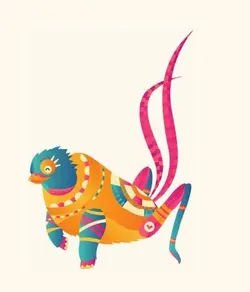
35Wormholes and MiraclesI travel through miraculous dimensions.

Wormholes and Miracles walks with Vipaścit because his four selves search endlessly through worlds for the limit of ignorance: Hunger. Along the way they live centuries as stone, tree, lion and frog, freeing one another: Adventure. And one of them, as a stag in Rāma's own garden, leaps into the fire and remembers everything, arriving where he started: Boundlessness.

  1. Shadow · what you avoidHunger

    Hunger: the wanderer 'has no cessation from his wanderings' (VI.2.128.42), and at the end he admits, 'I could not find anywhere, the limit of this Avidyá' (VI.2.132.16).

  2. Gift · what is hidden in itAdventure

    Adventure: through centuries as stone, tree, lion and frog, the four 'mutually helped and healed each other, as the members of the body assist' one another (VI.2.125.21).

  3. Essence · what you embodyBoundlessness

    Boundlessness: the stag in Rāma's garden (VI.2.129.46) leaps into the fire, comes out as Bhāsa, and 'remembered all the incidents of his past life' as one (VI.2.130.24).

Four kings set off to find the end of ignorance. One came home as a stag in Rāma's own garden. Before you go searching further today, look around: what's already here?

— Felicia
Today’s contemplation

If through the wormhole you arrive where you started, what are you searching for out there that may be waiting in your own garden?

To close the night

Tonight, write one honest sentence about what you went looking for today, and whether it was already at home.

The Ally Journey · about 15 minutes

Light trance, eyes open if you prefer. For the full, deeper script, see “The practice” above and its cautions.

  1. Threshold. Sit with both feet on the floor, eyes open or lowered. Take three slow breaths, the Umbral, and on each in-breath sense the four sides of the room around you.
  2. The tale in one line: King Vipaścit becomes four, searches through worlds for the end of ignorance, and one of him comes home as a stag in Rāma's garden (VI.2.132.16; VI.2.129.46).
  3. Meet the card. Look at the art of Wormholes and Miracles and let your eyes travel through it. Read the affirmation: 'I travel through miraculous dimensions.'
  4. Shadow. Where is hunger driving your search this week: one more course, one more trip, one more scroll, one more answer? Name the search and the feeling that says it is never enough.
  5. Gift. Turn the search into adventure for one hour today: do one thing out of pure curiosity, expecting no result, and notice the difference between exploring and hungering.
  6. Essence. Picture all your searching selves returning from the four directions and sitting together in one place. Rest for three breaths, saying: 'I travel through miraculous dimensions.'
  7. Return. Look around the room as if you had just come home. Feel your feet and hands, open your eyes fully, and write tonight's honest sentence.

The 30-day Bond

Through the wormhole you arrive where you started: each day of the Bond, notice where today's search began and where it ended.

The Sister · Tin-Hinan

Tuareg · Hoggar, Sahara · Allāh Hū

Visit Tin-Hinan, the Tuareg imzad-player and caravan-mother of the Hoggar, who knows that a caravan crosses the boundless Sahara in order to return to the well, and whose 'Allāh Hū' sounds like an arrival.

Guided Meditation

#35 · Wormholes and Miracles

Voice & guidance: Prof. Luis Miguel GallardoWatch on YouTube (ES also available)
For facilitatorsA session with “Vipaścit, the King Who Became Four” and Wormholes and Miracles

Aim. To help the client see the hunger behind endless searching, and to turn it into a curious adventure that knows how to come home.

ITM 2 Conscious Recognition. The tale's sharpest lesson is a recognition, 'I could not find anywhere, the limit of this Avidyá' (VI.2.132.16): Conscious Recognition of the hunger has to come before any homecoming.

The session (60–75 min)

  1. Arrival and Umbral (5 min): three slow breaths; screen gently for self-harm before telling the tale, given its opening.
  2. The tale (5 min): tell it without dwelling on the self-decapitation: the old king's offering to the fire, four kings rising, the wandering through worlds and lives, the stag in Rāma's garden leaping into the fire and emerging as Bhāsa. Point to the tale page for the full text.
  3. The card (8 min): Wormholes and Miracles, its affirmation and koan. Ask where the client has travelled far only to find what they had left behind.
  4. Shadow inquiry (12 min): map the client's searches (spiritual, professional, romantic) and the 'end' each one promises. Which have no end?
  5. Trance practice (20 min): 'The Four Directions and the Fire', from the full guided script on the tale page, at light to medium depth. Offer to the fire only an old, exhausted strategy, never the person; witness the wandering without following it; call one part home. Keep firm time limits.
  6. Gift and Essence integration (10 min): choose one adventure without a goal for the coming week; let the client say the affirmation from the place called home.
  7. Closing and Bond (5 min): strong grounding, feet, hands, the room, the date; assign the 30-day Bond with Wormholes and Miracles.

Integration questions

  • Which of your four selves wanted to keep wandering, and what did it say when you invited it to rest?
  • What did the part that came home remember?
  • What adventure could you begin this week that does not need to reach an end?

In a circle

In a circle, place four objects at the four sides of the room and tell the tale as the story of four travellers. Lead the practice at light depth for about fifteen minutes, sending a self in each direction only briefly before calling them home. Then invite people to walk once, slowly and in silence, to any one of the four objects and back to their own seat, noticing the moment of arrival. Share in threes: what were you searching for, and what was at your seat all along? Close with the koan spoken together and firm grounding.

Cautions

  • Never use the self-decapitation image literally; screen for suicidal ideation and self-harm before working with the opening of the tale.
  • With DID/OSDD, suggestions of splitting into four can destabilise; favour co-consciousness and cooperation over further division.
  • Do not suggest that parts will wander forever; with fantasy-prone, highly absorbed clients keep firm time limits and strong grounding.
  • Past-life recall is experiential material; vividness is not evidence.

Training and certification in the Meta Pets Method: metapetsworld.org/facilitators ↗

The correspondence between tales and Meta Pets is contemplative: the Yoga Vāsiṣṭha does not contain the Meta Pets; each tale enacts its ally’s arc. Felicia is an artificial-intelligence companion; her words are contemplative reflections, not clinical advice.

The song

From the cycle The Sixty-Four Tales

One of Four Came Home

agne naya supathā rāye asmān / viśvāni deva vayunāni vidvān

Figure — King Vipaścit, devotee of Agni, who became four kings (east, west, south and north), and the stag in Rāma's garden who became Bhāsa.

Where in the text — Book VI (second half, Nirvāṇa-prakaraṇa), Mitra chapters 106–132 (the story proper 108–132).

Hypnotic phenomenon the song enacts — PARTS and EMG: one self sung by four voices that begin in unison, part to the four quarters, free one another and never reunite; one goes still, two keep circling, and one returns through the fire it rose from and comes back as a single human voice that remembers.

Mantra — agne naya supathā rāye asmān / viśvāni deva vayunāni vidvān (अग्ने नय सुपथा राये अस्मान् विश्वानि देव वयुनानि विद्वान्). Source: Īśā Upaniṣad 18 (= Ṛg Veda 1.189.1). Meaning: "O Fire, lead us by the good path to our good, O god who knows all the ways": the prayer to Agni, the god from whom Vipaścit asked all knowledge, who knows every road and leads one of the four home.


Lyrics (English)

Performance: four male voices sing Verse 1 in unison. From Verse 2 they part to the four quarters, each with its own instrument (east bansuri, west sarangi, south santoor, north frame drum), and drift out of phase. In each chorus one instrument takes up another's stuck, repeating figure and resolves it. In Verse 3 the western voice settles onto a drone and stops; two voices loop without cadence and fade, never resolved; the eastern thins to a lone flute. The flute leaps into the mantra and comes out as one human voice, which sings the outro alone.

Verse 1 (unison) An old king, the enemy at all four gates, made his offering in the house of fire: "From the four urns of your furnace give me four of me." Four kings came up out of the flame, one soul, one mind.

Verse 2 (the voices part) They drove the armies to the four seas, asked the fire to know everything, and walked dryshod on the sea. They were stones and trees, a lion, a frog, a hog in a dark hole.

Chorus The west freed the east from the tree, the south freed the west from the stone; they helped and healed each other, and not one of them was home.

Verse 3 (the endings divide) One sat with Hari and went out like a breath, free. Two are walking yet, through endless worlds. One sat by the moon, missing his body, and took the shape of the moon's deer.

Chorus The west freed the east from the tree, the south freed the west from the stone; they helped and healed each other, and one of them grazes in your garden.

Bridge (mantra) (the flute leaps) A smokeless flame stood up in the hall. agne naya supathā rāye asmān viśvāni deva vayunāni vidvān (Fire, lead us by the good road, god who knows every road)

Outro (one voice) The stag from Trigarta, spotted like the stars, who'd bitten at sapphires for grass, saw his god and leapt into the blaze, and came out a man, gold as an evening cloud. "Lustre!" they cried: Bhāsa. He sat and remembered all of it, then rose and bowed: "You gave me my life." King Daśaratha said, "You have wandered long. Sit here. Rest."


Letra (castellano cantable)

Interpretación: cuatro voces de hombre cantan el Verso 1 al unísono. Desde el Verso 2 se separan hacia los cuatro vientos, cada una con su instrumento (este bansuri, oeste sarangi, sur santoor, norte pandero), y se desfasan. En cada estribillo un instrumento retoma la figura atascada y repetida de otro y la resuelve. En el Verso 3 la voz del oeste se posa en un bordón y calla; dos voces giran sin cadencia y se apagan sin resolver; la del este se adelgaza hasta una flauta sola. La flauta salta al mantra y sale convertida en una sola voz humana, que canta sola el final.

Verso 1 (al unísono) Un rey anciano, el enemigo en las cuatro puertas, hizo su ofrenda en la casa del fuego: "De las cuatro urnas de tu horno dame cuatro de mí." Cuatro reyes subieron de la llama, un alma, una mente.

Verso 2 (las voces se separan) Empujaron los ejércitos hasta los cuatro mares, pidieron al fuego saberlo todo, y caminaron a pie seco sobre el mar. Fueron piedras y árboles, león y rana, jabalí en un hoyo oscuro.

Estribillo El oeste libró al este del árbol, el sur libró al oeste de la piedra; se ayudaron y se sanaron, y ninguno estaba en casa.

Verso 3 (los finales se separan) Uno se sentó con Hari y se fue como un aliento, libre. Dos siguen caminando por mundos sin fin. Uno se sentó junto a la luna, añorando su cuerpo, y tomó la forma del ciervo de la luna.

Estribillo El oeste libró al este del árbol, el sur libró al oeste de la piedra; se ayudaron y se sanaron, y uno de ellos pace en tu jardín.

Puente (mantra) (la flauta salta) Una llama sin humo se alzó en la sala. agne naya supathā rāye asmān viśvāni deva vayunāni vidvān (Fuego, llévanos por el buen camino, dios que conoces todos los caminos)

Final (una sola voz) El ciervo de Trigarta, moteado como las estrellas, que mordía zafiros creyéndolos hierba, vio a su dios y saltó a la llama, y salió hecho hombre, dorado como nube de tarde. "¡Brillo!", gritaron: Bhāsa. Se sentó y lo recordó todo, luego se alzó y se inclinó: "Tú me diste la vida." El rey Daśaratha dijo: "Has vagado mucho. Siéntate aquí. Descansa."


One line to carry

EN: Four can search forever; one remembered, and was given a seat. ES: Cuatro pueden buscar sin fin; uno recordó, y le dieron asiento.


Libreto note

The longest search in the book, and the most honest ending. An old king besieged on four sides asks his fire for four of himself, and four kings ride out, one soul and one mind. Then they want to know everything, walk out over the sea, and come apart: stone, tree, lion, frog, each freeing another, "mutually helped and healed." They never reunite. One goes still beside Hari; two are walking yet; one, homesick by the moon, becomes the stag in Rāma's garden, leaps into Vasiṣṭha's fire and comes out remembering. Parts work rarely ends in a neat sum. Four voices part and drift; a flute leaps; one voice is given a seat.


Source check

Source check (Mitra, Book VI second half)

  1. The four from the fire — enemies "in vast numbers on all sides", the king in his fire temple; "Let the four urns of thy fiery furnace, yield four forms of mine"; four kings spring "from amidst the fire": ch. 109, vv. 12, 23, 26, 31; "of one soul and mind": ch. 113, v. 2. (The text's self-oblation, ch. 109, vv. 24–29, is deliberately left out of the lyric; "made his offering" stands for it.)
  2. The search — the boon "that we may know… whatever is knowable"; "walking on foot and dryshod over the sea": ch. 121, vv. 13–16; ch. 122, vv. 3–5. A stone for a century: ch. 123, vv. 12–13; a lion, a frog, a hog "in a dark hole for a hundred years": ch. 124, vv. 21–23; a tree for seventy years: ch. 125, v. 1.
  3. The parts heal each other — the western part releases the eastern from "its vegetable state"; the southern releases the western from stone; "these states mutually helped and healed each other, as the members of the body assist and supply to the defects of one another": ch. 125, vv. 2–3, 21.
  4. The four endings — the western meets Hari, sits in samādhi and flees "like his vital breath" to nirvāṇa; the eastern, seated beside the moon, laments "the loss of his former body" and by "the stag-like mark on the disc of that luminary" takes that form; two remain "constrained to rove about the worlds": ch. 126, vv. 15–18; ch. 129, vv. 4, 29.
  5. The stag comes home — "It is the same stag, which has been presented to you by the ruler of the province of Trigarta… kept close in your pleasure garden"; "spotted all over, as with the stars"; it ran to bite the blue sapphires "thinking them to be blades of grass": ch. 129, vv. 46–50. A flame "without emitting any smoke"; the stag leaps in "on seeing its adored deity", comes out "as bright as… an evening cloud", is named "Bhása", remembers "all the incidents of his past life", hails Vasiṣṭha as "the giver of my life"; Daśaratha: "you have wandered through many difficulties of the world, now take your rest here": ch. 130, vv. 6–30.

Read the full text

Source: Vihari-Lala Mitra, The Yoga-Vasishtha Maharamayana of Valmiki (1891–99), public domain.

Collaborate on this research

Researchers, clinicians and institutions are welcome to write. Replication, data-sharing and site partnerships for the trials in progress are all open conversations.

Educational and scholarly content. Hypnotherapy and regression material is complementary and not a substitute for medical or psychiatric care.