ICEF

Tale 54 · The Vāsiṣṭha Atlas

The Piśāca

Nirvāṇa · second half · Mitra VI.2.94.8–95.31 · 3,203 words

Even the sage, unseen and ungraspable, was a ghost for a while.

Bhūmikā 6 · Padārthābhāvanī (melting of objects)SomnambulisticYour ally · The Dragon in Your Genome

The essence

Rāma asks how Vasiṣṭha moved through the realms of the siddhas once his body had turned to dust. Vasiṣṭha answers from experience. In a body of pure intellect, with 'neither a receptacle nor recipient', he walked among the gods as a dreamer walks through his dream, seeing all and seen by none; his calls went unheard and his hands passed through their forms. 'I remained as a demoniac pisácha, in the abode of the holy Gods.' Asked what piśācas are, he describes subtle, shadow-like beings that darken even noon, enter minds to mislead them and yield to mantras. He then traces their origin to the one Intellect: some seeds of souls ripen into gods and humans, while others, choked by their own former desire, become piśācas. Nothing made them so but their own wanting. At last Vasiṣṭha wishes to be seen, and is. A body springs from within him by his own will, and he names it for what it is: a visible form taken for instruction, as unreal and as useful as a figure in a dream.

What it teaches

  1. 01

    What we call a demon is described as a stunted seed of the same consciousness, shaped by its own former desire, not an alien creation (VI.2.94.72–73).

  2. 02

    The sage himself becomes a 'piśāca' while he is bodiless and unseen: invisibility and ungraspability are a condition a mind can pass through, not a fixed nature (VI.2.94.26–28).

  3. 03

    Perception follows intention: Vasiṣṭha is seen only when he wishes to be seen, and beings see what they desire to see (VI.2.94.19–21; 95.4–5).

  4. 04

    Each group names him by its own element, earthly, luminous, aerial, watery: identity conferred from outside reflects the viewer more than the viewed (VI.2.95.7–11).

  5. 05

    Embodiment itself can be chosen: the material form 'sprang from within me and of my own will' (VI.2.95.12).

The Vāsiṣṭha Atlas

This tale’s coordinates

The wound and its virtue

Bodiless and unseen, his calls unheard, Vasiṣṭha says plainly, 'I remained as a demoniac pisácha, in the abode of the holy Gods' (VI.2.94.28). Hiddenness is the Repression wound, and the feared, shadowy piśācas are its image. Honesty appears when he wishes to be seen and openly names the body that springs from him as a form taken for teaching (VI.2.95.12). The tale dramatises Identifying the Shadow: the sage recognises the demon-state in himself, and traces it to a seed choked by its own former desire (VI.2.94.72–73).

What it trains

Demon, god or sage are conditions a mind passes through, named differently by each viewer (VI.2.95.7–11), so identity loosens its grip.

In other yogas

  • Patañjali · Yoga Sūtra · YS 4.4

    Patañjali says that constructed minds arise from the sense of 'I am' alone. Vasiṣṭha's material form, which 'sprang from within me and of my own will' (VI.2.95.12), is such a constructed body, taken up openly for a purpose.

  • Buddhist absorption

    The bardo teachings describe the mental body of the in-between state: it sees the living, calls to them unheard and passes through solid things. Vasiṣṭha among the gods, his hands passing through their forms, walks that bardo while still alive.

  • Māṇḍūkya Upaniṣad · MāU 4

    Māṇḍūkya 4 names the dreaming self, taijasa, that knows inner objects. Vasiṣṭha moves among the gods 'as the sleeping man thinks himself to be walking' in his dream (VI.2.94.16), seeing all and seen by none.

IEAF: Integrative Emotional Alchemy Framework (Gallardo, Frontiers in Psychology, 2026). FP20: the Fundamental Peace Scale. ITM: the Integrative Transformation Model. Parallels in other yogas are contemplative correspondences, not claims of influence.

The tale

When Vasiṣṭha had parted from the siddha, Rāma put a plain question: with what body had his teacher roamed the regions of the siddhas, when his mortal frame had been reduced to dust? Vasiṣṭha remembered. He had travelled through the open sky of Indra unseen, for since losing his material frame he had only a spiritual body. In that aerial form there was 'neither a receptacle nor recipient', only the vacuous, intellectual soul, and he kept no reckoning of distance or of time. The mind, he explained, deals with beings as a sleeper deals with the figures of his dream. As a man walking and acting in his dream is not perceived by others in the same room, so he walked among the aerial beings and saw them, and they did not see him.

Rāma objected: if the gods could not see him, how had the siddha in the land of gold seen him, and how could he see without eyes? Spiritual beings, Vasiṣṭha replied, see by inner knowledge, just as people see what they desire to see and miss what they do not. He had wished the siddha to see him, so the siddha saw him. Whoever wants something steadily obtains it; when two wills oppose each other, the stronger prevails.

So he passed the cities of the regents of the sky and watched the celestials' strange customs with amazement. He called out; no one heard. He reached for them; his hands closed on nothing, as on the images of the mind. 'Thus Ráma, I remained as a demoniac pisácha, in the abode of the holy Gods.'

What, then, are piśācas? Aerial beings with subtle bodies, with hands, feet and senses like ours. They take the form of a shadow to frighten people, or enter their minds as air to lead them into error; they besiege the mind and drain strength and life. Some are like frost, cloud or wind, some like the men of dreams; none can be grasped, and none can grasp. They feel heat and cold but cannot eat, drink or hold anything. They have desire, envy, fear, anger and greed, and can be subdued by mantras, drugs, rites and amulets. They gather in dark places as water collects in hollows, and a piśāca sitting on a sunny shore at noon darkens the spot so that the sun itself cannot dispel it.

Their origin is the origin of everything. The one Intellect, condensed, becomes ego; ego condensed becomes mind, Brahmā, who imagines the world as Rāma imagines a city in the air. From that boundless Intellect seeds of souls are scattered. Those that ripen become gods and sages; the half-ripe, humans and nāgas; others, insects, worms and plants; and those 'bloated and choked' become the piśācas. The creator did not make them so: they became so 'according to the desire which they fostered in themselves in their prior existence'. Humans are as habituated to their bodies as piśācas to their ugly forms.

Then Vasiṣṭha thought that these celestials, seekers of truth like himself, ought to see him. At once they did, startled as at a juggler's trick. He sat among them without fear. Those who first saw him standing took him for an earthly being; those who saw him in the sunlight called him the luminous Vasiṣṭha; the siddhas of the air, the aerial; the sages who saw him rise from the waters, the watery. In time a material form sprang from within him by his own will, yet both bodies, he says, were equally aerial, perceived only in the mind. He had not attained Brahmahood, he admits; he became the sage Vasiṣṭha who sits before Rāma, a visionary shape taken for his instruction. As the sun set, the assembly rose for the evening rites.

The text speaks

Passages from Mitra’s translation (1891–99), cited by book, chapter and verse.

“As the sleeping man thinks himself to be walking and acting in his dream, without such actions of his being perceived by others (in the same room); so methought I walked before and beheld the aerials without their seeing me.”
VI.2.94.16Vasiṣṭha defines his bodiless travel through the model of the dream: acting in a world that does not register him.
“We spiritual beings view all things by means of our inner knowledge of them; as other people behold the things they are desirous to see, and naught what they had not any desire for.”
VI.2.94.19Perception is governed by desire and intention, the principle behind both his invisibility and his later visibility.
“Thus Ráma, I remained as a demoniac pisácha, in the abode of the holy Gods; and thought myself to be transformed to a pisácha spirit in the open air.”
VI.2.94.28The teacher identifies his own state with the piśāca: the 'demon' as a condition of consciousness, not only another species.
“Those seeds which are bloated and choked, and become fruitless at the end; these produce the wicked Pisáchas, which are bodiless bodies of empty and aerial forms.”
VI.2.94.72The demonic is explained as arrested growth within the one Intellect.
“It is not that Virinchi (vir incipiens) or Brahmá, made them so of his own accord or will; but they became so according to the desire which they fostered in themselves in their prior existence”
VI.2.94.73No external maker of evil: the piśāca's form follows its own former desire.
“The sun even is not able, to dispel that darkness, nor can any one find out the place, where the dark demon makes his abode; on account of its delusiveness to evade human sight.”
VI.2.94.82An exact image of a shadow that ordinary light (reassurance, insight from outside) does not reach.
“Then in course of time, my spiritual body assumed a material form, which sprang from within me and of my own will.”
VI.2.95.12Re-embodiment arises from within, by intention.

What the trance sees

OBE

Out-of-body / thought-body travel

VI.2.94.10–17

In the textHaving lost his material frame, Vasiṣṭha travels the regions of Indra 'in my spiritual body', with 'neither a receptacle nor recipient', making no 'reckoning of the distance of space or succession of time'.

In the clinicOut-of-body experience in deep trance or dissociation; the dream model he gives (94.16) fits the phenomenology of lucid-dream and hypnotic out-of-body states, including loss of spatial and temporal reckoning.

HAL

Positive or negative hallucination

VI.2.94.19–27; 95.2–5

In the textGods, sun, moon and siddhas do not perceive him; his calls are unheard and his hands pass through them. When he decides they should see him, 'They then began to look upon me standing before them, and felt astonished'.

In the clinicNegative hallucination (a present person is not perceived) and its reversal on cue, a classic test of depth in hypnosis; here the cue is the visitor's own intention (satya-saṅkalpa, 94.19).

WIT

Witness position / dis-identification

VI.2.94.24–25

In the text'Being unseen myself by any one there, I saw distinctly every body there, and their mode of life and dealings with amazement.'

In the clinicThe observing self (Deikman 1982): a position of pure seeing that is not itself an object in the scene.

MET

Therapeutic metaphor / reframe

VI.2.94.72–76, 80–84

In the textPiśācas are seeds of souls 'bloated and choked' by their own former desire; they collect in dark places 'as the waters upon earth, are collected in lowlands', and darken the spot where they sit so that 'the sun even is not able, to dispel that darkness'.

In the clinicReframing malevolent or persecutory inner states as parts with a developmental history, approached and understood rather than expelled, as in ego-state therapy (Watkins & Watkins 1997).

EMG

Emergence / re-alerting

VI.2.95.4–13

In the textVasiṣṭha decides to be seen and is seen; 'my spiritual body assumed a material form, which sprang from within me and of my own will', though both forms were perceived 'in my intellectual mind only'.

In the clinicRe-association and re-embodiment at the end of a depersonalised or out-of-body state: return by intention, with the body felt as arising from within rather than imposed from outside.

Read upward — stage 1 at the bottom, stage 7 at the top

  1. Integration zone
    Perceptual shift — the boundaries of things soften; consciousness expands past its usual partitions.

A note on what this map claims. The alignment between stages of knowledge and trance depths is a clinical map — a heuristic correspondence proposed for research, not a claim of identity between contemplative attainment and hypnotic depth.

Bhūmikā 6 · Padārthābhāvanī

Bodiless, Vasiṣṭha keeps 'no reckoning of the distance of space or succession of time' (94.12) and sees Brahmā and the whole creation 'as visions ... without their having any entity in reality' (95.18): objects have melted, though he says he did not reach Brahmahood (95.16).

Zone · Somnambulistic

He travels, calls, reaches and observes inside a fully elaborated world that does not register him, 'as the sleeping man thinks himself to be walking and acting in his dream' (94.16): active, open-eyed behaviour inside an inner world.

In Mitra’s words

In Calcutta in the 1890s, the translator chose the vocabulary of hypnotism to name these states. More →

  • spell (of mantras)They are possessed of desire, envy, fear, anger and avarice, and are liable to delusion and illusion also; and are capable of subjection by means of the spell of _mantras_, charm of drugs and of other rites and practices.VI.2.94.38

In the therapy room

Indications

  • Feeling invisible, unheard or ungraspable in a family or community (calling out and not being heard, 94.26)
  • Shame or self-loathing experienced as an inner 'demon': reframed as a choked seed shaped by old desire (94.72–73)
  • Clients for whom spirit affliction is a lived cultural idiom: a respectful bridge from 'entity' to 'state'
  • Depersonalised clients who need a ritual of chosen re-embodiment (95.12)
  • Work on labels imposed by others (earthly, aerial, watery Vasiṣṭha, 95.7–11)

Cautions

  • Psychotic disorders and persecutory delusions: the description of beings that enter minds and drain life can reinforce beliefs of possession
  • DID/OSDD with persecutor states: avoid demonological language and frame such states as protective parts
  • Depersonalisation–derealisation: bodiless, invisible travel can deepen the symptom; keep the re-embodiment step central and unhurried
  • Do not offer mantras, drugs or amulets (94.38) as clinical treatment; respect religious frameworks without endorsing exorcism
From the bookThe full clinical note

Indications. Feeling invisible, unheard or ungraspable in a family, workplace or community: calling out and not being heard (VI.2.94.26). Shame or self-loathing experienced as an inner demon, reframed as a choked seed shaped by old desire (VI.2.94.72–73). Clients for whom spirit affliction is a lived cultural idiom, as a respectful bridge from entity to state; the cultural formulation framework of DSM-5 (APA 2013) gives the clinician a way to honour the idiom without endorsing its literal claims. Depersonalised clients who need a ritual of chosen re-embodiment (VI.2.95.12). And work on labels imposed by others: earthly, luminous, aerial, watery (VI.2.95.7–11), each group naming the sage after itself.

How to use it. Lead with the sage's own experience before any talk of demons; it removes the stigma. Make the re-embodiment step central and unhurried.

Cautions. In psychotic disorders and persecutory delusions, the description of beings that enter minds and drain life (VI.2.94.32–33) can reinforce beliefs of possession; do not use the tale. In dissociative identity disorder and related conditions with persecutor states, avoid demonological language entirely and frame such states as protective parts. In depersonalisation–derealisation, bodiless, invisible travel can deepen the symptom; if the tale is used at all, begin with the end, the body forming. Do not offer mantras, drugs or amulets (VI.2.94.38) as treatment, and respect religious frameworks without endorsing exorcism.


The practice

The Unseen Visitor

  1. Lighten: let the sense of the body thin until there is only awareness, 'neither a receptacle nor recipient' (VI.2.94.11).
  2. Walk unseen through a familiar place as through a dream, observing without being observed (94.16, 24–25).
  3. Call out and notice you are not heard; reach and notice nothing is grasped; feel and name the sting of invisibility (94.26–28).
  4. Find the dark spot that noon cannot light; meet what lives there and ask which unripened wish of the past shaped it (94.72–73, 80–83).
  5. Recognise that the shadow is made of the same intellect as you (94.74), and offer it room to ripen.
  6. Decide to be seen, and notice the others turn and see you (95.4–6).
  7. Let a body form from within, by your own will, and feel its weight and warmth (95.12).
  8. Return: say your own name, feel feet and breath, and open the eyes fully alert (95.7–11, 31).

Practise with a qualified professional if you have a history of dissociation, trauma or psychosis.

From the book · to be read aloudThe full guided script

The Unseen Visitor

Read slowly, aloud; about fifteen minutes.

Before you begin. This practice works with the feeling of being unseen and with an inner shadow. Do not use it if you have a psychotic illness, a dissociative disorder, or frequent feelings of unreality, except with a clinician; for many people with these conditions, the last part alone, the body forming, is the useful part. Never practise while driving or in or near water. Sit upright, feet on the floor.

How to return at any moment. Press your feet down, rub your palms together until they are warm, say your name aloud, and open your eyes.


Sit, and let the eyes close. Let the sense of the body grow light, lighter, until there is only awareness: no container, nothing contained.

Now walk, in imagination, through a place you know: a home, a workplace, a gathering. Walk as one walks in a dream. You see everyone. No one sees you.

Call out a name. Notice that no one turns. Reach towards someone. Notice your hand passing through. Notice what this feels like, the sting of not being seen. Name it quietly.

Breathe out.

Somewhere in that place there is a dark patch, a corner that daylight does not reach. Something lives there that you have been afraid of, or ashamed of. Approach it slowly, from your quiet awareness. Ask it: Which old wish shaped you? What did you want, long ago, that never ripened? Listen.

Notice that it is made of the same light as you, only folded tight. You were unseen for a while too. Offer it a little room. It does not have to change now.

Breathe out.

Now decide to be seen. Say inwardly: It is right that they should see me. Notice the people in that place turn, and look, and see you. Let yourself stand there, seen.

(Silence: one minute.)


Now let a body form, from within, by your own choice. Feel weight gather in the seat. Feel warmth in the hands. Feel the feet on the floor. Feel the breath moving the chest.

I will count from one to five. One: the body is here, heavy and warm. Two: the hands are your own; move the fingers. Three: the sounds of the room return. Four: a deep breath in, shoulders roll once. Five: eyes open, here, now, fully alert.

Say your own name aloud, and the day, and the place. Touch something solid. If you feel at all unreal, stand, walk, drink water, and count again.


Meta Pets World · Your ally · Meta Pet 59

The unseen sage who chooses to be seen

The Dragon in Your Genome card
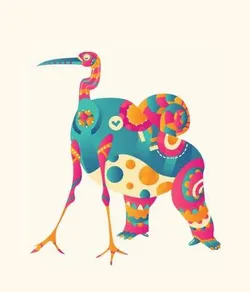
59The Dragon in Your GenomeThe dragon of my genome awakens.

The Dragon in Your Genome walks with the piśāca tale because both are about what hides and what comes into the open. Vasiṣṭha walks among the gods unseen and ungraspable, the shadow-life of a being that evades sight, and this hiddenness is the root of Dishonesty. He wishes to be seen and is: Intimacy. The form that springs from within him, openly named as a form taken for teaching, is Transparency.

  1. Shadow · what you avoidDishonesty

    Dishonesty: seen by none, his calls unheard, 'I remained as a demoniac pisácha, in the abode of the holy Gods' (VI.2.94.28), like the dark beings who hide where even the sun cannot find them (VI.2.94.82).

  2. Gift · what is hidden in itIntimacy

    Intimacy: the sage decides to be seen, and the beings who looked through him turn and see him (VI.2.95.4–6); visibility begins as a wish of his own.

  3. Essence · what you embodyTransparency

    Transparency: 'my spiritual body assumed a material form, which sprang from within me and of my own will' (VI.2.95.12), and he names it plainly for what it is, a form taken for instruction.

Even Vasiṣṭha spent a while as a ghost, calling out and not being heard. Being unseen can feel safe. Today, let one person see one true thing about you. Just one.

— Felicia
Today’s contemplation

The dragon in your genome roars: who taught it to hide, and what would it be like to let it be seen?

To close the night

Tonight, write one honest sentence about something true in you that nobody saw today.

The Ally Journey · about 15 minutes

Light trance, eyes open if you prefer. For the full, deeper script, see “The practice” above and its cautions.

  1. Threshold. Sit comfortably with your eyes open or lowered. Take three slow breaths, the Umbral, and with each one feel the weight of your body in the seat.
  2. The tale in one line: bodiless, Vasiṣṭha walks unseen among the gods like a ghost, until he wishes to be seen and a body springs from within him (VI.2.94.28; VI.2.95.12).
  3. Meet the card. Look at the art of The Dragon in Your Genome and let its strength look back at you. Read the affirmation: 'The dragon of my genome awakens.'
  4. Shadow. Where were you a ghost this week, present but unseen? Recall one moment you hid what you really thought or felt by smiling, agreeing or saying 'fine'. What were you protecting?
  5. Gift. Decide to be seen, as Vasiṣṭha did. Choose one person and one true sentence, small and safe enough, that you will let them hear today.
  6. Essence. Feel your body warm and present, formed from within by your own will. Rest for three breaths, saying on each out-breath: 'The dragon of my genome awakens.'
  7. Return. Say your own name quietly. Feel your feet and your breath, open your eyes fully, rest your gaze on something solid, and write tonight's honest sentence.

The 30-day Bond

The dragon in your genome roars: each day of the Bond, let one true thing be seen and ask who taught you to hide it.

The Sister · Miriam

Sephardic Jewish · Jerusalem · Shema Yisra'el

Visit Miriam, the Sephardic Kabbalist of Jerusalem, whose 'Shema Yisra'el' opens with the word 'hear', a fitting answer to a sage who called out among the gods and was not heard.

Guided Meditation

#59 · The Dragon in Your Genome

Voice & guidance: Prof. Luis Miguel GallardoWatch on YouTube (ES also available)
For facilitatorsA session with “The Piśāca” and The Dragon in Your Genome

Aim. To help the client notice how and where they hide, and to practise being seen, choosing intimacy and transparency at a pace that feels safe.

ITM 3 Gift Discovery. The tale turns on a decision, the sage wishes to be seen and a body forms 'of my own will' (VI.2.95.12): Gift Discovery, finding that visibility is chosen rather than forced.

The session (60–75 min)

  1. Arrival and Umbral (5 min): three slow breaths; ask the client to describe two or three body sensations, so that embodiment is anchored from the start.
  2. The tale (4 min): Rāma's question, the sage unseen among the gods, his account of piśācas as beings shaped by their own former wanting, and his decision to be seen. Point to the tale page for the full text.
  3. The card (8 min): The Dragon in Your Genome, its affirmation and koan. Ask who tamed the client's dragon into hiding.
  4. Shadow inquiry (12 min): map where the client hides (at work, in love, in the family) and the fear behind each concealment. Speak of unripened wishes, never in demonological language.
  5. Trance practice (20 min): 'The Unseen Visitor', from the full guided script on the tale page, at light depth only. Shorten the bodiless walk; keep the decision to be seen and the re-embodiment central and unhurried.
  6. Gift and Essence integration (12 min): rehearse one act of being seen in the room, the client telling the facilitator one true thing; then the affirmation, spoken with feet on the floor.
  7. Closing and Bond (5 min): the client says their name, the place and the date; assign the 30-day Bond with The Dragon in Your Genome and its daily koan.

Integration questions

  • How did it feel in your body when the others turned and saw you?
  • What did the shadow in the dark spot tell you about the wish that shaped it?
  • With whom will you practise being a little more transparent this week?

In a circle

In a circle, tell the tale lightly and leave out the more frightening descriptions of piśācas. Lead a short, light-depth version: walking unseen through a familiar place, deciding to be seen, feeling the body form from within. Afterwards, go round the circle: each person says their own name and one true thing they usually keep hidden, at whatever level of disclosure feels safe, and the circle answers only 'We see you.' Keep the round voluntary, allow anyone to pass, and close with everyone standing, feet grounded, saying the affirmation together.

Cautions

  • In psychotic disorders and persecutory delusions, the description of beings that enter minds can reinforce beliefs of possession; do not use this tale.
  • With DID/OSDD and persecutor states, avoid demonological language and frame such states as protective parts.
  • In depersonalisation–derealisation, bodiless, invisible travel can deepen the symptom; keep the re-embodiment step central and unhurried.
  • Do not offer mantras, drugs or amulets as clinical treatment; respect religious frameworks without endorsing exorcism.

Training and certification in the Meta Pets Method: metapetsworld.org/facilitators ↗

The correspondence between tales and Meta Pets is contemplative: the Yoga Vāsiṣṭha does not contain the Meta Pets; each tale enacts its ally’s arc. Felicia is an artificial-intelligence companion; her words are contemplative reflections, not clinical advice.

The song

From the cycle The Sixty-Four Tales

A Ghost for a While

Yan mad anyan nāsti kasmān nu bibhemīti … dvitīyād vai bhayaṃ bhavati

Figure — Vasiṣṭha, bodiless among the gods "as a demoniac pisácha", and the piśācas, seeds of souls that never ripened.

Where in the text — Book VI (second half, Nirvāṇa-prakaraṇa), Mitra chapters 94–95 (VI.2.94.8–95.31).

Hypnotic phenomenon the song enacts — HAL and EMG: a negative hallucination and its reversal. The singer calls under a crowded hall that neither hears nor sees him; when he decides to be seen, the hall stops and turns to him; then a body forms in him from within, and a heartbeat enters.

Mantra — Yan mad anyan nāsti kasmān nu bibhemīti … dvitīyād vai bhayaṃ bhavati (यन्मदन्यन्नास्ति कस्मान्नु बिभेमीति … द्वितीयाद्वै भयं भवति). Source: Bṛhadāraṇyaka Upaniṣad 1.4.2: the Self, alone in the beginning, was afraid ("so one who is alone is afraid"), then saw that nothing existed but itself, and the fear left it. Meaning: "Since there is nothing other than me, of what am I afraid? … Fear comes only from a second." The piśāca is no second thing: a seed of the same consciousness, choked by its own former desire (VI.2.94.72–73), and the sage who walked unseen among the gods was one himself for a while.


Lyrics (English)

Performance: Verses 1–2 and both choruses are sung under a bright, crowded hall of drums, strings and chanting voices that never pauses and never answers; the singer's line sits low in the mix. Verse 3 is sung over a single low note that does not resolve. At "And they saw" the hall stops dead, mid-phrase. A heartbeat enters with the body and is the only percussion to the end.

Verse 1 My body had gone to dust. I went through the sky in a body of thought the way a sleeper walks through his dream while the others in the room sleep on. The sun didn't see me, nor the moon.

Verse 2 I called them aloud; nobody turned. I reached for an arm; my hand closed the way it closes on a thought. So for a while, among the gods, I was a piśāca in the open air.

Chorus I'm calling in the house of the gods, I see them all; my hand goes through them like cloud, and nobody sees me.

Verse 3 (one low note) Seeds of souls were scattered: some ripened into gods, some half-ripened into people, some swelled and choked and never fruited. Nobody made them so; their own old wanting did. Let one sit on a sunny shore at noon and the sun can't light that spot.

Chorus I'm calling in the house of the gods, I see them all; my hand goes through them like cloud, and nobody sees me.

Bridge (mantra) yan mad anyan nāsti kasmān nu bibhemi (nothing is here but me: what should I fear?) dvitīyād vai bhayaṃ bhavati (fear comes only from a second)

Outro (the hall stops) Then I thought: they seek the truth like me; they ought to see me. And they saw. They started, as at a juggler's trick. They called me earthly, luminous, airy, watery. And in time a body grew in me from inside, of my own will. Here I sit before you. We rose at sunset for the evening rites and came back with the rising sun.


Letra (castellano cantable)

Interpretación: los Versos 1–2 y los dos estribillos se cantan bajo una sala luminosa y llena de tambores, cuerdas y voces que salmodian, que nunca se detiene y nunca contesta; la voz del cantante va baja en la mezcla. El Verso 3 se canta sobre una sola nota grave que no resuelve. En "Y me vieron" la sala se para en seco, a mitad de frase. Con el cuerpo entra un latido, y es la única percusión hasta el final.

Verso 1 Mi cuerpo se había hecho polvo. Iba por el cielo en un cuerpo de pensamiento como un durmiente cruza su sueño mientras los otros del cuarto siguen durmiendo. No me veía el sol, ni la luna.

Verso 2 Los llamé en voz alta; nadie se volvió. Busqué un brazo; mi mano se cerró como se cierra sobre un pensamiento. Así que un tiempo, entre los dioses, fui un piśāca al aire libre.

Estribillo Estoy llamando en la casa de los dioses, los veo a todos; mi mano los cruza como a una nube, y nadie me ve.

Verso 3 (una nota grave) Se esparcieron semillas de almas: unas maduraron en dioses, otras, a medio madurar, en gente, otras se hincharon, se ahogaron, y no dieron fruto. Nadie las hizo así: fue su propio querer de antes. Que una se siente en una orilla al sol del mediodía, y el sol no alumbra ese lugar.

Estribillo Estoy llamando en la casa de los dioses, los veo a todos; mi mano los cruza como a una nube, y nadie me ve.

Puente (mantra) yan mad anyan nāsti kasmān nu bibhemi (no hay nada sino yo: ¿qué he de temer?) dvitīyād vai bhayaṃ bhavati (el miedo solo nace de otro)

Final (la sala se detiene) Entonces pensé: buscan la verdad como yo; deberían verme. Y me vieron. Se sobresaltaron, como ante un truco de juglar. Me llamaron terrestre, luminoso, aéreo, el de las aguas. Y con el tiempo me creció un cuerpo desde dentro, por mi propia voluntad. Aquí estoy, frente a ti. Al ponerse el sol nos alzamos para los ritos de la tarde, y volvimos con el sol naciente.


One line to carry

EN: Even the sage was a ghost awhile; then a body grew within. ES: Hasta el sabio fue fantasma un tiempo; luego, un cuerpo desde dentro.


Libreto note

The teacher's confession. Asked how he travelled once his body was dust, Vasiṣṭha answers plainly: he walked among the gods as a sleeper walks through a dream, calling and unheard, his hands closing on nothing, "a demoniac pisácha, in the abode of the holy Gods." Then he says what a piśāca is: a seed of a soul choked by its own old wanting, a dark patch the noon sun cannot light. Many who come to the clinic live there, present and unseen. The turn is simple: he decides to be seen, and is, and a body grows in him from within. A crowded hall that never answers; one low unresolved note; a sudden silence; a heartbeat.


Source check

Source check (Mitra, Book VI second half)

  1. The body of thought — Rāma's question, "when thy mortal frame was reduced to dust"; travelling unseen "in my spiritual body"; "As the sleeping man thinks himself to be walking and acting in his dream, without such actions of his being perceived by others (in the same room)": ch. 94, vv. 8–16. "I was not perceived by the sun and moon": ch. 95, v. 2.
  2. Unheard and ungraspable — "I called them aloud, but they neither heard nor gave heed to my voice"; "noone could be grasped by my hands… as the ideal images of the human mind"; "I remained as a demoniac pisácha, in the abode of the holy Gods": ch. 94, vv. 26–28. Piśācas "of the forms of clouds": ch. 94, v. 35.
  3. Seeds that did not ripen — "among the scattered seeds of souls, there were some that grew mature… in the forms of gods"; "Those that were half mature, became as human beings"; "Those seeds which are bloated and choked, and become fruitless at the end; these produce the wicked Pisáchas"; not made so by Brahmā "but… according to the desire which they fostered in themselves in their prior existence": ch. 94, vv. 70–73.
  4. The dark patch at noon — "Should a dark Pisácha dwell at bright midday light, upon a sunny shore or open space; it darkens that spot… The sun even is not able, to dispel that darkness": ch. 94, vv. 81–82.
  5. Seen, named, embodied — "it is right they should observe me"; they were startled "as… at the sudden sight of a juggler's trick"; the earthly, the luminous, the aerial and the watery Vasiṣṭha; "my spiritual body assumed a material form, which sprang from within me and of my own will"; "the sage Vasishtha as you see before you"; the assembly broke at sunset "to perform their evening devotion" and returned "with the rising sun": ch. 95, vv. 4–12, 16, 31.

Read the full text

Source: Vihari-Lala Mitra, The Yoga-Vasishtha Maharamayana of Valmiki (1891–99), public domain.

Collaborate on this research

Researchers, clinicians and institutions are welcome to write. Replication, data-sharing and site partnerships for the trials in progress are all open conversations.

Educational and scholarly content. Hypnotherapy and regression material is complementary and not a substitute for medical or psychiatric care.