ICEF

Tale 56 · The Vāsiṣṭha Atlas

The Wonderful Carcass

Nirvāṇa · second half · Mitra VI.2.133–135 · 3,982 words

The corpse that buried the world became the ground beneath it.

Bhūmikā 2 · Vicāraṇā (inquiry)DeepYour ally · From Entropy to Syntropy

The essence

Still wandering in search of 'the object that I have in my heart', Vipaścit sees, in a world as different from ours as a dream city from a city seen, a vast shadow; then a man the size of mountains falling from the sky, and the sun falling with him. The corpse covers all seven continents and oceans. Terrified, Vipaścit resolves to enter the fire; Agni appears in a cool, moon-like form ('fear not') and carries him up on his parrot, from where the colossus looks like wood. The gods gather and praise the goddess of Night. She draws in the corpse's blood with her breath, swells into Caṇḍikā and dances while her goblins devour the flesh; the limbs that lie beyond the world rot away of themselves. The gods mourn the lost continents. Then the remains become the world: fat and flesh turn to clouds and soil, bones to mountains, the Himālaya to its spine, the fluids to an ocean, and the earth is named medinī. Day and night return.

What it teaches

  1. 01

    Terror of being crushed eases first through a resource and a change of vantage: from Agni's parrot the colossus looks 'as if it were made of wood' (VI.2.133.9–13).

  2. 02

    An immense dead weight is not removed by fighting it but by being taken in, breath by breath and piece by piece, by a force that is itself emptiness (VI.2.134.4, 15–17, 21–22).

  3. 03

    What lies beyond the boundary of one's world cannot be consumed; it rots away of itself (VI.2.134.23–24). Some burdens need only to be left outside.

  4. 04

    Grief for what is lost is voiced in full before renewal: the gods name each vanished place (VI.2.134.44–64).

  5. 05

    The remains of the old body become the ground of the new world: bones into mountains, flesh into soil, fluids into an ocean (VI.2.135.2–12).

The Vāsiṣṭha Atlas

This tale’s coordinates

The wound and its virtue

A dead colossus falls across all seven continents, and the gods mourn each vanished landscape with 'pity and grief' (VI.2.134.57). This is Separation as loss, with Vipaścit's terror, enough to make him resolve to enter the fire, as the secondary Repression. Care is shown in the mourning voiced in full and in the way the remains are taken in, breath by breath, by the goddess (VI.2.134.15). The tale dramatises Discovering the Gift: the bones become mountains and the Himālaya its spine (VI.2.135.5).

What it trains

Terror eases through a change of vantage, not through fighting the image: from Agni's parrot the colossus looks 'as if it were made of wood' (VI.2.133.13).

In other yogas

  • Buddhist absorption · MN 10

    The Satipaṭṭhāna Sutta includes the charnel-ground contemplations, in which a body is seen decaying until only bones remain. The tale enlarges that practice to the scale of a world, and lets the decay end in renewal.

  • Bhagavad Gītā · BG 11.7

    Kṛṣṇa invites Arjuna to see the whole universe gathered in his body. The wonderful carcass runs that vision in reverse: a single body whose bones, flesh and fluids become the mountains, soil and ocean of the world.

  • Yoga nidrā

    In yoga nidrā the body is rotated part by part and felt as heavy, then vast, until it is sensed as a landscape. The colossus whose limbs lie beyond the world's edge is the hypnagogic image of that enlarged body.

IEAF: Integrative Emotional Alchemy Framework (Gallardo, Frontiers in Psychology, 2026). FP20: the Fundamental Peace Scale. ITM: the Integrative Transformation Model. Parallels in other yogas are contemplative correspondences, not claims of influence.

The tale

Vipaścit, now called Bhāsa, went on telling Rāma's court what he had seen in his wanderings. This, he said, was a horrible sight, one that attends on sin, and he had to see it because of his blind attachment to ignorance.

Somewhere in the vast void there is a bright sphere, as different from ours as a city in a dream is from a city seen with the eyes. Roaming there, searching every side for the object he carried in his heart, he saw a huge, unmoving shadow spread over the ground like a swarm of locusts. He looked for its cause and found the mountainous form of a man falling fast from the sky, whirling down upon the earth. Was it Virāṭ, the cosmic person? A mountain dropping from the clouds? It filled the sky and hid the day. Then the sun itself fell, as if hurled down by the storm of the last day, and crashed against the belt of the cosmic egg.

The body landed and covered the whole earth, all seven continents and oceans. Dreading his own destruction, Vipaścit resolved to enter the fire that burned beside him. At once Agni, the god he had worshipped through a hundred births, appeared to him in a cool form like the moon and said, 'Fear not, no evil will betide thee.' Vipaścit begged him for protection from this untimely ruin. 'Rise, O sinless one, and follow me,' said the god; he seated him on the back of his parrot and flew upward, burning a path through part of the falling body. From the upper sky the colossus looked as if it were made of wood.

Below, the earth shook. Mountains burst into cataracts, the ground split, the sky roared on its four sides, and the cries of all beings filled the void. Vipaścit saw that the seven continents could not hold this single body. He asked Agni what it meant, and why the sun had fallen with it. 'Hold your patience, my son,' said the god, 'until this portentous event passes away.'

Then the beings of the sky gathered, siddhas, apsarases, daityas, gandharvas, sages, ancestors and gods, and bowed to the dark goddess of Night, refuge of all, who carries Brahmā's grey hair on her staff and Daityas' heads on her necklace, and who devours the world and drinks the deep. Agni told Vipaścit that the body's arms, thighs and head had no limit and had fallen from beyond the polar region. The goddess, Vipaścit learned, is the very manifestation of the void. The gods offered her the carcass. She drew its blood and pith into herself with her inhaling breath, until her lean, skeletal frame grew fat and she stood revealed as Caṇḍikā, red as a cloud, lightning in her eyes. Drunk, she danced across the sky while her goblins tore the flesh with clutches and tusks and stretched its entrails up to the sun as if measuring the heavens. They could not reach the limbs that lay beyond the world; those rotted away of themselves. The earth became an ocean of blood.

From the polar mountain the gods mourned. Where was the earth, with its oceans of milk, curds and honey, its Kalpa trees and lotus fountains, the Jambu river, the dances of the nymphs, the cities and villages and their people? 'The devastation of all these beauties of the landscape, fills our mind with pity and grief.'

Then, Vasiṣṭha tells Rāma, the goblins flung fat and flesh into the air, where it spread as clouds, and scattered the leavings of their feast over the continents, so that the earth appeared again. The great bones became the mountains; the Himālaya is the backbone. The demons built the earth anew from the carcass and went on dancing; at the gods' command its fluids were gathered into one ocean, called the ocean of wine. Because the earth was smeared with the corpse's fat, it was named medinī. When the body had vanished, day and night returned, and the lord of creatures restored the earth to its former shape.

The text speaks

Passages from Mitra’s translation (1891–99), cited by book, chapter and verse.

“There is somewhere amidst the vast vacuum, a wonderfully bright sphere, which is quite impassable by you; it is situated in a vacuity like this of ours, and so different from it, as a city in dream differs from one in sight.”
VI.2.133.2The narrator himself frames the whole vision as dream-like, a world of the mind.
“Then the lord fire--the source of vedas, and my adored divinity in a hundred repeated births, appeared manifest before me in his cooling moon-like form, and said, fear not, no evil will betide thee.”
VI.2.133.9The resource appears at the moment of maximal fear, and in the form the moment needs: fire become cool.
“Getting to the upper sky, I found the body as if it were made of wood, and it was this which struck so much terror below”
VI.2.133.13From an elevated, distant position the terrifying flesh is seen as inert matter.
“Upon this prayer of the gods unto her, the goddess began to draw in with her inhaling breath, the blood and pith of the carcass into her bowels and intestines.”
VI.2.134.15The dead weight is absorbed through breath.
“They could not therefore be reached unto by the ghosts, who are confined within the limits of this world, and could not go beyond, where those parts were rotten away of themselves.”
VI.2.134.24What lies beyond one's world dissolves without being fought.
“The devastation of all these beauties of the landscape, fills our mind with pity and grief; and we know not how much more piteous and painful must it be to the majority of mankind.”
VI.2.134.57The gods themselves grieve, and widen their grief to all of humankind.
“The big bones of its bulky body, form the mountains of this earth; and what is this high Himálaya, but the huge back bone of <the> gigantic skeleton.”
VI.2.135.5The catastrophe becomes the structure of the renewed world.

What the trance sees

HAL

Positive or negative hallucination

VI.2.133.2–7

In the textIn a sphere 'so different from it, as a city in dream differs from one in sight', Vipaścit sees a locust-like shadow, then 'the mountainous form of a man, falling fast from the sky', and then the sun itself falling.

In the clinicA catastrophic positive hallucination that the narrator himself frames as dream-like, comparable to the apocalyptic imagery of nightmares and of spontaneous trance under terror.

EGO

Ego-strengthening / resourcing

VI.2.133.8–12

In the textFacing destruction, he turns to the fire; Agni, 'my adored divinity in a hundred repeated births', appears 'in his cooling moon-like form' and says 'fear not', then lifts him on his parrot.

In the clinicEgo-strengthening with an inner helper or resource figure (Hartland) installed at the point of maximal fear; the burning god takes a cooling form suited to the need.

WIT

Witness position / dis-identification

VI.2.133.12–13; 134.20, 25

In the textFrom the upper sky 'I found the body as if it were made of wood'; the gods watch the devouring 'from their seats on the distant border or boundary mountains'.

In the clinicVisual–kinaesthetic dissociation (Bandler 1985): viewing a traumatic scene from a distant, elevated position changes its felt quality from flesh to wood.

GRIEF

Grief and loss work

VI.2.134.32, 44–64

In the textThe gods lament each lost place, the oceans of milk, curds and honey, the Kalpa trees, the Jambu river, the nymphs' dances, the cities and their people; Mitra's gloss at 134.32 notes that things 'absent from sight, are present in the mind'.

In the clinicGrief work that names each lost place one by one; the gloss matches the continuing-bonds view of mourning, in which the lost remains present in memory (Klass, Silverman & Nickman 1996).

MET

Therapeutic metaphor / reframe

VI.2.134.15–24; 135.2–12

In the textThe goddess inhales the blood, the goblins devour the flesh, the out-of-world limbs rot by themselves; then flesh becomes clouds and soil, bones mountains, the fluids an ocean, and the earth is named medinī from the corpse's fat.

In the clinicUtilisation and reframing in the Ericksonian sense: the very material of the catastrophe is used to rebuild, a metaphor for composting an outgrown identity into ground for a new life.

Read upward — stage 1 at the bottom, stage 7 at the top

  1. Integration zone
    Self-inquiry joined to guided suggestion — narrative reframing and Socratic dialogue inside a gently focused state.

A note on what this map claims. The alignment between stages of knowledge and trance depths is a clinical map — a heuristic correspondence proposed for research, not a claim of identity between contemplative attainment and hypnotic depth.

Bhūmikā 2 · Vicāraṇā

Vipaścit sees this 'by my blind attachment to ignorance' (133.1) while still searching outwardly for 'the object that I have in my heart' (133.3); his responses are fear, prayer and the question 'what is this and what does it mean' (133.24): inquiry at its beginning.

Zone · Deep

A fully sensory vision, with sight, sound and stench (134.26–27), watched from an elevated observer position with a guide present (133.12–13): deep absorption with an observer, not the amnesic action of somnambulism.

In the therapy room

Indications

  • Catastrophic dread and doom-laden anxiety
  • The weight of an outgrown identity, or of a dead relationship that still 'covers the whole earth'
  • Traumatic images that need distancing: the elevated observer for whom the colossus is only wood
  • Collective or ecological grief for lost places (the gods' lament)
  • Rebuilding after collapse, using the remains of the old life as ground

Cautions

  • The gore (oceans of blood, devouring, entrails) can retraumatise survivors of violence; soften or omit it
  • Avoid the devouring and fattening images with clients who have eating disorders
  • Handle the Caṇḍī and Night-goddess imagery with religious and cultural care
  • Not for acute psychosis or apocalyptic delusions
From the bookThe full clinical note

Indications. Catastrophic dread and doom-laden anxiety. The weight of an outgrown identity, or of a dead relationship that still covers everything. Traumatic images that need distancing, using the elevated observer for whom the colossus is only wood. Collective or ecological grief for lost places. Rebuilding after collapse, using the remains of the old life as ground.

How to use it. Do not tell the client what the corpse is. Agni does not (VI.2.133.26), and the client's own answer is the one that matters. Keep the order of the tale: resource, vantage, absorption, the boundary, grief, ground. Let the grief be spoken in full, place by place, before any talk of rebuilding.

Cautions. At the height of his terror Vipaścit "determined to enter into the ever burning fire" (VI.2.133.8). In context this is his old devotion to Agni (Tale 55), and the fire answers with coolness, but the verse is suicide-adjacent: screen for suicidal ideation before using the tale with anyone in catastrophic despair, and in any retelling make the turning towards the fire a turning towards a resource. The gore, the ocean of blood, the entrails, the devouring (VI.2.134.21–35), can retraumatise survivors of violence; soften or omit it. Avoid the devouring and fattening images with clients who have eating disorders. Handle the Night-goddess and Caṇḍikā imagery with religious and cultural care. Not for acute psychosis or apocalyptic delusions.


The practice

The Carcass and the Ground

  1. Notice the shadow: where in your life does a vast, unmoving shadow lie over everything (VI.2.133.3)?
  2. Look up and see what casts it: let the old, dead weight appear as a falling body, and allow the fear (133.4–8).
  3. Turn to your fire: let your oldest resource appear in a cool, moon-like form and hear 'fear not' (133.9–11).
  4. Rise on its back to the upper sky and look down: see how the colossus looks from there, wood rather than flesh (133.12–13).
  5. Let a greater emptiness breathe it in, breath by breath, and let what lies beyond your boundary rot away by itself (134.15–24).
  6. Name what was lost, place by place, and let the grief be spoken (134.44–64).
  7. Watch the remains become land: bones as mountains, flesh as soil, fluids as sea (135.2–11).
  8. Return: day and night resume; feel the ground beneath you, breathe, and open the eyes fully alert (135.12).

Practise with a qualified professional if you have a history of dissociation, trauma or psychosis.

From the book · to be read aloudThe full guided script

The Carcass and the Ground

Read slowly, aloud; about fifteen minutes.

Before you begin. This practice works with an image of something heavy and dead and with grief. Do not use it if you are having thoughts of death or self-harm; speak to a clinician first. Do not use it if you have a psychotic illness, an eating disorder or recent experience of violent death, except with a clinician. Never practise while driving or in or near water. Sit with your feet flat on the floor.

How to return at any moment. Press your feet down, say "Ground beneath me", take three full breaths, count from one to five and open your eyes.


Sit, and let the eyes close. Let the breath slow.

Somewhere in your life there may be a shadow that lies over everything, wide and unmoving. Notice where it falls.

Look up, gently, to see what casts it. Let it show itself as a great weight: an old self, an old bond, a life that has ended but still lies across the world. You may feel fear. Let the fear be there.

Now turn towards your oldest resource: the thing, the person, the faith or the quality you have trusted longest. Let it come to you, not hot but cool, like moonlight. Hear it say: Fear not.

Let it lift you. Rise with it, slowly, into the upper sky. Look down. From here, how does the weight look? Perhaps like wood. Perhaps smaller. Perhaps simply still. Notice.

Breathe out.

Now let a vast, quiet emptiness come near the weight, and breathe it in, breath by breath, as you watch from above. You do not have to do anything. Let it be taken in.

Some parts lie beyond your world, beyond your reach. Leave them there. They will dissolve of themselves.

Now let yourself grieve what was lost. Name the places, one by one: a home, a time, a face, a way of living. Say each name. Let it hurt as much as it hurts.

(Silence: one minute.)

Then look again. Watch what remains begin to change. Bones becoming mountains. Flesh becoming soil. What flowed becoming a sea. Let a new land take shape out of what fell. Let day and night return.


Come down now onto that land. Feel the ground under your feet: it holds you.

Let the breath grow fuller. Feel your weight on the seat.

I will count from one to five. One: the breath is full. Two: hands and feet are warm and your own. Three: the sounds of the room return. Four: a deep breath in, shoulders roll once. Five: eyes open, here, now, fully alert.

Say your name, the day and the place. Name three things you can see. If grief is still strong, do not carry it alone: tell someone today.


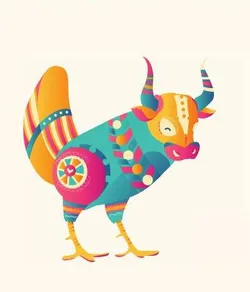
Meta Pets World · Your ally · Meta Pet 1

The fallen colossus that became the earth

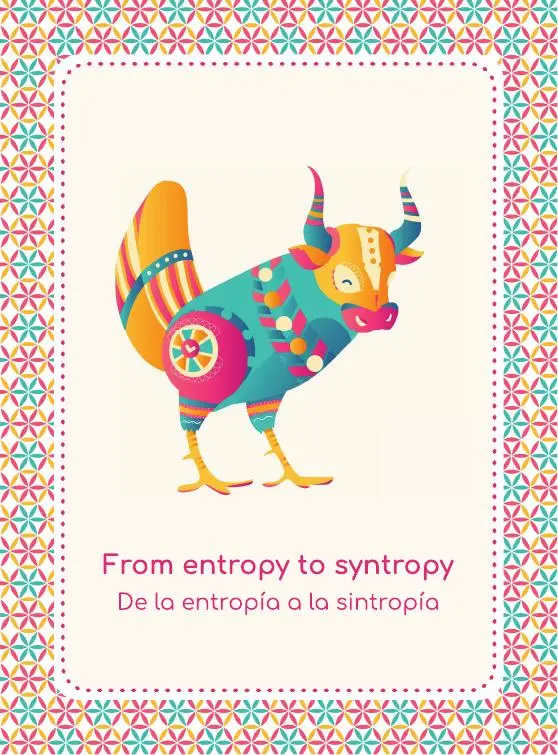
From Entropy to Syntropy card
01From Entropy to SyntropyI transform entropy into creative flow.

From Entropy to Syntropy walks with the wonderful carcass because the tale is decay on a cosmic scale: a dead colossus covers every continent and the gods mourn the ruined landscape, which is Entropy. Agni's cool form and the view from the upper sky bring a fresh way of seeing the remains: Freshness. And the remains become the world itself, bones as mountains and the Himālaya as its spine: Beauty.

  1. Shadow · what you avoidEntropy

    Entropy: the corpse lies across all seven continents, and the gods lament that 'the devastation of all these beauties of the landscape, fills our mind with pity and grief' (VI.2.134.57).

  2. Gift · what is hidden in itFreshness

    Freshness: Agni appears 'in his cooling moon-like form' and says 'fear not' (VI.2.133.9); seen from the upper sky, the terrifying body is 'as if it were made of wood' (VI.2.133.13).

  3. Essence · what you embodyBeauty

    Beauty: the remains become the land, 'the big bones of its bulky body, form the mountains of this earth' and the Himālaya is its backbone (VI.2.135.5); day and night return.

Today's tale has a giant corpse in it. I know. But stay with me: in the end its bones become mountains. What dead weight in your life might, slowly, become ground?

— Felicia
Today’s contemplation

If entropy becomes syntropy, what was the chaos for, and what in the dead weight you carry is already becoming ground?

To close the night

Tonight, write one honest sentence about something that ended or decayed in your life, and what has grown from it.

The Ally Journey · about 15 minutes

Light trance, eyes open if you prefer. For the full, deeper script, see “The practice” above and its cautions.

  1. Threshold. Sit with your feet flat on the floor and your eyes open or lowered. Take three slow breaths, the Umbral, feeling the ground holding you up.
  2. The tale in one line: a colossal corpse falls across the world and covers it, and in the end its bones become the mountains and its body the earth (VI.2.134.57; VI.2.135.5).
  3. Meet the card. Look at the art of From Entropy to Syntropy and notice where order and disorder meet. Read the affirmation: 'I transform entropy into creative flow.'
  4. Shadow. Where does a heavy, unmoving shadow lie over your week: a project gone stale, a habit, an old loss? Name it and notice the dullness it brings, without trying to fix it yet.
  5. Gift. Rise above it, as Vipaścit rose on Agni's parrot. Picture it from high up, where it looks like wood rather than flesh. From there, name one fresh use for what remains.
  6. Essence. Picture the old weight settling into the land as hills, soil and sea, with day and night returning. Rest for three breaths, saying: 'I transform entropy into creative flow.'
  7. Return. Feel the ground under your feet as something that was once something else. Open and close your hands, open your eyes fully, and write tonight's honest sentence.

The 30-day Bond

If entropy becomes syntropy, what was the chaos for? Each day of the Bond, find one thing that ended and look for what it is now feeding.

The Sister · Elena Ixchel

Maya · Mérida, Yucatán, Mexico · Mahā Mṛtyuñjaya Mantra

Visit Elena Ixchel, the Maya ICU interpreter of Mérida, who keeps watch at the threshold of death with the Mahā Mṛtyuñjaya Mantra and the marigold, a flower that knows how endings feed the living.

Guided Meditation

#1 · From Entropy to Syntropy

Voice & guidance: Prof. Luis Miguel GallardoWatch on YouTube (ES also available)
For facilitatorsA session with “The Wonderful Carcass” and From Entropy to Syntropy

Aim. To help the client meet stagnation and loss without denial, mourn what has gone, and discover the fresh ground that remains.

ITM 3 Gift Discovery. The tale's gift is a change of vantage, from terror below to the upper sky where the colossus looks like wood (VI.2.133.13): Gift Discovery, finding freshness in a new view of the same remains.

The session (60–75 min)

  1. Arrival and Umbral (5 min): three slow breaths; ask about recent bereavement, violence or eating difficulties, and choose the soft version of the tale if any apply.
  2. The tale (4 min): the soft version: the vast shadow, the falling giant, Agni's 'fear not', the view from above, the gods' grief, the remains becoming the world. Leave out the gore. Point to the tale page for the full text.
  3. The card (8 min): From Entropy to Syntropy, its affirmation and koan. Ask what chaos in the client's life has, in hindsight, been for something.
  4. Shadow inquiry (12 min): name the client's 'carcass', what has died or gone stale and still lies across their landscape, and let them describe the shadow it casts.
  5. Trance practice (20 min): 'The Carcass and the Ground', from the full guided script on the tale page, at light to medium depth. Replace the devouring with the gentler image of a greater emptiness breathing it in, and allow grief to be spoken.
  6. Gift and Essence integration (12 min): name what was lost, place by place, then one fresh thing the remains could become; close with the affirmation.
  7. Closing and Bond (5 min): feet on the ground, eyes open, day and night named; assign the 30-day Bond with From Entropy to Syntropy.

Integration questions

  • What did the dead weight look like from the upper sky?
  • What did you need to grieve before anything could grow?
  • What is one fresh thing you could make from what remains, this month?

In a circle

In a circle, tell the soft version of the tale, without gore. Lead the practice at light depth for about fifteen minutes, from the shadow to the view from above and the remains becoming land. Afterwards, invite each person to name aloud one thing that was lost, in a single word, as the gods named the lost continents, and let the circle hold a moment of silence after each. Then a second round: one word for what is growing there now. Close with the koan spoken together and feet pressed into the ground.

Cautions

  • The gore (oceans of blood, devouring, entrails) can retraumatise survivors of violence; soften it or leave it out.
  • Avoid the devouring and fattening images with clients who have eating disorders.
  • Handle the Caṇḍī and Night-goddess imagery with religious and cultural care.
  • Not for acute psychosis or apocalyptic delusions.

Training and certification in the Meta Pets Method: metapetsworld.org/facilitators ↗

The correspondence between tales and Meta Pets is contemplative: the Yoga Vāsiṣṭha does not contain the Meta Pets; each tale enacts its ally’s arc. Felicia is an artificial-intelligence companion; her words are contemplative reflections, not clinical advice.

The song

From the cycle The Sixty-Four Tales

Medinī

Oṃ bhūmyai namaḥ · Mātā bhūmiḥ putro ahaṃ pṛthivyāḥ

Title: Medinī Título: Medinī

Figure: Vipaścit (now called Bhāsa), who watched the carcass fall upon the world from the back of Agni's parrot

Where in the text: Book VI (second half, Nirvāṇa-prakaraṇa), Mitra chapters 133–135. The body is not identified in these chapters (Agni says only "hold your patience", 133.26); much later it is revealed as the hunter's own body, grown past the worlds by Brahmā's boon (VI.2.158.7–13).

Hypnotic phenomenon the song enacts: WIT and MET — the song lifts the listener from the crushing ground to the upper sky, where the terror looks like wood, then lets the catastrophe become the ground itself: the last verse is the first melody turned major, the dead weight rebuilt as mountains, soil and sea.

Mantra: Oṃ bhūmyai namaḥ · Mātā bhūmiḥ putro ahaṃ pṛthivyāḥ Source: Oṃ bhūmyai namaḥ is the traditional salutation to Bhūmi, the Earth, used in bhūmi-pūjā (traditional nāma-mantra); mātā bhūmiḥ putro ahaṃ pṛthivyāḥ is from the Bhūmi Sūkta, Atharva Veda 12.1.12. Meaning: "Om — homage to the Earth." / "The Earth is my mother; I am her child."


Lyrics (English)

Performance: verse 1 is low, heavy and slow, one voice. In verse 2 a second voice enters high and soft on "Fear not", and the arrangement lifts with it. Verse 3 is the gods' lament: names, no rhyme, a held silence after each line. The outro is the melody of verse 1, now in a major key and at walking pace.

Verse 1 I was looking for the thing I carry in my heart when a shadow lay down on the ground like locusts, and did not move. I looked up: a man as big as mountains whirling out of the sky, and the sun fell after him and broke against the rim of the world.

Verse 2 It covered seven continents, seven seas. I turned to walk into the fire beside me, and the fire stood up cool as the moon: "Fear not. Rise, and follow me." He set me on his parrot's back, and from the upper sky the body looked like wood.

Chorus From up here it's only wood, lying where the oceans stood. "Hold your patience, son," the fire said, "until this passes over."

Verse 3 (the gods, from the polar mountain) Where is the sea of milk? Where is the sea of honey? Where are the sandal woods, the kadamba groves, the Jambu river, sweet with fruit, the lotus fountains and the swans, the villages, and their people?

Chorus Then Night came down and breathed it in, breath by breath, the whole red sea, and the limbs beyond the edge of the world rotted away on their own.

Bridge (mantra) (both voices; the key turns) Oṃ bhūmyai namaḥ (Om — to the Earth, homage) Mātā bhūmiḥ putro ahaṃ pṛthivyāḥ (The Earth is my mother; I am her child)

Outro (verse 1's melody, major, walking) The fat they flung up turned to cloud; what they scattered turned to soil. The great bones rose as mountains; the Himālaya is its spine. The waters ran into one sea, and they named the ground medinī. Then day. Then night. I set my feet on what fell, and walk.


Letra (castellano cantable)

Interpretación: el verso 1, grave, pesado y lento, a una voz. En el verso 2 entra una segunda voz, aguda y suave, en "No temas", y el arreglo se eleva con ella. El verso 3 es el lamento de los dioses: nombres, sin rima, un silencio sostenido tras cada verso. El final es la melodía del verso 1, ahora en tono mayor y a paso de caminar.

Verso 1 Buscaba lo que llevo en el corazón cuando una sombra se tendió en el suelo como langostas, y no se movió. Alcé los ojos: un hombre del tamaño de los montes cayendo en remolino del cielo, y tras él cayó el sol y se quebró contra el borde del mundo.

Verso 2 Cubrió siete continentes, siete mares. Me volví para entrar en el fuego de mi lado, y el fuego se alzó fresco como la luna: "No temas. Levántate, y sígueme." Me sentó a lomos de su loro, y desde lo alto del cielo el cuerpo parecía de madera.

Estribillo Desde aquí arriba es solo madera, tendida donde estuvo el mar. "Ten paciencia, hijo", dijo el fuego, "hasta que esto pase."

Verso 3 (los dioses, desde el monte del polo) ¿Dónde está el mar de leche? ¿Dónde el mar de miel? ¿Dónde los bosques de sándalo, los kadambas, el río Jambu, dulce de fruta, las fuentes de lotos y los cisnes, las aldeas, y su gente?

Estribillo Bajó la Noche y lo aspiró, aliento a aliento, el mar rojo entero, y los miembros más allá del borde del mundo se pudrieron solos.

Puente (mantra) (las dos voces; cambia el tono) Oṃ bhūmyai namaḥ (Om: a la Tierra, homenaje) Mātā bhūmiḥ putro ahaṃ pṛthivyāḥ (La Tierra es mi madre; yo soy su hijo)

Final (la melodía del verso 1, en mayor, caminando) La grasa que lanzaron se hizo nube; lo que esparcieron se hizo tierra. Los grandes huesos se alzaron montañas; el Himālaya es su espinazo. Las aguas corrieron a un solo mar, y a la tierra la llamaron medinī. Luego el día. Luego la noche. Pongo los pies en lo que cayó, y camino.


One line to carry

EN: What fell and covered everything became the ground I walk on. ES: Lo que cayó y lo cubrió todo es el suelo que piso.


Libreto note

The darkest of Vipaścit's visions, and the one that lands most firmly. A body the size of mountains falls from the sky, the sun falls with it, and the seven continents vanish beneath it. The fire he has worshipped for a hundred lives comes to him cool as the moon, says fear not, and lifts him until the colossus looks like wood. The gods name every lost place; Night breathes the dead weight in; the bones become mountains, and the earth is called medinī. Whose body it was, the text tells much later. The clinician knows the order: a resource, a higher seat, grief spoken in full, then ground. Doom-folk that rises, mourns, and walks out in a major key.


Source check

Source check (Mitra, Book VI, second half)

  1. The bright sphere "as a city in dream differs from one in sight"; searching "for the object that I have in my heart"; the "huge and unmoving shadow, like that of a body of locusts"; "the mountainous form of a man, falling fast from the sky… like a whirlpool"; the sun falling and "dashing with a hideous crash against… the great belt of the mundane egg"; the body covering "the seven continents and oceans" — ch. 133, vv. 2–7.
  2. Resolving "to enter into the ever burning fire by my side"; Agni "in his cooling moon-like form" saying "fear not"; "rise, O sinless one, and follow me" the parrot; from the upper sky "the body as if it were made of wood"; "Hold your patience, my son… until this portentous event passes away" — ch. 133, vv. 8–13, 26.
  3. The gods' lament: the milky ocean, the "mellifluous sea of honey", the sandal, mandāra and kadamba woods, the Jambu river flowing "with the sweet juice of jambu fruits", Puṣkara's "limpid fountains… decked with beds of lotus… sported upon by the silvery swans", "the cities and villages and their people", pitied "to be seen no more" — ch. 134, vv. 44–64.
  4. The goddess of Night drawing in "with her inhaling breath, the blood and pith of the carcass"; the earth become "an universal ocean of blood"; the arms and thighs beyond the world, "where those parts were rotten away of themselves" — ch. 134, vv. 15–17, 23–24, 30.
  5. Fat and flesh flung into the air "appear as huge masses of clouds"; the relics scattered over the continents make the earth "reappear to view"; "the big bones… form the mountains… this high Himálaya… the huge back bone"; the liquid gathered "in one great basin of the ocean"; the earth named medinī from the fat (medhas); "there appeared again the succession of day and night" — ch. 135, vv. 2–12.

Read the full text

Source: Vihari-Lala Mitra, The Yoga-Vasishtha Maharamayana of Valmiki (1891–99), public domain.

Collaborate on this research

Researchers, clinicians and institutions are welcome to write. Replication, data-sharing and site partnerships for the trials in progress are all open conversations.

Educational and scholarly content. Hypnotherapy and regression material is complementary and not a substitute for medical or psychiatric care.