ICEF

Tale 40 · The Vāsiṣṭha Atlas

Kaca and Bṛhaspati

Nirvāṇa · first half · Mitra VI.1.111 (outcome VI.1.112.1–2) · 1,740 words

The only thing to abandon is a self that never existed.

Bhūmikā 5 · Asaṃsakti (non-clinging)DeepYour ally · The Language of Light

The essence

Kaca, son of Bṛhaspati, preceptor of the gods, asks how the spirit bound to the body is set free. "By abandoning concerns with the world," says his father, and Kaca leaves home for the forest. Eight years later he meets his father and asks why peace has not come; Bṛhaspati says again "abandon all" and departs. Kaca casts off even his bark garment and lives naked in a cave, breathing only, and still peace does not come. "All", his father now explains, means the mind, which contains everything. But the mind will not be abandoned, and Kaca, unwilling to throw away so innocent a companion without understanding, rises to the sky to ask what it is. The mind is egoism, says Bṛhaspati, and egoism does not exist: a mirage, a double moon, a child's ghost. Dropping it is easier than blinking. There is one Ego, unbounded, in every leaf and fruit. Kaca rests in this and is freed from "egoism and meism".

What it teaches

  1. 01

    Literal compliance can consume years: Kaca's eight years of outer renunciation never touched what the instruction meant (VI.1.111.12–14, 111.21).

  2. 02

    The attempt to suppress the mind fails because the one trying is the mind: Kaca "found it impossible to subdue his mind" (VI.1.111.23).

  3. 03

    What looks hardest, dropping the ego, is "as easy as the twinkling of our eyelids", because there is nothing there to drop (VI.1.111.31–33).

  4. 04

    Questioning resistance can be progress: Kaca's refusal to discard "so innocent and constant a companion" without understanding sends him back to his teacher with the right question (VI.1.111.24–27).

  5. 05

    The cure for the narrow self is a wider identity, not an emptier one: "Know thyself (soul) as unbounded by space and time" and present in every leaf and fruit (VI.1.111.40–41).

The Vāsiṣṭha Atlas

This tale’s coordinates

The wound and its virtue

Told to 'abandon all', Kaca renounces home and even his bark garment and lives in a cave, breathing only, yet he 'found it impossible to subdue his mind' (VI.1.111.23): suppression mistaken for peace. Honesty turns him: he will not throw away 'so innocent and constant a companion' without understanding it (VI.1.111.24), goes back to ask, and learns that the egoism he fought was never there to drop (VI.1.111.31–33).

What it trains

Bṛhaspati identifies the mind with “the inward feeling of one's egoism” (VI.1.111.28) and says dropping it is as easy as a blink (VI.1.111.31), a direct training in loosening self-reference rather than in renouncing objects.

In other yogas

  • Bhagavad Gītā · BG 2.71

    The Gītā gives peace to the one who abandons all desires and moves without longing, without “mine” and without “I” (nirmamo nirahaṅkāraḥ). Kaca learns that this, not nakedness in a cave, is what “all” meant, and ends free of egoism and meism.

  • Patañjali · Yoga Sūtra · YS 2.6

    Patañjali defines asmitā, I-am-ness, as the seer and the instrument of seeing taken as one. Bṛhaspati's teaching that the mind is nothing but the felt sense of “I” (VI.1.111.28) names the same affliction and the same remedy: see through the false identity.

  • Buddhist absorption · SN 22.59

    In the Anattalakkhaṇa Sutta each aggregate is seen as “not mine, not I, not my self”, and release follows. Kaca's path, from discarding things to seeing that the ego is “an unreality appearing as reality” (VI.1.111.33), runs the same course.

IEAF: Integrative Emotional Alchemy Framework (Gallardo, Frontiers in Psychology, 2026). FP20: the Fundamental Peace Scale. ITM: the Integrative Transformation Model. Parallels in other yogas are contemplative correspondences, not claims of influence.

The tale

Vasiṣṭha has finished the story of Śikhidhvaja and urges Rāma to reign as that king learned to reign, inwardly free. As Śikhidhvaja came to enlightenment by degrees, he says, so did Kaca, the son of Bṛhaspati, preceptor of the gods; and Rāma asks to hear how Kaca, deluded like the king, came to his right understanding.

Kaca had passed his youth, was about to enter the life of the world, and had already learned all there was to know of worlds and things. He asked his father how the spirit, bound to the body by the thin thread of life, is released. Bṛhaspati answered that the soul can fly easily and swiftly over the perilous ocean of the world "by means of its abandonment of concerns with it". Kaca took him at his word: he gave up all his property and expectations, left his house and went to the forest. Bṛhaspati grieved at his going, for good-hearted people feel separation as keenly as union.

After eight years in solitude Kaca met his father, who had come looking for him in the wood. He rose, did homage, was taken into his arms, and asked: I have forsaken everything for eight full years and taken to this retreat; why do I still not have the lasting peace I have sought so long? Bṛhaspati told him again to abandon his all, and went back up into the sky.

Kaca threw off his mantle of bark and leaves, and his frail body appeared like a clear autumn sky. He moved to another forest and sheltered in the cave of a rock. He lived apart, naked, with a tranquil and vacant mind, breathing only the breath of life. One day, in distress, he saw his father standing before him. He rose, did reverence, was clasped to his breast, and asked in a faltering voice: I have cast away even my ragged wrapper and my shelter of reeds; why do I not find rest, and what must I still do?

Bṛhaspati said: when I told you to forsake your all, the all is the mind, which comprehends everything; the learned know the mind to be all in all, since nothing exists for us except its ideas. By forsaking the mind you will gain perfect felicity. And he flew off again.

Kaca now strove to relinquish the thoughts and workings of his mind, and found it impossible to subdue them. So he reflected. The mind is no part of the body, nor any of the known categories of nature; it stands apart and is innocent in itself. Why should I abandon so innocent and constant a companion? I will go to my father and learn why the mind is called man's greatest enemy, and then I will forsake it. He rose to the upper sky, bowed to Bṛhaspati, drew him aside, and asked the true nature of the mind so that he might recognise it and let it go.

"The mind is known as the egoism of a man," Bṛhaspati answered; the inward feeling of 'I' takes the name of mind, and nothing more. Kaca confessed that he saw no way to forsake either mind or ego. His father replied that demolishing egoism is "as easy as the twinkling of our eyelids", easier than crushing a flower, because "there is no such thing in reality my son, as what you call your egoism or personality". It is water in a mirage, a snake in a rope, a second moon seen by faulty sight. There is one real Ego, without beginning or end, clearer than the sky, the light and life of all, spread through everything as water through its waves. Where then is a separate personality, and how could it arise? Can dust rise from water? Give up the belief in this one and that one; do not think yourself small and bounded by space and time. You are in the fruits, the flowers and the leaves of every tree around you.

Kaca mused on this "in the best kind of yoga meditation", lost and absorbed in the sole self-existent being, and remained free of egoism and meism, his mind tranquil and released from all ties.

The text speaks

Passages from Mitra’s translation (1891–99), cited by book, chapter and verse.

“The soul, my son, is well able to fly away easily and swiftly over the perilous ocean of the world, by means of its abandonment of concerns with it.”
VI.1.111.9The first, deliberately underspecified instruction that Kaca will take literally for eight years.
“I told you my son, to forsake your all, and this all means the mind, which comprehends all things in it; it is by forsaking your mind that you can gain your perfect felicity”
VI.1.111.21The instruction is re-specified: the 'all' was always the mind.
“He considered in himself, the mind to be no part of his body, nor anything among the known categories in nature; It is quite aloof and apart from all, and therefore perfectly guiltless in itself, why should I then abandon so innocent and constant a companion of mine.”
VI.1.111.24The student's own inquiry, a resistance that becomes the next question.
“The mind is known as the egoism of a man, by men acquainted with the mental science or psychology; the inward feeling of one's egoism, takes the name of his mind and no more.”
VI.1.111.28Mind is identified with the felt sense of 'I'; Mitra uses the word 'psychology'.
“Why my son, the demolition of our egoism is as easy as the twinkling of our eyelids, and easier far than the crushing of flowers; and there is not the least pain in your rejecting this feeling.”
VI.1.111.31The reframe of difficulty that dissolves the paradox.
“There is no such thing in reality my son, as what you call your egoism or personality; it is an unreality appearing as reality, and a false chimera like the ghost of little boys.”
VI.1.111.33The ego is not abandoned but seen not to exist.
“Kacha the son of the divine preceptor Brihaspati, being thus advised by his venerable sire in the best kind of yoga meditation; began to muse in himself as one liberated from his personal entity, and lost and absorbed in essence of the sole and self-existent Deity.”
VI.1.112.1The outcome is a state entered in meditation, not a conclusion reached in argument.

What the trance sees

DIR

Direct suggestion

VI.1.111.9, 111.15, 111.21, 111.28–31

In the textOne short instruction given three times and re-specified each time: abandon "concerns" (111.9), "abandon his all" (111.15), "this all means the mind" (111.21), and the mind "is known as the egoism" (111.28), whose removal is "as easy as the twinkling of our eyelids" (111.31).

In the clinicProgressive specification of a direct suggestion, and a clear picture of the literalism Erickson noted in hypnotic responding: the subject executes the words at their most concrete level (home, then clothing) until the operator narrows the referent.

PARA

Paradox / confusion technique

VI.1.111.22–23, 111.30–33

In the textTold to forsake the mind, Kaca "strove henceforth to relinquish the thoughts and operations of his mind" and "found it impossible"; the deadlock is resolved by the statement that "There is no such thing in reality my son, as what you call your egoism".

In the clinicThe 'be spontaneous' paradox (Watzlawick, Weakland & Fisch 1974): a demand that cannot be met by trying, since the trying is the problem, resolved by second-order change that redefines the problem rather than intensifying the effort.

WIT

Witness position / dis-identification

VI.1.111.24, 111.36–41; VI.1.112.1–2

In the textKaca first sees the mind as "aloof and apart from all"; Bṛhaspati points to "one real Ego alone ... more transparent than the clear atmosphere" and bids him "Know thyself (soul) as unbounded by space and time"; Kaca muses "as one liberated from his personal entity".

In the clinicDis-identification from the personal self toward an observing, unbounded awareness, as in Assagioli's dis-identification exercise (Assagioli 1965) and self-as-context in Acceptance and Commitment Therapy (Hayes, Strosahl & Wilson 1999).

Read upward — stage 1 at the bottom, stage 7 at the top

  1. Integration zone
    Post-trance integration — sustained non-reactivity carried into behaviour; what was seen in depth becomes how one lives.

A note on what this map claims. The alignment between stages of knowledge and trance depths is a clinical map — a heuristic correspondence proposed for research, not a claim of identity between contemplative attainment and hypnotic depth.

Bhūmikā 5 · Asaṃsakti

The tale passes through vicāraṇā (Kaca's own reasoning about the mind, VI.1.111.24–27) and ends with him "quite freed from his egoism and meism ... cut off from all the ties of nature" (VI.1.112.2), the non-clinging of asaṃsakti.

Zone · Deep

The teaching becomes realisation only in sustained meditation, "lost and absorbed in essence of the sole and self-existent Deity" (VI.1.112.1); the earlier stages (naked, "tranquil and vacant mind", breathing only, VI.1.111.18) already describe a withdrawn absorptive state.

In the therapy room

Indications

  • Over-literal or scrupulous spiritual practice: clients who keep renouncing outer things without inner change.
  • Frustration from trying to stop thinking (meditation struggle, insomnia sustained by effort to sleep).
  • Identity rigidity and excessive self-focus, where widening identity relieves pressure.
  • Mentor, parent–child or supervision relationships in which guidance has been misread for years.

Cautions

  • "Egoism is unreal" can destabilise clients with a fragile self-structure, depersonalisation or psychotic vulnerability; ego-strengthening comes first.
  • Kaca's nakedness, isolation and breath-only living are narrative, not prescriptions; do not encourage withdrawal from food, shelter or relationships.
  • With depressed clients the call to "abandon all" can be heard as endorsement of withdrawal; foreground the widening of identity, not the loss.
From the bookThe full clinical note

Indications. Over-literal or scrupulous practice: clients who keep renouncing outer things without inner change. Frustration from trying to stop thinking, including insomnia maintained by effort. Identity rigidity and excessive self-focus, where widening the sense of self relieves pressure. Mentoring, parent–child or supervision relationships in which an instruction has been misread for years; the tale shows a teacher who comes back.

How to use it. Tell it in its three meetings. Ask the client what they have been abandoning, and what the "all" might really have meant. Use 111.24 to honour resistance: the client's refusal to discard a companion they do not understand may be wisdom, not obstruction.

Cautions. The teaching that egoism is unreal can destabilise clients with a fragile self-structure, depersonalisation or psychotic vulnerability; screen for these, and give ego-strengthening first. Kaca's nakedness, isolation and breath-only living, and his affliction in that state (111.18), are narrative, not prescription: do not encourage withdrawal from food, shelter or relationships. With depressed clients, "abandon all" can be heard as endorsement of withdrawal or worse; foreground the widening of identity (111.40–41), not the loss.


The practice

Abandon All

  1. Sit, let the breath settle, and ask Kaca's question inwardly: how is this spirit set free?
  2. Hear the words "abandon all" and notice what you instinctively reach to drop: possessions, roles, people.
  3. Imagine having dropped them all, like Kaca's bark garment, and notice that the one seeking peace is still here.
  4. For three breaths, try to abandon the mind itself, and notice that the trying is more mind.
  5. Turn and look for the 'I' that is trying: where is it, where is its edge? Look the way you would look for a second moon.
  6. Let attention widen to the space in which thoughts appear, and sense that space in the leaves, the fruit and the air around you.
  7. Rest there for as long as is comfortable.
  8. Recall a teacher or inner guide with gratitude, then count up from one to five, feel the body, open the eyes and return.

Practise with a qualified professional if you have a history of dissociation, trauma or psychosis.

From the book · to be read aloudThe full guided script

Abandon All

Read slowly, aloud; fifteen to eighteen minutes.

Before you begin. This practice works with the sense of self. Do not use it unsupervised if you have experienced depersonalisation, derealisation, a dissociative disorder or psychosis, or if you are in a period of acute grief or depression; use it with a clinician. Never practise while driving or operating anything. Sit upright with your feet on the floor.

How to return at any moment. If at any moment the sense of self feels unsafe rather than spacious, open your eyes, press your feet down, say your name aloud, and stop. That is always allowed.


Sit, and let the breath settle. Let each out-breath be a little longer than the in-breath.

Ask inwardly the question Kaca asked: how is this spirit set free?

And hear the first answer: abandon all. Notice what you instinctively reach to drop. Possessions, roles, people, plans.

Imagine you have dropped them all, as Kaca dropped his bark garment. Rest there a moment. Notice that the one seeking peace is still here.

Breathe out.

Now, for three breaths, try to abandon the mind itself. Try to stop thinking. One. Two. Three. Notice that the trying is more mind.

Let the trying go.

Now turn, gently, and look for the one who was trying. Where is it? Where is its edge? Look as you would look for a second moon in the sky: carefully, and without fear of what you will not find.

If something answers, notice it. If nothing answers, notice that too.

Let attention widen to the space in which thoughts appear. Let it widen to the room. Sense that space in the leaves of the trees outside, in the fruit, in the air. You are in all of it.

Rest here, for as long as it is comfortable.

(Silence: one to three minutes.)

Now recall, with gratitude, a teacher or guide who came back for you.


Now return. Feel the edges of the body again: the seat, the feet, the hands. Let the body feel like a good and trusted home.

One: the breath deepens. Two: move the fingers and toes. Three: the sounds of the room. Four: a full breath in, stretch. Five: eyes open, alert, clear.

Say your name, the day and the place. Name three things you can see and one thing you can touch. Sit a moment, drink some water, and do not drive for ten minutes.


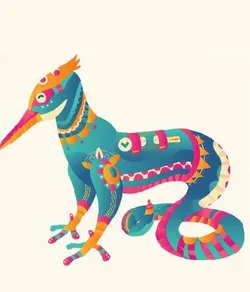
Meta Pets World · Your ally · Meta Pet 62

Kaca learns what ‘all’ means

The Language of Light card
62The Language of LightI speak the language of light.

Kaca's Intellect obeys his father's words to the letter, and years of literal renunciation leave him without peace. Precision arrives when he learns exactly what ‘all’ meant, and refuses to drop the mind until he understands it; Impeccability is the teaching that lands at last, clean as light: there was never a separate self to abandon.

  1. Shadow · what you avoidIntellect

    Intellect takes the instruction literally: told that the soul crosses the world “by means of its abandonment of concerns with it” (VI.1.111.9), Kaca leaves house and property, and later even his bark garment, and still finds no rest.

  2. Gift · what is hidden in itPrecision

    Precision comes with the exact meaning, “this all means the mind, which comprehends all things in it” (VI.1.111.21), and with Kaca's own careful refusal to discard “so innocent and constant a companion” before he understands it (VI.1.111.24).

  3. Essence · what you embodyImpeccability

    Impeccability is the clean final word: the demolition of egoism is “as easy as the twinkling of our eyelids” (VI.1.111.31), for “there is no such thing in reality” (VI.1.111.33), and Kaca rests absorbed “in the best kind of yoga meditation” (VI.1.112.1).

Here is The Language of Light, and a young man who obeyed two words so literally that he ended up naked in a cave. Read your instructions twice today. The second reading is kinder.

— Felicia
Today’s contemplation

When Bṛhaspati said ‘abandon all’ and Kaca heard ‘leave the house’, who translated, and which instruction in your own life are you still translating too literally?

To close the night

Tonight, write one honest sentence about an instruction you have followed to the letter while missing what it meant.

The Ally Journey · about 15 minutes

Light trance, eyes open if you prefer. For the full, deeper script, see “The practice” above and its cautions.

  1. Threshold: three slow breaths, and let the eyes rest on one point. Ask Kaca's question inwardly, once: how is this spirit set free?
  2. The tale in one line: Kaca renounces home and even his clothes for years without peace, until his father explains that ‘all’ meant the mind, and that the ego was never real (VI.1.111–112).
  3. Meet the card: look at the art of The Language of Light and notice the brightest point in it. Read the affirmation aloud: “I speak the language of light.”
  4. Shadow: where this week did you obey a rule, a diet, a method, a piece of advice, so literally that it missed its purpose? Name one rule and the result it gave.
  5. Gift: for three breaths, try to stop thinking, and notice that the trying is more thinking. Then simply ask, with curiosity: who is trying? Let the question stay open.
  6. Essence: rest for three breaths in the space in which thoughts appear, wide as the air around the trees. On each out-breath say: “I speak the language of light.”
  7. Return: recall a teacher with gratitude, feel your feet and hands, open your eyes fully and look around the room. Write tonight's honest sentence.

The 30-day Bond

Light speaks, darkness listens: today, who translated ‘all’ for you?

The Sister · Lánxīn

Chinese · Hangzhou, Zhejiang, China · 無心 · Wú Xīn

Visit Lánxīn, the Chan calligrapher and sutra translator of Hangzhou, whose mantra 無心 · Wú Xīn, ‘no-mind’, is the very word Kaca spent eight years translating wrongly before he translated it right.

Guided Meditation

#62 · The Language of Light

Voice & guidance: Prof. Luis Miguel GallardoWatch on YouTube (ES also available)
For facilitatorsA session with “Kaca and Bṛhaspati” and The Language of Light

Aim. To help the client notice where literal, effortful compliance has replaced understanding, and to move from suppressing the mind to a wider, lighter sense of self.

ITM 3 Gift Discovery. The tale's turning is a Gift found through exact understanding: Kaca's questioning resistance brings him back to his teacher with the right question (VI.1.111.24–27).

The session (60–75 min)

  1. Arrival and Umbral: three breaths; ask what practice or rule the client has been following hardest, and what it has given them (8 min).
  2. Telling the tale: the four-minute version with its three meetings between father and son; point to the tale page for the full dialogue (5 min).
  3. The card: show The Language of Light, read Shadow → Gift → Essence and the affirmation; ask where the client lives more in analysis than in meaning (7 min).
  4. Shadow inquiry: take one instruction the client has obeyed literally and ask, as Kaca finally did, what it was really pointing at (12 min).
  5. Trance practice: “Abandon All”, the full guided script on the tale page, at light to medium depth only, never the deep absorption of the tale; offer ego-strengthening first and keep the emphasis on widening, not losing (18 min).
  6. Gift and Essence integration: rewrite the instruction in one precise, kinder sentence, and name one place to rest as ‘the space in which thoughts appear’ during the week (12 min).
  7. Closing and Bond: gratitude for a teacher, count up and re-alert; set the 30-day Bond (8 min).

Integration questions

  • What happened when you tried to abandon the mind, and when you asked who was trying?
  • Which instruction in your life now reads differently, and how would you phrase it precisely?
  • Where did you sense yourself wider than you thought, in the leaves, the air, the room?

In a circle

For 8–20 people, tell the tale in its three meetings and pause after each, asking the circle what Kaca thought the instruction meant. Then each person writes one rule they live by on a card, passes it to a neighbour, and receives it back rewritten as precisely and kindly as the neighbour can. Guide “Abandon All” at light depth only, with the emphasis on the space in which thoughts appear rather than on letting go. Close with a minute of shared silence and the affirmation spoken together.

Cautions

  • ‘Egoism is unreal’ can destabilise clients with a fragile self-structure, depersonalisation or psychotic vulnerability; ego-strengthening comes first.
  • Kaca's nakedness, isolation and breath-only living are narrative, not prescriptions; never encourage withdrawal from food, shelter or relationships.
  • With depressed clients ‘abandon all’ can be heard as permission to withdraw; foreground the widening of identity, not the loss.

Training and certification in the Meta Pets Method: metapetsworld.org/facilitators ↗

The correspondence between tales and Meta Pets is contemplative: the Yoga Vāsiṣṭha does not contain the Meta Pets; each tale enacts its ally’s arc. Felicia is an artificial-intelligence companion; her words are contemplative reflections, not clinical advice.

The song

From the cycle The Sixty-Four Tales

Easier Than a Blink

Oṃ Bṛhaspataye Namaḥ

Figure — Kaca, son of Bṛhaspati, and his father, the preceptor of the gods, who keeps coming back.

Where in the text — Book VI (first half, Nirvāṇa-prakaraṇa), Mitra chapter 111, with the outcome at 112.1–2.

Hypnotic phenomenon the song enacts — DIR and PARA, opening into WIT: one direct suggestion given three times and obeyed to the letter for eight years, each verse barer than the last, until the impossible order to drop the mind dissolves in the news that there is no "I" there to drop, and the self widens into every leaf.

Mantra — Oṃ Bṛhaspataye Namaḥ (ॐ बृहस्पतये नमः). Source: traditional nāma-mantra of Bṛhaspati, preceptor of the gods, as recited in navagraha worship. Meaning: "Om — I bow to Bṛhaspati." Sung at the point where Kaca "recalled his father to his mind" (VI.1.111.23): the son calling the teacher back.


Lyrics (English)

Performance: three meetings. Each verse ends with the father's answer on the same four notes, one word changed: concerns, all, mind. The guitar loses part of its pattern each verse, and each chorus is barer than the one before. The bridge is a love song to the mind. In the outro the father's voice widens, strings enter, and the song ends on a single soft percussive tick: a blink.

Verse 1 (Kaca) I asked my father, lord of speech, how the spirit on its thin thread gets free. "Let go of your concerns with the world." I gave up all I owned, left the house; he grieved to see me go.

Verse 2 Three years, and five. He found me in the wood and held me. "Where is the peace?" "Let go of all," and went up into the sky. I threw off my bark and leaves; my body showed like an autumn sky when the sun and stars have set.

Chorus Father, I've left the house, I've left the bark and leaves, I breathe in the cave of a rock, and still there is no rest.

Verse 3 He stood before me; he held me close. "My rags are gone, my roof of reeds — what is left?" "The all is the mind. Let go of mind," and he flew. I tried. It would not stop moving.

Chorus (barer) Father, the bark, the reeds, the rags — I can't leave the mind; still no rest.

Bridge (mantra) (son, alone, tender) It's no part of my body; it has done no wrong — why leave so innocent a companion? I call my father to mind: Oṃ Bṛhaspataye Namaḥ (Om — I bow to Bṛhaspati, my teacher) and rise to ask him what it is.

Outro (father, the arrangement widening) "It is only the feeling 'I'. Dropping it is easier than a blink. It doesn't hurt. There is no such thing, my son: a second moon, a ghost the small boys fear. You are in the fruits, the flowers, the leaves of every tree around you." I blink — and there they are. (one soft tick)


Letra (castellano cantable)

Interpretación: tres encuentros. Cada verso termina con la respuesta del padre sobre las mismas cuatro notas, cambiando una palabra: afanes, todo, mente. La guitarra pierde parte de su dibujo en cada verso y cada estribillo es más desnudo que el anterior. El puente es una canción de amor a la mente. En el final la voz del padre se ensancha, entran las cuerdas, y la canción acaba en un solo golpe suave de percusión: un parpadeo.

Verso 1 (Kaca) Le pregunté a mi padre, señor de la palabra, cómo se suelta el alma de su hilo tan fino. "Suelta tus afanes del mundo." Di todo lo que tenía, dejé la casa; le dolió verme partir.

Verso 2 Tres años, y cinco. Me buscó en el bosque y me abrazó. "¿Dónde está la paz?" "Suéltalo todo", y subió al cielo. Me quité la corteza y las hojas; mi cuerpo asomó como un cielo de otoño cuando el sol y las estrellas se han puesto.

Estribillo Padre, dejé la casa, dejé la corteza y las hojas, respiro en la cueva de una roca, y aún no hay descanso.

Verso 3 Lo vi delante de mí; me estrechó en su pecho. "Ya no tengo harapos, ni techo de juncos, ¿qué me queda?" "El todo es la mente. Suelta la mente", y se fue volando. Lo intenté. No dejaba de moverse.

Estribillo (más desnudo) Padre, la corteza, los juncos, los harapos — no puedo dejar la mente; no hay descanso.

Puente (mantra) (el hijo, solo, con ternura) No es parte de mi cuerpo; no ha hecho ningún mal: ¿por qué dejar a una compañera tan inocente? Traigo a mi padre a la mente: Oṃ Bṛhaspataye Namaḥ (Om — me inclino ante Bṛhaspati, mi maestro) y subo a preguntarle qué es.

Final (el padre, el arreglo se ensancha) "No es más que el sentir 'yo'. Soltarlo es más fácil que un parpadeo, y no duele. No existe tal cosa, hijo mío: una segunda luna, el fantasma que temen los niños. Estás en los frutos, en las flores, en las hojas de cada árbol que te rodea." Parpadeo — y ahí están. (un golpe suave)


One line to carry

EN: Easier than a blink: you are in every leaf. ES: Más fácil que un parpadeo: estás en cada hoja.


Libreto note

The gentlest of the renunciation tales, and the most exact about how a good student gets it wrong. Kaca asks how the spirit is freed; his father says let go of your concerns, and the boy gives away the house. Eight years later, let go of all, and he throws off the bark from his back. Only at the third meeting does "all" become "mind", and the mind will not be dropped by trying. Clinicians know this literalism and this deadlock. The way out is not more effort but a reframe: the "I" was a second moon. A guitar that thins verse by verse; strings when the father widens the frame; then a single tick, a blink.


Source check

Source check (Mitra, Book VI first half)

  1. Released "by means of its abandonment of concerns with it"; Kaca gives up "all his earthly properties and expectations", leaves his house for the forest; Bṛhaspati "filled with sorrow at his departure": ch. 111, vv. 8–11.
  2. "Three and five years"; the father seeking him in the wood, the embrace, "for these full eight years, forsaken every thing … still why is it, that I do not enjoy the lovely and lasting peace"; "abandon his all", the father leaves for "the upper sky": ch. 111, vv. 12–15.
  3. The mantle of bark and leaves cast off, his frail body "like the clear autumnal sky, after the setting of the sun and the stars of heaven"; the cave of a rock; "breathed only the breath of his life"; "my ragged wrapper and my shelter of reeds and weeds": ch. 111, vv. 16–20.
  4. "This all means the mind"; "found it impossible to subdue his mind, as also to suppress its action and motion"; "recalled his father to his mind"; the mind "no part of his body … aloof and apart from all … so innocent and constant a companion"; Kaca goes "upward to the upper sky": ch. 111, vv. 21–26.
  5. Egoism the "inward feeling"; its demolition "as easy as the twinkling of our eyelids … not the least pain"; "no such thing in reality … like the ghost of little boys"; "a couple of moons in the sky"; "Thyself (soul) is situated, in the fruits, flowers and leaves of all the trees on every side of thee": ch. 111, vv. 28, 31–35, 41.

Read the full text

Source: Vihari-Lala Mitra, The Yoga-Vasishtha Maharamayana of Valmiki (1891–99), public domain.

Collaborate on this research

Researchers, clinicians and institutions are welcome to write. Replication, data-sharing and site partnerships for the trials in progress are all open conversations.

Educational and scholarly content. Hypnotherapy and regression material is complementary and not a substitute for medical or psychiatric care.