ICEF

Tale 41 · The Vāsiṣṭha Atlas

The Man Who Built Houses in the Air

Nirvāṇa · first half · Mitra VI.1.112.3–113.22 (parable VI.1.112.15–35; interpretation VI.1.113) · 2,527 words

The pot breaks; the space inside it was never lost.

Bhūmikā 3 · Tanumānasā (thinning of the mind)MediumYour ally · Through the Eyes of a Child

The essence

Vasiṣṭha tells Rāma a parable he calls "quite ludicrous and laughable". A simple man, "like a magical machine", is born somewhere in the empty sky; he sees nothing but himself and decides the air is his property, to be ruled and guarded. He builds a castle in the air and lives in it contentedly until it crumbles; he laments, then digs a cave in the void, which is washed away. He moves into a pot, which breaks; a tub, smashed by a wild animal; a cottage open to the sky, scattered by time; a barn-hut, blown off by the winds. Each loss brings fresh lament, and only at the end does he reflect that he chose these narrow abodes himself. The interpretation: the man is egoism, a māyā-yantra; the air he guards is the soul; pit, pot, tub and huts are the bodies it takes life after life. As the air in a pot survives the pot, the soul survives the body. Stop guarding the sky.

What it teaches

  1. 01

    Much grief is for containers, not for what they held: the air in a broken pot is not destroyed (VI.1.113.18).

  2. 02

    The ego's first act is a claim of ownership ("The air is my proprietory right"), and every later fear and labour follows from it (VI.1.112.19–20).

  3. 03

    Each new shelter repeats the old mistake in a smaller shape: castle, cave, pot, tub, cottage, barn-hut (VI.1.112.20–33).

  4. 04

    Insight begins when the sufferer sees that his confinement was chosen "of his own accord" (VI.1.112.35).

  5. 05

    Fear of death is the "vain care of preserving your vacuous soul", and it eases when one sees that space cannot be confined (VI.1.113.15–16).

The Vāsiṣṭha Atlas

This tale’s coordinates

The wound and its virtue

The aerial man claims the air as his province (VI.1.112.19) and greets each lost shelter with the same cry, “O my air built mansion” (VI.1.112.23): the possessive bond and the grief of Separation, repeated through castle, cave, pot, tub and huts. His turn comes when he sees the recurring pattern, that he chose these narrow abodes himself (VI.1.112.35), and the healing is belonging to the open space that survives every pot (VI.1.113.18), the whole he was never cut from.

What it trains

The tale shifts identification from container to contained space, the shelters being successive bodies (VI.1.113.9), which is the loosening of a fixed self-concept that the third component names.

In other yogas

  • Bhagavad Gītā · BG 2.22; 18.61

    As a person discards worn-out clothes and puts on new ones, the embodied one passes into new bodies. The aerial man's pots and huts are that image, and the Gītā's picture of beings mounted on a machine by māyā (BG 18.61) echoes Mitra's “máyá yantra” (VI.1.113.3).

  • Buddhist absorption

    The first formless attainment, the base of infinite space (ākāsānañcāyatana), is entered as perceptions of form fall away. The parable invites the same turn, from the walls of each shelter to the boundless space they never really contained.

  • Vijñāna Bhairava Tantra · VBT

    Several dhāraṇās of the Vijñāna Bhairava ask the practitioner to contemplate the body, or all directions at once, as empty space. Practised after this tale, they let the listener rest as the sky rather than guard it.

IEAF: Integrative Emotional Alchemy Framework (Gallardo, Frontiers in Psychology, 2026). FP20: the Fundamental Peace Scale. ITM: the Integrative Transformation Model. Parallels in other yogas are contemplative correspondences, not claims of influence.

The tale

Kaca has rested in the one self, and Vasiṣṭha draws the lesson for Rāma: egoistic personality is as empty as the horns of a hare, and to speak of its birth and death is to plant a tree in the sky. When egoism goes, the sole Ego remains; our egoism rises from it as waves rise on water, and only imperfect knowledge turns the world into a magic show. Do not trouble yourself, he says, "like the false man in the tale". Rāma asks who this false man is.

Vasiṣṭha promises a tale "quite ludicrous and laughable from first to last". There once lived a man "like a magical machine". He was born somewhere in a remote region of the sky and wandered there like an apparition in the air or a mirage in the desert. There was no one besides him; whatever he saw, he took to be himself. Growing up in that solitude, he reflected: I am airy and belong to the air; the air is my province, and I will rule it as mine. Since the air was his by right, he must protect it, and so he built a house in the air from which to guard and govern his domain. He trusted in it and lived there contentedly for a long time.

In time the castle decayed and was destroyed, as autumn clouds are blown away. He cried: "O my air built mansion, why art thou broken down and blown away so soon; and, O my air drawn habitation, where art thou withdrawn from me." And he added: "Ah, now I see, that an aerial something must be reduced to an aerial nothing." After long lament the simpleton dug a cave in the vacant atmosphere and dwelt in the hollow, gazing up at his aerial realm, content again for a long period. In time the cave was wasted and washed away, and he sank into sorrow.

He made a hollow pot, lived in its belly and fitted his life to its narrow limits; soon the pot broke. He took a tub, like Diogenes, and surveyed the heavens from it; a wild animal broke the tub. He then sheltered in a walled cottage with an open space in the middle so that he could watch the upper sky; all-devouring time scattered it like dry leaves. He built a barn-hut in a field and kept watch over his estate of air as a farmer guards his granary; the driving winds blew it away like gathering clouds, and the roofless man lamented once more. Having lost every abode, the pit and the pot, the cottage and the hut, he was left to bemoan his losses in his empty home of air. And there at last he reflected on how narrow were the dwellings he had chosen of his own accord, and on all the pains he had suffered building and losing his aerial castles through his own ignorance.

Rāma asks for the meaning. The man, says Vasiṣṭha, the "magical engine (máyá yantra)", is the egoistic person, led by the magic of egoism to take the empty air of his personality for a real thing. As wind stirs in still air, the individual soul with its sense of 'I' arises in the empty, impersonal Brahman and comes to believe in a personality of its own. Wanting to preserve that ego forever, it enters body after body and makes new ones when the old are lost. The pit, the pot, the cottage and the hut are these bodies, whose hollow gives the ego a temporary home.

So do not, Rāma, rely on your false personality, or wear yourself out preserving your vacuous soul in pits and pots. How could anyone confine what is wider than the sky? People mourn the body as though the soul died with it, but "as the destruction of the pot or any other hollow vessel, does not destroy the subtile air, which is contained in the same; so the dissolution of the body, does not dissolve the embodied and intangible soul." The soul is never born and never dies; know it as one, calm, without beginning, middle or end, and let go of egoism.

The text speaks

Passages from Mitra’s translation (1891–99), cited by book, chapter and verse.

“As he grew up to manhood in this lonely retreat, he pondered in himself saying: I am airy and belong to the aerial sphere; the air is my province, and I will therefore rule over this region as mine.”
VI.1.112.19The founding claim of the ego: ownership of what cannot be owned.
“He then cried out in sorrow, saying; O my air built mansion, why art thou broken down and blown away so soon; and, O my air drawn habitation, where art thou withdrawn from me.”
VI.1.112.23The first lament, prototype of every later grief in the tale.
“Being thus situated in his helpless state, the aerial man reflected upon the narrow confines of the abodes, which he had chosen for himself of his own accord”
VI.1.112.35The turn from lament to reflection: the confinement was self-chosen.
“The man that I have represented to you, as a magical engine (máyá yantra), means the egoistic man, who is led by the magic of his egoism, to look upon the empty air of his personality as a real entity”
VI.1.113.3The key to the parable, in Mitra's vocabulary of magic.
“The pit and the pot, and the cottage and the hut, represent the different bodies, the empty vacuity of which, supplies the egoistic soul with a temporary abode.”
VI.1.113.9The shelters are successive bodies: the tale is about embodiment and death.
“As the destruction of the pot or any other hollow vessel, does not destroy the subtile air, which is contained in the same; so the dissolution of the body, does not dissolve the embodied and intangible soul.”
VI.1.113.18The pot-space image that resolves the grief.

What the trance sees

MET

Therapeutic metaphor / reframe

VI.1.112.15–35; VI.1.113.3–9

In the textSix shelters (castle, cave, pot, tub, open cottage, barn-hut), each destroyed, are decoded: "The pit and the pot, and the cottage and the hut, represent the different bodies"; the man is the "magical engine (máyá yantra)" of egoism. The register is deliberately comic: "quite ludicrous and laughable from first to last".

In the clinicAn isomorphic metaphor (Gordon 1978) told in a humorous register; humour gives the observing distance that lets a client look at his own identification with the body without being flooded by death anxiety.

GRIEF

Grief and loss work

VI.1.112.23–34; VI.1.113.17

In the textAfter each loss the man laments ("O my air built mansion, why art thou broken down"); the interpretation names the grief: "people are seen to lament at the loss of their frail bodies, as if it entailed the destruction of their indestructible soul".

In the clinicWork with serial loss and with mortality: the parable reframes grief and death anxiety in the manner of existential psychotherapy (Yalom 1980), by examining what the sufferer believes is actually lost.

WIT

Witness position / dis-identification

VI.1.113.15–19

In the text"How is it possible for any body, to preserve or confine the vacuous spirit in the narrow limit of a pot"; "the dissolution of the body, does not dissolve the embodied and intangible soul".

In the clinicDis-identification from the body (Assagioli 1965, "I have a body, but I am not my body"), given a single concrete image, space in a pot, that can be used as a trance anchor.

Read upward — stage 1 at the bottom, stage 7 at the top

  1. Integration zone
    Progressive relaxation and deepening — the habitual self loosens enough for new pattern to take.

A note on what this map claims. The alignment between stages of knowledge and trance depths is a clinical map — a heuristic correspondence proposed for research, not a claim of identity between contemplative attainment and hypnotic depth.

Bhūmikā 3 · Tanumānasā

The man's arc ends in reflection on "the narrow confines of the abodes, which he had chosen for himself" (VI.1.112.35), and the teaching asks Rāma to give up "the vain care of preserving your vacuous soul" (VI.1.113.15): a loosening of identification with containers, the thinning of tanumānasā.

Zone · Medium

The tale invites sustained imaginative identification with a sequence of shrinking shelters and then a shift of identification from container to contained space, which needs medium absorption but not deep dissociation.

In Mitra’s words

In Calcutta in the 1890s, the translator chose the vocabulary of hypnotism to name these states. More →

  • magic showIt is our ignorance or imperfect knowledge only that represents the visible world as a magic show, but the light of right knowledge, brings us to see the one and self-same Brahma in all forms of things.VI.1.112.7
  • magic; theurgy or sorceryThere is an inexplicable magic enveloping the whole, and this world is an impervious mass of theurgy or sorcery, which enwraps as thickly, as the autumnal mists obscure the firmament, and which is scattered by the light of good understanding.VI.1.112.9
  • magical machineThere lived once a man, like a magical machine somewhere; who lived like an idiot with the imbecility of his infantine simplicity, and was full of gross ignorance as a fool or block-head.VI.1.112.16
  • magical engine (máyá yantra); magic of his egoismThe man that I have represented to you, as a magical engine (máyá yantra), means the egoistic man, who is led by the magic of his egoism, to look upon the empty air of his personality as a real entityVI.1.113.3

In the therapy room

Indications

  • Death anxiety and health anxiety; anticipatory grief about one's own body or ageing.
  • Grief after serial losses (homes, moves, relationships) where each loss reopens the last.
  • Clients who keep rebuilding the same constrained structure in smaller forms.
  • Integration after past-life or between-lives regression, framing successive lives as containers of one continuous space.

Cautions

  • The comic register can feel dismissive to the recently bereaved; use after the acute phase of grief.
  • "The soul is never born, nor does it die" (VI.1.113.20) is a metaphysical frame; offer the pot image as an image and respect the client's beliefs.
  • Dis-identification from the body is contraindicated or needs care with depersonalisation, eating disorders and severe body-image distress.
From the bookThe full clinical note

Indications. Death anxiety and health anxiety; anticipatory grief about one's own body or ageing. Grief after serial losses, of homes, moves, relationships, where each loss reopens the last. Clients who keep rebuilding the same constraining structure in smaller forms. Integration after past-life or between-lives regression, framing successive lives as containers of one continuous space.

How to use it. Tell it for laughter first. Then ask which house the client is in now, and which they have just lost. Offer the pot as an image to hold, not a doctrine to accept.

Cautions. The comic register can wound the recently bereaved; use the tale after the acute phase of grief, not in it. "The soul is never born, nor does it die" (113.20) is a metaphysical frame; respect the client's beliefs and offer the pot as an image. Dis-identification from the body is contraindicated, or needs great care, with depersonalisation, eating disorders and severe body-image distress; with these clients end, as the practice does, by returning to the body as a cherished home.


The practice

The Space in the Pot

  1. Settle the breath and feel the space inside the body: the mouth, the chest, the belly.
  2. Picture the aerial man's first home, a castle in open sky, and notice what you have claimed as "mine" to guard.
  3. Watch the castle dissolve; let the feeling of loss rise and give it a name.
  4. Move through the smaller shelters (cave, pot, tub, open cottage, barn-hut), each falling away in turn, and notice which one feels like your present body or life.
  5. When the last shelter is gone, notice the space that was inside it: it has not gone anywhere.
  6. Rest as that space, wider than any container, repeating inwardly: "the pot breaks, the space remains".
  7. Return to the body as a temporary, cherished dwelling; count up from one to five, open the eyes and come back fully alert.

Practise with a qualified professional if you have a history of dissociation, trauma or psychosis.

From the book · to be read aloudThe full guided script

The Space in the Pot

Read slowly, aloud; twelve to fifteen minutes.

Before you begin. This practice invites you to feel the body as a container of space. Do not use it unsupervised if you live with depersonalisation, an eating disorder, severe body-image distress, a dissociative disorder or psychosis, or if you are in the first months of a bereavement; use it with a clinician. Do not practise while driving or operating anything. Sit upright, feet on the floor. You may stop at any time: open your eyes, press your feet down, and touch something solid.


Sit, and let the breath settle.

Feel the spaces inside the body. The space in the mouth. The space in the chest as it fills and empties. The space in the belly.

Now picture the aerial man's first home: a castle in open sky. Notice what you have claimed as yours to guard. Let it be whatever it is.

Watch the castle thin and blow away, like an autumn cloud. Let the feeling of loss rise. Give it a name. You need not do anything with it.

Breathe out.

Now the smaller shelters, one by one. A cave dug in the air. A pot. A tub. A cottage open to the sky. A hut in a field. Each holds you for a while. Each falls away in its turn.

Notice which of them feels most like your present body, or your present life. Rest a moment in that one.

And now let it, too, fall away, gently.

When the last shelter is gone, notice the space that was inside it. It has not gone anywhere. It never could.

Rest as that space, wider than any container. Inwardly, slowly: the pot breaks; the space remains.

(Silence: one to two minutes.)


Now come back into the body, as into a dwelling you are glad of: temporary, and cherished. Feel its warmth, its weight, the breath moving in it.

One: the breath deepens. Two: feel the feet and hands. Three: hear the room. Four: a full breath in, stretch. Five: eyes open, alert, at home.

Say your name, the day and the place. Name three things you can see, and touch one solid thing. Sit a moment before you stand.


Meta Pets World · Your ally · Meta Pet 3

The air-house builder and the sky never lost

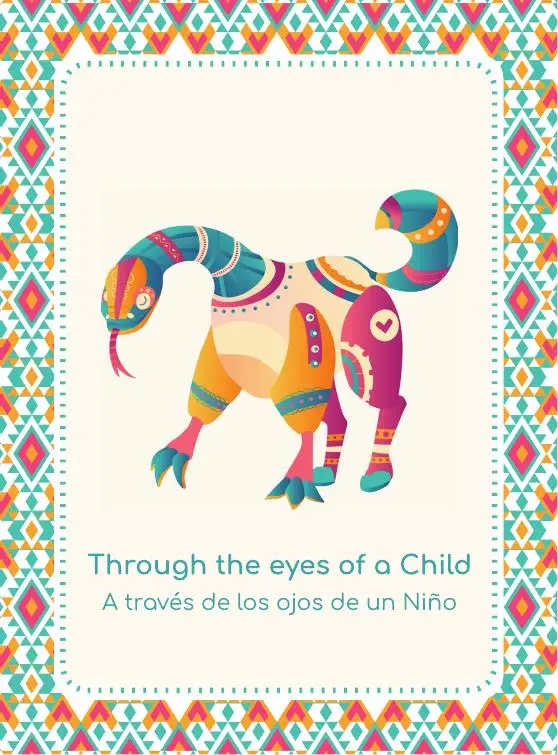
Through the Eyes of a Child card
03Through the Eyes of a ChildI see the world with wonder and innocence.

The aerial man lives Chaos as an endless cycle: castle, cave, pot, tub, hut, each one crumbling, each loss met with fresh lament. His Innovation is not a better shelter but a new way of seeing, that he chose these confinements himself, and Innocence is the open sky that was never lost, the ‘laughable’ simplicity of a being before he claimed anything as his own.

  1. Shadow · what you avoidChaos

    Chaos is the cycle of building and losing, each collapse greeted with the same cry: “O my air built mansion, why art thou broken down and blown away so soon” (VI.1.112.23).

  2. Gift · what is hidden in itInnovation

    Innovation is the turn from rebuilding to reflection, when the aerial man at last considers “the narrow confines of the abodes, which he had chosen for himself of his own accord” (VI.1.112.35).

  3. Essence · what you embodyInnocence

    Innocence is the space that was always there: “as the destruction of the pot or any other hollow vessel, does not destroy the subtile air, which is contained in the same” (VI.1.113.18).

Here is Through the Eyes of a Child, and a man who kept building houses in the sky and crying when the wind took them. Look up: the sky is still there.

— Felicia
Today’s contemplation

Behind the castle, the cave, the pot and the hut you keep rebuilding, what open sky have you forgotten that you already are?

To close the night

Tonight, write one honest sentence about a shelter you keep rebuilding in a smaller and smaller form.

The Ally Journey · about 15 minutes

Light trance, eyes open if you prefer. For the full, deeper script, see “The practice” above and its cautions.

  1. Threshold: three slow breaths, feeling the space inside the body, the mouth, the chest, the belly, fill and empty with each breath.
  2. The tale in one line: a man claims the sky as his, builds a castle, a cave, a pot, a tub, a hut in it, mourns each one, and finally sees he chose them all (VI.1.112.15–35).
  3. Meet the card: look at the art of Through the Eyes of a Child as a child would, without naming anything. Read the affirmation aloud: “I see the world with wonder and innocence.”
  4. Shadow: what have you claimed as ‘mine to guard’ that keeps collapsing and being rebuilt, a role, a plan, a way of being needed? Name it, and the feeling when it last fell.
  5. Gift: picture that shelter falling away gently, and notice the space that was inside it. It has not gone anywhere. Say inwardly: “The pot breaks, the space remains.”
  6. Essence: rest for three breaths as that open space, wider than any container. On each out-breath say: “I see the world with wonder and innocence.”
  7. Return: come back to the body as a cherished, temporary home; feel feet and hands, open the eyes fully and look around. Write tonight's honest sentence.

The 30-day Bond

The child sees what the adult forgot: today, what did you remember about the space inside the pot?

The Sister · Layla Hassan

Syrian (in exile) · Istanbul, Türkiye · Om Namaḥ Śivāya

Visit Layla Hassan, the Syrian poet writing in exile in Istanbul, who knows what it is to lose houses, and let her Om Namaḥ Śivāya keep you company in the sky the aerial man finally stopped guarding.

Guided Meditation

#3 · Through the Eyes of a Child

Voice & guidance: Prof. Luis Miguel GallardoWatch on YouTube (ES also available)
For facilitatorsA session with “The Man Who Built Houses in the Air” and Through the Eyes of a Child

Aim. To help the client recognise the repeating pattern of building and mourning the same confinement, and to shift identification from the container to the space it holds.

ITM 2 Conscious Recognition. Understanding begins only when the sufferer sees that his confinements were chosen “of his own accord” (VI.1.112.35), which is the precise work of Conscious Recognition.

The session (60–75 min)

  1. Arrival and Umbral: three breaths into the body's inner space; ask what the client has recently lost or keeps losing (8 min).
  2. Telling the tale: the parable in its ‘laughable’ register, castle to barn-hut, then Vasiṣṭha's reading; point to the tale page for the full text (5 min).
  3. The card: show Through the Eyes of a Child, read Shadow → Gift → Essence and the affirmation; ask what a child would notice about the client's pattern (7 min).
  4. Shadow inquiry: list the client's own succession of shelters, homes, jobs, relationships or roles, and look for the claim that repeats in each (12 min).
  5. Trance practice: “The Space in the Pot”, the full guided script on the tale page, at medium depth at most; let each loss be named and keep returning attention to the space that remains (18 min).
  6. Gift and Essence integration: name the next shelter the client is tempted to build and one way to live this week from the open space instead (12 min).
  7. Closing and Bond: return to the body as a cherished dwelling, count up and re-alert; set the 30-day Bond (8 min).

Integration questions

  • Which shelter felt most like your present life or body, and what did you notice when it fell away?
  • What did you first claim as ‘yours to guard’, and what has guarding it cost?
  • How might you live this week as the space rather than the pot?

In a circle

With 8–20 people, tell the parable lightly and let the room laugh at the aerial man's ever-smaller houses, then pause for each person to recognise, silently, their own. Pass round a clay pot or bowl: each person holds it, names one shelter they have outgrown if they wish, and passes it on. Guide “The Space in the Pot” at light to medium depth for the whole circle. Close by having everyone breathe out together and say, “The pot breaks, the space remains,” followed by the affirmation.

Cautions

  • The comic register can feel dismissive to the recently bereaved; use the tale after the acute phase of grief.
  • ‘The soul is never born, nor does it die’ is a metaphysical frame; offer the pot as an image and respect the client's beliefs.
  • Dis-identification from the body needs particular care, or is contraindicated, with depersonalisation, eating disorders and severe body-image distress.

Training and certification in the Meta Pets Method: metapetsworld.org/facilitators ↗

The correspondence between tales and Meta Pets is contemplative: the Yoga Vāsiṣṭha does not contain the Meta Pets; each tale enacts its ally’s arc. Felicia is an artificial-intelligence companion; her words are contemplative reflections, not clinical advice.

The song

From the cycle The Sixty-Four Tales

Houses in the Air

Pūrṇam adaḥ pūrṇam idaṃ pūrṇāt pūrṇam udacyate / pūrṇasya pūrṇam ādāya pūrṇam evāvaśiṣyate · Oṃ śāntiḥ

Figure — The aerial man, "like a magical machine" (māyā-yantra), who thought the sky was his to guard.

Where in the text — Book VI (first half, Nirvāṇa-prakaraṇa), Mitra chapters 112–113 (the parable 112.15–35; its interpretation, ch. 113).

Hypnotic phenomenon the song enacts — MET and GRIEF: a comic metaphor for the bodies lost birth after birth, each verse a narrower house and a thinner arrangement, each chorus a crash and the same lament, until the grief meets the space in the broken pot (WIT) and the music leaves only space.

Mantra — Pūrṇam adaḥ pūrṇam idaṃ pūrṇāt pūrṇam udacyate / pūrṇasya pūrṇam ādāya pūrṇam evāvaśiṣyate · Oṃ śāntiḥ (पूर्णमदः पूर्णमिदं पूर्णात्पूर्णमुदच्यते । पूर्णस्य पूर्णमादाय पूर्णमेवावशिष्यते ॥ ॐ शान्तिः). Source: the śānti-pāṭha (peace invocation) of the Īśā Upaniṣad, from Bṛhadāraṇyaka Upaniṣad 5.1.1; it closes with Oṃ śāntiḥ. Meaning: "That is full, this is full; from the full the full comes forth; take the full from the full, and the full remains. Om, peace."


Lyrics (English)

Performance: verse 1 is the full band; verse 2 loses half of it; verse 3 is one guitar, then hand drum and voice, and its lines get shorter as the houses get narrower. Every chorus ends on a cymbal crash and a comic sob. The outro is slow, in open reverb, and the band does not come back: only space, and the last word, śāntiḥ.

Verse 1 Born somewhere out in the empty sky, no one but me; all I saw was me. I grew up and said: I'm made of air, the air is mine to rule and guard, so I built a castle in the air and lived there happy a long, long time.

Verse 2 It blew away like autumn clouds. I dug a cave in the empty air to look up at my kingdom from below — it washed away. I made a pot and lived in its belly, cut my life to fit. It broke.

Chorus O my air-built mansion, why are you blown away so soon? O my air-drawn house, where have you gone? Ah, now I see: an airy something comes to an airy nothing. (crash)

Verse 3 A tub, like Diogenes — a wild beast broke it. A cottage, open in the middle so I could watch my sky — time blew it off like dry leaves. A hut in the field; I watched my air the way a farmer guards his grain. The wind took it like a cloud.

Chorus (crash)

Bridge (mantra) (the band gone; voice and open air) Roofless, in my empty house of air, I looked at the narrow rooms I chose myself: the cave, the pot, the tub, the hut. Pūrṇam adaḥ pūrṇam idaṃ, pūrṇāt pūrṇam udacyate, pūrṇasya pūrṇam ādāya pūrṇam evāvaśiṣyate (That is full, this is full; take full from full, the full remains)

Outro (slow, open reverb) Break the pot: the air inside is not lost. How could a pot hold what is wider than the sky? No roof — let the rain come in; drink, like the swallow in the shower. Oṃ śāntiḥ.


Letra (castellano cantable)

Interpretación: el verso 1 es la banda entera; el verso 2 pierde la mitad; el verso 3 es una guitarra sola, luego tambor de mano y voz, y sus versos se acortan a medida que las casas se estrechan. Cada estribillo acaba en un golpe de platillo y un sollozo cómico. El final es lento, con reverberación abierta, y la banda no vuelve: solo espacio, y la última palabra, śāntiḥ.

Verso 1 Nací en algún lugar del cielo vacío, nadie más que yo; todo lo que veía era yo. Crecí y me dije: soy de aire, el aire es mío, lo gobierno y lo guardo, y construí un castillo en el aire y viví en él contento mucho, mucho tiempo.

Verso 2 Se lo llevó el viento como nubes de otoño. Cavé una cueva en el aire vacío para mirar mi reino desde abajo — se la llevó el agua. Hice un cántaro y viví en su vientre, recorté mi vida a su medida. Se rompió.

Estribillo Ay, mi mansión de aire, ¿por qué te vuela el viento tan pronto? Ay, mi casa dibujada en el aire, ¿adónde te has ido? Ah, ya lo veo: un algo de aire acaba en una nada de aire. (platillo)

Verso 3 Un tonel, como Diógenes — lo rompió una fiera. Una choza abierta en el centro para ver mi cielo — el tiempo la esparció como hojas secas. Un chamizo en el campo; vigilaba mi aire como el labrador su granero. El viento se lo llevó como una nube.

Estribillo (platillo)

Puente (mantra) (sin banda; voz y aire abierto) Sin techo, en mi casa vacía de aire, miré los cuartos estrechos que yo mismo escogí: la cueva, el cántaro, el tonel, el chamizo. Pūrṇam adaḥ pūrṇam idaṃ, pūrṇāt pūrṇam udacyate, pūrṇasya pūrṇam ādāya pūrṇam evāvaśiṣyate (Aquello es pleno, esto es pleno; quita lo pleno de lo pleno, lo pleno queda)

Final (lento, reverberación abierta) Rompe el cántaro: el aire de dentro no se pierde. ¿Cómo va a guardar un cántaro lo que es más ancho que el cielo? Sin techo — que entre la lluvia; bebe, como la golondrina bajo el aguacero. Oṃ śāntiḥ.


One line to carry

EN: The pot breaks; the space inside it was never lost. ES: Se rompe el cántaro; el espacio de dentro nunca se perdió.


Libreto note

Vasiṣṭha promises a tale "ludicrous and laughable from first to last", and keeps his word. A man born alone in the empty sky decides the air is his and builds a castle to guard it. It blows away; he digs a cave in the void, then lives in a pot, a tub, a cottage open to the sky, a hut in a field, lamenting each one. Only then is the joke explained: the houses are our bodies, life after life. Laughter gives the distance that grief over the body cannot find alone. Each verse a narrower house and a thinner band, a crash at every chorus, and at the end only open air, and rain coming in.


Source check

Source check (Mitra, Book VI first half)

  1. The man "like a magical machine", born "in some remote region of the sky", who "saw naught but himself"; "the air is my province, and I will therefore rule over this region as mine"; the aerial house built "to protect and rule his etherial dominion", where he "lived quite content … for a long time": ch. 112, vv. 16–21.
  2. The castle blown away "as the clouds of heaven are driven and blown away in autumn"; the lament "O my air built mansion, why art thou broken down and blown away so soon; and, O my air drawn habitation, where art thou withdrawn from me … an aerial something must be reduced to an aerial nothing": ch. 112, vv. 22–23.
  3. The cave dug "in the vacuity of the atmosphere … to look up to his aerial realm from below", "washed away"; the pot, "its open bowel … its narrow limits"; the tub "like the tub of Diogenes" broken "by some wild animal"; the cottage "with an open space in the midst", scattered by time "as the winds of heaven dispersed the dried leaves"; the barn-hut, watching "as farmers … their granaries", blown away "as they do the gathering clouds": ch. 112, vv. 24–33.
  4. The roofless man reflecting "upon the narrow confines of the abodes, which he had chosen for himself of his own accord"; "the pit and the pot, and the cottage and the hut, represent the different bodies": ch. 112, vv. 33–35; ch. 113, v. 9.
  5. "How is it possible … to confine the vacuous spirit in the narrow limit of a pot … when it is more extended than the boundless sky"; "the destruction of the pot … does not destroy the subtile air, which is contained in the same"; Rāma refreshed "as the parching swallow is refrigerated by a shower of rain water": ch. 113, vv. 16, 18; ch. 112, v. 10.

Read the full text

Source: Vihari-Lala Mitra, The Yoga-Vasishtha Maharamayana of Valmiki (1891–99), public domain.

Collaborate on this research

Researchers, clinicians and institutions are welcome to write. Replication, data-sharing and site partnerships for the trials in progress are all open conversations.

Educational and scholarly content. Hypnotherapy and regression material is complementary and not a substitute for medical or psychiatric care.