ICEF

Tale 38 · The Vāsiṣṭha Atlas

The Vindhya Elephant

Nirvāṇa · first half · Mitra VI.1.89, 91 · 3,327 words

Breaking the chain is not the same as ending the hunter.

Bhūmikā 2 · Vicāraṇā (inquiry)LightYour ally · The Beauty of the Beast

The essence

A great tusker, leader of the Vindhya herds, is caught in an iron trap and goaded for three days while the hunter watches from afar. With one roar he snaps the iron bar with his tusks. The hunter leaps from a palm tree to land on his head, misses, and falls at his feet; the elephant, judging it no valour to trample the fallen, spares him and walks away. The hunter, unhurt, tracks him, digs a circular pit around his resting place and covers it with green branches; the elephant falls in and stays there in endless anxiety. Kumbha decodes it: the elephant is Śikhidhvaja, his tusks reason and dispassion; the hunter is ignorance; the chain is expectation; breaking the chain was leaving the kingdom; sparing the hunter was leaving ignorance cast down but not destroyed; the pit is austerity, baited with hopes of reward. Escaping one bondage is not freedom while the captor survives within.

What it teaches

  1. 01

    Leaving a situation is not the same as dissolving the pattern that created it: ignorance merely "cast down" revives and "gains renewed strength" (VI.1.91.14–15).

  2. 02

    Expectation is a harder chain than iron: iron rusts in time, "but our expectations rise high and hold us faster" (VI.1.91.6).

  3. 03

    Real strengths can still be insufficient: reason and dispassion broke the chain, yet the strong was "foiled by weak, and lead from one danger to another" (VI.1.91.2–4).

  4. 04

    The second trap usually looks like nourishment: the pit is covered with green leaves and stocked with fodder, as austerity is stocked with hopes of reward (VI.1.89.24, 91.18).

  5. 05

    Relief after an escape breeds carelessness: the elephant "thought no more of any future mishap", and that was the cause of his capture (VI.1.89.30).

The Vāsiṣṭha Atlas

This tale’s coordinates

The wound and its virtue

Freed from the iron chain, the elephant “thought no more of any future mishap” (VI.1.89.30), a relief that refuses the reality of a hunter still alive, and it walks into a baited pit and lasting anxiety. Kumbha's decoding is a reckoning of cost: renunciation has cast ignorance down, but “it is not yet destroyed” (VI.1.91.14), and Ease would mean holding that unfinished truth instead of resolving it into premature triumph.

What it trains

The tale draws the decisive line between suppression and release: a mind cast down by renunciation but not destroyed (VI.1.91.14) is held only by effortful suppression, and the first component asks for a steadiness that does not depend on it.

In other yogas

  • Bhagavad Gītā · BG 2.59

    For one who abstains, sense objects fall away but the taste (rasa) for them remains, and it goes only when the highest is seen. Śikhidhvaja has left the kingdom, yet the hunter lives on in his hopes of reward.

  • Patañjali · Yoga Sūtra · YS 2.10–11

    Patañjali distinguishes the gross movements of the afflictions, removed by meditation, from their subtle seeds, removed only by return to the source. The elephant who spares the fallen hunter has dealt with the gross form and left the seed.

  • Buddhist absorption · MN 64

    The Mahāmāluṅkya Sutta teaches that an underlying tendency (anusaya) lies latent even where it is not manifest, as in a young infant. The hunter cast down but alive is the anusaya the elephant overlooked.

IEAF: Integrative Emotional Alchemy Framework (Gallardo, Frontiers in Psychology, 2026). FP20: the Fundamental Peace Scale. ITM: the Integrative Transformation Model. Parallels in other yogas are contemplative correspondences, not claims of influence.

The tale

Kumbha's second parable, he says, applies to the king "as the ruler of a land", and is meant to wake his understanding.

In the Vindhya mountains lived a huge elephant, leader of a great herd and clear of understanding, with two tusks strong as thunderbolts, long as lightning and sharp enough to uproot a mountain. He was caught in an iron trap laid by elephant-catchers and held fast in it, "as the Vindhya by the Muni's charm". Goaded with iron, he lay in excruciating pain for three days while the hunter watched him from a distance. At last the suffering made him open his mouth in a roar like thunder; he set both tusks against the iron bar and broke it.

The hunter saw the fetters break. He climbed a tall palm tree and leaped from its top, meaning to land on the elephant's head, but missed and fell headlong on the ground at the animal's feet. The great elephant took pity on him. He thought it no valour to trample the self-fallen, and with magnanimity spared the life of his enemy. He broke only the chains and went his way, sweeping obstacles aside as rushing water sweeps away a bridge.

The hunter got up and found himself unhurt ("the bodies of scoundrels are fortified against every harm", Kumbha remarks) and, sorry to have lost his prize, beat the forest to find it. After a long search he saw the elephant resting under a tree, like a warrior breathing in the shade after battle. He gathered many tools, dug a circular ditch around the place, and covered it with green branches and soft leaves, as autumn covers the sky with fleecy cloud. One day, roaming freely, the elephant fell into the pit, deep as the sea, and lay confined there in endless trouble and anxiety, like the demon Bali in his cave beneath the earth.

This, Kumbha says, came of letting the cruel hunter go unhurt when he lay fallen. Those who lack the foresight to guard against future mishaps share the fate of the Vindhya elephant, and people call them gaja-mūrkha, "elephant-fools". The elephant was glad to be free of the chains and thought no more of danger, and that very carelessness was the cause of his second capture. "There is no bondage of man except his own ignorance."

Two chapters later, after decoding the gem, Kumbha interprets the elephant. "That elephant of the vindhyan range, is thy very self in this forest", and his two tusks are viveka and vairāgya, reasoning and resignation, on which the king relies. The hunter is ignorance, which waylaid him and watches him unseen. The strong is foiled by the weak and led from woe to woe. The iron chain is the snare of desire for a future reward, and "the expectation of man is the iron chain, that is stronger and harder and more durable than the other; the iron rusts and wastes away in time, but our expectations rise high and hold us faster." Breaking the chain was breaking the bonds of the kingdom and its pleasures. The hunter's fall was ignorance cast down when the king gave up his royalty; when a man truly gives up enjoyment, ignorance trembles like a demon in a tree being felled.

But the king only threw it down. "Your mind is of course cast down by it, but it is not yet destroyed by the sword of your resignation." The fallen ignorance revived, remembered its defeat, and confined him in this wilderness and in "the painful dungeon of your false asceticism". The pit it dug is austerity; the provisions heaped in it to entice him are the expectations of future reward that ignorance holds out as the recompense of penance. The elephant's pit at least held tender leaves for fodder; the king's cave holds only rigours no one could bear. "Though you are not the witless elephant," Kumbha concludes, "yet you are not unlike the same." Kill the fallen ignorance now, he urges, and glean the lesson for yourself.

The text speaks

Passages from Mitra’s translation (1891–99), cited by book, chapter and verse.

“The noble animal thought in his mind, that it was no valour on his part to trample over the self-fallen; and had thus the magnanimity of sparing the life of his own enemy.”
VI.1.89.13The turning point: a noble act toward the outer hunter that, in the decoding, is a failure toward the inner one.
“The elephant was glad with the thought of his freedom from the hunter's chains, and thought no more of any future mishap; which was the sole cause of his being by another mischance, which lay at a long distance from him.”
VI.1.89.30Relief as the precondition of relapse.
“Know, O great soul! that there is no bondage of man except his own ignorance; and the jail prisoners are not under such thraldom, as the intellectual servitude of freemen under their errors and prejudice.”
VI.1.89.31The tale's thesis, stated before the decoding.
“The expectation of man is the iron chain, that is stronger and harder and more durable than the other; the iron rusts and wastes away in time, but our expectations rise high and hold us faster.”
VI.1.91.6Expectation named as the real fetter.
“You have no doubt put down your ignorance, by your resignation of royalty and resorting to this forest; your mind is of course cast down by it, but it is not yet destroyed by the sword of your resignation.”
VI.1.91.14The decisive distinction between suppression and dissolution.
“The many provisions and supplies with which the huntsman had filled the hollow, in order to entice the elephant; are the very many expectations of future reward, which your ignorance presents before you, as the recompense of your penitence.”
VI.1.91.18The bait of the second trap is the promised reward of discipline.

What the trance sees

MET

Therapeutic metaphor / reframe

VI.1.91.2–22

In the textPoint-by-point decoding: "That elephant of the vindhyan range, is thy very self"; tusks = reasoning and resignation; hunter = ignorance; chain = expectation; palm-tree fall = ignorance cast down; pit = austerity; fodder = "expectations of future reward".

In the clinicAn isomorphic metaphor (Gordon 1978) whose structure carries a relapse warning: in clinical use it is a relapse-prevention narrative (Marlatt & Gordon 1985), showing that escape from the high-risk situation is not resolution of the underlying pattern.

EGO

Ego-strengthening / resourcing

VI.1.91.2, 91.19

In the textBefore the confrontation the king's resources are named: "his two strong tusks are no other than the two virtues of reasoning and resignation, on which you lay your strength"; and at the end, "though you are not the witless elephant".

In the clinicEgo-strengthening before uncovering or confrontation (Hartland 1965): naming real strengths first so the client can bear the hard part of the interpretation; the tale adds that strengths alone do not prevent relapse.

Read upward — stage 1 at the bottom, stage 7 at the top

  1. Integration zone
    Self-inquiry joined to guided suggestion — narrative reframing and Socratic dialogue inside a gently focused state.

A note on what this map claims. The alignment between stages of knowledge and trance depths is a clinical map — a heuristic correspondence proposed for research, not a claim of identity between contemplative attainment and hypnotic depth.

Bhūmikā 2 · Vicāraṇā

Kumbha credits the king with viveka and vairāgya (VI.1.91.2) yet shows his ignorance "not yet destroyed" (91.14): he has renounced outwardly but has not yet inquired to the root, which is the threshold of vicāraṇā.

Zone · Light

A parable and its interpretation delivered in eyes-open dialogue; it works on understanding and foresight rather than on altered experience.

In Mitra’s words

In Calcutta in the 1890s, the translator chose the vocabulary of hypnotism to name these states. More →

  • charmHe came to be caught by an iron trap laid by elephant catchers in his way, and was fast held in it as the Vindhya by the Muni's charm; and as the giant Bali was bound in the chains of India.VI.1.89.4
  • spell bound(Vindhya and its people were spell bound by the Agastya sage).VI.1.89.4

In the therapy room

Indications

  • Relapse after leaving an addictive, abusive or toxic setting when the inner pattern has not been examined.
  • 'Escape solutions' and geographical cures: quitting the job or the city and finding the same trap in a new form.
  • Burnout after a radical life change undertaken in the hope of a reward (the baited pit).
  • Strengths-based framing for high-functioning clients who over-rely on willpower and insight.

Cautions

  • The text calls the elephant's mercy foolish and urges killing the fallen hunter; work only with the inner pattern and never let the story read as licence to harm a person.
  • The label "elephant-fool" (gaja-mūrkha, VI.1.89.29, 91.22) can shame; omit it with clients prone to self-contempt.
  • For clients still in danger, leaving is the first and necessary step; do not use the story to suggest that leaving was a mistake.
From the bookThe full clinical note

Indications. Relapse after leaving an addictive, abusive or toxic setting when the inner pattern has not been examined. Escape solutions and geographical cures: the new job, city or partner that turns out to be the same trap. Burnout after a radical life change undertaken in hope of a reward. High-functioning clients who over-rely on willpower and insight.

How to use it. In the consolidation phase, tell the story to the end of chapter 89 and ask: where is your shady tree? What would the green branches look like in your life? The decoding of 91.17–18 makes a natural bridge to a written relapse-prevention plan.

Cautions. The text calls the elephant's mercy foolish and urges the king to "kill your fallen ignorance" (91.16). Work only with the inner pattern, and never let the story read as licence to harm a person. The label "elephant-fool" (89.29; 91.22) shames; omit it with clients prone to self-contempt. Above all, for clients still in danger, leaving is the first and necessary step. Do not use the story to suggest that leaving was the mistake. The text's point is that leaving was not enough.


The practice

The Second Trap

  1. Settle the breath and feel the weight and strength of the body, like a great elephant standing on the earth.
  2. Recall a chain you have already broken, a situation you left, and feel the strength that broke it; name your two tusks.
  3. Look down at the fallen hunter: the old belief or fear that kept you there. Notice that it is down, not gone.
  4. Instead of walking away, stay and look at it fully until you can say in one sentence what it wanted from you; let its hold end in that clear seeing.
  5. Survey your present resting place: is there a ring of green leaves over a pit, such as a new routine, a promised reward or a harsh discipline?
  6. In imagination, walk around it and choose a path that does not need the bait.
  7. Count up from one to five, feel the feet, open the eyes and return alert.

Practise with a qualified professional if you have a history of dissociation, trauma or psychosis.

From the book · to be read aloudThe full guided script

The Second Trap

Read slowly, aloud; ten to twelve minutes.

Before you begin. This is a light reflective practice. If you are currently in a dangerous situation, set the practice aside and seek help to reach safety first. If you have a history of psychosis or dissociative disorder, or recent trauma, use it with a clinician. Do not practise while driving or operating anything.

How to return at any moment. Open your eyes, press your feet into the floor, name what you see. Nothing in the practice requires you to stay.


Sit, and let your weight settle. Feel it go down through the seat into the ground, heavy and steady, like a great elephant standing on the earth.

Breathe out.

Recall a chain you have already broken. A place you left, a habit you ended, a bond you cut. Feel the strength that did it.

Name your two tusks. Two strengths that broke that chain. Say them silently. They are real.

Now look down. At your feet lies the hunter: the old belief or fear that held you there. It fell when you left. Notice that it is down. Notice that it is not gone.

This time, do not walk away. Stay, and look at it fully. Ask it what it wanted from you. Wait until you can say it in one sentence. Let that clear seeing be the end of its hold.

Breathe out.

Now look at where you rest today. Is there a ring of green leaves on the ground around you? A new routine, a promised reward, a harsh discipline that looks like nourishment? Look at it carefully.

In imagination, walk around it. Choose a path that does not need the bait. Feel each step land, heavy and unhurried. You can rest without sleeping. You can be glad without forgetting.


Now return. One: feel the weight of the body, heavy and your own. Two: move the fingers and toes. Three: hear the sounds of the room. Four: a full breath in. Five: eyes open, alert, clear.

Say your name, the day and the place, and name three things you can see. Stand slowly, and walk a few steps before you go on.


Meta Pets World · Your ally · Meta Pet 34

The Vindhya elephant and the hunter not yet gone

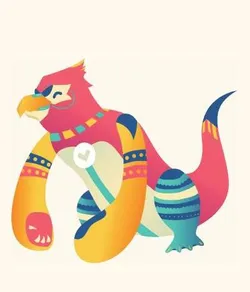
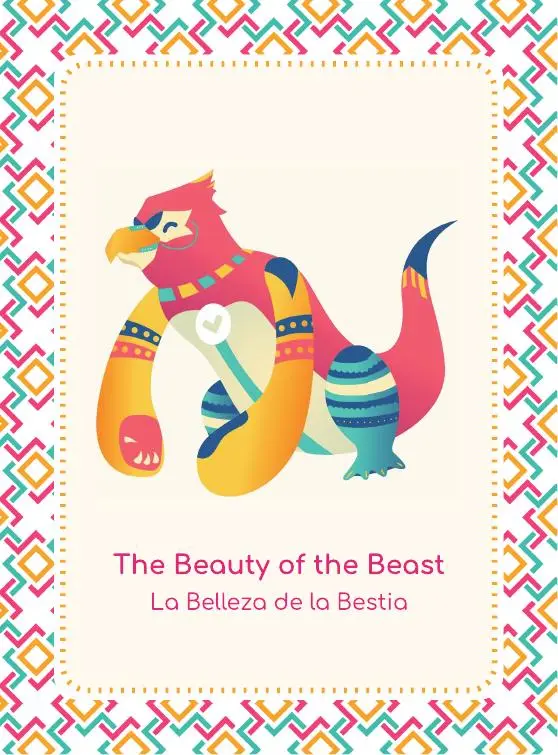
The Beauty of the Beast card
34The Beauty of the BeastI see beauty in every form of life.

The great elephant's raw Force snaps the iron bar, and his noble Strength spares the hunter who falls at his feet. Yet Majesty does not hold while the hunter lives: the beast who broke one chain walks carelessly into a baited pit. The pairing asks what strength is for once the chain is broken.

  1. Shadow · what you avoidForce

    Force is power without foresight: free of the chains, the elephant “was glad with the thought of his freedom from the hunter's chains, and thought no more of any future mishap” (VI.1.89.30), and the mind cast down is “not yet destroyed” (VI.1.91.14).

  2. Gift · what is hidden in itStrength

    Strength shows in mercy and in the two tusks: the noble animal “thought in his mind, that it was no valour on his part to trample over the self-fallen” (VI.1.89.13), and Kumbha names the tusks reasoning and resignation (VI.1.91.2).

  3. Essence · what you embodyMajesty

    Majesty is the road the tale points to but does not reach: sovereignty comes only when expectation, “the iron chain, that is stronger and harder” than iron (VI.1.91.6), is seen through, for “there is no bondage of man except his own ignorance” (VI.1.89.31).

Here is The Beauty of the Beast: an elephant strong enough to snap iron, gentle enough to spare his hunter. Now look gently at what you left behind: is it gone, or only lying down?

— Felicia
Today’s contemplation

If the beast is beautiful even in its mercy, what is that beauty afraid to look at fully: the fallen hunter, or the green leaves over the pit?

To close the night

Tonight, write one honest sentence about a pattern you once escaped that may be waiting for you in a new form.

The Ally Journey · about 15 minutes

Light trance, eyes open if you prefer. For the full, deeper script, see “The practice” above and its cautions.

  1. Threshold: three slow breaths, feeling the weight of your body settle onto the chair and your feet onto the earth, heavy and steady as an elephant standing.
  2. The tale in one line: a great elephant breaks an iron trap, spares the fallen hunter, and is later caught in the leaf-covered pit that same hunter dug (VI.1.89, 91).
  3. Meet the card: look at the art of The Beauty of the Beast and notice where its power is. Read the affirmation aloud: “I see beauty in every form of life.”
  4. Shadow: think of a situation you have already left, a job, a habit, a relationship. This week, did anything in a new routine or promised reward look like green leaves over the same pit?
  5. Gift: name your two tusks, the clear reasoning and the letting-go that broke the old chain. Then look at the old fear for one breath, without fighting it, and say in one sentence what it wanted.
  6. Essence: rest for three breaths in Majesty, presence that needs no bait and no reward. On each out-breath say: “I see beauty in every form of life.”
  7. Return: press your feet into the floor, open and close your hands, look around the room with eyes fully open. Write tonight's honest sentence.

The 30-day Bond

The beast is beautiful: today, what did your strength see before it stepped?

The Sister · Nomvula

Zulu · KwaZulu-Natal, South Africa · Sawubona — Sikhona

Visit Nomvula, the Zulu sangoma of KwaZulu-Natal, and borrow her greeting, Sawubona — Sikhona, ‘I see you’ and ‘I am here’: the full seeing that the elephant never gave his fallen hunter.

Guided Meditation

#34 · The Beauty of the Beast

Voice & guidance: Prof. Luis Miguel GallardoWatch on YouTube (ES also available)
For facilitatorsA session with “The Vindhya Elephant” and The Beauty of the Beast

Aim. To honour the strength that got the client out of a trap, and to help them see the inner pattern that is down but not gone before it digs the next pit.

ITM 2 Conscious Recognition. The tale's lesson is a recognition: breaking the chain is not the same as ending the hunter (VI.1.91.14), and nothing changes until the client sees the second trap for what it is.

The session (60–75 min)

  1. Arrival and Umbral: three grounding breaths; ask about a chain the client has already broken and what it took (8 min).
  2. Telling the tale: the four-minute parable and Kumbha's interpretation, the tusks, the hunter, the chain of expectation and the baited pit; point to the tale page (5 min).
  3. The card: show The Beauty of the Beast, read Shadow → Gift → Essence and the affirmation; ask where the client relies on force and where on strength (7 min).
  4. Shadow inquiry: survey the client's present resting place for green leaves over a pit, a new routine, a promised reward, a harsh discipline, and name the expectation that baits it (12 min).
  5. Trance practice: “The Second Trap”, the full guided script on the tale page, at light depth; the ‘hunter’ is always an inner belief or fear, and the work is seeing it fully until its hold ends (18 min).
  6. Gift and Essence integration: choose one path for the coming month that does not need the bait, and one sign that would warn of a new pit (12 min).
  7. Closing and Bond: feet on the floor, count up, re-alert; set the 30-day Bond (8 min).

Integration questions

  • When you looked fully at the fallen hunter, what did it want from you?
  • What expectation has been the bait in your present resting place?
  • What would it look like this week to use your strength with foresight rather than relief?

In a circle

With 8–20 people, invite everyone to stand for the Umbral, feeling their weight like the herd-leader's, then sit for the tale. In threes, each person names a chain they have broken while the other two simply say back, “I see you”; then each names, if they wish, one place where green leaves may be covering a pit. Guide “The Second Trap” at light depth for the whole circle, keeping the hunter clearly an inner figure. Close with Nomvula's Sawubona — Sikhona spoken around the circle, each person greeting the next.

Cautions

  • The text calls the elephant's mercy foolish and urges killing the fallen hunter; work only with the inner pattern and never let the story read as licence to harm a person.
  • The label ‘elephant-fool’ can shame; omit it with clients prone to self-contempt.
  • For clients still in danger, leaving is the first and necessary step; never suggest that leaving was a mistake.

Training and certification in the Meta Pets Method: metapetsworld.org/facilitators ↗

The correspondence between tales and Meta Pets is contemplative: the Yoga Vāsiṣṭha does not contain the Meta Pets; each tale enacts its ally’s arc. Felicia is an artificial-intelligence companion; her words are contemplative reflections, not clinical advice.

The song

From the cycle The Sixty-Four Tales

Down, Not Gone

Oṃ gaṃ gaṇapataye namaḥ

Title: Down, Not Gone Título: Derribado, no muerto

Figure: The leader-elephant of the Vindhya herds and the hunter he spared, told by Kumbha to Śikhidhvaja: "that elephant … is thy very self"

Where in the text: Book VI (first half, Nirvāṇa-prakaraṇa), Mitra chapters 89 (the parable) and 91 (its interpretation)

Hypnotic phenomenon the song enacts: MET and EGO: a relapse parable that names the strength first (tusks like thunderbolts, one struck chord for the breaking iron) and only then lets the second trap close on a missing beat; the outro decodes it on the listener in the same order, the strength before the fallen hunter.

Mantra: Oṃ gaṃ gaṇapataye namaḥ (ॐ गं गणपतये नमः) Source: the mūla mantra of Gaṇeśa, built on the seed-syllable gaṃ taught in the Gaṇapati Atharvaśīrṣa (Gaṇapati Upaniṣad), v. 7. Meaning: "Om, gaṃ: homage to the Lord of the hosts", the elephant-headed one who clears the obstacle no one sees.


Lyrics (English)

Performance: verse 1 is low and grinding; the chain breaks on one struck chord. Verse 2 is tender, never mocking. Verse 3 is almost a lullaby, green branches in the strings, until a whole beat goes missing where he falls. The outro picks up a slow walking groove.

Verse 1 Leader of the Vindhya herds, tusks like thunderbolts, three days in the catchers' iron trap, the goad in his trunk, the hunter watching from far; then he roared like the clouds, set both tusks to the bar, and broke it.

Verse 2 The hunter leaped from a tall palm for his head, missed, and fell at his feet like a ripe fruit. No valour, he thought, in trampling the fallen. He broke only the chains, and went like rushing water through a bridge.

Chorus Iron rusts, iron wastes away; the hope of a reward holds faster. The chain is broken, the hunter's down: down is not gone.

Verse 3 The hunter rose without a scratch and found him resting under a tree, a warrior breathing after battle. He dug a ring of ditch around him, laid green branches and soft leaves over as autumn lays cloud on an empty sky, and roaming, the great one fell, deep as the sea, among tender leaves.

Chorus Iron rusts, iron wastes away; the hope of a reward holds faster. The chain is broken, the hunter's down: down is not gone.

Bridge — mantra Oṃ gaṃ gaṇapataye namaḥ (homage to the lord who clears the way) Oṃ gaṃ gaṇapataye namaḥ

Outro — Kumbha to the king, walking groove You are that elephant, my king; your tusks, reason and letting go. They broke your kingdom's chain. The hunter fell when you left your throne: down, not gone, he dug you this cave. Turn; look at him at your feet till he trembles like the demon in a falling tree, and leaves. Then walk, like water through a bridge.


Letra (castellano cantable)

Interpretación: el verso 1 es grave y áspero; la cadena se rompe en un solo acorde golpeado. El verso 2 es tierno, nunca burlón. El verso 3 es casi una nana, ramas verdes en las cuerdas, hasta que falta un tiempo entero donde él cae. El final toma un ritmo lento de caminar.

Verso 1 Jefe de las manadas del Vindhya, colmillos como rayos, tres días en la trampa de hierro, aguijón en la trompa, el cazador mirando de lejos; entonces bramó como las nubes, puso los dos colmillos en la barra, y la partió.

Verso 2 El cazador saltó de una palmera a su cabeza, falló, y cayó a sus pies como fruta madura. No hay valor, pensó, en pisar al caído. Rompió solo las cadenas, y se fue como el agua que arrastra un puente.

Estribillo El hierro se oxida, el hierro se gasta; la esperanza del premio sujeta más. La cadena está rota, el cazador en el suelo: derribado no es muerto.

Verso 3 El cazador se alzó sin un rasguño y lo encontró descansando bajo un árbol, guerrero que respira tras la batalla. Cavó una zanja en anillo a su alrededor, la cubrió de ramas verdes y hojas blandas como el otoño cubre de nubes un cielo vacío, y vagando, el grande cayó, hondo como el mar, entre hojas tiernas.

Estribillo El hierro se oxida, el hierro se gasta; la esperanza del premio sujeta más. La cadena está rota, el cazador en el suelo: derribado no es muerto.

Puente — mantra Oṃ gaṃ gaṇapataye namaḥ (homenaje al señor que abre el camino) Oṃ gaṃ gaṇapataye namaḥ

Final — Kumbha al rey, ritmo de caminar Tú eres ese elefante, mi rey; tus colmillos, razón y desapego. Rompieron la cadena de tu reino. El cazador cayó cuando dejaste el trono: derribado, no muerto, te cavó esta cueva. Vuélvete y míralo a tus pies hasta que tiemble como el demonio del árbol que cae, y se vaya. Después camina, como el agua por un puente.


One line to carry

EN: Down is not gone. Look at the hunter, then walk on. ES: Derribado no es muerto. Mira al cazador, y sigue andando.


Libreto note

The relapse song, and the kindest warning in the Cūḍālā cycle. A great tusker breaks an iron trap after three days, spares the hunter who fell at his feet, and walks away free, only to rest under a tree while the same hunter digs a ring of pit and lays green branches over it. Kumbha decodes it gently: the tusks are reason and letting go, the chain was the kingdom, the hunter is ignorance, down but not gone, and the pit is austerity baited with hopes of reward. The strength is sung before the fall: a struck chord for the breaking chain, a lullaby, a missing beat. Then the elephant turns, looks, and walks on.


Source check

Source check (Mitra, Book VI first half)

  1. The leader of the Vindhya herds, tusks "as strong as the thunderbolts of heaven, and as long … as the far reaching flashes of lightning"; caught "by an iron trap laid by elephant catchers"; "tormented by the iron goad in his proboscis"; three days, "watched over by his hunter for a distance"; a scream "like the loud noise of roaring clouds"; "the force of both his tusks … to break asunder the iron bar" — ch. 89, vv. 2–8.
  2. The hunter "mounted a tall tála (palm) tree, and leaped from its top" to land on its head, missed and fell "as a ripe fruit, is dropped down by the hurrying winds"; "it was no valour on his part to trample over the self-fallen"; "He broke only the chains … as the rushing waters bear down the strongest bridge" — ch. 89, vv. 10–14.
  3. The hunter unhurt; he beats the forest and finds the elephant "halting under a tree; as when a warrior returns from the battlefield, and breathes the air under a shady arbour"; the "circular ditch"; covered "with green branches and soft leaves … as the season of autumn covers the face of the empty sky with fleecy … clouds"; the pit "as deep as the dreadful depth of the sea" — ch. 89, vv. 16–26; the pit's "tender plants and leaves for the fodder" — ch. 91, v. 20.
  4. The decoding: "That elephant of the vindhyan range, is thy very self"; tusks = "reasoning and resignation" (viveka, vairāgya); the hunter = ignorance; "the iron rusts and wastes away in time, but our expectations rise high and hold us faster"; the provisions in the pit = "expectations of future reward" — ch. 91, vv. 2–6, 18.
  5. "Your mind is of course cast down by it, but it is not yet destroyed"; ignorance "rises again"; the pit is "this painful pit of austerity" and "your cave is full of rigorous austerities"; ignorance trembles "as the demon that dwells on a tree, quakes with fear when the tree is felled" and "departs from the fallen tree" — ch. 91, vv. 11–12, 14–17, 20.

Read the full text

Source: Vihari-Lala Mitra, The Yoga-Vasishtha Maharamayana of Valmiki (1891–99), public domain.

Collaborate on this research

Researchers, clinicians and institutions are welcome to write. Replication, data-sharing and site partnerships for the trials in progress are all open conversations.

Educational and scholarly content. Hypnotherapy and regression material is complementary and not a substitute for medical or psychiatric care.