ICEF

Tale 28 · The Vāsiṣṭha Atlas

The Vilva (Wood-Apple) Fruit

Nirvāṇa · first half · Mitra VI.1.45 · 1,686 words

One fruit, countless worlds as seeds, and nothing divided.

Bhūmikā 4 · Sattvāpatti (dawn of being)MediumYour ally · Superabundance

The essence

Vasiṣṭha offers Rāma “a pleasant story, which was never told before”: a bel fruit as large as many myriads of miles, never unripe and never fallen, older than Brahmā, Viṣṇu and Rudra, hanging on no stem or branch. Its countless seeds are the worlds, specks of dust at the foot of a mountain; its pulp is bliss, dense as stone and cool as moonlight. The fruit is consciousness. The second half of the chapter shows how the one becomes many: the thought “I am this” clothes the unreal with form, as the thought of a devil gives a phantom a foul figure; consciousness stretches out, counts time, conceives destiny, learns love and hatred, forgets its subjectivity and sees itself as an object, and starts to place things in front and behind, past and to come. The world then sits inside it like a playhouse. Yet this consciousness is “neither alone nor many”: one peaceful tranquillity able to hold every form without being divided.

What it teaches

  1. 01

    The sense of being a separate somebody starts with one thought — “I am this” — which the mind then believes, like a phantom it has itself given a figure (VI.1.45.17).

  2. 02

    Spatial and temporal perspective are products of contraction: front and behind, past and future appear as consciousness loses its overview (VI.1.45.24), so widening the field of attention is itself relieving.

  3. 03

    Many contents need not mean fragmentation: worlds are seeds within one fruit (VI.1.45.6), so a person can hold many memories, roles and pains without being divided by them (VI.1.45.36).

  4. 04

    Well-being is presented as intrinsic rather than earned: the fruit is “ever ripe of itself” and “effluent of bliss” (VI.1.45.8, 13), a resource that does not depend on circumstance.

The Vāsiṣṭha Atlas

This tale’s coordinates

The wound and its virtue

The fruit is undivided consciousness, and the second half of the chapter is a genealogy of the primordial rupture: the thought ‘I am this’ clothes the unreal with form (VI.1.45.17) until consciousness ‘views itself in an objective light, by forgetting its subjectivity’ (VI.1.45.23), Separation traced to its origin. Care appears as the fruit’s pulp, ‘source of delight in all beings’ (VI.1.45.14), a belonging that was never lost.

What it trains

Watching how ‘I am this’ builds a narrow self (VI.1.45.17), and setting each concern as one seed among millions (VI.1.45.6), directly softens the rigidity of self-reference.

In other yogas

  • Patañjali · Yoga Sūtra · YS 2.6

    Patañjali’s asmitā, the seer taken as one with the instrument of seeing, is the same movement as ‘I am this’ clothing the unreal with form (VI.1.45.17); both texts make this identification the seed of the many.

  • Bhagavad Gītā · BG 18.20

    Knowledge that sees one imperishable being in all beings, undivided in the divided, is the Gītā’s sāttvika vision; Vasiṣṭha’s consciousness, ‘neither alone nor many’ (VI.1.45.36), is that sight given as an image.

  • Māṇḍūkya Upaniṣad · MāU 2

    ‘All this is Brahman; this self is Brahman’ (own translation): the Māṇḍūkya’s second verse states in a line what the bel fruit shows, countless worlds as seeds within one self.

IEAF: Integrative Emotional Alchemy Framework (Gallardo, Frontiers in Psychology, 2026). FP20: the Fundamental Peace Scale. ITM: the Integrative Transformation Model. Parallels in other yogas are contemplative correspondences, not claims of influence.

The tale

Vasiṣṭha promises Rāma “a pleasant story, which was never told before”, told briefly for his instruction and for his “wondrous amusement”.

There is a big and beautiful bel fruit, he says, as large as the distance of many myriads of miles, so solid that it neither ripens nor rots in the course of ages. It has the lasting taste of honey and ambrosia, and though old it grows day by day like the crescent moon. It stands in the middle of the universe as Meru stands in the middle of the earth, as firm as Mount Mandara, unmoved even by the winds of the deluge. Its root is the basis of the world, and it stretches immeasurably on every side.

Millions of worlds lie within it as its countless seeds, so small beside its bulk that they look like particles of dust at the foot of a mountain. It holds every delicacy that pleases the six senses. It is never green and never falls overripe; it is always ripe, never rotten, dried or decayed. Brahmā, Viṣṇu and Rudra are not as old as this tree and know nothing of its root or its size. No one knows its germ or sprout; its buds and flowers are invisible, and it has no stem, trunk, bough or branch. It is dense as the inside of a stone, yet sheds bliss as the moon sheds its cooling beams, and distils its nectar into conscious souls. It is the source of delight in all beings, the rock of security, “the stupendous body of felicity”. That wonder, Vasiṣṭha says, is lodged in the small bel fruit that represents the human as well as the divine soul, without ever losing its properties.

Then the story turns inward. The thought “I am this” clothes the unreal with a gross form, as the thought of a devil gives an unreal phantom a foul figure; though it is absurd to attribute differences to nothing, the mind makes them itself and then believes its own fictitious creatures. The divine ego holds the parts of all things in order, as space holds the atoms from which the three worlds burst forth. So the power of consciousness grows into form while its essence remains unexhausted.

Stretched out, consciousness perceives the fabric and bustle of the world in its own tranquil self. It looks at the void on every side and counts the parts of time as they pass; it conceives a destiny that directs all things and learns what action is. It finds the world as wide as a wish and the quarters of heaven as far as human desires; it learns love and hatred, liking and dislike. It understands “I” and “you”, subject and object, and by forgetting its subjectivity views itself as an object, as high as the stars and yet finding itself far below them. It sets one thing before it, another beside it, another behind; some near, some far; some present, some past, some yet to come.

So the whole world stands in it like a playhouse, its figures bright as lotuses in a lake. Consciousness sits in the pericarp of the lotus of the heart, its desires budding around it, watching countless worlds turn like a rosary of lotus seeds. Within its hollow rove the Rudras like comets; Meru rises with its moon-capped summit; there stand the tree of paradise and the deadly tree of the old world, the lake of time with moments and ages for its petals, bodies in health and disease, quarrelling scriptures, knowledge and ignorance. All this is the pulp of the bel: the unsubstantial substance of our desires and the pithless marrow of our imagination.

It also sees the tranquil, free of restraint and desire, heedless of doing and not doing. Thus the single consciousness shows her many aspects, Vasiṣṭha concludes, though “she is neither alone nor many”; she is what she is — one form of peaceful tranquillity, able to conceive all forms in freedom.

The text speaks

Passages from Mitra’s translation (1891–99), cited by book, chapter and verse.

“There were millions of worlds all within this fruit as its un-countable seeds; and they were as minute in respect to the great bulk of the fruit, that they appeared as particles of dust at foot of a mountain.”
VI.1.45.6The governing image: multiplicity contained in one without loss of proportion.
“It is source of delight in all beings, and it is the cause of the cooling moon-beams by its own brightness; It is the solid rock of all security, the stupendous body of felicity”
VI.1.45.14Consciousness described as an inherent resource of safety and bliss.
“The thought that 'I am this', clothes the unreality with a gross form (as the thought of a devil gives the unreal phantom a foul figure); and though it is absurd to attribute differences to nullities, yet the mind makes them of itself and then believes its fictitious creatures as real ones.”
VI.1.45.17The mechanism of identification stated as a law of belief-made perception.
“It understands its egoism and non-egoism or tuism, or the subjective and objective and views itself in an objective light, by forgetting its subjectivity.”
VI.1.45.23Self-objectification through forgetting — the root of the subject–object split.
“Thus this single consciousness presents her various aspects, though she is neither alone nor many of herself, except that she is what she is.”
VI.1.45.36The resolution: one consciousness, neither single nor plural.

What the trance sees

MET

Therapeutic metaphor / reframe

VI.1.45.2–16

In the textA fruit “as large as the distance of many myriads of miles”, “ever ripe of itself”, holding “millions of worlds” as its seeds, is offered as the image of the intellect and of “the human as well as the divine soul” (VI.1.45.16).

In the clinicA therapeutic container metaphor: a single concrete image that holds many contents, used like the containment imagery of trauma stabilization to give the client a felt sense of holding without being overwhelmed.

HAL

Positive or negative hallucination

VI.1.45.17

In the text“The thought that 'I am this', clothes the unreality with a gross form (as the thought of a devil gives the unreal phantom a foul figure)… the mind makes them of itself and then believes its fictitious creatures as real ones.”

In the clinicPositive hallucination produced by belief; Bernheim's ideodynamic principle (De la suggestion, 1886), that an accepted idea tends to realize itself as perception or act.

AMN

Amnesia

VI.1.45.23

In the textConsciousness “views itself in an objective light, by forgetting its subjectivity”, and becomes “as low as a sublunary being”.

In the clinicLoss of awareness of one's own authorship of an experience, the non-volitional quality of hypnotic responding that Weitzenhoffer called the “classic suggestion effect”; the self forgets that it is producing what it perceives.

Read upward — stage 1 at the bottom, stage 7 at the top

  1. Integration zone
    Hypnotic absorption meets direct knowing — identity deconstruction at full depth. This is YVH's primary therapeutic zone, and the model's central testable hypothesis.

A note on what this map claims. The alignment between stages of knowledge and trance depths is a clinical map — a heuristic correspondence proposed for research, not a claim of identity between contemplative attainment and hypnotic depth.

Bhūmikā 4 · Sattvāpatti

The fruit is presented as “the stupendous body of felicity” that distils its nectar “to the conscious souls of men” (VI.1.45.13–14): contemplation of being prior to objects, the dawn of sattva (sattvāpatti), rather than a state attained by a character.

Zone · Medium

The image requires sustained imaginal absorption and a shift of scale, but involves no amnesia, catalepsy or loss of orientation.

In the therapy room

Indications

  • Overwhelm and the felt sense of being fragmented by many roles or demands
  • Identity diffusion: a containing image of one self holding many contents
  • Anticipatory anxiety, by widening the contracted sense of before and after (VI.1.45.24)
  • Resource and containment work prior to processing difficult material

Cautions

  • Cosmic-scale imagery can feed grandiosity in hypomanic clients
  • Clients with derealization or psychotic vulnerability may find the “world inside a fruit” destabilizing; keep the image concrete and grounded
  • Do not use the containment image to avoid material that needs processing
From the bookThe full clinical note

Indications. Overwhelm and the sense of being torn apart by many roles or demands. Identity diffusion, where one self holding many contents steadies the work. Anticipatory anxiety, by widening the geometry of ahead and behind (VI.1.45.24). Resource and containment before processing difficult material.

How to use it. As metaphor, the tale can be told in two minutes: sixteen verses of resource, then eight of diagnosis. As protocol, the practice follows the chapter: build the fruit, find the seeds, notice I am this attach to one, widen the field, rest. The small bel returned to the palm becomes a cue for later; the client controls its size, and that control is itself therapeutic.

Cautions. Cosmic-scale imagery can feed grandiosity in hypomanic clients. Clients with derealisation, depersonalisation or psychotic vulnerability may be unsettled by a world inside a fruit; keep the image concrete and tactile, the weight of a real fruit in the hand, and omit the enlargement. Containment must not become avoidance: a seed put away is still a seed, and the work returns to it.


The practice

The Fruit That Holds the Worlds

  1. Settle the breath and imagine a small, round bel fruit resting before you.
  2. Let it grow until it is “as large as the distance of many myriads of miles”, solid, never unripe and never rotten (VI.1.45.2, 8).
  3. Look inside and see the countless seeds, each a world no bigger than dust at the foot of a mountain (VI.1.45.6); let each present concern become one seed among millions.
  4. Notice the thought “I am this” attaching itself to one seed (VI.1.45.17); name it, and let it loosen.
  5. Let front and behind, past and future soften (VI.1.45.24); taste the fruit's sweetness, “effluent of bliss as the disk of the moon” (VI.1.45.13).
  6. Rest as the fruit itself, “neither alone nor many” (VI.1.45.36).
  7. Return: let the fruit shrink back to a small bel resting in your palm as a cue for later use; feel the chair, breathe more fully, open the eyes.

Practise with a qualified professional if you have a history of dissociation, trauma or psychosis.

From the book · to be read aloudThe full guided script

The Fruit That Holds the Worlds

Read slowly, a breath between lines; ten to fifteen minutes. A real round fruit held at the start helps.

Before you begin. This is a light-to-medium imagery practice, safe for most healthy adults. If you have a history of psychosis, mania, or episodes in which the world or your body feels unreal, do not practise the enlargement alone: keep the fruit small and in your hand, or work with a clinician. Sit; do not lie down. Never practise while driving or operating anything.

How to return at any moment. Press your feet into the floor, feel the weight of your hands, open your eyes and say the name of the room. Nothing requires you to stay.


Sit comfortably. Let the breath settle by itself.

Rest your hands in your lap and imagine a small round bel fruit in them. Feel its weight, the hard smooth shell, cool under the fingers.

Let it grow. Larger than your hands, larger than the room, larger than the house, until it is as large as the distance of many myriads of miles, and still whole. Never green, never overripe. Ripe of itself.

Look inside. Countless seeds, each one a world, as small beside the fruit as dust at the foot of a mountain.

Find among them what you have carried today. Each concern, one seed. Each memory, one seed. Each role, one seed. None is lost. None is large.

Notice a seed that seems to call to you, and a thought that fastens on it: I am this. Name it gently, a thought, and let it loosen, as a hand loosens on a rail when the ground is steady.

From inside the fruit there is no front and no back. What was ahead is a seed. What is behind is a seed. The fruit holds them all at once.

Taste it: dense as the inside of a stone, cool as moonlight. Let the coolness spread through chest, shoulders, hands.

Rest as the fruit. Neither alone, nor many.

(Silence: one to three minutes.)


Now let it grow smaller, smaller than the sky, the house, the room, until a small round bel rests again in your palms. Keep it. It is yours to find again.

Feel your hands, your feet on the floor, your weight on the seat. Breathe more deeply.

I will count from one to five; on five the eyes open, clear and alert. One, the breath is fuller. Two, hands and feet are your own. Three, the sounds of the room are here. Four, a deep breath and a stretch. Five, eyes open. Here. Now.

Say your name, the day and the place. Name three things you can see. If you feel at all distant, count again from one to five, stand and walk a few steps. When overwhelm comes later, close your hand as if around a small round fruit.


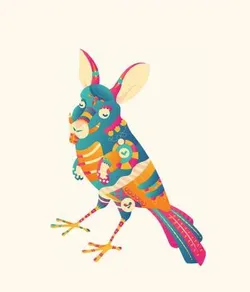
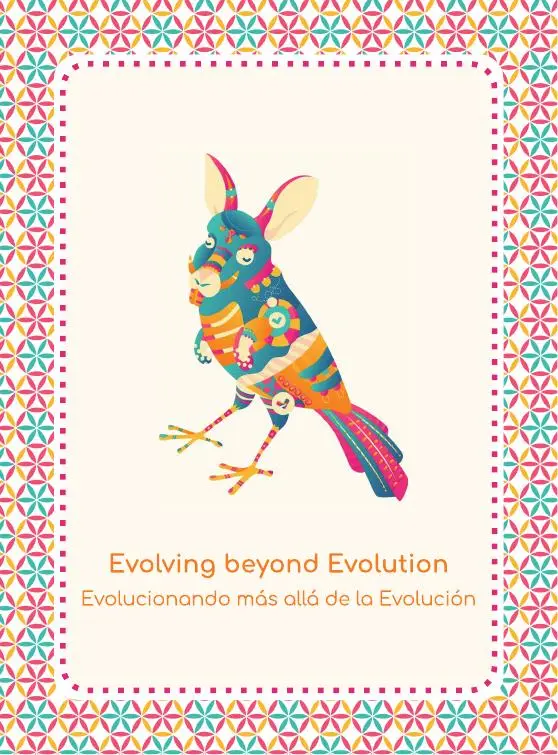
Meta Pets World · Your ally · Meta Pet 53

The bel fruit, ever ripe of itself

Superabundance card
53SuperabundanceSuperabundance is my natural state.

The tale begins where we shrink: one thought, ‘I am this’, clothes us in a narrow form and we feel unripe, never quite enough: the Immaturity that is Superabundance’s Shadow. Vasiṣṭha’s fruit grows until countless worlds are its seeds, the Gift of Expansion. And it is ‘ever ripe of itself’, shedding bliss like moonlight, a Superabundance that never depended on circumstance.

  1. Shadow · what you avoidImmaturity

    Immaturity is the contraction into one small seed: ‘The thought that “I am this”, clothes the unreality with a gross form… the mind makes them of itself and then believes its fictitious creatures as real ones’ (VI.1.45.17).

  2. Gift · what is hidden in itExpansion

    Expansion is the fruit growing until ‘millions of worlds’ lie within it as seeds, ‘as particles of dust at foot of a mountain’ (VI.1.45.6): each concern becomes one seed among millions.

  3. Essence · what you embodySuperabundance

    Superabundance is the fruit itself, ‘the source of delight in all beings… the solid rock of all security, the stupendous body of felicity’ (VI.1.45.14), ‘neither alone nor many’ (VI.1.45.36).

Still waiting to be ripe? Vasiṣṭha’s fruit never waited. It was always ripe, and so sweet that whole worlds fit inside it like seeds. Hold out your palm. I’ve brought you one.

— Felicia
Today’s contemplation

If superabundance overflows and the cup was never empty, what in you is already ripe, like the bel fruit, before anything changes?

To close the night

Tonight, write one honest sentence about something you are waiting for before allowing yourself to feel enough.

The Ally Journey · about 15 minutes

Light trance, eyes open if you prefer. For the full, deeper script, see “The practice” above and its cautions.

  1. Threshold. Sit comfortably and rest your hands open in your lap. Three slow breaths.
  2. The tale in one line: Vasiṣṭha describes a fruit so vast that worlds are its seeds, ever ripe and pouring out bliss, and says it is the soul (VI.1.45).
  3. Meet Superabundance. Look at the card’s art, then read with a little relish: ‘Superabundance is my natural state.’
  4. Shadow. Where this week did you feel ‘not ready yet’, too young, too unfinished, not enough? Notice the thought ‘I am this’ that came with it.
  5. Gift. Imagine a small round bel fruit in your palm. Let it grow, larger than the room, larger than the city, until today’s worries are tiny seeds inside it, dust at the foot of a mountain.
  6. Essence. Taste its sweetness, cool and bright as moonlight, never unripe, never spoiled. Rest three breaths as the fruit itself, then say the affirmation.
  7. Return. Let the fruit shrink back to a small bel in your palm, a cue you can recall later. Feel the chair, breathe fully, open the eyes. Write the honest line.

The 30-day Bond

Superabundance overflows and the cup was never empty: today, which seed am I mistaking for the whole fruit?

The Sister · Wirikuta

Wixárika (Huichol) · Wirikuta, Mexico · Tatewari · Tatewari

Visit Wirikuta, the Wixárika marakame of the sacred desert of Wirikuta, whose ‘Tatewari, Tatewari’ calls on Grandfather Fire, a warmth that gives and is not used up, like the fruit’s sweetness.

Guided Meditation

#53 · Superabundance

Voice & guidance: Prof. Luis Miguel GallardoWatch on YouTube (ES also available)
For facilitatorsA session with “The Vilva (Wood-Apple) Fruit” and Superabundance

Aim. To give an overwhelmed or fragmented client a containing image of one self that holds many contents, and a felt sense of well-being that does not depend on circumstance.

ITM 4 Essence Embodiment. The fruit is ‘ever ripe of itself’ (VI.1.45.8): the pairing serves Essence Embodiment, resting as an abundance already present rather than one still to be earned.

The session (60–75 min)

  1. Arrival and Umbral: three breaths; ask the client to list, quickly, everything they are carrying this week (8 min)
  2. Tell the tale in a 3-minute version: the vast bel fruit, its seeds of worlds, its sweetness, and Vasiṣṭha’s turn inward to the thought ‘I am this’; point to the tale page for the full retelling (5 min)
  3. The card: Superabundance’s art, affirmation and koan; ask where the cup feels empty (7 min)
  4. Shadow inquiry on Immaturity: where does the client resist growth or new beginnings, waiting to be ‘ready’? Which roles feel like fragments? (12 min)
  5. Trance practice: ‘The Fruit That Holds the Worlds’, following the full guided script on the tale page, at medium depth at most and with the image kept concrete and tactile; install the small bel fruit in the palm as a cue (18 min)
  6. Gift and Essence integration: the client places each item from the opening list as a seed inside the fruit, and chooses one new beginning to take up from that sense of plenty (14 min)
  7. Closing and Bond: assign the 30-day Bond with the varied koan; reorient fully, chair, breath, eyes (6 min)

Integration questions

  • What happened to your list of burdens when each became a seed inside the fruit?
  • What did the sweetness feel like, and where in your body did you feel it?
  • When this week will you close your hand around the small bel fruit, and what will you begin from there?

In a circle

In a circle, bring a real round fruit, a bel if you can find one, otherwise a quince or an orange, and pass it hand to hand during the Umbral. Tell the tale, then invite everyone to write on a slip of paper three things they are carrying. Guide the growing fruit at light depth, letting each burden become a seed. Afterwards, share in pairs one new beginning each feels ready for, and close by having everyone hold out an open palm for the small fruit cue while saying the affirmation together.

Cautions

  • Cosmic-scale imagery can feed grandiosity in hypomanic clients; keep it modest or choose another tale.
  • With derealisation or psychotic vulnerability, keep the ‘world inside a fruit’ image concrete and grounded, or omit it.
  • Do not use the containment image to avoid material that needs processing.

Training and certification in the Meta Pets Method: metapetsworld.org/facilitators ↗

The correspondence between tales and Meta Pets is contemplative: the Yoga Vāsiṣṭha does not contain the Meta Pets; each tale enacts its ally’s arc. Felicia is an artificial-intelligence companion; her words are contemplative reflections, not clinical advice.

The song

From the cycle The Sixty-Four Tales

Neither Alone Nor Many

Agnir yathaiko bhuvanaṃ praviṣṭo rūpaṃ rūpaṃ pratirūpo babhūva / ekas tathā sarvabhūtāntarātmā rūpaṃ rūpaṃ pratirūpo bahiś ca

Figure — The bel fruit, and the consciousness that turns out to be the fruit: Vasiṣṭha's riddle for Rāma.

Where in the text — Book VI (first half, Nirvāṇa-prakaraṇa), Mitra chapter 45.

Hypnotic phenomenon the song enacts — MET and AMN: the song builds the containing fruit first, then narrows its melody step by step to a single note as "I am this", "you", "in front", "behind", "to come" arrive and consciousness forgets it is the one who sees, then opens again to its full range.

Mantra — Agnir yathaiko bhuvanaṃ praviṣṭo rūpaṃ rūpaṃ pratirūpo babhūva / ekas tathā sarvabhūtāntarātmā rūpaṃ rūpaṃ pratirūpo bahiś ca (अग्निर्यथैको भुवनं प्रविष्टो रूपं रूपं प्रतिरूपो बभूव । एकस्तथा सर्वभूतान्तरात्मा रूपं रूपं प्रतिरूपो बहिश्च ॥). Source: Kaṭha Upaniṣad 2.2.9 (5.9); the bridge sings the second half. Meaning: "As the one fire, entering the world, takes the shape of every shape, so the one self within all beings takes the shape of every shape, and is outside them too": the fruit whose seeds are worlds, and which is still "neither alone nor many" (VI.1.45.36).


Lyrics (English)

Performance: the first verse is a quick, light riddle over the sitar. In verse 3 the melody narrows by one step on each line until it rests on a single repeated note. In the outro it opens back to its full range.

Verse 1 Here's a story never told before: a fruit as wide as myriad miles, older than Brahmā, Viṣṇu, Rudra, hanging on no stem, no bough, no branch. It is never green, it never falls, the deluge winds can't shake it loose. Tell me the fruit. Tell me the tree.

Verse 2 Break the shell: its seeds are worlds, millions, like dust at a mountain's foot. And all we wish for paints the pulp: Meru with the moon upon its peak, Rudras like comets trailing fire, a lake of time with ages for its petals.

Chorus Ever ripe of itself, dense as the inside of a stone, sweet with honey, cool as the moon, it drips its nectar on the living, and no one ever saw it grow.

Verse 3 (narrowing) Then one thought: I am this. Then you. Then in front. Beside. Behind. Near. Far. Gone. Now. Yet to come. It forgets it is the one who sees; high as the stars, it looks up at the stars.

Chorus Ever ripe of itself, dense as the inside of a stone, sweet with honey, cool as the moon, it drips its nectar on the living, and no one ever saw it grow.

Bridge (mantra) ekas tathā sarvabhūtāntarātmā (the one self in all that lives) rūpaṃ rūpaṃ pratirūpo bahiś ca (takes every shape, and stays outside) rūpaṃ rūpaṃ pratirūpo

Outro (full range again) Neither alone, nor many: the whole wonder lodged in a small bel fruit, a human soul — yours. Go back to the work that comes, done, or left undone, tranquil and calm and cool, ever ripe of yourself.


Letra (castellano cantable)

Interpretación: el primer verso es una adivinanza rápida y ligera sobre el sitar. En el verso 3 la melodía se estrecha un paso en cada línea hasta quedar en una sola nota repetida. En el final vuelve a abrirse a todo su registro.

Verso 1 Te cuento una historia nunca contada: un fruto ancho como miríadas de leguas, más viejo que Brahmā, Viṣṇu y Rudra, que no cuelga de tallo, ni rama, ni tronco. Nunca está verde, nunca se cae, no lo arrancan los vientos del diluvio. Dime qué fruto. Dime qué árbol.

Verso 2 Abre la cáscara: sus semillas son mundos, millones, polvo al pie de una montaña. Y lo que deseamos pinta la pulpa: el Meru con la luna en la cumbre, los Rudras, cometas de cola encendida, un lago del tiempo con eras por pétalos.

Estribillo Maduro siempre por sí mismo, denso como el centro de una piedra, dulce de miel, fresco de luna, gotea su néctar sobre los vivos, y nadie lo ha visto crecer.

Verso 3 (se estrecha) Luego un pensamiento: yo soy esto. Luego tú. Luego delante. Al lado. Detrás. Cerca. Lejos. Pasado. Ahora. Lo que vendrá. Olvida que es quien mira; alto como los astros, alza los ojos a los astros.

Estribillo Maduro siempre por sí mismo, denso como el centro de una piedra, dulce de miel, fresco de luna, gotea su néctar sobre los vivos, y nadie lo ha visto crecer.

Puente (mantra) ekas tathā sarvabhūtāntarātmā (el único ser en todo lo que vive) rūpaṃ rūpaṃ pratirūpo bahiś ca (toma cada forma, y queda fuera) rūpaṃ rūpaṃ pratirūpo

Final (de nuevo todo el registro) Ni una, ni muchas: la maravilla entera guardada en un pequeño fruto de bel, un alma humana: la tuya. Vuelve al trabajo que llega, hecho, o por hacer, con calma, en paz, en frescor: el alma, madura por sí misma.


One line to carry

EN: Worlds are its seeds; the fruit, ever ripe, is you. ES: Los mundos son sus semillas; el fruto, siempre maduro, eres tú.


Libreto note

A tale with no characters: only a fruit, and the listener who turns out to be it. Vasiṣṭha builds the bel first — wider than myriad miles, older than the gods, hanging on no branch, ripe of itself — and only then shows how the one becomes many. One thought, I am this, and the field narrows: you, in front, behind, gone, to come. The worlds are its seeds; the pulp is what our wishing paints there. A clinician knows the order: safety first, diagnosis after. A riddle over sitar; a melody that narrows to one note as the separating words arrive, then opens to its full range and sends you back to your work.


Source check

Source check (Mitra, Book VI first half)

  1. The fruit "as large as the distance of many myriads of miles"; "immovable even by the force of the diluvian winds"; Brahmā, Viṣṇu and Rudra "are not sempiternal with this tree"; "no stem or trunk or bough or branch": ch. 45, vv. 2, 4, 9–10.
  2. "Millions of worlds all within this fruit as its un-countable seeds… as particles of dust at foot of a mountain": ch. 45, v. 6.
  3. "Ever ripe of itself", never green, never falling; tasting of "sweet honey or celestial ambrosia"; "no body that has seen its growth"; "as dense as the inside of a stone… as effluent of bliss as the disk of the moon… distils its ambrosial draughts to the conscious souls of men": ch. 45, vv. 3, 8, 11, 13.
  4. "The thought that 'I am this'"; consciousness "counts the parts of time"; sees itself "by forgetting its subjectivity" and, "being itself as high as any one of them, finds itself far below them"; one thing "before", another "beside", "behind", "near or afar", "present… past or yet to come": ch. 45, vv. 17, 21, 23–24.
  5. The pulp: the Rudras "like comets falling from above with their flaming tails"; Meru's "moon capt summit"; "the lake of time… having the moments and ages for its leaves and petals" — "the wonders contained in the pulp of the vilva fruit… the unsubstantial substance of our desires"; the "tranquil, calm, cool" who do not care for works "done or left undone"; "that small bel fruit, which represents the human as well as the divine soul"; "neither alone nor many": ch. 45, vv. 16, 27–28, 32, 34–36.

Read the full text

Source: Vihari-Lala Mitra, The Yoga-Vasishtha Maharamayana of Valmiki (1891–99), public domain.

Collaborate on this research

Researchers, clinicians and institutions are welcome to write. Replication, data-sharing and site partnerships for the trials in progress are all open conversations.

Educational and scholarly content. Hypnotherapy and regression material is complementary and not a substitute for medical or psychiatric care.