ICEF

Tale 7 · The Vāsiṣṭha Atlas

The Ten Sons of Indu

Utpatti · Creation · Mitra III.84–88 · 8,419 words

Ten brothers thought 'I am the Maker', and ten worlds appeared.

Bhūmikā 4 · Sattvāpatti (dawn of being)PlenaryYour ally · The Prime Emanation

The essence

Brahmā wakes at the dawn of a new creation, finds ten worlds already shining in his mind, and summons the Sun to ask where they came from. The Sun tells him: in a past kalpa the brahmin Indu and his wife stood like trees on Kailāsa for two ages until Śiva granted them ten sons. Orphaned, the brothers asked what endures for a whole kalpa, and the eldest answered: the state of Brahmā. He gave the instruction, sit in padmāsana and think yourselves Brahmā, and they did, until their bodies withered and were eaten by beasts while their minds went on holding the thought. Each became a creator; their ten worlds outlived the dissolution, and the Sun himself is the eldest of them. When Brahmā asks what is left for him to create, the Sun counsels him to create without desire, as if in sleep, for what is firmly seated in a mind can be removed by no one but its owner. It is the text's clearest demonstration that sustained self-suggestion becomes a world.

What it teaches

  1. 01

    A self-image held with total, sustained attention stops being an image and becomes the frame of experience: 'Here I sit ... and find myself as Brahmá' (III.86.38).

  2. 02

    Deep-rooted belief can be removed by no outside force, 'except by its owner' (III.88.19–20); in therapy, lasting change is the client's own act.

  3. 03

    Absorption without a plan for return costs the body: the brothers' bodies dried and were eaten while their minds meditated on (III.87.2–3).

  4. 04

    Loss can open inquiry: the brothers ask what truly lasts only after both parents die (III.86.24–29).

  5. 05

    Action can be done 'as if it were in thy sleep': without craving, yet without the inertia of the dull mirror that reflects nothing (III.88.11–13).

The Vāsiṣṭha Atlas

This tale’s coordinates

The wound and its virtue

Orphaned, the ten brothers ask what endures and flee finitude into a single image, 'Here I sit … and find myself as Brahmá' (III.86.38), held so completely that their bodies wither unnoticed (III.87.2): a felicity that refuses the body's reality. The Sun's counsel turns that power into Ease, to create 'with a cheerful heart, and calmness of mind; with a tranquil soul, as if it were in thy sleep' (III.88.13).

What it trains

The brothers show what sustained single-pointed attention can build, and the Sun refines it into attention that creates without strain or craving, 'as if it were in thy sleep' (III.88.13).

In other yogas

  • Patañjali · Yoga Sūtra · YS 1.19

    Patañjali mentions those who, bodiless or merged in nature, rest in absorption by the very fact of becoming, a state that lasts but is not liberation; the brothers, bodies fallen away and minds holding Brahmā until the close of the kalpa (III.87.4), are a vivid case.

  • Bhagavad Gītā · BG 17.3

    The Gītā says a person is made of faith: as one's faith is, so one is; the Sun's teaching that a deep-rooted belief can be removed by no one but its owner (III.88.19) is its narrative proof.

  • Yoga nidrā

    In yoga nidrā a saṅkalpa planted in deep relaxation is meant to shape the life that follows; the eldest brother's instruction to sit in padmāsana and think yourselves Brahmā (III.86.35) is a saṅkalpa held to its cosmic limit.

  • Buddhist absorption · DN 1

    The Brahmajāla Sutta tells of a Brahmā who, arising alone and wishing for company, believes the beings who then appear are his own creation; the ten worlds already shining in Brahmā's mind (III.85) raise the same question of who made whom.

IEAF: Integrative Emotional Alchemy Framework (Gallardo, Frontiers in Psychology, 2026). FP20: the Fundamental Peace Scale. ITM: the Integrative Transformation Model. Parallels in other yogas are contemplative correspondences, not claims of influence.

The tale

Vasiṣṭha first prepares Rāma: the mind spins the magical world out of itself; sit in silent meditation and the whole world will be seen within, while outward bodies disappear like drops of oil in sand. Then he relates a story Brahmā himself once told him.

Brahmā said: at the end of a cosmic night I woke as from deep sleep, opened my eyes on an empty, boundless darkness, and resolved to create. Looking within, I beheld a cosmos already standing in my mind, and from my reflection ten lotus-born Brahmās sat over ten orbs like swans brooding on their eggs. Rivers, seas, winds, gods, men and serpents filled them. I was confounded: whence had all this come, and why do I perceive with my mind what I do not see with my eyes? I called the brightest sun to me and asked him what he was and how these worlds arose.

The Sun bowed and answered: you are their cause, yet I will tell you. In one of your past kalpas, at the foot of Kailāsa, lived a pious brahmin, Indu, of Kaśyapa's line, with a wife dear to him as his second self. They had no child. They climbed the barren mountain and stood there like two trees in the desert, drinking only a palmful of water at dusk, through heat and cold, for two ages. Śiva came to them, Umā on his left and the moon on his brow, and granted Indu's prayer for ten intelligent sons. Ten boys were born, beautiful as the new moon; they learned the language of the gods and grew. Then both parents died.

Grieving, the ten brothers went up Kailāsa and asked one another what is truly great. What is a kingdom worth, when even Indra's sovereignty is lost in a moment of Brahmā's time? What endures a whole kalpa? The eldest answered: the state of Brahmā. How can we reach it? Sit in padmāsana, he said, and think yourselves Brahmā, full of his effulgence, holding the powers of creation and annihilation. The brothers said Amen and sat with him, still as figures in a painting.

Each thought: here I sit on the pericarp of a full-blown lotus and find myself as Brahmā. I find in me the Vedas and the rites, the gods and men; the regents of the quarters and the circling Siddhas; this earth with its oceans hanging like an earring; the underworlds and the heavens; the twelve suns of the twelve months; beings rising and falling like waves; years and ages turning; a kalpa passing and the night of dissolution stretched out before me, while I remain in the Supreme.

They sat like rocks hewn from the hill until their bodies dried in sun and wind and dropped like withered leaves; forest beasts devoured them and monkeys tossed them about. Their minds, fixed in Brahmā-hood, stayed in bliss until the kalpa ended in deluge and your night came, when all creation slept in you as in yoga-nidrā. Now you have woken, and the ten worlds you see are theirs. I am the eldest of them, appointed to measure out time for earthly beings.

Brahmā asked: then what need is there for me to make more worlds? The Sun replied: you create without desire, for delight, as sunlight raises water and casts a shadow. Do the work that comes to you, cheerfully, calmly, as if in sleep, wanting nothing. No one sees these worlds with open eyes as you see them with the mind, and no one can destroy them, for what is firmly seated in a mind cannot be annulled. A deep-rooted belief can be removed by none but its owner; a curse may kill the body, but it cannot remove a confirmed belief from the mind.

The text speaks

Passages from Mitra’s translation (1891–99), cited by book, chapter and verse.

“Do you but sit in your posture of padmásana, and think yourselves as the bright Brahmá and full of his effulgence; and possessing the powers of creation and annihilation in yourselves.”
III.86.35The induction in one sentence: posture plus an identification suggestion, delivered by the eldest brother.
“Here I sit on the pericarp of a full blown lotus, and find myself as Brahmá—the great god, the creator and sustainer of the universe.”
III.86.38The suggestion accepted and spoken in the first person: the moment the image becomes identity.
“They remained in this state (of abstraction), until their bodies were dried up by exposure to the sun and air, and dropped down in time like the withered leaves of trees.”
III.87.2Catalepsy carried to its extreme, and the cost of no return.
“These Bráhmans, having their thoughts distracted from outward objects, and concentrated in Brahmáhood, continued in the enjoyment of divine felicity in their Spirits, until the close of the kalpa age at the end of the four yugas.”
III.87.4Absorption that outlasts the body: the mental state persists independently of its physical support.
“Why is it that I do not see with my visual organs, all that I perceive, as a magic scene spread out in the sphere of my Mind?”
III.85.32The creator's own question about inner seeing versus sensory seeing: the frame for the whole tale.
“Therefore do thy work as it comes to thee, with a cheerful heart, and calmness of mind; with a tranquil soul, as if it were in thy sleep, and devoid of desires which thou canst never reap.”
III.88.13Action in a trance-like detachment, prescribed as the right relation to one's creations.
“Whatever belief is deep-rooted in the minds of living beings, it is impossible to remove it by any body, except by its owner (by change of his mind or its forgetfulness).”
III.88.19The tale's conclusion and a principle for any work with suggestion: belief belongs to its owner.
“Whatever is habituated to confirmed belief in the mind, no curse can remove it from the mind, though it can kill the body.”
III.88.20Bridges directly into the next tale, where a sage's curse fells two bodies but not two minds.

What the trance sees

IND

Induction

III.86.34–37

In the textThe eldest brother prescribes posture and idea ('sit in your posture of padmásana, and think yourselves as the bright Brahmá'); the others answer 'Amen' and sit 'like the still pictures in a painting.'

In the clinicA direct verbal induction combining posture with a single identification suggestion, delivered in a group by a trusted figure; comparable to group induction with an 'as-if' role suggestion.

ABS

Absorption

III.86.38–49

In the textTwelve verses of first-person immersion: 'I find in me the whole ritual ... I see in me the spheres of the regents ... I see a Kalpa passing away before me.'

In the clinicImaginative absorption in the sense of Tellegen & Atkinson (1974): total engagement of attention in an inner scene that is experienced as self.

CAT

Catalepsy

III.86.9; III.86.50; III.87.2–3

In the textThe parents stand 'unmoved as immovable trees' for two ages; the sons sit 'in their motionless postures like fixed rocks' until their bodies dry, drop and are devoured.

In the clinicSustained catalepsy with complete inattention to the body, the extreme of the waxy immobility seen in deep hypnosis; here carried past any safe limit.

NEST

Nested trance

III.85.10–11; III.87.9–11

In the textWorlds created by ten minds now stand inside Brahmā's mind: 'these have become the ten bright orbs situated in the vacuous sphere of thy mind.'

In the clinicEmbedded realities within a containing frame, structurally like the multiple embedded metaphor of Ericksonian practice (Lankton & Lankton, The Answer Within, 1983).

PHS

Post-hypnotic carry-over

III.87.4; III.88.17–20

In the textThe state continues after the bodies are gone, and its products persist into the next kalpa: 'no body has the power to destroy them, when they are seated so firmly in the mind.'

In the clinicPost-hypnotic persistence: a suggestion accepted as belief continues to act long after, and outside, the session in which it was given.

DIR

Direct suggestion

III.86.34–36; III.88.19

In the textA direct instruction is accepted without reservation and fulfilled completely; the Sun then states the limit of all such influence: belief is removed by no one 'except by its owner.'

In the clinicBernheim's view (De la suggestion, 1886) that a suggestion works only as the subject accepts it and turns the idea into act; modern practice frames this as all hypnosis being consented self-direction.

Read upward — stage 1 at the bottom, stage 7 at the top

  1. Integration zone
    Hypnotic absorption meets direct knowing — identity deconstruction at full depth. This is YVH's primary therapeutic zone, and the model's central testable hypothesis.

A note on what this map claims. The alignment between stages of knowledge and trance depths is a clinical map — a heuristic correspondence proposed for research, not a claim of identity between contemplative attainment and hypnotic depth.

Bhūmikā 4 · Sattvāpatti

The brothers are 'freed from the snare of the fickle and frivolous desires' and rest in divine felicity (III.86.51; III.87.4), a dawning of pure being; but their identification is still with a form, Brahmā, and it goes on producing worlds, so it is not yet non-clinging.

Zone · Plenary

Their absorption admits no emergence at all: the body dries, falls and is eaten without the meditators noticing (III.87.2–4), which is beyond the deepest clinically usable state.

In Mitra’s words

In Calcutta in the 1890s, the translator chose the vocabulary of hypnotism to name these states. More →

  • clairvoyanceAt last he perceived by his súkshma vid subtile sightedness (clairvoyance), that all gross bodies were as empty as air and not solid substantialities.III.84.41
  • Várkshivritti (forgetting one's self to wood or stone)(Várkshivritti means intense meditation conducted by forgetting one’s self to wood or stone).III.86.9
  • absorption(This is called the Samádhi yoga or absorption in meditation, until one’s final extinction or Euthanasia in the Spirit).III.87.2
  • hupnos(The duration of a day of Brahmá extends over a kalpa age composed of four yugas, followed by his night of kalpánta, when he becomes extinct in his death-like sleep, the twin brother of death. Ho hupnos esti didumos adelphos thanatow).III.87.4
  • hypnotic tranceIt was then thy dark night, and the previous creation slept as in their yoga-nidrá or hypnotic trance in thy sleeping self.III.87.7

In the therapy room

Indications

  • Identity and self-image work: installing a resource self-image through sustained first-person identification
  • Demonstrating to clients that a stabilised belief shapes the world they experience, and that they own it
  • Grief that turns toward meaning and inquiry after the loss of parents
  • Creative block or loss of agency, using the brothers' 'I find in me' sequence
  • Over-striving or burnout, through the Sun's counsel to act without craving

Cautions

  • The tale shows absorption without return; practices derived from it must include explicit emergence and attention to the body
  • Grandiose identification ('I am the creator') is contraindicated for clients with mania, psychosis or fragile reality-testing
  • The principle that only the owner can remove a belief should not be used to blame clients for symptoms they cannot yet change
From the bookThe full clinical note

Indications. Identity and self-image work, installing a resource self-image through sustained first-person identification; demonstrating to clients that a stabilised belief shapes the world they experience and that they own it; grief that turns toward meaning after the loss of parents; creative block or loss of agency, using the "I find in me" sequence; over-striving and burnout, through the Sun's counsel to act without craving.

How to use it. As metaphor, tell the brothers' question and the eldest's answer, and ask what the client would choose to "think himself" if the choice were his. As protocol, give a first-person identification suggestion in present tense, with the body located ("Here I sit"), widen its circle breath by breath, and then, unlike the brothers, return to the body explicitly. The principle of III.88.19 is useful for ownership: the client can hear that only he can keep or change a belief, and that this is a power, not a reproach.

Cautions. The tale shows absorption without return; every practice derived from it must include explicit emergence and attention to the body. Grandiose identification, "I am the creator", is contraindicated for clients with mania, hypomania, psychosis or fragile reality-testing; for them, choose a modest resource identity, or do not use the tale. The principle that only the owner can remove a belief must never be used to blame clients for symptoms they cannot yet change. And the parents' austerity, standing for two ages on a barren mountain (III.86.7–10), is not a model for anyone struggling with infertility or loss; frame it as myth.


The practice

Ten Breaths of the Maker

  1. Sit in a stable posture, cross-legged or in a chair, and let the body grow still as a figure in a painting (III.86.35–37).
  2. Ask the brothers' question quietly: what in me endures? (III.86.27–31).
  3. Choose one resource identity and give it to yourself in the first person: 'Here I sit, and find myself as …' (III.86.38).
  4. Over ten breaths widen the circle of 'I find in me': body, room, people, land, sky (III.86.39–46).
  5. Watch time pass within the image, seasons turning, while you remain (III.86.48–49).
  6. Affirm ownership: this belief is mine, and I alone may keep or change it (III.88.19).
  7. Take the Sun's counsel: choose one action to do today without craving, 'as if it were in thy sleep' (III.88.13).
  8. Re-alert by returning to the body the brothers abandoned: feel weight and breath, move hands and feet, count up and open the eyes (contrast III.87.2–3).

Practise with a qualified professional if you have a history of dissociation, trauma or psychosis.

From the book · to be read aloudThe full guided script

Ten Breaths of the Maker

Read slowly, aloud; about fifteen minutes. Sit upright.

Before you begin. This practice builds a resource self-image through first-person identification. Do not use it if you live with bipolar disorder, mania, psychosis or any condition affecting your sense of what is real, except with your clinician. Choose a modest identity, one you would be glad to carry into an ordinary day. Never practise while driving, operating anything, or in or near water.

How to return at any moment. Open your eyes, press your feet into the floor, say your name and the date aloud.


Sit, stable and upright, in a chair or cross-legged. Let the body grow still, like a figure in a painting. Let the breath slow.

Ask the brothers' question quietly: What in me endures? Do not answer with your head. Let the question rest.

Now choose one resource identity, one quality you need and would be glad to live from: the steady one, the patient one, the maker, the healer. Give it to yourself in the first person: Here I sit, and find myself as … Say it silently. Feel where in the body it lives.

Now ten breaths. With each out-breath, let the circle of I find in me widen.

One. I find in me this body, breathing.

Two. I find in me this room.

Three. The people I love.

Four. The people I work with.

Five. The street outside.

Six. The town, its sounds.

Seven. The land, the rivers, the hills.

Eight. The sky over all of it.

Nine. The seasons turning: spring, summer, autumn, winter, and I remain.

Ten. All of it held, and I am the one in whom it is held.

Rest there for a few breaths.

Now affirm, quietly: This belief is mine. I alone may keep it or change it.

And take the Sun's counsel. Choose one thing you will do today without craving, cheerfully, calmly, as if in sleep.

(Silence: one minute.)


Now come back to the body the brothers forgot.

Feel its weight on the seat. Feel the breath in the belly. Feel hunger, thirst, warmth: the body is here, and it is yours to look after.

I will count from one to five, and on five your eyes open.

One. Move your fingers and toes.

Two. Feel your feet pressing the floor.

Three. The sounds of the room return.

Four. Stretch; take one full breath.

Five. Eyes open. Here. Now. Fully alert.

Say your name aloud, the day and the place, and name three things you can see. Stand, walk a few steps, and drink some water before you begin the action you chose.


Meta Pets World · Your ally · Meta Pet 41

The ten sons of Indu and the held thought

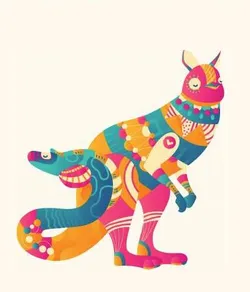
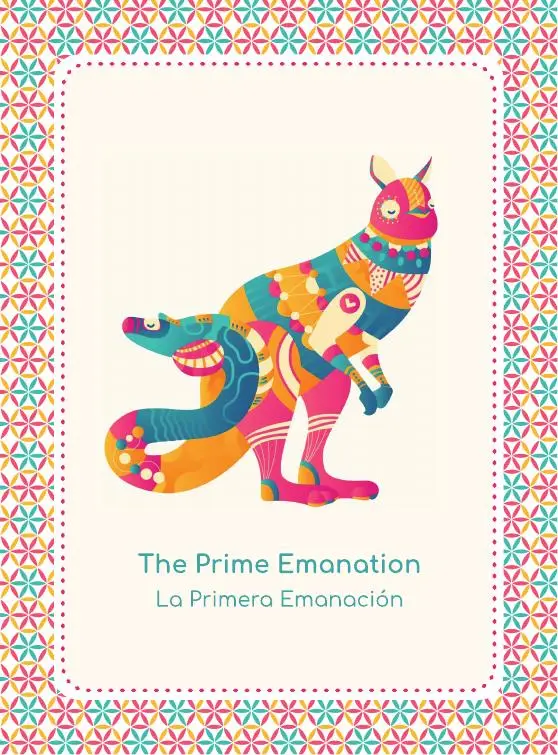
The Prime Emanation card
41The Prime EmanationI channel the prime emanation of source.

The Prime Emanation walks with the ten sons of Indu because the tale lives at the edge of Fantasy: the brothers hold one image of themselves so completely that their bodies wither and are eaten while their minds go on. Their turning is Anticipation, asking what endures and holding that one image with discipline, and their arrival is Emanation, ten worlds shining in the mind of Brahmā, and the Sun's counsel to create without craving.

  1. Shadow · what you avoidFantasy

    Fantasy: absorbed in being Brahmā, the brothers stayed 'until their bodies were dried up by exposure to the sun and air, and dropped down in time like the withered leaves of trees' (III.87.2).

  2. Gift · what is hidden in itAnticipation

    Anticipation: orphaned, they ask what endures for a whole age (III.86.27–31) and choose one image to hold with total attention: 'Here I sit on the pericarp of a full blown lotus, and find myself as Brahmá' (III.86.38).

  3. Essence · what you embodyEmanation

    Emanation: their ten worlds outlast the dissolution and the Sun, eldest of them, counsels Brahmā to create 'with a tranquil soul, as if it were in thy sleep, and devoid of desires' (III.88.13).

The Prime Emanation, and ten brothers who thought one thought until it became a world. Pick your thought kindly. And keep one hand on your knee, so your body comes along.

— Felicia
Today’s contemplation

If the brothers' one held thought became ten worlds, from where does the picture you hold of yourself emanate, and what world is it already making around you?

To close the night

Tonight, write one honest sentence about the picture of yourself you held most often today, and the world it made.

The Ally Journey · about 15 minutes

Light trance, eyes open if you prefer. For the full, deeper script, see “The practice” above and its cautions.

  1. Threshold: sit in a stable posture, one hand resting on your knee as an anchor. Take three slow breaths and feel the weight of the body. This is the Umbral.
  2. The tale in one line: ten orphaned brothers sit thinking 'I am the Maker' until each becomes the creator of a world, while their forgotten bodies wither (III.86.38; III.87.2).
  3. Meet the card: look at The Prime Emanation for a few breaths. Notice where the light seems to come from. Read the affirmation once: I channel the prime emanation of source.
  4. Shadow: when this week did a daydream carry you away from your body or your tasks? Name the picture you were living in, and what was left untended meanwhile.
  5. Gift: choose one modest resource image, such as 'a calm maker' or 'a steady friend'. Say silently, 'Here I sit, and find myself as…', and let it settle for a few breaths, hand still on the knee.
  6. Essence: let the image widen gently to the room and the people near you. For three breaths say the affirmation, and choose one task today to do without craving, 'as if in sleep'.
  7. Return: press the hand on your knee, feel your feet and breath, move your fingers, open your eyes fully and look around. Write tonight's honest line.

The 30-day Bond

The prime emanation emanates: from which held thought in you did today's world begin?

The Sister · Rabia

Turkish-Kurdish · Konya, Turkey · Bismillāh ar-Raḥmān ar-Raḥīm

Visit Rabia, the Mevlevi whirling dervish of Konya, who turns with one palm open to the sky and one to the earth; her Bismillāh ar-Raḥmān ar-Raḥīm is a way of beginning any creation in a name larger than one's own.

Guided Meditation

#41 · The Prime Emanation

Voice & guidance: Prof. Luis Miguel GallardoWatch on YouTube (ES also available)
For facilitatorsA session with “The Ten Sons of Indu” and The Prime Emanation

Aim. To help the person choose and sustain a resource self-image that shapes their days, while keeping the body present and creating without craving.

ITM 4 Essence Embodiment. The tale installs a new quality in the first person and lets it become the frame of experience, the core move of Essence Embodiment.

The session (60–75 min)

  1. Arrival and Umbral: three slow breaths together, one hand on the knee as an anchor for the whole session (8 min)
  2. Telling the tale: a 4-minute version of Brahmā's ten worlds, the Sun's story of Indu's sons and the counsel to create without desire; point to the tale page for the full text (5 min)
  3. The card: show The Prime Emanation, read the affirmation and the koan, and ask where the person's own creations seem to come from (7 min)
  4. Shadow inquiry: which self-images the person lives in, which pull them away from body and daily tasks, and what has withered while they were absorbed (12 min)
  5. Trance practice: Ten Breaths of the Maker, using the full guided script on the tale page at LIGHT to MEDIUM depth only, never the plenary absorption of the tale; choose a modest resource identity, not a cosmic one; include the explicit return to the body (15 min)
  6. Gift and Essence integration: affirm ownership of the chosen image and pick one action to do 'as if in sleep', without craving (12 min)
  7. Closing and Bond: count up, move hands and feet; set the 30-day Bond with the koan variation (7 min)

Integration questions

  • What changed in your posture or breath while you held the resource image?
  • Which old picture of yourself is still building your days, and is it yours to keep or to change?
  • What will you do this week 'as if in sleep', fully, without craving the result?

In a circle

In a circle, ask everyone to keep one hand on a knee throughout. Tell the tale, then lead Ten Breaths of the Maker at light depth, with each person choosing a modest, kindly resource identity of their own. On each of the ten breaths, widen the circle aloud: body, room, the people in this circle, the street, the sky, and then come back the same way. In pairs, each person says their sentence, 'Here I sit, and find myself as…', and one task they will do without craving. Close with the circle standing and pressing feet to the floor together, so that every world made today has a body under it.

Cautions

  • The tale shows absorption without return; every practice drawn from it must include explicit emergence and attention to the body.
  • Grandiose identification ('I am the creator') is contraindicated for anyone with mania, psychosis or fragile reality testing; use modest resource identities.
  • Do not use 'only the owner can remove a belief' to blame people for symptoms they cannot yet change.

Training and certification in the Meta Pets Method: metapetsworld.org/facilitators ↗

The correspondence between tales and Meta Pets is contemplative: the Yoga Vāsiṣṭha does not contain the Meta Pets; each tale enacts its ally’s arc. Felicia is an artificial-intelligence companion; her words are contemplative reflections, not clinical advice.

The song

From the cycle The Sixty-Four Tales

Ten Worlds, One Sun

Oṃ namo brahmaṇe · namas te vāyo · tvam eva pratyakṣaṃ brahmāsi

Title: Ten Worlds, One Sun Título: Diez mundos, un sol

Figure — The ten sons of Indu, whose eldest became the Sun and tells their story to Brahmā.

Where in the text — Book III (Utpatti Prakaraṇa), Mitra chapters 85–88 (84 as the bridge from the tale before).

Hypnotic phenomenon the song enacts — ABS and CAT: ten voices enter on ten breaths, each absorbed in "Here I sit … I find in me …", until they hold one chord; then the voices leave one by one, as the motionless bodies withered and fell, while a single drone stays (the minds holding the worlds); the song ends by walking back into a breathing body.

Mantra — Oṃ namo brahmaṇe · namas te vāyo · tvam eva pratyakṣaṃ brahmāsi (ॐ नमो ब्रह्मणे । नमस्ते वायो । त्वमेव प्रत्यक्षं ब्रह्मासि). Source: Taittirīya Upaniṣad 1.1.1 (the Śīkṣāvallī invocation); the planned Oṃ Brahmaṇe Namaḥ in its Upaniṣadic form. Meaning: "Om, homage to Brahman. Homage to you, Breath: you alone are Brahman that can be seen."


Lyrics (English)

Performance: the verses are the Sun, a solo baritone. In the first chorus ten voices enter on ten breaths, one line each, until they are one chord. In the second chorus the lines shorten and the voices leave one by one, the eldest last; the drone stays. Bridge and outro at walking pace, the breath audible.

Verse 1 — the Sun You woke, Lord, from your night, and found ten worlds already in your mind, like swans brooding on their eggs. You called the brightest. I bowed. Let me tell you whose they are.

Verse 2 Indu and his wife had no child. They stood on bare Kailāsa like two trees for two ages, till Śiva came with the moon on his brow. Ten sons. The parents died; on the mountain we asked what lasts a kalpa. I, the eldest, said: sit; think yourselves Brahmā.

Chorus (ten voices, one per breath) Here I sit on the open lotus. The Vedas are in me. The gods and men. The Siddhas circle me. The earth hangs like an earring. The serpents' hollow. The net of stars. Twelve suns for twelve months. Beings rise and fall like waves. A kalpa passes, and the night.

Verse 3 — the Sun We sat like rocks hewn from the hill. Sun and wind dried our bodies; they dropped like withered leaves; beasts ate them. The minds held. The flood came; your night came. You woke: we are ten worlds in you; I, the eldest, measure out the days.

Chorus (the voices leaving) Here I sit. The gods and men. An earring. Twelve suns. Waves. Night.

Bridge (mantra) (walking pace, breath audible) Oṃ namo brahmaṇe (Om, homage to Brahman) namas te vāyo, tvam eva pratyakṣaṃ brahmāsi (homage, Breath: you are Brahman we can see)

Outro — the Sun What a mind holds firm, no curse can take; only its owner. Choose what you hold. Do the work that comes, cheerfully, as if in sleep. Breathe. This is the body we left on the mountain. Keep it. Walk. I rise now to measure out your day.


Letra (castellano cantable)

Interpretación: los versos son el Sol, un barítono solo. En el primer estribillo diez voces entran en diez respiraciones, un verso cada una, hasta ser un solo acorde. En el segundo los versos se acortan y las voces se van una a una, la del mayor la última; queda el bordón. Puente y final a paso de caminar, con la respiración audible.

Verso 1 — el Sol Despertaste, Señor, de tu noche, y hallaste diez mundos ya en tu mente, como cisnes empollando sus huevos. Llamaste al más brillante. Me incliné. Deja que te cuente de quién son.

Verso 2 Indu y su mujer no tenían hijos. Se quedaron en el Kailāsa pelado como dos árboles, dos eras, hasta que vino Śiva con la luna en la frente. Diez hijos. Murieron los padres; en el monte preguntamos qué dura un kalpa. Yo, el mayor, dije: sentaos, y pensaos Brahmā.

Estribillo (diez voces, una por respiración) Aquí me siento en el loto abierto. Los Vedas están en mí. Los dioses y los hombres. Los Siddhas giran a mi alrededor. La tierra cuelga como un pendiente. La hondura de las serpientes. La red de estrellas. Doce soles para doce meses. Los seres suben y caen como olas. Pasa un kalpa, y la noche.

Verso 3 — el Sol Nos sentamos como rocas talladas en el monte. El sol y el viento secaron los cuerpos; cayeron como hojas marchitas; las fieras se los comieron. Las mentes aguantaron. Vino el diluvio; vino tu noche. Despertaste: somos diez mundos en ti; yo, el mayor, reparto los días.

Estribillo (las voces se van) Aquí me siento. Los dioses y los hombres. Un pendiente. Doce soles. Olas. Noche.

Puente (mantra) (a paso de caminar, respiración audible) Oṃ namo brahmaṇe (Om, homenaje a Brahman) namas te vāyo, tvam eva pratyakṣaṃ brahmāsi (homenaje a ti, Aliento: tú eres el Brahman que se ve)

Final — el Sol Lo que una mente sostiene firme, ninguna maldición se lo lleva; solo su dueño. Elige lo que sostienes. Haz el trabajo que llega, con alegría, como en sueños. Respira. Este es el cuerpo que dejamos en el monte. Guárdalo. Camina. Ya me levanto a medirte el día.


One line to carry

EN: A held thought becomes a world; only its owner unmakes it. ES: Un pensamiento sostenido se hace mundo; solo su dueño lo deshace.


Libreto note

Brahmā wakes at dawn and finds ten worlds already in his mind, and calls the Sun to explain. The Sun is the eldest of ten orphaned brothers who sat on Kailāsa and thought themselves the Maker until their bodies fell like withered leaves and their worlds outlasted the flood. It is the text's plainest proof that a self-image held long enough becomes a world, and its plainest warning: they never came back for the body. Ten voices enter on ten breaths and become one chord; they leave as the bodies left; the drone remains. Then the Sun's counsel at walking pace: work as if in sleep, and keep the body you are breathing in.


Source check

Source check (Mitra, Book III)

  1. Brahmā wakes "at the end of the chaotic night … as from a deep sleep"; the cosmos seen in his mind, "ten lotus-born Brahmás over the ten orbs … like so many swans brooding upon their eggs"; "I called to me the brightest sun"; the Sun "made his salutation": ch. 85, vv. 7–11, 33–36.
  2. Indu and his wife on Kailāsa "unshaded by shady trees", standing "like a couple of trees in the barren desert" for "the period of two ages"; Śiva "with the cooling moon-beams on his forehead"; ten sons; both parents die; the brothers on Kailāsa ask "What is that thing which endures a whole kalpa"; "sit in your posture of padmásana, and think yourselves as the bright Brahmá": ch. 86, vv. 3–35.
  3. "Here I sit on the pericarp of a full blown lotus, and find myself as Brahmá"; "the Vedas … the gods and men"; "the circles of the Siddhas revolving about me"; the earth "hanging as an ear-ring"; "the hollow of the infernal world … serpents"; "the bright net of the firmament … the twelve suns of the twelve months"; beings "rising and falling … like the incessant waves of the sea"; "a Kalpa passing away before me, and the night of Brahmá": ch. 86, vv. 38–49.
  4. "Like fixed rocks, and as images hewn out of stones in a hill"; bodies "dried up by exposure to the sun and air, and dropped down … like the withered leaves"; "devoured by the voracious beasts of the forest"; the deluge and "thy dark night"; "I am the one eldest among them … appointed … to regulate the portions of time on earthly beings": ch. 86, v. 50; ch. 87, vv. 2–10.
  5. "Do thy work as it comes to thee, with a cheerful heart … as if it were in thy sleep"; belief removable by none "except by its owner"; "no curse can remove it from the mind, though it can kill the body": ch. 88, vv. 13, 19–20.

Read the full text

Source: Vihari-Lala Mitra, The Yoga-Vasishtha Maharamayana of Valmiki (1891–99), public domain.

Collaborate on this research

Researchers, clinicians and institutions are welcome to write. Replication, data-sharing and site partnerships for the trials in progress are all open conversations.

Educational and scholarly content. Hypnotherapy and regression material is complementary and not a substitute for medical or psychiatric care.