ICEF

Tale 5 · The Vāsiṣṭha Atlas

The War of Vidūratha and Sindhu; the Death and Revival of Padma

Utpatti · Creation · Mitra III.31–59 · 79,169 words

A seventy-year life and a war, held in one chamber's empty space.

Bhūmikā 5 · Asaṃsakti (non-clinging)SomnambulisticYour ally · Letting Go of Living and Dying

The essence

Padma's widow Līlā and the goddess Sarasvatī pass into the empty space of Padma's tomb and find a whole kingdom there: Padma lives on as King Vidūratha, seventy years old, besieged by King Sindhu. At a touch of the goddess's hand he remembers his former life and asks how seventy years fit into one day after his death. The war, the burning city, his second queen (an exact double of Līlā) and his death in battle all happen, the goddess says, "nowhere except in the vacant space of the shrine". Sindhu wins because he prayed for victory; Vidūratha prayed only for liberation. The text then gives its fullest account of dying: the senses fall and whirl, the swoon comes, the soul wakes, is judged by Yama, and is led back by its own desire to the body it longs for. Sarasvatī breathes life into Padma's nostrils; he wakes, reigns with both Līlās in living liberation, and is finally freed. Death here is a fainting fit inside consciousness, and one wakes into what one desires.

What it teaches

  1. 01

    A whole lifetime can be a scene inside one room of the mind: Vidūratha's seventy years, with his boyhood, his grandsire and his wars, fit into a single day after Padma's death (III.41.29–30), so the felt length and solidity of an experience prove nothing about its reality.

  2. 02

    Outcomes follow the direction of desire, not merit or force: Sindhu had long prayed for victory and won; Vidūratha never asked for it, wanted liberation, lost the war and was freed (III.47.3–7).

  3. 03

    Dying is described as a sequence of sensory collapse (darkness, falling, whirling, speech failing, memory lost, swoon) followed by waking into whatever the mind expects (III.54.40–55; III.55.21–22; III.56.9): preparing the expectation is preparing the death.

  4. 04

    A blessing or a curse acts only as the state the person already desires or fears (III.53.36); the same thought that makes poison taste of nectar (III.56.31) is the engine of both healing and harm.

  5. 05

    The self one wishes to be can appear as a rival person: the younger Līlā is the elder's own desired image (III.52.36–37), and naming her "a reflexion of myself" (III.58.47) ends the doubling and lets both serve one life.

The Vāsiṣṭha Atlas

This tale’s coordinates

The wound and its virtue

Death is the ground of this tale: Vidūratha loses his city, his queen and his life, and the text walks through the swoon of dying and the soul's waking (III.54–56), the rupture of finitude itself. Because he prayed only for liberation he crosses it without clinging (III.47.3–7), and Care completes the arc when Sarasvatī breathes life into Padma's nostrils (III.58.35) and he owns the younger Līlā as 'a reflexion of myself' (III.58.47).

What it trains

Learning that the soul 'is neither born nor dead' but witnesses both (III.54.67), Padma holds two lives, two queens and his own death without fixing on any single self.

In other yogas

  • Bhagavad Gītā · BG 2.20; 8.6

    The Gītā's self that is never born and never dies, and its teaching that at death one goes to whatever state one dwells upon, both run through this tale: the soul is 'neither born nor dead' (III.54.67), and the spirit is drawn back to what it longs for (III.56.21).

  • Buddhist absorption

    Tibetan bardo teachings describe the senses dissolving, a swoon, waking into an after-death state, judgement before the Lord of Death and craving drawing one toward a new birth; Vasiṣṭha's account of dying (III.54–56) follows the same sequence.

  • Patañjali · Yoga Sūtra · YS 2.9

    Patañjali names clinging to life (abhiniveśa) as the affliction that persists even in the learned; Vidūratha, praying only for liberation, is the rare figure who loses his life without it.

IEAF: Integrative Emotional Alchemy Framework (Gallardo, Frontiers in Psychology, 2026). FP20: the Fundamental Peace Scale. ITM: the Integrative Transformation Model. Parallels in other yogas are contemplative correspondences, not claims of influence.

The tale

At the dead of night Līlā and the goddess Sarasvatī come down into the chamber where King Padma's body lies under heaps of flowers. Passing through the space of that room as ants pass through the shell of a wood-apple, they find a whole earth inside it, and in Bhārata they see the realm of Līlā's husband attacked by Sindhu, king of Sinde. Gods, nymphs and ghouls crowd the sky to watch. The two armies, drawn from every people of the land, clash all day until a truce at sunset; at night the field belongs to fiends feasting on the dead.

The two women enter the king's tent through a crevice, for a spirit that does not take itself to be its body is stopped by nothing. Their radiance wakes him. He is Vidūratha, the minister explains, crowned at ten when his father went to the forest. Sarasvatī touches his head, and the veil of oblivion lifts: he remembers being Padma and his life with Līlā, and asks how so many events, seventy years of them, could happen to him in a single day after his death. The goddess answers that after the swoon of death his soul stayed in the space of that same room, within the house of a brahmin in the hills, and that his lineage, his boyhood and his kingdom are habits of thought.

A messenger bursts in: the city is burning. Through the night the queen of Vidūratha arrives fleeing the flames, and she is Līlā's exact double, also named Līlā. Sarasvatī explains that what we see outside is what we hold inside. The younger Līlā, a lifelong devotee, asks to follow her husband with this very body and is granted it. When the elder asks why she could not do the same, the goddess says she has no power of her own: everything happens according to the desire of the living being. At dawn she adds that Sindhu has long prayed to her for victory, while Vidūratha only ever wanted liberation.

The kings duel with divine weapons. Sindhu's Gandharva missile freezes Vidūratha's army like painted figures until a counter-charm wakes them; serpents meet eagles, darkness meets a sun-bright shot, fire meets flood, demons meet witches and walking corpses. Sindhu's chariot burns; swords and javelin follow. Vidūratha is cut down, his legs severed; the younger Līlā falls senseless at the sight; Sindhu strikes his neck as the charioteer bears him to the tent, and Sindhu's line takes the kingdom.

Sarasvatī now reveals that the war happened nowhere but in the empty space of the shrine. The younger Līlā, who died in her swoon, is the form the elder had wished to be. A maiden sent by the goddess meets her in the sky and leads her through clouds, sun, stars and the shell of the universe, across an emptiness full of unformed worlds, and back to the same tomb, where she sits fanning the corpse.

Asked what to do as her husband dies, the elder Līlā is taught what dying is: darkness, falling and whirling, speech failing, memory gone, a swoon, then waking into whatever one's desires and deeds present, Yama's messengers, judgment, heaven or hell, rebirth. Then Vidūratha breathes his last. The women watch his spirit rise, rouse from its fainting fit, and reach Yama's court after a year's way; finding it spotless, Yama sends it back to its former body. Drawn by its own desire, it returns to Padma's palace.

There a month has passed. The elder Līlā's body has rotted and been burned by ministers who thought her a suicide. Sarasvatī puts the maids to sleep, shows herself to the younger Līlā, and breathes the breath of life into Padma's nostrils. Colour returns, his eyes open, he asks, "Who waits there?" Both Līlās bow. Blessed by the goddess, Padma reigns for thousands of years with his two queens in living liberation, and at death they are wholly freed.

The text speaks

Passages from Mitra’s translation (1891–99), cited by book, chapter and verse.

“So saying, she touched his head with her hand, and immediately the dark veil of illusion and oblivion was dispersed from over the lotus of his mind.”
III.41.25The induction of past-life recall: posture, rapport, then a touch on the head lifts the amnesia of a former identity.
“He said: I have come to know this by the favour of the goddesses, but how is it that so many events have occurred to me in course of one day after my death.”
III.41.29Seventy remembered years inside one day of clock time: the text's clearest statement of time distortion within an after-death world.
“The goddess answered saying:—Know O excellent lady! that I have no power to do anything; but every thing happens to pass according to the desire of the living being.”
III.45.12The guiding power disclaims all power: every effect is produced by the subject's own desire, the core of the modern view that hypnotic effects are the subject's own.
“Struck with this weapon, the soldiers became as mute as moonstruck, staring in their looks, and appearing as dead bodies or as pictures in a painting.”
III.48.25A whole army in group catalepsy under a 'spell', later released by a counter-charm.
“It occurred nowhere except in the vacant space of the shrine, containing the dead body of the Bráhman; and where it appeared as the phantom of a dream only (in your imagination).”
III.52.4The entire war is placed inside a room within a tomb: the nesting of worlds that frames the tale.
“The effect of a blessing or curse, on any one is no other than his obtaining the state he desired or feared to have.”
III.53.36A one-line theory of suggestion as expectancy: boon and curse work only through what the recipient already desires or fears.
“Now he thinks as falling in a dark pit, and then as lying in the cavern of a hill; he wants to tell aloud his torments, but his speech fails him to give utterance to his thoughts.”
III.54.44Part of the text's step-by-step phenomenology of dying (III.54.40–55), with its falling, enclosure and loss of speech.
“The sentient soul is neither born nor dead at any time; but witnesses these two states as the passing shadows and apparitions in a dream and vision.”
III.54.67The witness position applied to birth and death themselves.
“The soul continues to remember all its past adventures, even in its next state, and finds itself in a new body, soon after the insensibility of death is over.”
III.55.9Memory carried across the between-lives interval, the premise of every life-between-lives method.
“The tomb of the dead body of the prince, being impressed in his soul, and the object of its desire, led his spirit insensibly to it, as if it were by its inborn instinct.”
III.56.21The returning soul needs no map: an impression and a desire steer it home, as an anchored cue steers re-orientation.
“It is the thought of a man, that makes the poison savour as nectar to his taste; and it is his very thought that makes an untruth seem as truth to him.”
III.56.31Placebo and nocebo in one sentence; Mitra's gloss adds the snake-catcher who swallows poison as honey and the thorn-prick that kills by imagined snake-bite.
“Saying so, she breathed the breath of life as the lotus lets off its fragrance; and it fled into the nostrils of the carcase, like a creeping plant crawls into a hole.”
III.58.35The revival begins with breath, the first step of a slow, staged re-alerting of the body.

What the trance sees

IND

Induction

III.41.24–26

In the textWith the king and minister seated cross-legged, hands joined and eyes lowered, Sarasvatī "touched his head with her hand, and immediately the dark veil of illusion and oblivion was dispersed"; his mind "opened as a blossom".

In the clinicA formal induction built from posture, rapport and a tactile cue: the hand on the head or forehead used in rapid inductions and as the signal that opens recall in regression work.

DEEP

Deepening

III.54.40–55

In the textThe dying man's sight darkens, stars appear by day, he is "lifted up in the air, and now hurled down", thinks himself "falling in a dark pit", whirls "as by a rotatory machine", loses memory, then swoons (murch'ha) until the body stiffens.

In the clinicA stepwise descent in the same sensory vocabulary as deepening: falling, sinking, spinning and fading of the surroundings, the vestibular and perceptual changes deep-trance subjects report; also close to the darkness, being carried and inability to speak in near-death accounts (Moody 1975).

TD

Time distortion

III.41.29–30; III.41.50; III.58.2–3

In the textVidūratha asks how "so many events have occurred to me in course of one day after my death" when he has lived "full seventy years"; the goddess says error "makes a moment appear as a period of hundred years". Līlā's absorption has meanwhile lasted a month.

In the clinicTime distortion (Cooper & Erickson 1954): subjective time expanded far beyond clock time, here in both directions (a life in a day; a month that passed unnoticed).

AR

Age regression / past-life regression

III.41.27–28; III.41.46–47

In the text"He remembered by his intelligence his former kingdom, of which he had been the sole lord, and recollected all his past sports with Lílá"; he perceives "that your present life is but a shadow of the former".

In the clinicPast-life regression: a present identity recovers a former one with its relationships intact; the text itself treats the recalled life as a construction of mind (III.41.37–38), which is the safe clinical framing.

HYP

Hypermnesia

III.41.30–31; III.40.36; III.55.9

In the text"I recollect the bygone days of my boyhood and youth, and I remember well all the friends and relatives and all the apparels and suite"; humans "do not lose their remembrance of the past" at death; "the soul continues to remember all its past adventures, even in its next state".

In the clinicHypermnesia across lives; hypnotically enhanced recall also raises confident errors (Dywan & Bowers 1983), and the text's own claim that the remembered life is "mere imagination" (III.41.38) supplies the needed caution.

AMN

Amnesia

III.41.25; III.54.52; III.55.13; III.58.16

In the textA "veil of illusion and oblivion" hides the former life; the dying man "loses the remembrance of the past and present"; the most sinful "lose the remembrance of their past states for the period of a whole year"; the adept forgets the material body "as a youth forgets his embryonic state".

In the clinicSpontaneous amnesia and its lifting on cue; in life-between-lives practice (Newton 1994, 2000) the same forgetting of former identity is assumed between incarnations and reversed in session.

CAT

Catalepsy

III.48.24–27; III.49.19; III.56.4

In the textUnder Sindhu's Gandharva missile the soldiers become "as mute as moonstruck, staring in their looks, and appearing as dead bodies or as pictures in a painting" until a counter-charm wakes them; later troops stand "petrified ... with staring eyes, open mouths, and unmoving hands and feet"; the dying king lies "as motionless, as those of a statue".

In the clinicHypnotic catalepsy (fixed gaze, immobility, loss of speech), here produced in a group by a 'spell' and removed by a counter-suggestion, the standard way a suggested catalepsy is cancelled.

NEST

Nested trance

III.41.33–35; III.52.3–6; III.52.26

In the textThe royal pavilion "is situated in the vacuous space, within the house of the Bráhman in that hilly district"; the war "occurred nowhere except in the vacant space of the shrine"; Padma "beholds these illusions of the world spread before him in the same sepulchre in the person of Vidúratha".

In the clinicNested trance and the multiple embedded metaphor (Lankton & Lankton 1983): a world inside a tomb inside a house inside a dream, each level opening into the next.

HAL

Positive or negative hallucination

III.44.14–17; III.56.16; III.57.9; III.57.53; III.58.12

In the textLīlā sees the queen "exactly of her form and features" and asks whether these are "living beings (or the false chimeras of my imagination)"; the king's soul and the younger Līlā cannot see the two spirit forms present; a Yogi is seen by some in the air and by others as a corpse, "according to one's belief"; children who fear devils see ghosts.

In the clinicPositive and negative hallucination governed by belief; the calm acceptance of a double of oneself resembles Orne's 'trance logic' (Orne 1959), where a hallucinated person and the real one are perceived together without distress.

PARTS

Parts / ego states

III.52.36–37; III.58.46–47

In the textThe younger Līlā "is but a form of thee as thou didst desire to be to please thy husband"; before the revived king the elder says, "The other Lílá is but a reflexion of myself, and cast by my free will for your service."

In the clinicEgo-state therapy (Watkins & Watkins 1997): an idealised self-image split off as a separate person, who meets the original and is finally owned as part of one self.

OBE

Out-of-body / thought-body travel

III.40.8–10; III.40.62–64; III.53.1–17; III.56.6–19

In the textThe goddesses enter the sleeping king's tent through a crevice, since one who "has the true notion of his inward subtle spirit" is not bounded by the body; the younger Līlā, "in her fancied body", flies through clouds, sun, stars and the cosmic shell and returns to the tomb; the elder Līlā and Sarasvatī follow the king's departing soul.

In the clinicOut-of-body and thought-body travel as used in transpersonal and between-lives sessions; the text names the vehicle (the ātivāhika or subtle body) and says Līlā's route was "purely the workings of her own mind" (III.53.11, Mitra's gloss).

DIR

Direct suggestion

III.45.12; III.53.36; III.56.29–31

In the textThe goddess grants boons yet says "I have no power to do anything"; "the effect of a blessing or curse ... is no other than his obtaining the state he desired or feared"; the mere thought of receiving the funeral cake nourishes the dead, and thought "makes the poison savour as nectar".

In the clinicSuggestion working through response expectancy (Kirsch 1985): placebo in the snake-catcher who swallows poison, nocebo in the man killed by an imagined snake-bite (compare Cannon's 'voodoo death', 1942).

GRIEF

Grief and loss work

III.54.4; III.55.73; III.52.48

In the textLīlā: "You see here my husband is about to die, so tell me what must I do at present"; after the goddess's account of death she is "relieved of her pain, by the recital of this agreeable narration" and watches him breathe his last; the younger Līlā's boon was that she should not survive as a widow.

In the clinicAnticipatory grief work through a detailed, non-frightening narrative of the dying process; the reunions that follow fit a continuing-bonds frame (Klass, Silverman & Nickman 1996) rather than a severance model.

EMG

Emergence / re-alerting

III.58.34–43; III.48.26–27

In the textSarasvatī's breath enters the corpse's nostrils; colour returns, the limbs grow supple, "he oped his eyes", raised his body and "cried, 'who waits there'"; in the battle a counter-charm "awakened the senses" of the spell-bound soldiers.

In the clinicStaged re-alerting: breath, colour, muscle tone, eyes, posture, then orientation by a question about who is present, the same order a careful emergence follows; also de-hypnotization by counter-suggestion.

PHS

Post-hypnotic carry-over

III.58.11–16; III.59.14–17

In the textLīlā keeps a body "changed to a purer one, agreeably to the tenor and temperament of thy mind"; after the revival the king, "fraught with the wisdom imparted to him by the goddess", rules with both Līlās "in their state of living liberation for myriads of years".

In the clinicPost-hypnotic carry-over and integration: insight gained in the altered state governs ordinary life afterwards, which is the outcome life-between-lives practitioners aim to consolidate after a session.

Read upward — stage 1 at the bottom, stage 7 at the top

  1. Integration zone
    Post-trance integration — sustained non-reactivity carried into behaviour; what was seen in depth becomes how one lives.

A note on what this map claims. The alignment between stages of knowledge and trance depths is a clinical map — a heuristic correspondence proposed for research, not a claim of identity between contemplative attainment and hypnotic depth.

Bhūmikā 5 · Asaṃsakti

Līlā is told she has "forgotten and forsaken thy former body, with all the desires connate with it" (III.58.13–16), and Padma and both queens end as living-liberated rulers (III.59.17): this is asaṃsakti, non-clinging lived within worldly duty, not yet the melting of all objects.

Zone · Somnambulistic

Vidūratha lives, fights and dies inside a fully hallucinated world for seventy subjective years, with amnesia for his former identity until it is lifted on cue (III.41.24–31). Līlā's month-long immobility while her body decays (III.58.2–8) reaches toward the plenary end.

In Mitra’s words

In Calcutta in the 1890s, the translator chose the vocabulary of hypnotism to name these states. More →

  • samádhiThe hissing of their loosened strings (halhala), resembled the (ghunghuna) buzzing of bees, heard in the _samádhi_ yoga (by shutting the ears).III.33.10
  • magician / bewitched beholdersThe fighting of one man among the motionless many, is like the magic play of a magician[19] where the conjurer acts his parts amidst the bewitched beholders, Lo! there the indifferent spectators viewing the warfare as a dream (by their _prajna_ or inward vision of the mind).III.34.48
  • trance, reverie or swoonAfter the shocks of delirium and death are over, the spiritual part of every man, is regenerated anew in a different form, as if it was roused from a state of trance, reverie or swoon; (the three states of insensibility—avidyá-trayam).III.40.32
  • lulled to sleepA pure and cooling fragrance spread about it, as if wafted by the breeze from the Mandara flowers; and lulled the prince to sleep, with every body lying in their camps.III.41.2
  • farsightednessThe two Lílás saw the great battle with the virgin daughter of the minister from the tent; and they had their eyes enlightened with farsightedness by favour of the goddess.III.46.18
  • spell-boundSindhu then let fly his magic missile the gift of a Gandharva to him, which kept his hostile army all spell-bound except Vidúratha’s self.III.48.24
  • moonstruckStruck with this weapon, the soldiers became as mute as moonstruck, staring in their looks, and appearing as dead bodies or as pictures in a painting.III.48.25
  • spell / counter-charmAs the soldiers of Vidúratha remained exorcised in their files, the king employed his instruments of a counter-charm to remove the spell.III.48.26
  • death-like torpidityHaving swallowed the fires above, the waters overflooded the ground and filled it with a humidity which served to enervate all bodies, as the power of sleep numbs every body in death-like torpidity.III.48.67
  • demon-struckFrightened to death they stood motionless, and dropped down their arms and armours, and stood petrified as if they were demon-struck, with staring eyes, open mouths, and unmoving hands and feet.III.49.19
  • reverieHe fought this battle as thou didst see in his reverie, and this Lílá resembling thyself was likewise a delusion.III.52.27
  • swooning (murch’ha)In the state of faintishness, the vital breath ceases to circulate through the body; and at the utter stoppage of its circulation, there ensues a collapse _murch’ha_ or swooning.III.54.54
  • fainting fitThen in a moment after the fainting fit of death was over; the conscious soul was roused from its insensibility, like some fragrance expanding itself with the breeze.III.56.9
  • reverieRáma said:—You have said Sir, that the former Lílá had repaired there in her reverie and spiritual form, by the favour of the goddess of wisdom.III.57.10
  • deep meditationLílá said:—Tell me, goddess, what length of time has expired, since the corpse of the king was laid in this tomb, and I was absorbed in my deep meditation.III.58.2
  • spiritualismNow, O beauteous lady! Thou art an adept in spiritualism, and hast a spiritual body on thee, and hast forgotten and forsaken thy former body, with all the desires connate with it.III.58.13
  • fast sleep (induced)It is now the thirty first day that we have arrived at this place; and I have caused the maid servants here, to fall into a fast sleep this morning.III.58.17
  • anaesthesiaThen I found myself, O great goddess! after I had recovered from my anaesthesia of death, to assume (by mistake a new body agreeably to my former impression), and to be translated at once into the midst of the sky.III.58.28
  • trance_8th._ _Samádhi_ (समाधि), Trance, the last stage of _Yoga_.III.31 front matter (Mitra's Introduction, not a verse)
  • animal magnetism, clairvoyanceThe votaries of animal magnetism, clairvoyance and so called spiritualism, will find most of their theories represented or far outdone by corresponding notions existing in the _yoga_ system for more than two thousand years ago.III.31 front matter (Mitra's Introduction, not a verse)
  • tranceThe yogi in a state of trance acquires the power of predicting future events, of understanding unknown languages, of curing divers diseases, of hearing distant sounds, of divining unexpressed thoughts of others, of seeing distant objects, or smelling mystical fragrant odours, and of understanding the language of beasts and birds.III.31 front matter (Mitra's Introduction, not a verse)
  • trance or ecstasyThe revival of the divine elements is an inspiration of the nature of madness (trance or ecstasy of the yoga).III.31 front matter (Mitra's Introduction, not a verse)

In the therapy room

Indications

  • Fear of death and dying; preparation for death in palliative settings, using the stepwise account of III.54.40–55 and the waking of III.56.9 as a non-frightening map
  • Anticipatory grief and bereavement, especially for spouses (Līlā's question 'what must I do' and the reunion at the tomb)
  • Framework and script material for life-between-lives and between-lives sessions: guide met on the way (III.53.3–6), review (III.56.12–14), return led by desire (III.56.21)
  • Integration of near-death or out-of-body experiences that left the client frightened or isolated
  • Values clarification and loss of a contest: Sindhu gets the victory he asked for, Vidūratha the liberation he asked for (III.47.3–7)
  • Self-image work: meeting and owning an idealised or rival self (the two Līlās)
  • Placebo/nocebo psychoeducation for anxious or somatising clients (III.53.36; III.56.31)

Cautions

  • Chapters III.33–51 are saturated with graphic violence, rape and burning; omit them for clients with combat trauma, violent bereavement or PTSD
  • The tale contains suicide on a husband's body (III.38.34), widow-burning (III.43.48) and death as the road to reunion: screen for suicidal ideation before using it with the bereaved, and never present death as the way back to the beloved
  • Recovered 'past lives' can harden into confident false memories (Dywan & Bowers 1983); keep the text's own frame that the remembered life is a construction of mind (III.41.37–38; III.52.27)
  • Yama's judgment and the year-long insensibility and hells of sinners (III.55.13–19) can feed guilt, scrupulosity or fear of damnation; leave them out for such clients
  • The world-as-dream teaching may worsen derealisation, depersonalisation or psychotic states
  • A practice that rehearses dying needs a thorough emergence and reorientation; Līlā's body lay a month and was cremated (III.58.3–8)
From the bookThe full clinical note

Indications. Fear of death and dying, including preparation in palliative settings, where III.54.40–55 and the waking of III.56.9 offer a map that is ordered and, for the prepared, not frightening. Anticipatory grief and bereavement, especially in spouses: Līlā's question at III.54.4 is the one families ask. Script material for between-lives work, with the text's own sequence of guide met on the way (III.53.3–6), review (III.56.12–14) and return led by desire (III.56.21). Integration of near-death or out-of-body experiences that left a client frightened or alone. Self-image work with an idealised or rival self (the two Līlās). Placebo and nocebo psychoeducation for anxious or somatising clients (III.53.36; III.56.31).

As metaphor. For the ruminating client, the war in the shrine is a direct reframe: a battle that is complete, vivid and exhausting, and happening "nowhere except in the vacant space of the shrine" (III.52.4). For the client who has lost a contest, Sindhu and Vidūratha are a values exercise: each received exactly what he asked for (III.47.3–8). What are you asking for?

As protocol. The tale gives the structure of a between-lives session as I was trained to conduct it in Newton's method, and the parallels are worth stating as parallels: an induction with an agreed cue; recall of a former identity; the crossing; a companion who has waited; a review that looks for what is clean; a choice about return; a staged re-alerting ending with orientation to who is present. The text's frame (that the remembered life is real as experience and constructed by mind, III.41.37–38) is the safest frame a facilitator can offer.

Cautions. Chapters 33–51 are saturated with graphic violence, rape and burning; omit them for clients with combat trauma, violent bereavement or post-traumatic stress. The tale contains suicide on a husband's body (III.38.34), widow-burning (III.43.48) and death as the road to reunion (III.45.7; III.52.48): screen for suicidal ideation before using it with the bereaved, and never present death as the way back to the beloved. Yama's judgement and the hells of III.55.13–19 can feed guilt, scrupulosity or fear of damnation; leave them out for such clients. The world-as-dream teaching may worsen derealisation, depersonalisation or psychotic states; screen for these and for dissociative disorders. Recovered "past lives" can harden into confident false memories; never use them as evidence. And a practice that rehearses dying requires an unhurried, complete emergence: the text's own warning is a body left a month and cremated (III.58.3–7).


The practice

The Road Between: a rehearsal of dying and return

  1. Settle as Vidūratha sat before the goddess: seated, legs folded or feet grounded, hands joined, eyes lowered (III.41.24); agree on a touch or self-touch on the forehead as the signal for remembering.
  2. At the touch, let a veil lift and watch a single scene of your present life from above, as Līlā and Sarasvatī watched the war from the sky (III.33.2), present but untouched.
  3. Notice that this whole scene fits inside one small room of the mind (III.52.4): let years compress into a moment and expand again.
  4. Rehearse the descent gently: the light dims, the senses fade like a landscape at sunset, memory loosens, a brief swoon (III.54.51–54), with an agreed signal to stop at any point.
  5. Wake on the other side 'like some fragrance expanding itself with the breeze' (III.56.9) and meet the companion who has been waiting on the way (III.53.3–6).
  6. Allow a review that looks for what is spotless in the life, as Yama found the king's spirit clean (III.56.12–14), and name the one desire that leads you home (III.56.21).
  7. Return to the body as Padma did: breath entering the nostrils, colour and warmth in the face, suppleness in the limbs (III.58.35–40).
  8. Re-alert fully: open the eyes, sit up, ask aloud 'who waits there?' (III.58.42), name the room, the date and your own name, and ratify one insight to carry into daily life (III.59.14–16).

Practise with a qualified professional if you have a history of dissociation, trauma or psychosis.

From the book · to be read aloudThe full guided script

The Road Between: a rehearsal of dying and return

Read slowly, aloud, leaving a breath between lines; about twenty-five minutes. Best guided by a trained clinician; if you practise alone, record it in your own voice. This is not a practice of dying. It is a practice of returning.

Before you begin. This practice walks gently through the sequence the Yoga Vāsiṣṭha gives for dying and revival: a remembering, a crossing, a meeting, a review, and a return. Do not use it alone if you are having thoughts of ending your life, if you have recently lost someone and feel drawn to follow them, or if you have a psychotic illness, a dissociative disorder, post-traumatic flashbacks, depersonalisation or panic attacks; in those cases use it only with a clinician who knows your history. If you are seriously ill, use it with your care team. Never practise while driving, operating anything, standing, or in or near water. Sit in a supported chair rather than lying in bed, so that the body knows this is a practice and not sleep.

How to return at any moment. Agree on a signal now: say the word "lamp" aloud. If anything becomes uncomfortable, say "lamp", place your palm on your chest, breathe in fully, feel your feet on the floor, count from one to five and open your eyes on five. Nothing in this practice requires you to stay.


Sit as the king sat before the goddess. Feet on the ground, or legs folded if that is easy. Join the hands in the lap. Let the eyes lower.

Breathe out.

The room is quiet. The doors are shut, the lamps are low. A cool fragrance is in the air, like flowers in the night. Let it lull you, as it lulled the whole camp to sleep.

Breathe out.

Now bring the fingertips of one hand to your forehead, lightly. This touch means: remember. Let it rest there a moment, and let a veil lift from the mind, as dew lifts from a lotus at morning. Then let the hand return to the lap.

A single scene of your life comes forward. Let it be an ordinary one, a good one: a table, a walk, a voice you love. Watch it from a little above, the way Līlā watched from the sky: present, interested, untouched. See the colours. Hear the sounds.

Now notice something. All of it, every year that led to it, fits inside one small room of the mind. Let the years fold into a single breath. And let them open out again. A moment can hold a lifetime. A lifetime can rest in a moment.

Breathe out.

Now, gently, the light of the scene begins to dim, the way a landscape fades at sunset. Nothing is lost. It is only evening.

The sounds draw away. The body grows heavy, then light. Perhaps there is a sense of floating, or of sinking slowly, or of turning, like a leaf on still water. Let it be slow. Let it be kind.

The names of things loosen, as the directions of the compass loosen after twilight. You do not need them now.

And there is a rest, a soft swoon between two breaths, like the pause at the bottom of a breath. Rest there. Remember: one word, "lamp", brings you home.

(Pause: three slow breaths.)

Then something wakes, lightly, like a fragrance opening on the breeze. You are here, and aware, and at ease.

Someone has been waiting for you on the way. "I have been waiting here on thy way." Let the companion be whatever form is kind to you: a person, a light, a presence at your side. If no form comes, let the waiting itself keep you company. Walk together a little.

Now you come to a place of seeing. Here your life is looked at, not to be judged, but the way the king's life was looked at and found clean. Let the companion show you one thing in your life that is spotless: one act of care, one moment of honesty, one kindness you may have forgotten. Look at it. Let it be enough.

Now ask yourself one question, and let the answer be a single word or image: what do I wish to return to? Not what you must do. What you love. Let the word come. Hold it as the tomb was held in the king's mind, the place his desire knew the way to.

That word is your road home. You do not need a map. Let it draw you, the way a scent draws a bee.

(Pause: two to three minutes.)


Now the return.

You are coming back to a room you know. The doors, the low lamps, the chair beneath you.

A breath comes in through the nostrils, slowly, the way a vine finds its way into the earth. Let it go all the way down to the heart.

Feel warmth come into the face. Colour into the cheeks. Let the hands and arms soften, like branches in spring.

Feel the weight of the body on the seat. Feel the feet on the floor; press them down a little.

I will count from one to five, and on five your eyes open, clear and rested.

One. The breath is full and your own.

Two. Warmth in the hands and feet. Move the fingers.

Three. The sounds of the room come back, near and ordinary.

Four. Take one deep breath in, and let the shoulders roll.

Five. Eyes open. Sit up, as the king sat up.

Now ask aloud, as he did: "Who waits there?" And answer aloud: say your name. Say the day and the date. Say where you are. Name three things you can see, and one you can hear.

Say aloud the word you brought back. Write it down.

If you feel at all slow or far away, repeat the count from one to five, stand, walk a few steps, wash your face and drink some water. Do not drive or operate anything for fifteen minutes. If anything distressing stays with you, speak to your clinician.

Then go about your day, as Padma did his kingdom, carrying the word.

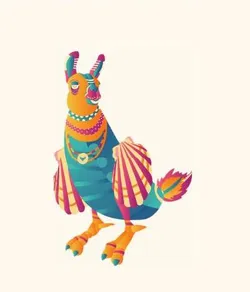
Meta Pets World · Your ally · Meta Pet 42

Vidūratha's lost war and the breath that returns

Letting Go of Living and Dying card
42Letting Go of Living and DyingI release attachment to living and dying.

Letting Go of Living and Dying walks with Vidūratha because the tale's whole world runs on Expectation: everything, the goddess says, happens according to the desire of the living being, and even the dying wake into what they expect. His turning is Detachment, praying only for liberation and losing the war without clinging, and his arrival is Celebration, waking as Padma to reign again in living liberation.

  1. Shadow · what you avoidExpectation

    Expectation: 'every thing happens to pass according to the desire of the living being' (III.45.12); Sindhu, who long prayed for victory, wins, and after death the spirit is drawn back to the tomb it longs for (III.56.21).

  2. Gift · what is hidden in itDetachment

    Detachment: Vidūratha never asked for victory, only for liberation, and loses the war and his life without clinging (III.47.3–7), learning that the soul 'is neither born nor dead' but witnesses both (III.54.67).

  3. Essence · what you embodyCelebration

    Celebration: Sarasvatī 'breathed the breath of life as the lotus lets off its fragrance' into Padma's nostrils (III.58.35); he wakes and reigns with both Līlās, the younger owned as 'a reflexion of myself' (III.58.47).

Letting Go of Living and Dying, and a king who asked for freedom instead of victory. He lost the war and woke into a celebration. Open your hands; see what stays.

— Felicia
Today’s contemplation

If, like Vidūratha, you asked only for freedom and let the outcome of your own war go, what would be left to wake into?

To close the night

Tonight, write one honest sentence about an outcome you are praying for, and what you would still have if it did not come.

The Ally Journey · about 15 minutes

Light trance, eyes open if you prefer. For the full, deeper script, see “The practice” above and its cautions.

  1. Threshold: sit with your feet grounded and your hands resting open. Take three slow breaths, noticing the air at the nostrils. This is the Umbral.
  2. The tale in one line: King Vidūratha prays not for victory but for liberation, loses his war, and wakes again as Padma to reign in freedom (III.47.3–7; III.58.35).
  3. Meet the card: look at Letting Go of Living and Dying for a few breaths. Let your eyes rest where they want. Read the affirmation once: I release attachment to living and dying.
  4. Shadow: which outcome are you counting on this week, a result, a reply, a verdict? Name it, and notice how much of your day it is already shaping.
  5. Gift: keep your hands open on your knees. Say the outcome silently, then add, as Vidūratha might: 'I ask for freedom, not for this.' Notice what loosens, even slightly.
  6. Essence: feel the breath entering the nostrils like fragrance, as life returned to Padma. For three breaths say the affirmation, and let a small gladness at simply breathing be enough.
  7. Return: press your feet into the floor and close your hands gently. Open your eyes fully, look around and say today's date. Write tonight's honest line.

The 30-day Bond

Let go of winning and losing today, as Vidūratha did: what is left, and can it be celebrated?

The Sister · Dolma

Tibetan · Spiti Valley, India · Gate Gate Pāragate Pārasaṃgate Bodhi Svāhā

Visit Dolma, the Tibetan singing-bowl master of the Spiti Valley, whose mantra, Gate Gate Pāragate Pārasaṃgate Bodhi Svāhā, 'gone, gone beyond', sounds like the road Vidūratha walked and the gladness he woke into.

Guided Meditation

#42 · Letting Go of Living and Dying

Voice & guidance: Prof. Luis Miguel GallardoWatch on YouTube (ES also available)
For facilitatorsA session with “The War of Vidūratha and Sindhu; the Death and Revival of Padma” and Letting Go of Living and Dying

Aim. To help the person see how expectation shapes what they live, and to rehearse letting outcomes go so that ordinary life can be met as a celebration.

ITM 5 Transcendent Integration. The tale holds the paradox of living and dying calmly and ends in liberation while reigning, which serves Transcendent Integration in people already steady in practice.

The session (60–75 min)

  1. Arrival and Umbral: three slow breaths together; screen gently for recent bereavement, trauma and current wellbeing before choosing the depth (8 min)
  2. Telling the tale: a 5-minute version centred on the tomb, Vidūratha's prayer for liberation, the goddess's law of desire and Padma's waking; omit the battle chapters; point to the tale page for the full text (5 min)
  3. The card: show Letting Go of Living and Dying, read the affirmation and the koan, and sit for a minute with 'what is left?' (7 min)
  4. Shadow inquiry: what the person is praying for, as Sindhu prayed for victory; what they expect of illness, ageing or death, and how those expectations shape today (12 min)
  5. Trance practice: The Road Between, using the full guided script on the tale page at LIGHT to MEDIUM depth only, with an agreed stop signal; for anyone not clearly suited, use only the opening scene from above and the return of the breath (18 min)
  6. Gift and Essence integration: thorough reorientation first (name, room, date); then name one outcome to release and one ordinary thing to celebrate this week (12 min)
  7. Closing and Bond: set the 30-day Bond with the koan variation; check the person is fully present before they leave (8 min)

Integration questions

  • Which expectation did you notice shaping your life most clearly, and how long has it been shaping it?
  • What did it feel like to ask for freedom rather than for a particular result?
  • What ordinary thing in your week deserves to be celebrated as Padma's waking was?

In a circle

In a circle, do not rehearse dying. Tell the tale without the battles, then lead only the parts of The Road Between that stay in daylight: watching one scene of one's life from above, letting years compress into a moment, and the return of the breath at the nostrils, all at light depth with eyes open allowed. In pairs, each person names the outcome they are praying for and then says aloud, 'I ask for freedom, not for this', noticing what changes. Close by sounding a singing bowl, or simply humming together, and inviting each person to name one ordinary thing they will celebrate this week. Brief everyone on the reorientation: name, place, date.

Cautions

  • Omit the battle chapters (III.33–51), with their graphic violence, rape and burning, for anyone with combat trauma, violent bereavement or PTSD.
  • The tale contains suicide on a husband's body, widow-burning and death as the road to reunion: screen for suicidal ideation and never present death as the way back to the beloved.
  • Keep remembered 'past lives' framed as constructions of mind, and leave out Yama's judgment and the hells for anyone prone to guilt or scrupulosity.
  • Not for derealisation, depersonalisation or psychotic states; any rehearsal of dying needs an agreed stop signal and thorough emergence and reorientation.

Training and certification in the Meta Pets Method: metapetsworld.org/facilitators ↗

The correspondence between tales and Meta Pets is contemplative: the Yoga Vāsiṣṭha does not contain the Meta Pets; each tale enacts its ally’s arc. Felicia is an artificial-intelligence companion; her words are contemplative reflections, not clinical advice.

The song

From the cycle The Sixty-Four Tales

Who Waits There?

Tryambakaṃ yajāmahe sugandhiṃ puṣṭivardhanam / urvārukam iva bandhanān mṛtyor mukṣīya māmṛtāt

Title: Who Waits There? Título: ¿Quién aguarda ahí?

Figure — King Padma, who lived seventy years as Vidūratha in the empty space of his own tomb, with the two Līlās and the goddess Sarasvatī.

Where in the text — Book III (Utpatti Prakaraṇa), Mitra chapters 31–59.

Hypnotic phenomenon the song enacts — DEEP and EMG: the verses fall through the text's own stages of dying to one bar of silence (the swoon), and the ending re-alerts in the text's own order: breath, colour, limbs, eyes, sitting up, and a question about who is present.

Mantra — Tryambakaṃ yajāmahe sugandhiṃ puṣṭivardhanam / urvārukam iva bandhanān mṛtyor mukṣīya māmṛtāt (त्र्यम्बकं यजामहे सुगन्धिं पुष्टिवर्धनम् । उर्वारुकमिव बन्धनान्मृत्योर्मुक्षीय मामृतात्), the Mahāmṛtyuñjaya mantra. Source: Ṛgveda 7.59.12. Meaning: "We honour the three-eyed one, the fragrant, who makes all things grow; as the ripe cucumber from its stalk, may I be loosed from death, not from the deathless."


Lyrics (English)

Performance: 7/8 throughout. The opening drums and bowstrings thin until only their hum is left, "the buzzing of bees, heard in the samádhi yoga"; that hum becomes the drone. Each verse falls in pitch. One full bar of silence after "the swoon". The mantra enters on the in-breath. The ending is spoken.

Verse 1 Dead of night. The house asleep. The king lies under heaps of flowers. We passed into the room's empty space as ants pass through the wood-apple's shell: a whole earth, and a war, the twang of bows, till the loosened strings hissed like bees, heard with the ears shut.

Verse 2 Her hand on the old king's head; his mind opened like a blossom. "I was Padma. How did seventy years pass in one day after my death?"

Chorus Nowhere but the room where the body lies: the burning city, the second queen, seventy years under the flowers.

Verse 3 Dying: the sight goes dark, stars by day; lifted, and hurled down, falling in a dark pit, wanting to cry out, and the voice won't come; the land fades as at sunset, the swoon. (one bar of silence) It wakes like a fragrance on the breeze. Yama finds it spotless: go back. The tomb it longs for leads it home.

Chorus Nowhere but the room where the body lies: the burning city, the second queen, seventy years under the flowers.

Bridge (mantra) (on the in-breath) Tryambakaṃ yajāmahe sugandhiṃ puṣṭivardhanam urvārukam iva bandhanān mṛtyor mukṣīya māmṛtāt (We honour the fragrant three-eyed one; like ripe fruit from its stalk, free me from death, not from the deathless)

Outro (spoken) She breathed life into him; it crept into his nostrils like a vine into a hollow. Colour came back, like rain on a lotus in a drought; his limbs grew soft as branches in spring. He opened his eyes; he rose as the Vindhya lifts its head. (low voice) "Who waits there?" (two matched voices) "Your commands." Morning. The people rose with their king.


Letra (castellano cantable)

Interpretación: 7/8 de principio a fin. Los tambores y las cuerdas de los arcos se adelgazan hasta que solo queda su zumbido, "el zumbido de las abejas que se oye en el samādhi"; ese zumbido se vuelve el bordón. Cada verso desciende. Un compás entero de silencio tras "el desmayo". El mantra entra con la inspiración. El final es hablado.

Verso 1 Noche cerrada. La casa duerme. El rey yace bajo montones de flores. Entramos en el espacio vacío del cuarto como cruzan las hormigas la cáscara del bel: una tierra entera, y una guerra, el chasquido de los arcos, hasta que las cuerdas sueltas silbaron como abejas, oídas con los oídos cerrados.

Verso 2 Su mano en la cabeza del viejo rey; su mente se abrió como una flor. "Yo fui Padma. ¿Cómo setenta años cupieron en un día tras mi muerte?"

Estribillo En ninguna parte sino en la cámara del cuerpo: la ciudad en llamas, la segunda reina, setenta años bajo las flores.

Verso 3 Morir: la vista se oscurece, estrellas de día; alzado, y arrojado abajo, cayendo a un pozo oscuro, queriendo gritar, y la voz no llega; la tierra se borra como al ponerse el sol, el desmayo. (un compás de silencio) Despierta como un perfume en la brisa. Yama lo halla sin mancha: vuelve. La tumba que anhela lo lleva a casa.

Estribillo En ninguna parte sino en la cámara del cuerpo: la ciudad en llamas, la segunda reina, setenta años bajo las flores.

Puente (mantra) (con la inspiración) Tryambakaṃ yajāmahe sugandhiṃ puṣṭivardhanam urvārukam iva bandhanān mṛtyor mukṣīya māmṛtāt (Honramos al fragante de tres ojos; como el fruto maduro de su tallo, líbrame de la muerte, no de lo inmortal)

Final (hablado) Le sopló la vida; entró por su nariz como una enredadera en un hueco. Volvió el color, como lluvia sobre un loto en la sequía; sus miembros se ablandaron como ramas en primavera. Abrió los ojos, y se incorporó como el Vindhya alza la cabeza. (voz grave) "¿Quién aguarda ahí?" (dos voces iguales) "A tus órdenes." Amanece. El pueblo se levanta con su rey.


One line to carry

EN: Death is a swoon; what you long for leads you home. ES: La muerte es un desmayo; lo que anhelas te devuelve a casa.


Libreto note

The longest tale here, and its map of the road between. Līlā and the goddess pass into the empty space of a tomb and find a war there, and a king who has lived seventy years in one day after his death. Then the text describes dying from the inside: the darkening, the falling, the voice that will not come, the swoon, and the waking "like some fragrance expanding itself with the breeze". The soul finds its way back by what it longs for. War drums thin into the hum of bees; each verse falls; a bar of silence; the oldest prayer against death, on the in-breath; and a man sitting up to ask who is there.


Source check

Source check (Mitra, Book III)

  1. "It was the dead of night", the inmates in "sound sleep"; the king's body "lying in state amidst heaps of flowers"; the goddesses enter "as weak ants make their passage through the hard crust of the wood-apple": ch. 31, vv. 2–3, 8.
  2. "The twangings of their bows"; "the hissing of their loosened strings … resembled the … buzzing of bees, heard in the samádhi yoga (by shutting the ears)": ch. 33, vv. 9–10.
  3. Sarasvatī "touched his head with her hand"; his mind "opened as a blossom"; "so many events … in course of one day after my death … full seventy years … my grand-sire … my boyhood"; the war "occurred nowhere except in the vacant space of the shrine": ch. 41, vv. 25–31; ch. 52, v. 4 (burning city, ch. 43; the double queen, ch. 44).
  4. Dying: "a deep darkness spreads over the dimming sight, and the stars twinkle before it in day-light"; "lifted up in the air, and now hurled down"; "falling in a dark pit … he wants to tell aloud his torments, but his speech fails him"; "as the landscape fades to view at the setting of the sun"; the swoon (murch'ha): ch. 54, vv. 41–54. Waking "like some fragrance expanding itself with the breeze"; Yama finds the spirit "spotless" and orders it back; "the tomb … the object of its desire, led his spirit": ch. 56, vv. 9, 13–14, 21.
  5. Revival: "she breathed the breath of life … and it fled into the nostrils … like a creeping plant crawls into a hole"; colour "as the rain-water refreshes the fading lotus in a drought"; limbs "as the branches of trees in spring"; "he oped his eyes"; "raised his body, as the Vindhyá mountain uplifts its head, and cried, 'who waits there'"; "your commands": ch. 58, vv. 35–43. "The people rose in the morning with their revivified king": ch. 59, v. 1.

Read the full text

Source: Vihari-Lala Mitra, The Yoga-Vasishtha Maharamayana of Valmiki (1891–99), public domain.

Collaborate on this research

Researchers, clinicians and institutions are welcome to write. Replication, data-sharing and site partnerships for the trials in progress are all open conversations.

Educational and scholarly content. Hypnotherapy and regression material is complementary and not a substitute for medical or psychiatric care.