ICEF

Tale 46 · The Vāsiṣṭha Atlas

Indra in the Atom

Nirvāṇa · second half · Mitra VI.2.13 · 1,384 words

Fleeing defeat, Indra hid in an atom and built a world.

Bhūmikā 3 · Tanumānasā (thinning of the mind)DeepYour ally · The Power of the Infinite Small

The essence

Bhuśuṇḍa tells this story to show that the size of the world is a trick of the senses: the world is as fine as a scent on the wind, yet it looks as big as a mountain. Once the world grew like a fig on a branch of the tree of ages, and Indra, lord of the gods, lived in it. Weakened by his study of spiritual knowledge, he was routed by the demons and chased through all ten directions with no place to rest. When his enemies lost sight of him for a moment, he compressed the thought of his body until he was minute. Then he entered an atom glittering in a sunbeam and found rest “by utter forgetfulness of the warfare”. There he imagined a palace, then a city, then a country, then desired the three worlds, and had them. He fathered a son, Kunda, and passed into nirvāṇa. A thousand generations of his line have reigned in that atom since, and a prince named Ansaka reigns there still.

What it teaches

  1. 01

    Size follows the inner image. Indra “compressed the thought of his big body in his mind, and became of a minute form on the out-side of himself” (VI.2.13.17), and Mitra adds that the inner thought moulds the outer body. The body image obeys imagination.

  2. 02

    A refuge can become a whole world. What began as hiding from defeat grew into a cosmos with a palace, a dynasty and a thousand generations (VI.2.13.20–29). Escape fantasies that are fed by desire can grow into entire life-structures.

  3. 03

    Forgetting brings instant rest (VI.2.13.19), but the tale shows its price. Inside the forgotten refuge desire starts again at once, and a new world of possession grows (VI.2.13.23–24).

  4. 04

    Desire, not perception, extends the imagined world. Indra saw a city and a country, and then desire turned them into three worlds to own (VI.2.13.22–24).

  5. 05

    “Every one … views and thinks the world, in the same form and light as it presents unto him” (VI.2.13.4). The client's world is real to the client and has to be entered on its own terms.

The Vāsiṣṭha Atlas

This tale’s coordinates

The wound and its virtue

Routed and chased through all ten directions, the lord of the gods is cast out with no place to rest (VI.2.13.15–16), and he survives not by fighting back but by compressing the thought of his body until he can enter a mote of sunlight (VI.2.13.17). The tale honours that manoeuvre, a gentleness that stops forcing its old place and finds rest “by utter forgetfulness of the warfare” (VI.2.13.19), while showing how desire then builds palace, city and three worlds again inside the atom (VI.2.13.20–29).

What it trains

Indra finds rest by moving attention wholly elsewhere rather than by battling the memory of defeat (VI.2.13.19), and the tale's thesis that the world's size is a trick of the senses (VI.2.13.3) asks for an attention flexible enough to change scale.

In other yogas

  • Buddhist absorption · AN 4.45

    In the Rohitassa Sutta the Buddha says the end of the world cannot be reached by travelling, yet within this fathom-long body, with its perception and mind, he makes known the world, its arising and its ending. Indra's three worlds and thousand generations inside an atom carry the same teaching: the world lies in perception, not in size.

  • Bhagavad Gītā · BG 2.58

    The one who draws the senses back from their objects as a tortoise draws in its limbs is called steady in wisdom. Indra's compression is a mythic tortoise, though the tale adds the warning that withdrawal without insight soon builds a world again.

  • Yoga nidrā

    Yoga nidrā begins with sensory withdrawal and a saṅkalpa, then rests the practitioner near the hypnagogic threshold where the day's battles are forgotten. Indra's rest in the atom is the image, and his new palaces show what an unexamined resolve will build there.

IEAF: Integrative Emotional Alchemy Framework (Gallardo, Frontiers in Psychology, 2026). FP20: the Fundamental Peace Scale. ITM: the Integrative Transformation Model. Parallels in other yogas are contemplative correspondences, not claims of influence.

The tale

Bhuśuṇḍa tells the vidyādhara that the universe needs no space or time already there to hold it. It is the mind's own working, quieter, finer and clearer than a scent carried on the air. It is a wonder of the intellect, as minute as a particle of fragrance, yet to the outward senses it looks as big as a mountain. Each being sees the world in the form in which it presents itself to him, as a dream shows itself only to its dreamer. To show this, he tells an old legend about Indra, lord of the gods, when he was shut inside a tiny particle.

Once, he says, this world grew like a small fig on a branch of the tree of the ages, in the great forest of a kalpa. The fruit had three compartments: earth, sky and the lower regions, with gods and demigods, hills and creatures, marshes and swarms of gnats. It was the intellect's own handiwork, ripe with the juice of desire, fragrant and tempting. Egoism was the stalk it hung by. When the kalpa ends it ripens and becomes food for black crows, or it drops and is absorbed back into Brahman.

Indra, lord of the gods, lived inside that fruit like a big mosquito leading the small gnats in an empty pot. But his strength and valour had been weakened by his study of spiritual knowledge and his teacher's lectures, which had made him a spiritualist and a seer of past and future. One day, while Nārāyaṇa and the heavenly host were at rest and Indra's arm was feeble, the demigods rose in revolt. Indra took up his flashing weapons and fought the Asuras for a long time. At last he was beaten and fled the field. He ran in all ten directions with the enemy at his heels everywhere, and found no place to rest, like a sinner who finds none in the next world.

Then, when the enemy lost sight of him for a moment, he seized his chance. He compressed the thought of his big body in his mind and became minute in his outward form as well, for the inner thought shapes the outer body. Knowing himself to be tiny, he entered the womb of an atom glittering in a sunbeam, as a bee enters the seed-vessel of a lotus bud. There he found instant rest by forgetting the battle completely.

In his imagination he at once conceived his royal palace inside that lotus, and sat on his lotus seat there as if resting on his own bed. Seated in that mansion he saw an imaginary city, with a great edifice at its centre whose walls were set with gems, pearls and corals. From the city he saw a wide country around it, with hills and villages, pastures, forests and homes. He felt a desire to enjoy that country, its lands and hills and the seas to their furthest shores. Next he desired to possess the three worlds: earth and ocean, sky and the lower regions, the heavens, the planetary spheres and the mountain ranges below.

So Indra lived there as lord of the gods, with everything he could enjoy. A son was born to him named Kunda, strong and valiant. At the end of his life Indra left his mortal frame and went out in nirvāṇa, like a lamp whose oil is spent. Kunda reigned over the three worlds as his father had, fathered a son, and departed in turn. That son reigned and departed too, leaving a son after him. In this way a thousand generations of the first Indra's descendants have reigned and passed, and a prince named Ansaka reigns there still. The line of the lord of the immortals still holds sovereignty over Indra's imagined world, in that sacred particle of sunbeam in empty air, even as the particle itself slowly wastes away.

The text speaks

Passages from Mitra’s translation (1891–99), cited by book, chapter and verse.

“The world is a wondrous phenomenon of the intellect, which though it is as minute as a particle of fragrance borne by the wind; appears yet as big as a mountain to the sensation of the outward organs of sense.”
VI.2.13.3States the thesis the anecdote illustrates: scale is a deception of the senses.
“Every one (animal being) views and thinks the world, in the same form and light as it presents unto him; just as the operations of the mind and visions in a dream, appear as they occur to their recipients and to no other besides.”
VI.2.13.4Each mind lives in a private world, as a dreamer does.
“But this great lord was weakened in his strength and valour by his study of and the lectures of his preceptor on spiritualism; which made him a spiritualist, and seer in all past and future matters.”
VI.2.13.13The unexpected cause of Indra's defeat: spiritual study weakened his power to fight.
“Then as the enemy lost sight of him for a moment, he availed to himself of that opportunity; he compressed the thought of his big body in his mind, and became of a minute form on the out-side of himself. (It is the inner thought that moulds the outer body, according to the inner type).”
VI.2.13.17The body image is altered by thought alone.
“He had his instant rest in that state, and then his hope of final bliss in the next; by utter forgetfulness of the warfare, and attainment of the ultimate beatitude of the nirvána torpitude in the end.”
VI.2.13.19Amnesia for the battle as the source of rest.
“He instantly conceived in his imagination, his royal palace in that lotus, and he sat upon his lotiform seat (padmásana) within it, as if he was resting on his own bed.”
VI.2.13.20The first imagined object inside the refuge, the start of the world-building.
“In this manner a thousand generations of the grandsons of the first Indra, have reigned and passed away in their time; and there is still a prince by name of Ansaka, reigning over the state of the lord of gods.”
VI.2.13.29The imagined refuge outlives its maker for a thousand generations.

What the trance sees

OBE

Out-of-body / thought-body travel

VI.2.13.17–18

In the textIndra “compressed the thought of his big body in his mind, and became of a minute form”, then entered an atom “by means of the consciousness of his personal minuteness”.

In the clinicHypnotic alteration of body image (feeling smaller, larger or distant), followed by imaginal travel into an inner scene, as in scale-shift deepening.

AMN

Amnesia

VI.2.13.19

In the textHe found “his instant rest in that state … by utter forgetfulness of the warfare”.

In the clinicDissociative amnesia as a defence against overwhelming defeat, and in hypnosis spontaneous or suggested amnesia. The tale shows both the relief it brings and how quickly a new world grows over what is forgotten.

HAL

Positive or negative hallucination

VI.2.13.20–24

In the textInside the atom he “conceived in his imagination, his royal palace”, then “saw an imaginary city … with its walls studded with gems, pearls and corals”, then a country of hills, villages and forests, then all three worlds.

In the clinicProgressively elaborated positive hallucination, built in the same way as guided-imagery ‘safe place’ construction, one scene added to the next.

NEST

Nested trance

VI.2.13.6–12; VI.2.13.18–30

In the textThe world is a fig on a branch of the tree of ages. Inside it Indra enters an atom, and inside the atom he builds a world where a thousand generations reign.

In the clinicNested inner worlds used for deepening, the fractal descent, and the embedded-metaphor structure of Ericksonian work (Lankton & Lankton 1983).

Read upward — stage 1 at the bottom, stage 7 at the top

  1. Integration zone
    Progressive relaxation and deepening — the habitual self loosens enough for new pattern to take.

A note on what this map claims. The alignment between stages of knowledge and trance depths is a clinical map — a heuristic correspondence proposed for research, not a claim of identity between contemplative attainment and hypnotic depth.

Bhūmikā 3 · Tanumānasā

Bhuśuṇḍa tells the tale to thin the solidity of the world for a pupil he has placed “in this your second or third stage of Yoga” (VI.2.8.23). Indra himself never rises above desire inside the atom (VI.2.13.23–24), so the tale works at the level of tanumānasā, not padārthābhāvanī.

Zone · Deep

He forgets the battle, lives inside an elaborated imagined world as though it were real, and stays absorbed there for life. These are deep-trance phenomena, though without the immobility of the plenary pole.

In Mitra’s words

In Calcutta in the 1890s, the translator chose the vocabulary of hypnotism to name these states. More →

  • torpitudeHe had his instant rest in that state, and then his hope of final bliss in the next; by utter forgetfulness of the warfare, and attainment of the ultimate beatitude of the nirvána torpitude in the end.VI.2.13.19

In the therapy room

Indications

  • Survivors who ‘made themselves small’ to survive: recognising the shrinking and the refuge as their own creations, along with the refuge's cost.
  • Escapism and immersive or maladaptive daydreaming.
  • Safe-place work, used with awareness that a refuge can turn into a world one never leaves.
  • Patterns inherited across generations: a refuge built by one generation and lived in by the next (VI.2.13.25–30).
  • Body-image work, through the body-size alteration of VI.2.13.17.

Cautions

  • For dissociative clients, the atom-refuge and the forgetting of the battle can reinforce avoidance. Do not suggest amnesia for traumatic material.
  • Keep safe-place imagery a resource to return from, never a hiding place. Re-alert fully.
  • Indra's defeat is blamed on spiritual study (VI.2.13.13). Do not use the tale to shame a client's contemplative practice.
  • Body-shrinking imagery may be unsuitable for clients with eating disorders or body-dysmorphic concerns.
From the bookThe full clinical note

Indications. Clients who made themselves small to survive, recognising both the shrinking and the refuge as their own creations, and the refuge's cost. Escapism and immersive fantasy of the kind described as maladaptive daydreaming (Somer 2002). Safe-place work, used with the awareness that a refuge can become a world one never leaves. Patterns inherited across generations: a refuge built by one generation and lived in by the next (13.25–30). Body-image work, through the contraction and re-expansion of 13.17.

How to use it. Tell the tale in trance and ask, at the moment of instant rest (13.19), what was forgotten. Then ask what was built. The question that opens the most is the dynastic one: who in my family first hid here, and who still reigns?

Cautions. For dissociative clients, the atom refuge and the forgetting of the battle can reinforce avoidance; never suggest amnesia for traumatic material, and screen for dissociative disorders before using shrinking imagery. Keep any safe place a resource to return from, not a place to stay, and re-alert fully. Body-shrinking may be unsuitable for clients with eating disorders or body-dysmorphic concerns; use a light or distant image instead. And because Indra's defeat is blamed on spiritual study (13.13), do not use the tale to shame a client's contemplative practice; the text's point is balance, not a verdict against inner work.


The practice

The Atom Refuge: seeing the worlds we build to hide in

  1. Name the battle. At low intensity (0–3 out of 10), recall a situation you once fled from (VI.2.13.15–16).
  2. The unseen moment. Imagine a moment when the pursuit pauses and no one is looking (VI.2.13.17).
  3. Contraction. Let the body image shrink gently, as Indra's thought did, until you are a mote in a shaft of sunlight (VI.2.13.17–18).
  4. Inside the atom. Notice what you built there: palace, city, country (VI.2.13.20–22). Feel its comfort, and notice the first stirring of a wish to possess more (VI.2.13.23–24).
  5. The generations. See how long this refuge has lasted, and which habits and roles were born and handed on inside it (VI.2.13.25–29).
  6. Expansion. Let the body image return to full size, until the atom is again a glint in a sunbeam held within your awareness (after VI.2.15.20).
  7. Return. Re-orient to the room, the present date and your full body size. Feel the feet, open the eyes, and name one thing you no longer need to hide from.

Practise with a qualified professional if you have a history of dissociation, trauma or psychosis.

From the book · to be read aloudThe full guided script

The Atom Refuge

Read aloud, slowly; about fifteen minutes, seated.

Before you begin. This practice looks gently at the places we have hidden. Keep any memory you choose at a low intensity, no more than three out of ten. Do not use it alone if you have a dissociative disorder, an eating disorder, or trauma that still brings flashbacks; work with a clinician. Never practise while driving, operating anything, or in or near water.

How to return at any moment. Open your eyes, feel your full size in the chair, and say the date aloud.


Let the breath slow.

Recall, lightly, a situation you once fled from. Not the worst one. A small battle. Notice it from a distance, as if across a field.

Now a moment comes when the pursuit pauses. No one is looking.

Let your sense of your body grow gently smaller. Not frightening; easy. Smaller, until you are a single bright mote in a shaft of sunlight, and you can slip inside the mote as a bee slips into a lotus.

Inside, there is rest. Notice how quickly it comes.

And notice what you built there. A room, perhaps. A house. A city of habits. A whole country of ways of living. Feel its comfort; it served you. And notice, without judging, the first stirring of a wish for more of it.

Now look along the generations. How long has this refuge lasted? Who taught you to hide here, and whom have you taught? Which roles were born inside it and handed on?

You do not have to dismantle anything. Only see it.

Now let the body image grow again, gently, back to its true size, larger than the mote, larger than the room, until the atom is once more a glint in a sunbeam, small, held within your awareness.

(Silence: one minute.)


Feel your full size now: the length of the legs, the width of the shoulders, the weight on the seat.

One. The breath full.

Two. Hands and feet your own, at their true size.

Three. Sounds of the room.

Four. Stretch.

Five. Eyes open. Fully alert.

Say your name, today's date and where you are. Name three things you can see. Name one thing you no longer need to hide from. If you feel small or far away, stand, press your feet down, and count again from one to five.


Meta Pets World · Your ally · Meta Pet 9

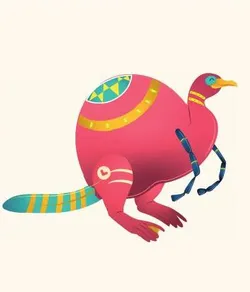
Indra hides in an atom and builds a world

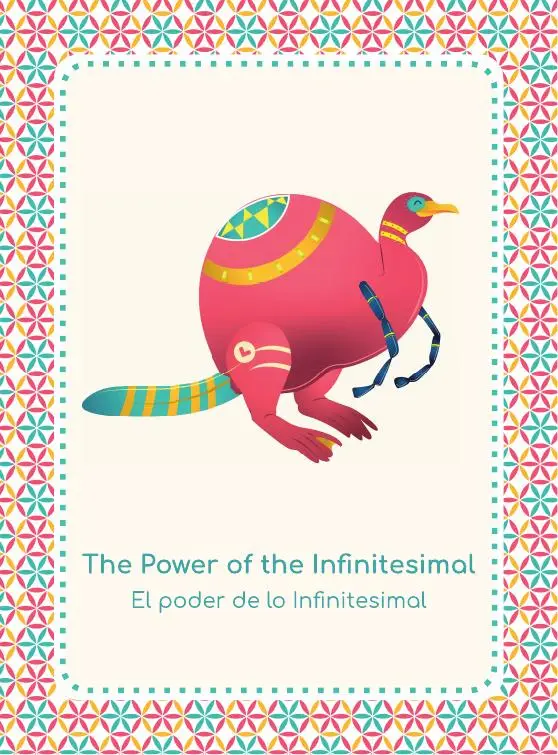
The Power of the Infinite Small card
09The Power of the Infinite SmallI honor the power within the smallest gesture.

Indra, routed by the demigods and chased in every direction, lives Powerlessness in full. His Determination is a single deliberate act, compressing the thought of his body until he can enter a mote of sunlight, and inside it he discovers the Power of the Infinite Small: a palace, a country, three worlds and a thousand generations within one glittering particle.

  1. Shadow · what you avoidPowerlessness

    Powerlessness begins before the battle, his strength and valour “weakened… by his study of and the lectures of his preceptor on spiritualism” (VI.2.13.13), and ends with the lord of the gods fleeing in all ten directions without rest (VI.2.13.15–16).

  2. Gift · what is hidden in itDetermination

    Determination is the one precise move in the unseen moment: “he compressed the thought of his big body in his mind, and became of a minute form on the out-side of himself” (VI.2.13.17).

  3. Essence · what you embodyPower of the Infinite Small

    The Power of the Infinite Small is what the atom holds: a world “as minute as a particle of fragrance” that appears “as big as a mountain” (VI.2.13.3), where Indra finds rest, a palace and a line that reigns a thousand generations (VI.2.13.19–20, 13.29).

Here is The Power of the Infinite Small, and a defeated god who made himself tiny enough to slip into a sunbeam. Small is not weak. Small is where whole worlds begin.

— Felicia
Today’s contemplation

If Indra found a whole world inside a mote of sunlight, where does your smallest steady gesture live, and is it a place you build from or a place you hide in?

To close the night

Tonight, write one honest sentence about a time you made yourself small, and what it protected or cost you.

The Ally Journey · about 15 minutes

Light trance, eyes open if you prefer. For the full, deeper script, see “The practice” above and its cautions.

  1. Threshold: three slow breaths, and notice a beam of light or a bright point somewhere in the room. Let your gaze rest on it lightly.
  2. The tale in one line: defeated and pursued, Indra shrinks into an atom glittering in a sunbeam and imagines a palace, a city and three worlds there, where his line still reigns (VI.2.13).
  3. Meet the card: look at the art of The Power of the Infinite Small and find its smallest detail. Read the affirmation aloud: “I honor the power within the smallest gesture.”
  4. Shadow: where this week did you feel outmatched, routed, with nowhere to rest? Recall it gently, at low intensity, three out of ten at most.
  5. Gift: choose one small, deliberate act you can do tomorrow in that situation, a single sentence, a five-minute task, one breath before answering. Picture yourself doing it, precisely.
  6. Essence: rest for three breaths in the infinite small, as if the whole day fitted inside that one gesture. On each out-breath say: “I honor the power within the smallest gesture.”
  7. Return: feel your full body size, feet on the floor, hands open; notice the date and the room, open your eyes fully. Write tonight's honest sentence.

The 30-day Bond

The infinite lives in the small: today, which small act held a whole world?

The Sister · Asha

Indian · Sarnath, Uttar Pradesh · Om Gaṃ Gaṇapataye Namaḥ

Visit Asha, the restorer of sacred walls at Sarnath, who mends great buildings one small stone at a time, and say her Om Gaṃ Gaṇapataye Namaḥ before the smallest task of your day.

Guided Meditation

#9 · The Power of the Infinite Small

Voice & guidance: Prof. Luis Miguel GallardoWatch on YouTube (ES also available)
For facilitatorsA session with “Indra in the Atom” and The Power of the Infinite Small

Aim. To help the client recognise the ways they made themselves small to survive, honour the determination in it, and turn the refuge into a base for small, deliberate action.

ITM 3 Gift Discovery. The tale's turn is a Gift discovered in defeat, the deliberate compression that becomes a creative power (VI.2.13.17–20), and the work is to claim that gift without staying hidden.

The session (60–75 min)

  1. Arrival and Umbral: three breaths; ask where the client currently feels outmatched or pursued (8 min).
  2. Telling the tale: the four-minute version, from the fig-world to the thousand generations; point to the tale page for Bhuśuṇḍa's frame (5 min).
  3. The card: show The Power of the Infinite Small, read Shadow → Gift → Essence and the affirmation; ask what ‘small’ has meant in the client's history (7 min).
  4. Shadow inquiry: at low intensity, recall a battle the client once fled; explore what they built in the refuge and which habits were born there (12 min).
  5. Trance practice: “The Atom Refuge”, the full guided script on the tale page, at medium depth at most; keep the refuge a resource to return from, never suggest forgetting traumatic material, and restore full body size before re-alerting (18 min).
  6. Gift and Essence integration: name one thing the client no longer needs to hide from, and one small deliberate act to practise daily (12 min).
  7. Closing and Bond: re-orient to the room, the date and full body size; set the 30-day Bond (8 min).

Integration questions

  • What did you find you had built inside the refuge, and how long has it lasted?
  • Which of your present habits or roles were born there, and which do you still need?
  • What small, deliberate act will carry the power of the refuge into your ordinary week?

In a circle

For 8–20 people, darken the room a little and, if possible, let a single beam of light fall across it while you tell the tale. Rather than guiding everyone through body-shrinking, invite the circle to imagine a small, safe ‘atom’ of their own at light depth and to notice what they would build there, then return clearly to full size. In pairs, each person names one small deliberate act for the week. Close with Asha's Om Gaṃ Gaṇapataye Namaḥ and the affirmation said together.

Cautions

  • For dissociative clients the atom-refuge and the forgetting of the battle can reinforce avoidance; never suggest amnesia for traumatic material.
  • Keep safe-place imagery a resource to return from, never a hiding place; re-alert fully.
  • Indra's defeat is blamed on spiritual study; do not use the tale to shame a client's contemplative practice.
  • Body-shrinking imagery may be unsuitable for clients with eating disorders or body-dysmorphic concerns.

Training and certification in the Meta Pets Method: metapetsworld.org/facilitators ↗

The correspondence between tales and Meta Pets is contemplative: the Yoga Vāsiṣṭha does not contain the Meta Pets; each tale enacts its ally’s arc. Felicia is an artificial-intelligence companion; her words are contemplative reflections, not clinical advice.

The song

From the cycle The Sixty-Four Tales

A World Inside the Atom

Oṃ · aṇor aṇīyān mahato mahīyān

Título: Un mundo dentro del átomo

Figure — Indra, lord of the gods, routed by the Asuras, and the thousand generations of his line who reign inside the atom he hid in

Where in the text — Book VI (second half, Nirvāṇa-prakaraṇa), Mitra chapter 13 (VI.2.13), told by Bhuśuṇḍa to the vidyādhara

Hypnotic phenomenon the song enacts — OBE and HAL, hinged on AMN: the beaten god folds the thought of his body small until he fits a mote in a sunbeam, forgets the war in one bar of silence, and builds a world inside it layer by layer; then the song grows the listener back to full size.

Mantra — Oṃ · aṇor aṇīyān mahato mahīyān (ॐ अणोरणीयान्महतो महीयान्) — Kaṭha Upaniṣad 1.2.20 (also Śvetāśvatara Upaniṣad 3.20). Meaning: "Om — smaller than the smallest, greater than the greatest": the Self, which the verse goes on to say is set in the heart of every creature. The tale's whole thesis in one line: the world "as minute as a particle of fragrance" that "appears yet as big as a mountain" (VI.2.13.3).


Lyrics (English)

[Performance: Verse 1 is the battle, driving and percussive. On "for one moment no one saw me" everything collapses to a single high, bright tone. After "a bee into a lotus bud", one full bar of silence. From the chorus on, each line adds one layer of texture over the same motif until it is lavish. In Verse 3 the motif passes from voice to voice, a little more worn each time, as the speck decays. In the outro the arrangement opens back to full width.]

Verse 1 — Indra The world hung like a fig on the branch of the ages, gods and hills and gnats inside. Lord of the gods, I'd studied at my teacher's feet till my arms were weak. The Asuras rose. I fought with flashing arms and fire, broke, and ran in all ten directions, and everywhere I ran, they ran.

Verse 2 — Indra Then for one moment no one saw me. I folded the thought of my body small, and the body outside grew small as the thought. A mote glittered in the sunbeam: I went in, like a bee into a lotus bud. (silence) And I forgot the war.

Chorus — Indra A palace, a lotus seat to rest on like my bed; a city, walls set with pearl and coral; a country, hills and villages, pasture for the cows, the seas out to their furthest shore — then I wanted the three worlds.

Verse 3 — the heirs He had a son, Kunda, strong and brave, and went out like a lamp with no oil. Kunda reigned, had a boy, and went. The boy reigned, had a boy, and went. A thousand generations in a speck of light; Ansaka is king there still, while the speck wears away in empty air.

[Chorus — sung by the heirs, one line each, the motif more worn on every line]

Bridge (mantra) Oṃ — aṇor aṇīyān mahato mahīyān (Om — smaller than the smallest, greater than the great) Oṃ…

Outro The thought inside shapes the body: let the thought grow, and you grow. The world is lighter than a scent on the wind, and big as a mountain to the open eye. A mote turns in the sunbeam. Stand up, your own size, on the field you ran from.


Letra (castellano cantable)

[Interpretación: el Verso 1 es la batalla, empujado y percusivo. En "un instante, nadie pudo verme" todo se reduce a un solo tono agudo y brillante. Tras "la abeja en el botón del loto", un compás entero de silencio. Desde el estribillo, cada verso añade una capa sobre el mismo motivo. En el Verso 3 el motivo pasa de voz en voz, más gastado cada vez. En el final el arreglo vuelve a abrirse del todo.]

Verso 1 — Indra El mundo colgaba como un higo en la rama de las eras, con dioses y montes y mosquitos dentro. Señor de los dioses, estudié a los pies de mi maestro hasta quedarme sin fuerza en los brazos. Se alzaron los asuras. Luché con brazos de rayo y fuego, me rompí, corrí hacia las diez direcciones, y por donde corría, corrían.

Verso 2 — Indra Entonces, un instante, nadie pudo verme. Plegué pequeño el pensamiento de mi cuerpo, y el cuerpo de fuera se hizo pequeño como el pensamiento. Brillaba una mota en el rayo de sol: entré en ella como la abeja en el botón del loto. (silencio) Y olvidé la guerra.

Estribillo — Indra Un palacio, un asiento de loto para descansar como en mi cama; una ciudad, con muros de perla y de coral; un país, colinas y aldeas, pastos para las vacas, los mares hasta su última orilla… después quise los tres mundos.

Verso 3 — los herederos Tuvo un hijo, Kunda, fuerte y valiente, y se apagó como lámpara sin aceite. Kunda reinó, tuvo un niño, y se fue. El niño reinó, tuvo un niño, y se fue. Mil generaciones en una mota de luz; Ansaka reina allí todavía, mientras la mota se gasta en el aire vacío.

[Estribillo — cantado por los herederos, un verso cada uno, el motivo más gastado en cada verso]

Puente (mantra) Oṃ — aṇor aṇīyān mahato mahīyān (Om — más pequeño que lo pequeño, más grande que lo grande) Oṃ…

Final El pensamiento de dentro da forma al cuerpo: deja que crezca, y creces. El mundo es más leve que un aroma en el viento, y grande como un monte para el ojo abierto. Una mota gira en el rayo de sol. Ponte en pie, de tu tamaño, en el campo del que huiste.


One line to carry

EN: The thought that made you small can stand you up again. ES: El pensamiento que te hizo pequeño puede ponerte en pie.


Libreto note

Bhuśuṇḍa's parable of scale, with a warning folded inside a refuge. Indra, routed by the Asuras (weakened, the text says, by his spiritual studies), runs in all ten directions until, for one unseen moment, he folds the thought of his body small and slips into a mote in a sunbeam. There he forgets the war, and at once begins to build: a palace, a city, a country, three worlds, a dynasty a thousand generations long. Anyone who has built a safe place in trance knows both halves of this. Drums collapse to one bright tone, a bar of silence, then layer on layer; the heirs hand the tune down worn. Then the song grows you back.


Source check

Source check (Mitra, Book VI second half)

  1. The world as "a small fig fruit on a branch of the Yuga tree", holding gods, hills and "troops of gnats and flies" over its marshy lands — ch. 13, vv. 6–7.
  2. Indra "weakened in his strength and valour by his study of … spiritualism"; he "rose with his flashing arms and fire", was defeated, "ran in all the ten directions, and was pursued by the enemy wherever he fled" — ch. 13, vv. 13–16.
  3. "As the enemy lost sight of him for a moment … he compressed the thought of his big body in his mind, and became of a minute form on the out-side" (Mitra's gloss: "It is the inner thought that moulds the outer body"); he entered "an atom, which was glittering amidst the expanse of solar rays; as a bee enters into the cup … of a lotus bud"; rest "by utter forgetfulness of the warfare" — ch. 13, vv. 17–19.
  4. The palace and lotus seat, "as if he was resting on his own bed"; the city walls "studded with gems, pearls and corals"; the country of "hills and villages, pasture grounds for kine"; "the seas to their utmost boundaries"; the desire to possess the three worlds — ch. 13, vv. 20–24.
  5. Kunda "of great strength and valour"; Indra extinct "as when a lamp is extinguished for want of oil"; son after son; "a thousand generations"; "a prince by name of Ansaka" still reigning; the "particle of sunbeam in empty air … continually going to decay"; the world "as minute as a particle of fragrance borne by the wind" yet "as big as a mountain to the … outward organs of sense" — ch. 13, vv. 3, 25–30.

Read the full text

Source: Vihari-Lala Mitra, The Yoga-Vasishtha Maharamayana of Valmiki (1891–99), public domain.

Collaborate on this research

Researchers, clinicians and institutions are welcome to write. Replication, data-sharing and site partnerships for the trials in progress are all open conversations.

Educational and scholarly content. Hypnotherapy and regression material is complementary and not a substitute for medical or psychiatric care.