ICEF

Tale 43 · The Vāsiṣṭha Atlas

Manu and Ikṣvāku: The Seven Stages

Nirvāṇa · first half · Mitra VI.1.117–123 · 4,761 words

Seven rungs from good desire to light: the map of awakening.

Bhūmikā 4 · Sattvāpatti (dawn of being)DeepYour ally · The Light of Eden

The essence

King Ikṣvāku, founder of Rāma’s line, sits alone and asks why beings decay, sicken, die and suffer. Finding no answer, he questions Manu, who has come down from Brahmā’s world. Manu tells him the world is an appearance in the mirror of the one reality, the Tatsat. Bondage is the belief “I am an embodied being”; release is the firm conviction that one is intelligence, “as rarefied as the pure air”. Then he gives the map. There are seven stages of yoga: study with the wise; reconsideration; inward rumination (nididhyāsana); silent meditation in which desire and darkness are lost before the light; a fifth stage, partly waking and partly sleeping; a sixth of bliss absorbed “in a state of trance or sound sleep”; and a seventh of even, transparent light in which self-consciousness is lost. Mitra glosses the fifth as “half hypnotism” and the sixth as “samádhi or hypnotism”. Resting in the fourth stage and beyond is liberation. Vasiṣṭha closes the tale: powers prove nothing, and calm is the only sign.

What it teaches

  1. 01

    Suffering lives in the mind, not in the core self. The tendencies of former states produce happiness or misery that “is felt by the mind and never affects the soul itself” (VI.1.118.2). Healing therefore works on the mind’s identifications and does not need to repair a damaged essence.

  2. 02

    One belief keeps bondage in place: “I am an embodied being” (VI.1.118.8). The remedy is a counter-conviction that is firmly held. Liberation is framed as a change of belief, and belief is exactly what suggestion works on.

  3. 03

    The path is graded, and its grades are states of consciousness. The first three stages belong to waking, the fourth is like dream, the fifth like deep sleep, the sixth is turya and the seventh lies beyond it (VI.1.120.7–9). Depth of practice is depth of state.

  4. 04

    Pain can be held “as passing on his shadow” (VI.1.122.7). This analgesic stance does not numb the pain. It moves the pain outside the self that is suffering.

  5. 05

    Extraordinary powers do not measure progress (VI.1.123.3–6). The only sign is a mind that stays cool and calm, with hardly any trace of love, anger or sorrow left. This warns against treating dramatic phenomena as the goal.

The Vāsiṣṭha Atlas

This tale’s coordinates

The wound and its virtue

Ikṣvāku sits alone with the question of why beings decay, sicken, die and suffer, the finitude at the root of Separation, and Manu traces it to one belief: “I am an embodied being” is the cause of bondage (VI.1.118.8). The healing is the recognition of belonging to a single reality, the world as an appearance in the mirror of the Tatsat, offered as a seven-runged map from study to even, transparent light (VI.1.120.1–9).

What it trains

The ladder runs from study, reconsideration and rumination to a silent meditation in which desire and darkness are lost before the light (VI.1.120.2), a graded training of attention that ends in effortless steadiness rather than forced control.

In other yogas

  • Māṇḍūkya Upaniṣad · Māṇḍūkya 3–7

    The Māṇḍūkya maps waking, dream, deep sleep and the fourth (turīya). Manu links the first three stages to waking, the fourth to sleep, and the higher stages to sound sleep, turya and what lies beyond (VI.1.120.7–9), a direct correspondence between graded yoga and the Upaniṣad's states.

  • Patañjali · Yoga Sūtra · YS 1.17–18

    Patañjali grades absorption with support (samprajñāta: gross thought, subtle thought, joy, I-am-ness) and absorption beyond support (asamprajñāta). Manu's seven stages are a parallel graded map in which the higher rungs ask for less effort, not more.

  • Buddhist absorption · MN 111

    The Anupada Sutta follows Sāriputta through the jhānas and the formless attainments one by one, emerging from each and reviewing it. Like Manu's seven stages it offers a stage-by-stage phenomenology of deepening absorption.

  • Yoga nidrā

    Manu's fifth stage, “partly waking and partly sleeping” (VI.1.120.3), which Mitra glosses as half hypnotism, is the hypnagogic threshold that yoga nidrā deliberately cultivates and holds.

IEAF: Integrative Emotional Alchemy Framework (Gallardo, Frontiers in Psychology, 2026). FP20: the Fundamental Peace Scale. ITM: the Integrative Transformation Model. Parallels in other yogas are contemplative correspondences, not claims of influence.

The tale

Vasiṣṭha tells Rāma how the founder of his own line was set free. King Ikṣvāku was ruling his kingdom when, in a solitary hour, he began to think about the human condition. He wondered what causes decay, disease and death, sorrow, pleasure and pain, and the errors to which every living being is subject. He pondered for a long time and found nothing. Then the sage Manu came to him from the world of Brahmā. The king honoured him, asked pardon for his impatience, and put his questions. What was the origin of creation? How many worlds are there, and who is their master? And how could he be freed from his doubts “like a bird from its net”?

Manu welcomed the questions as a sign that the king had at last begun to use his reason. All that you see, he said, is like castles in the air or water in a mirage. Even the mind is nothing in reality. Only the indestructible, the Tatsat, truly is. The worlds are appearances in the mirror of that substance, sparks of Brahman’s own powers, waves of a single sea. Living souls carry the tendencies of their former births. Their happiness and misery are felt by the mind and never touch the soul. No teacher and no scripture can show the spirit. It is our own spirit that shows it, when the understanding rests in its own essence. The thought “I am an embodied being” is bondage. The firm conviction “I am no other than an intellectual being, and as rarefied as the pure air” is release. Men wail for a self they have never lost, like a mother moaning for a child that sleeps on her lap. Manu told the king to steady his mind, call his thoughts home, and go and rule his realm with self-possession. He was to take up the weapon of samādhi, which Mitra renders “anaesthesia”, and with it cut through the feeling of the agreeable and the disagreeable.

Then Manu set out the stages. The first is the enlightenment of the understanding through the scriptures and the company of the wise. The second is discussion and reconsideration of what has been learnt. The third is rumination within oneself, nididhyāsana. The fourth is silent meditation in which desire and darkness are lost before the light of God. The fifth is pure consciousness and felicity, partly waking and partly sleeping. The sixth is ineffable bliss, absorbed in trance or sound sleep. The seventh is an even and transparent light in which the devotee loses his self-consciousness. Resting in the fourth stage and beyond is liberation, and the seventh belongs to disembodied souls alone. The first three stages, Manu said, belong to waking. The fourth is like dream, the fifth like deep sleep and the sixth is turya. The seventh lies beyond turya, where neither words nor mind can reach.

Manu then described the signs of the liberated. Such a man is unmoved in prosperity and adversity. He does not think of himself as alive or dead, and he does not hold the thought “I am the doer”. Desire drags the soul up and down like a bucket on a rope in a well. When “this is I, that is another” is given up, the mind expands until it becomes one with the divine. However the liberated yogi is clothed or fed, he rests like an emperor. He breaks the bonds of caste and rite like a lion breaking out of its cage. He lets pain and pleasure pass over his shadow, hurts no one, and is hurt by no one. When he had said all this, Manu returned to Brahmā’s abode, and Ikṣvāku lived by his teaching.

Rāma asked whether such a man gains extraordinary powers. Vasiṣṭha replied that some do win aerial flight, or the power to expand and contract, through mantras, minerals and practice. But birds and flies fly too. The real sign of the seer is that he is always cool and calm, with scarcely a trace left of love, anger, sorrow or illusion.

The text speaks

Passages from Mitra’s translation (1891–99), cited by book, chapter and verse.

“Enlightenment of the understanding by the study of the sástras and attendance on holy and wise men, is said to be the first stage of yoga by yogis.”
VI.1.120.1Defines stage 1, which the YVH Model names śubhecchā, good desire.
“Discussion and reconsideration of what has been learnt before, is second stage of yoga”
VI.1.120.2Defines stage 2, vicāraṇā, inquiry.
“the third is the rumination of the same in one's self and is known under the name of nididhyásana or self-communion of meditation.”
VI.1.120.2Defines stage 3, tanumānasā, as inward rumination, the point where the mind begins to thin.
“The fourth is silent meditation in which one loses his desires and darkness in his presence before the light of God.”
VI.1.120.2Defines stage 4, sattvāpatti, the YVH Model's primary therapeutic stage.
“The fifth stage is one of pure consciousness and felicity, wherein the living-liberated-devotee remains in his partly waking and partly sleeping state. (This is half hypnotism).”
VI.1.120.3Defines stage 5, asaṃsakti, and carries Mitra's own gloss “half hypnotism”.
“The sixth stage in one's consciousness of ineffable bliss, in which he is absorbed in a state of trance or sound sleep. (This is known as samádhi or hypnotism).”
VI.1.120.4Defines stage 6, padārthābhāvanī, which Mitra equates outright with “hypnotism”.
“One's resting in the fourth and succeeding stages, is called his liberation, and then the seventh stage is the state of an even and transparent light, in which the devotee loses his self consciousness.”
VI.1.120.5Defines stage 7, turyagā, and makes the fourth stage the threshold of liberation.
“The first three stages relate to the waking state of man, and the fourth stage concerns the sleeping state, in which the world appears in the manner of a dream.”
VI.1.120.7The only place where the text maps the stages onto states of consciousness. This is the scriptural basis for pairing bhūmikā with trance depth.
“The knowledge that "I am an embodied being" is the cause of our bondage in this world; and therefore it is never to be entertained by them, that are seekers of their liberation.”
VI.1.118.8Names the single belief that keeps bondage in place.
“he deems his pain and pleasure as passing on his shadow, and never takes them to his heart, as they do not touch his intangible soul.”
VI.1.122.7The liberated man's analgesic stance, put in one image.

What the trance sees

DEEP

Deepening

VI.1.120.1–9

In the textSeven graded stages, each defined and then mapped onto a state of consciousness: “The first three stages relate to the waking state … the fourth stage concerns the sleeping state”. The fifth is sound sleep, the sixth turya, and the seventh lies beyond turya.

In the clinicGraded hypnotic depth scales with stage-specific markers, such as the Davis & Husband (1931) and LeCron–Bordeaux depth scales. In both, progressive descent is read from the phenomena present at each level.

TEST

Trance testing / ratification

VI.1.120.11–17; VI.1.122.1–9; VI.1.123.6

In the textManu lists observable signs of the liberated: unmoved in prosperity and adversity, untouched by honour or slight. Vasiṣṭha names the decisive sign: “This is verily the sign of the unconspicuous seer in yoga, that he is always cool and calm in his mind”.

In the clinicRatification of trance by observable markers (Erickson & Rossi). Here the marker is equanimity rather than a spectacular phenomenon, and flight-like powers are explicitly rejected as evidence.

DIR

Direct suggestion

VI.1.118.18

In the textA compact chain of imperatives: “keep the steadiness of your mind, repress thy imagination and the flights of thy fancy; call thy thoughts home and confine them to thyself; remain calm and cool”.

In the clinicDirect, authoritative suggestion as used in classical inductions. The chain moves step by step from narrowing attention to calm, and ends with an instruction to return to activity (“go and rule thy realm”).

ANA

Analgesia / anaesthesia

VI.1.119.9; VI.1.122.7

In the textSamādhi is called a weapon of “anaesthesia” that cuts the feeling of agreeable and disagreeable. The liberated man “is not affected either by the torture or subministration of his body; he deems his pain and pleasure as passing on his shadow”.

In the clinicHypnotic analgesia through dissociative relocation of pain, in which the sensation is perceived as “over there” (Hilgard & Hilgard 1975, Hypnosis in the Relief of Pain).

WIT

Witness position / dis-identification

VI.1.118.7; VI.1.118.14

In the text“Be of an indifferent mind (udásina) with regard to your bodies and all external objects”. The king is also told to “sit retired from all except alone with thyself”.

In the clinicThe observing self and decentering. Udāsīna, literally ‘sitting above’, describes the stance studied experimentally as the hidden observer (Hilgard 1977): a part of the mind that registers experience without being moved by it.

MET

Therapeutic metaphor / reframe

VI.1.118.15

In the text“as a fond mother moans on missing her child, forgetful of its sleeping upon her lap”: men grieve for a self they have never lost.

In the clinicA therapeutic metaphor that reframes the search. What is sought as missing is already present. This suits clients who are stuck in endless self-seeking.

Read upward — stage 1 at the bottom, stage 7 at the top

  1. Integration zone
    Hypnotic absorption meets direct knowing — identity deconstruction at full depth. This is YVH's primary therapeutic zone, and the model's central testable hypothesis.

A note on what this map claims. The alignment between stages of knowledge and trance depths is a clinical map — a heuristic correspondence proposed for research, not a claim of identity between contemplative attainment and hypnotic depth.

Bhūmikā 4 · Sattvāpatti

The chapter maps all seven stages, but its hinge is the fourth. “One's resting in the fourth and succeeding stages, is called his liberation” (VI.1.120.5), and the fourth is the silent meditation in which desire and darkness are lost before the light (VI.1.120.2).

Zone · Deep

In Manu's own mapping the fourth stage is the dream-like “sleeping state” (VI.1.120.7). Mitra reserves “half hypnotism” and “hypnotism” for stages 5–6, so the tale works from deep trance toward somnambulistic and plenary levels.

In Mitra’s words

In Calcutta in the 1890s, the translator chose the vocabulary of hypnotism to name these states. More →

  • anaesthesiaUse, Oh King! the weapon of your restless anaesthesia (samádhi), and cut in twain the feeling of the agreeable and disagreeable, and pare asunder your sensation of love and hatred by the sword of your manly equanimity.VI.1.119.9
  • half hypnotismThe fifth stage is one of pure consciousness and felicity, wherein the living-liberated-devotee remains in his partly waking and partly sleeping state. (This is half hypnotism).VI.1.120.3
  • tranceThe sixth stage in one's consciousness of ineffable bliss, in which he is absorbed in a state of trance or sound sleep.VI.1.120.4
  • hypnotism(This is known as samádhi or hypnotism).VI.1.120.4

In the therapy room

Indications

  • A structure for staging treatment and assessing progress, as a ladder the client can recognise.
  • Existential distress about ageing, illness and death (Ikṣvāku's own question, VI.1.117.3).
  • Over-identification with the body in chronic illness or pain, worked through the counter-conviction of VI.1.118.9.
  • Spiritual perfectionism or the hunt for powers and peak phenomena (VI.1.123.3–6).
  • Compulsive seeking of a lost or ‘true’ self, using the image of the sleeping child (VI.1.118.15).

Cautions

  • The text reserves the seventh stage for disembodied souls (VI.1.120.6). It is never a clinical target.
  • “I am not the body” suggestions can deepen depersonalisation or derealisation in dissociative, traumatised or psychotic clients.
  • Disregard of “merit or demerit of acts” (VI.1.119.10) and the breaking of social rules (VI.1.122.2) can be misread as permission for ethical bypass.
  • Do not use the ladder as an examination the client can fail. Manu presents it as a map, not a grade.
From the bookThe full clinical note

Indications. A structure for staging treatment and assessing progress: shown to the client at the first session, the ladder becomes a shared map (phase one of the YVH protocol, alliance and map). Existential distress about ageing, illness and death, Ikṣvāku's own question (VI.1.117.3). Over-identification with the body in chronic illness or pain, worked through the counter-conviction of VI.1.118.9 and the shadow of VI.1.122.7. Spiritual perfectionism and the hunt for peak experiences, answered by VI.1.123.3–6. Compulsive seeking of a lost "true self", answered by the sleeping child (VI.1.118.15).

How to use it. As metaphor, the tale is short enough to tell in trance: a king alone with his question, a sage who comes, a ladder, a return to the throne. As protocol, the practice below is a deepening that stops at the fourth and fifth rungs and only looks at the sixth and seventh. Between sessions, the counter-conviction of VI.1.118.9, adapted to the client's own words, can be given as a self-suggestion for the out-breath. Progress is reviewed by Vasiṣṭha's criterion, calm, not by the phenomena a session produced.

Cautions. The seventh rung is never a clinical target; Manu reserves it for the disembodied (VI.1.120.6). Suggestions of the form "I am not the body" can deepen depersonalisation or derealisation in dissociative, traumatised or psychotic clients; screen first, and with such clients replace the formula with a grounding one ("I am here, breathing, and I am more than this pain"). The disregard of "merit or demerit of acts" (VI.1.119.10) and the lion breaking the bonds of caste and rite (VI.1.122.2) can be misread as permission for ethical bypass; the same Manu says the liberated man "hurts no body" (VI.1.122.9). Never use the ladder as an examination. Book III says people stand at a quarter or a half of a stage (III.118.27); a client who is told he has "failed to reach the fourth" has been harmed by a map meant to console.


The practice

The Ladder: a seven-rung deepening from Manu

  1. Seat and question. Name the question that brought you, as Ikṣvāku named his: why decay, why sorrow. Let the wish for an answer be the first rung, good desire.
  2. Reconsider. Recall one teaching or insight you already have, and turn it over slowly once (second rung).
  3. Ruminate inwardly. With each out-breath repeat silently “I am awareness, as light as air” (after VI.1.118.9), until the phrase repeats itself (third rung).
  4. Call the thoughts home (VI.1.118.18). Enter silent meditation and let desire and darkness settle before an inner light (fourth rung, deep trance).
  5. Half waking, half sleeping. Let the body sleep while a thread of awareness stays awake (fifth rung).
  6. Shadow. Notice any sensation, pleasant or painful, as if it were passing over your shadow on the ground (VI.1.122.7).
  7. Rest for a few breaths in an even, transparent light without trying to hold it. If self-consciousness thins, allow it.
  8. Return. Climb back down the rungs from seven to one, counting up with each, and feel the body's weight and the breath. Open your eyes and, in Manu's words, go and rule your realm with self-possession.

Practise with a qualified professional if you have a history of dissociation, trauma or psychosis.

From the book · to be read aloudThe full guided script

The Ladder: A Seven-Rung Deepening from Manu

Read slowly, aloud, in your own voice, leaving a breath between lines; twenty minutes. Record it and play it back if you wish.

Before you begin. This practice climbs Manu's ladder as a deepening: three rungs of waking, one of dream, one of half-sleep, and a look upward at the last two, which you do not try to reach. It is safe for most healthy adults. Do not practise it unsupervised if you have, or have had, a psychotic illness, a dissociative disorder, or episodes of feeling unreal or detached from your body; if so, practise only with a clinician, and use the phrase "I am here, breathing" wherever the script says "I am awareness". Never practise while driving, operating anything, standing, or in or near water. Sit, do not lie down.

How to return at any moment. Say aloud, "Back to the throne." Press your feet into the floor, take one full breath, count from one to five, and open your eyes on five.


Sit down, as a king sits alone in a solitary hour.

Let the hands rest. Let the back be upright and easy.

Breathe out.

The first rung. Bring to mind the question that brought you here. Perhaps it is Ikṣvāku's: why do things decay, why is there sorrow. Perhaps it is smaller and your own. Let it be there, honestly. Let it ask itself; you do not need to answer it yet. The wish for an answer is the first rung. Good desire. You are already standing on it.

Breathe out.

The second rung. Recall one thing you already know that helps, a teaching, a sentence, something a wise person once told you. Turn it over once, slowly, the way one turns a stone in the hand. Reconsideration. The second rung.

Breathe out.

The third rung. Now let the breath carry a phrase. On each out-breath, silently: I am awareness, as light as air. Again. I am awareness, as light as air. Do not push it. Let it repeat itself, until you are listening to it rather than saying it. Rumination. The third rung. The mind is growing thin, like cloud.

Breathe out.

The fourth rung. Now call your thoughts home. Wherever they have gone, to work, to people, to tomorrow, call them home as one calls children in at dusk, and let them settle inside. Remain calm and cool.

And in that quiet, let there be a light, ahead or above or within, wherever it is easy. Before that light, desire grows still. Darkness thins. You do not have to do anything to it. You are sitting in front of a lamp.

Things may begin to look like a dream: images arriving of themselves, the room further away. That is the fourth rung. This is the place where good work is done. Whatever you came with can be set down here, before the lamp, and looked at kindly. Rest here a while.

(Silence: one minute.)

The fifth rung. Now let the body go to sleep, and let one thread of you stay awake. The body heavy, the breath slow, and somewhere a quiet listener who hears these words. Partly waking, partly sleeping. Nothing to do. Felicity, if it comes; ease, if it does not.

Breathe out.

The shadow. From here, notice any sensation in the body, pleasant or unpleasant: an ache, a warmth, a tightness. Let it be there. And now let it pass over your shadow, as a shadow lies on the ground in the afternoon and the leaves move across it. The sensation is on the shadow. You are the one who sees the shadow. It can stay or go. It does not have to be taken to the heart.

Breathe out.

Looking up. Above you there are two more rungs. You will not climb them now; they are not for climbing. Only look up, for a few breaths, at an even and transparent light, like the sky at the clearest hour. Do not try to hold it. If the sense of being someone grows thin for a moment, let it, and know that the thread is still awake and will bring you back.

(Silence: one to two minutes.)


Now come back down the ladder.

From the light, back to the fifth rung: the thread that stayed awake grows stronger. You are beginning to wake.

To the fourth: the lamp is still there, and you can come back to it whenever you choose. The dream-pictures fade.

To the third: the phrase is quiet now. Let it rest.

To the second: the thing you know is still in your hand.

To the first: the question that brought you here. It may be answered; it may simply be calmer. Either is enough.

Feel the body on the seat. Feel the weight of the arms, the feet on the floor. Feel the breath coming in, full.

Move the fingers. Move the toes. Let the shoulders roll once.

I will count from one to five, and on five the eyes open, clear, calm and rested.

One. The breath is full.

Two. The hands and feet are warm and your own.

Three. The sounds of the room return.

Four. Take one deep breath in.

Five. Eyes open. Here. Now. Fully alert.

Sit a moment. Say your name aloud, and the date, and the place. Name three things you can see. If you feel at all slow, repeat the count, stand, walk a few steps and drink some water. Do not drive or operate anything for ten minutes.

Then, in Manu's words, go and rule your realm with self-possession.

Meta Pets World · Your ally · Meta Pet 11

Ikṣvāku and the seven rungs toward light

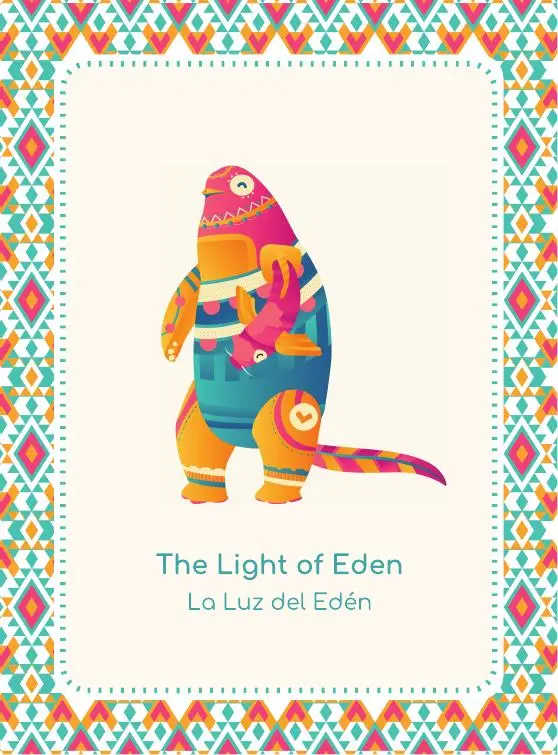
The Light of Eden card
11The Light of EdenI carry the light of Eden within me.

Ikṣvāku begins in Obscurity: alone with the question of why beings decay, sicken and grieve, he ponders and finds nothing. Manu answers with Idealism in its truest sense, a vision of graded awakening that can be climbed rung by rung, and the ladder ends in Light, even and transparent, the light of Eden that was never actually lost.

  1. Shadow · what you avoidObscurity

    Obscurity is the fog in which the king wonders why there is decay, disease and death and finds no answer, and Manu names its root: “The knowledge that ‘I am an embodied being’ is the cause of our bondage in this world” (VI.1.118.8).

  2. Gift · what is hidden in itIdealism

    Idealism is the map itself, the stages beginning with the “enlightenment of the understanding by the study of the sástras and attendance on holy and wise men” and rising through reflection to silent meditation before “the light of God” (VI.1.120.1–2).

  3. Essence · what you embodyLight

    Light is “the state of an even and transparent light” (VI.1.120.5), and its sign in daily life is the liberated one who “deems his pain and pleasure as passing on his shadow” (VI.1.122.7).

Here is The Light of Eden, and a king who asked why everything decays and was given a map of seven rungs. Stand on the rung you are on. It is already lit.

— Felicia
Today’s contemplation

If, like the mother moaning for the child asleep on her lap, you are mourning a light you never lost, on which rung have you been looking for it?

To close the night

Tonight, write one honest sentence about where you stand on the ladder today, without grading yourself.

The Ally Journey · about 15 minutes

Light trance, eyes open if you prefer. For the full, deeper script, see “The practice” above and its cautions.

  1. Threshold: three slow breaths, and name the question that brought you today, as Ikṣvāku named his: why decay, why sorrow. Let wanting an answer be the first rung.
  2. The tale in one line: King Ikṣvāku asks why beings suffer, and the sage Manu answers with seven stages, from listening to the wise to an even, transparent light (VI.1.117–123).
  3. Meet the card: look at the art of The Light of Eden and find where its light gathers. Read the affirmation aloud: “I carry the light of Eden within me.”
  4. Shadow: where this week did you feel lost in your thoughts, unable to tell what was true? Recall one foggy moment, and the belief about yourself that was underneath it.
  5. Gift: climb only two rungs, eyes open. Recall one insight you already have and turn it over slowly once; then repeat on three out-breaths: “I am awareness, light as air.”
  6. Essence: rest for three breaths, letting any feeling, pleasant or unpleasant, pass like a shadow on the ground. On each out-breath say: “I carry the light of Eden within me.”
  7. Return: feel the body's weight and the breath, press feet and hands, open the eyes fully. In Manu's words, go and rule your realm with self-possession. Write tonight's honest sentence.

The 30-day Bond

Eden was never lost: today, on which rung did you stop searching and simply look?

The Sister · Pema

Tibetan · Dharamshala, India · Om Āḥ Hūṃ

Visit Pema, the Tibetan nun of Dharamshala, the Lamp-Bearer, and let her Om Āḥ Hūṃ walk with you up Manu's ladder, one syllable for each step from listening to light.

Guided Meditation

#11 · The Light of Eden

Voice & guidance: Prof. Luis Miguel GallardoWatch on YouTube (ES also available)
For facilitatorsA session with “Manu and Ikṣvāku: The Seven Stages” and The Light of Eden

Aim. To offer the client the seven stages as a recognisable map of where they are, and to ground the counter-conviction ‘I am awareness’ in steady, self-possessed daily life.

ITM 4 Essence Embodiment. The tale's hinge is the fourth stage, “one's resting in the fourth and succeeding stages, is called his liberation” (VI.1.120.5), and Manu sends the king back to rule from it, which is Essence Embodiment.

The session (60–75 min)

  1. Arrival and Umbral: three breaths; ask the client to name their own version of Ikṣvāku's question (8 min).
  2. Telling the tale: a five-minute version, the solitary question, Manu's arrival, the image of the mother mourning a sleeping child, and the seven stages; point to the tale page for the full map (5 min).
  3. The card: show The Light of Eden, read Shadow → Gift → Essence and the affirmation; ask where the client feels the light is ‘lost’ (7 min).
  4. Shadow inquiry: explore the belief ‘I am only this body’ in the client's experience of illness, ageing or pain, gently and without arguing it away (10 min).
  5. Trance practice: “The Ladder”, the full guided script on the tale page, kept at light to medium depth and stopping at the fourth rung; never present the higher rungs as targets, and climb back down rung by rung (20 min).
  6. Gift and Essence integration: locate, without grading, the rung the client lives on most days, and choose one practice for that rung this month (12 min).
  7. Closing and Bond: full re-alerting with Manu's charge to rule one's realm with self-possession; set the 30-day Bond (8 min).

Integration questions

  • Which rung felt most like home, and which felt out of reach?
  • What happened to a sensation when you let it pass like a shadow on the ground?
  • What would ruling your own realm with self-possession look like on an ordinary day this week?

In a circle

In a circle of 8–20, draw or lay out seven steps on the floor with cards, one for each of Manu's stages, read briefly. After the tale, invite people to stand silently beside the step that feels most like their present life, simply to notice, never to compare. Guide “The Ladder” for the whole circle up to the fourth rung only, at light to medium depth, and bring everyone back down rung by rung. Close with Pema's Om Āḥ Hūṃ and the affirmation spoken together.

Cautions

  • The text reserves the seventh stage for disembodied souls; it is never a clinical target.
  • ‘I am not the body’ suggestions can deepen depersonalisation or derealisation in dissociative, traumatised or psychotic clients.
  • Disregard of merit and demerit and the breaking of social rules can be misread as permission for ethical bypass.
  • Do not use the ladder as an examination the client can fail; Manu offers it as a map, not a grade.

Training and certification in the Meta Pets Method: metapetsworld.org/facilitators ↗

The correspondence between tales and Meta Pets is contemplative: the Yoga Vāsiṣṭha does not contain the Meta Pets; each tale enacts its ally’s arc. Felicia is an artificial-intelligence companion; her words are contemplative reflections, not clinical advice.

The song

Read the full text

Source: Vihari-Lala Mitra, The Yoga-Vasishtha Maharamayana of Valmiki (1891–99), public domain.

Collaborate on this research

Researchers, clinicians and institutions are welcome to write. Replication, data-sharing and site partnerships for the trials in progress are all open conversations.

Educational and scholarly content. Hypnotherapy and regression material is complementary and not a substitute for medical or psychiatric care.