ICEF

Tale 35 · The Vāsiṣṭha Atlas

The Miserly Kirāṭa

Nirvāṇa · first half · Mitra VI.1.83 (tale 83.16–29; frame 83.1–15) · 1,266 words

Searching for a lost shell, the miser finds a moon-bright gem.

Bhūmikā 2 · Vicāraṇā (inquiry)LightYour ally · A Science of Luck

The essence

Asked why the perfected Cūḍālā could not teach her own husband, Vasiṣṭha tells Rāma of an old, rich and miserly Kirāṭa who drops a single cowrie in the Vindhya forest. For three days he beats the bushes, his mind compounding the lost shell into four, eight, a hundred, a thousand, and mourning a fortune that never existed. At the end of the third day he finds, in the same forest, a jewel bright as the moon, and goes home free of care. The moral is double and paradoxical: knowledge of the Self cannot be conveyed by a teacher's words, for it lies beyond the senses and beyond speech; yet it is not found without the teacher, as the gem is not found without the search for the shell. Instruction is the indirect cause of an awakening it cannot produce, and since results so often differ from aims, the seeker does well to stay indifferent to outcomes.

What it teaches

  1. 01

    The mind that loses a little compounds it into a fortune: the Kirāṭa mourns four, eight, a thousand cowries that never existed (VI.1.83.19–20), a precise anatomy of anticipatory rumination over loss.

  2. 02

    What a person seeks and what he finds need not coincide: the search for the shell is the occasion, not the cause, of the gem (VI.1.83.27–28).

  3. 03

    No teacher can hand over the Self, yet no one finds it without a teacher; words are the indirect cause of an insight they cannot contain (VI.1.83.25–27).

  4. 04

    Because outcomes so often differ from aims, indifference to results is not passivity but accuracy; the Kirāṭa still searched for three days (VI.1.83.18, 83.29).

  5. 05

    Instruction works only where the pupil brings his own intelligence: 'it is the serpent only that can trace out the path of another serpent' (VI.1.83.13–14).

The Vāsiṣṭha Atlas

This tale’s coordinates

The wound and its virtue

Refusing the plain fact that a cowrie is almost worthless, the Kirāṭa's mind compounds it into four, eight, a thousand, “so I have lost a treasure in this” (VI.1.83.19), and he mourns a fortune that never existed. The gift is found inside the shadow's own search, a jewel “as brilliant as the bright moon” in the same forest (VI.1.83.21), and Ease is the moral Vasiṣṭha draws: since results so often differ from aims, stay indifferent to outcomes.

What it trains

Three days of beating the bushes are attention narrowed and gripped by rumination (VI.1.83.18–20); the jewel appears only to an attention wide enough to notice what it was not looking for.

In other yogas

  • Patañjali · Yoga Sūtra · YS 4.3

    Patañjali says an instrumental cause does not set nature in motion but only removes obstacles, like a farmer breaching a dyke. Vasiṣṭha's moral is the same: the preceptor's words are the “indirect cause” of an awakening they cannot produce (VI.1.83.27).

  • Buddhist absorption · MN 18

    The Madhupiṇḍika Sutta traces how contact and feeling run on into conceptual proliferation (papañca). One shell swelling into a lost thousand is papañca in its plainest and most recognisable form.

  • Bhagavad Gītā · BG 2.47

    The Gītā gives the seeker a claim on the action but never on its fruits. The tale makes the point with irony, since the man who searched for a shell found a jewel, and results so often differ from aims.

IEAF: Integrative Emotional Alchemy Framework (Gallardo, Frontiers in Psychology, 2026). FP20: the Fundamental Peace Scale. ITM: the Integrative Transformation Model. Parallels in other yogas are contemplative correspondences, not claims of influence.

The tale

The story is told by Vasiṣṭha to Rāma in the middle of the tale of Cūḍālā. By long practice the queen had mastered the powers of yoga. She could contract and expand her form, travel at will through the sky and over the waters, glide over the earth as silently as the Ganges, and pass through grass and wood, stone, fire, water and air as easily as a thread passes through a hole. She skimmed the mountain peaks, entered the regions of the guardians of the quarters, and conversed with beasts, serpents and insects, with the Piśāca tribes, with men, gods and demigods. Mitra, in a note, calls all this 'brain action and no reality at all'.

Yet she could not pass her knowledge on to her husband. She tried, but Śikhidhvaja was in no way able to receive it: he saw in her only his young princess, the mistress of his house, skilled in coquetry and housekeeping, and had no idea of her progress. She, in turn, became reserved, and kept her learning from him as a priest keeps his secret rites.

Rāma is troubled. If a seeress of such perfection, for all her efforts, could not instruct her own husband, how can anyone else be taught? Vasiṣṭha answers that instruction succeeds only when the pupil obeys the precepts of the preceptor and brings his own intelligence to them. Neither sermons nor rites avail unless a man turns his own soul so that the light of the supreme soul may shine on it: 'It is the spirit alone that can know the spirit, as it is the serpent only that can trace out the path of another serpent.' Then, Rāma asks, if nothing is learned without a teacher, how do the precepts of the wise lead to spiritual knowledge? Vasiṣṭha replies with a tale.

On the edge of the Vindhya woods there lived an old Kirāṭa, as miserly in his conduct as he was rich in wealth and grain, living apart with his family. One day, passing through his native forest, he let a single cowrie slip from his purse. It fell into a tuft of grass and was lost. For three days he ran on every side and beat the bushes, driven by his niggardliness to leave no fallen leaf unturned. As he searched, he turned the loss over in his mind: this one cowrie would have made four by trade, four would have made eight, and in time a hundred, a thousand, more and more; 'so I have lost a treasure in this.' Over and over he counted the gains he would have gained and sighed at the loss he had sustained, heedless of what the country folk thought of his foolish penury.

At the end of the third day, in that same forest, he came upon a jewel as brilliant as the bright moon, worth a thousand times his paltry shell. He went home gladly with his great gain, delighted that poverty was banished from his door for ever, and passed his days without care or fear of the changeful world.

Vasiṣṭha draws the lesson. So the student, while seeking from his preceptor what is temporal and trifling, comes upon the knowledge of the spirit, which is his eternal concern. Yet divine knowledge is not reached by the mere lectures of a preceptor, for the Lord lies beyond the senses and can neither be expressed by nor known from an instructor's words. Nor is it reached without the guide: who gains the gem without searching for the cowrie? As the search for the shell was attended with the gain of the gem, so attendance on the teacher's ordinary instruction becomes the indirect cause of the priceless treasure. 'Look,' Vasiṣṭha tells Rāma, at this wonder of nature, which brings forth events other than the necessary results of our pursuits. Since our attempts so often bear results other than those we sought, it is better to remain indifferent to the result of what we do.

The narrative then resumes: Śikhidhvaja, still in darkness, sets out on the course that will take him to the forest.

The text speaks

Passages from Mitra’s translation (1891–99), cited by book, chapter and verse.

“The hearing of sermon nor the observance of any religious rite, is of any efficacy towards the knowledge of the soul; unless one will employ his own soul, to have the light of the supreme soul shine upon it. It is the spirit alone that can know the spirit, as it is the serpent only that can trace out the path of another serpent.”
VI.1.83.14Instruction is necessary but not sufficient; the pupil's own inner turning completes it.
“As he searched and turned about, he ran and turned it ever in his mind, saying:--Ah! this single couri would make four by its commerce, and that would bring me eight in time, and this would make a hundred and a thousand, and more and more by repetition, so I have lost a treasure in this.”
VI.1.83.19The compounding mind: a trivial loss inflated into a lost fortune.
“At the end of the third day he came across a rich jewel, as brilliant as the bright moon in the same forest; which compensated for the loss of his paltry couri by a thousand fold.”
VI.1.83.21The unexpected find, in the same forest, at the end of the search.
“But then, O sinless Ráma! it is not possible to attain to divine knowledge, by the mere lectures of the preceptor; because the lord is beyond the perception of senses, and can neither be expressed by nor known from the words of the instructor's mouth. (It requires one's intuition and spiritual inspiration also to see the spirit in one's own spirit).”
VI.1.83.25The limit of verbal teaching: the Self cannot be conveyed by words.
“Again it is not possible to arrive to spiritual knowledge, without the guidance of the spiritual guide; for can one gain the rich gem without his search after the couri like the miserly Kiráta? (This means that it is impossible to attain the esoteric or abstract knowledge of the soul, without a prior acquaintance of the exoteric and concrete).”
VI.1.83.26The other half of the paradox: no gem without the search for the cowrie.
“As it often comes to pass, that our attempts are attended with other result than those which are ought; it is better for us to remain indifferent with regard to the result of our act.”
VI.1.83.29Indifference to results drawn as a practical conclusion from the unpredictability of outcomes.

What the trance sees

MET

Therapeutic metaphor / reframe

VI.1.83.16–27

In the textA parable told in direct answer to Rāma's question, then mapped point by point: 'As the search of couri became the cause of or was attended with the gain of the gem, so our attendance on secular instructions of the preceptor, becomes an indirect cause' (83.27).

In the clinicReframing (Watzlawick, Weakland & Fisch 1974, Change): the modest presenting goal is recast as the occasion for a larger change the client is not yet seeking.

PARA

Paradox / confusion technique

VI.1.83.25–27

In the textDivine knowledge cannot be attained 'by the mere lectures of the preceptor' (83.25), yet it is 'not possible to arrive to spiritual knowledge, without the guidance of the spiritual guide' (83.26).

In the clinicThe paradox of indirect suggestion (Erickson & Rossi 1979): the therapist's words set the conditions, but the discovery must be the client's own.

Read upward — stage 1 at the bottom, stage 7 at the top

  1. Integration zone
    Self-inquiry joined to guided suggestion — narrative reframing and Socratic dialogue inside a gently focused state.

A note on what this map claims. The alignment between stages of knowledge and trance depths is a clinical map — a heuristic correspondence proposed for research, not a claim of identity between contemplative attainment and hypnotic depth.

Bhūmikā 2 · Vicāraṇā

The tale concerns attending to a preceptor's instruction and bringing one's own intelligence to it (VI.1.83.13–14, 83.24–27): vicāraṇā, where hearing the wise turns into inquiry.

Zone · Light

No trance is described; the parable works as a waking-state reframe. The Kirāṭa's three-day fixation (VI.1.83.18–20) is narrowed, ruminative attention rather than absorption.

In Mitra’s words

In Calcutta in the 1890s, the translator chose the vocabulary of hypnotism to name these states. More →

  • brain action (Mitra's gloss on the siddhis)She lightly skimmed over the mountain peaks, and pryed through the regions of the regents of all the sides of heaven; she penetrated into the cavities of the empty womb of vacuity, and have a pleasant trip whatever she directed in her flight. (All this is brain action and no reality at all).VI.1.83.6

In the therapy room

Indications

  • Clients who belittle their 'small' presenting goal (sleep, a habit, an exam) or feel the real issue is out of reach
  • Loss-rumination and scarcity thinking that inflate a minor loss into a catastrophe
  • Students and clients frustrated that explanation does not give them insight
  • Outcome fixation in therapy, meditation or coaching
  • Clinicians discouraged that their words do not change patients directly

Cautions

  • Do not use the tale to dismiss the presenting complaint as trivial; the cowrie is searched for in earnest
  • Avoid implying a windfall will come: with gambling-prone or money-obsessed clients the jewel may feed magical thinking
  • 'Indifference to results' can be heard as giving up effort; the Kirāṭa searched for three days
From the bookThe full clinical note

Indications. Clients who belittle their small presenting goal or feel the real issue is out of reach. Loss-rumination and scarcity thinking that inflate a minor loss into a catastrophe. Students and clients frustrated that explanation has not given them insight. Outcome fixation in therapy, meditation or coaching. Clinicians discouraged that their words do not change patients directly.

How to use it. Tell the tale when the client apologises for the modesty of their goal; let them notice, without argument, the counting mind; take the search seriously; and leave the gem unnamed. The client's own discovery is the point.

Cautions. Do not use the tale to dismiss the presenting complaint as trivial; the cowrie is searched for in earnest. Avoid implying that a windfall will come; with gambling-prone or money-preoccupied clients the jewel can feed magical thinking. Indifference to results can be heard as giving up effort; the Kirāṭa searched for three days.


The practice

The Cowrie and the Gem

  1. Name the cowrie: the client states the small, concrete goal that brought him (VI.1.83.17).
  2. Notice the counting: invite awareness, without argument, of how the mind compounds the loss into a lost fortune (VI.1.83.19–20).
  3. Search the forest: in light trance, walk the familiar ground and turn the leaves with full, patient care (VI.1.83.18).
  4. The third evening: let attention widen beyond the shell and notice what shines in the same forest (VI.1.83.21).
  5. Hold both: the cowrie remains a worthy aim; the gem was found because of the search, not instead of it (VI.1.83.26–27).
  6. Release the result: rehearse doing the search while leaving open which find will come (VI.1.83.28–29).
  7. Return home: carry back what was found, then re-alert with eyes open and feet on the floor (VI.1.83.22–23).

Practise with a qualified professional if you have a history of dissociation, trauma or psychosis.

From the book · to be read aloudThe full guided script

The Cowrie and the Gem

Ten minutes, in light trance.

Before you begin. This is a gentle reflective practice, safe for most adults. If you are struggling with gambling or debt, use it with a clinician and keep the gem as an image of understanding, not of money. Sit; never practise while driving or operating anything.

How to return at any moment. Open your eyes, feel your feet, and name the room.


Sit, and let the breath slow. Let the eyes close.

Name your cowrie: the small, concrete thing that brought you here. Say it plainly. It is worth looking for.

Notice the counting. How the mind says: if I lose this, I lose that, and then that, and then everything. One shell becoming four, eight, a thousand. Do not argue with it. Just hear it count, the way you might hear a neighbour's radio through the wall.

Now walk into the forest where the shell was lost. It is your own forest; you know these paths. Kneel. Turn the leaves, one at a time, with patient care. This is good work. Take your time.

The light changes. The first day. The second. The third evening comes.

And now, without stopping the search, let your attention widen. Beyond the leaf in your hand, beyond the patch of grass. Notice what else is here, in this same forest. Something that shines. You do not need to know what it is. Just let it be there, in the corner of the eye.

Hold both. The shell is still worth finding. The light was found because you searched, not instead of searching.

Rehearse, once, doing your search tomorrow while leaving open which find will come.

(Silence: one minute.)


Stand, in imagination, and walk home, carrying whatever you found.

Feel the seat beneath you and your feet on the floor. Breathe more fully.

I will count from one to five; on five the eyes open. One, the breath full. Two, hands and feet your own. Three, the room around you. Four, a deep breath and a stretch. Five, eyes open. Here. Now.

Say your name, the day and the place. Name three things you can see. Write down, in one line, what shone.


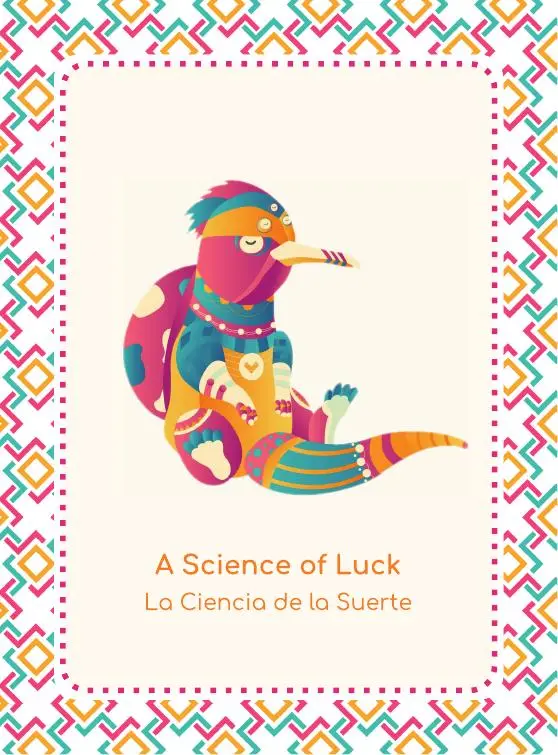
Meta Pets World · Your ally · Meta Pet 46

The miser's cowrie and the moon-bright gem

A Science of Luck card
46A Science of LuckLuck flows naturally to and through me.

The old Kirāṭa lives Seriousness at its grimmest: three days of beating the bushes for one lost shell while his mind counts the fortune it would have become. Delight enters by the side door, as a jewel found in the same forest, and the Ecstasy he carries home is freedom from care, the gift of a result he never sought.

  1. Shadow · what you avoidSeriousness

    Seriousness is the counting mind at work as he searches: “this single couri would make four by its commerce, and that would bring me eight in time… so I have lost a treasure in this” (VI.1.83.19).

  2. Gift · what is hidden in itDelight

    Delight comes at the end of the third day, when he comes across “a rich jewel, as brilliant as the bright moon in the same forest”, worth a thousand of his shells (VI.1.83.21).

  3. Essence · what you embodyEcstasy

    Ecstasy is the homecoming without care or fear (VI.1.83.22–23), and Vasiṣṭha's conclusion that, since our attempts so often bring other results than we sought, “it is better for us to remain indifferent with regard to the result of our act” (VI.1.83.29).

Here is A Science of Luck, and a miser who spent three grim days hunting one shell. Keep searching, by all means. Just leave a little room for the moon to turn up.

— Felicia
Today’s contemplation

If luck is a science and the gem was found because of the search, not instead of it, what is your hypothesis about the shell you are hunting now?

To close the night

Tonight, write one honest sentence about a small loss your mind has been multiplying into a lost fortune.

The Ally Journey · about 15 minutes

Light trance, eyes open if you prefer. For the full, deeper script, see “The practice” above and its cautions.

  1. Threshold: three slow breaths, shoulders dropping a little on each out-breath. Let your face soften, especially the forehead and the jaw.
  2. The tale in one line: an old miser loses one cowrie, searches the forest for three days counting what it would have earned, and finds a moon-bright gem instead (VI.1.83.16–29).
  3. Meet the card: look at the art of A Science of Luck and notice what makes you smile in it. Read the affirmation aloud: “Luck flows naturally to and through me.”
  4. Shadow: what small thing did you lose or miss this week that your mind keeps compounding, four, eight, a thousand? Name the shell, and notice the counting without arguing with it.
  5. Gift: keep your aim, and widen your eyes. For one minute, look around the room as the Kirāṭa might on the third evening, noticing three things that shine which you were not looking for.
  6. Essence: rest for three breaths in Ecstasy, the ease of not needing the result. On each out-breath say: “Luck flows naturally to and through me.”
  7. Return: feel your feet and hands, sit up, open your eyes fully and look around. Write tonight's honest sentence.

The 30-day Bond

Luck is a science: today, what did your search find that it was not looking for?

The Sister · Habba

Kashmiri · Srinagar, Kashmir · Om Śānti Śānti Śānti

Visit Habba, the Kashmiri bhakti poet-singer of Srinagar, and sing or say her Om Śānti Śānti Śānti after the Kirāṭa's three days, one peace for each day of searching.

Guided Meditation

#46 · A Science of Luck

Voice & guidance: Prof. Luis Miguel GallardoWatch on YouTube (ES also available)
For facilitatorsA session with “The Miserly Kirāṭa” and A Science of Luck

Aim. To help the client notice how the mind compounds a small loss into catastrophe, and to hold an earnest aim while staying open to outcomes they did not plan.

ITM 2 Conscious Recognition. The tale's precise contribution is an anatomy of loss-rumination (VI.1.83.19–20) that the client can recognise in themselves before anything else changes.

The session (60–75 min)

  1. Arrival and Umbral: three breaths; ask the client to name the small, concrete goal or loss that brought them (8 min).
  2. Telling the tale: the three-minute parable with Rāma's question about why Cūḍālā could not teach her husband; point to the tale page for the frame (4 min).
  3. The card: show A Science of Luck, read Shadow → Gift → Essence and the affirmation; ask where life currently feels too serious (8 min).
  4. Shadow inquiry: write out the client's own ‘four, eight, a hundred’ sequence for their loss and look at it together, with curiosity rather than correction (12 min).
  5. Trance practice: “The Cowrie and the Gem”, the full guided script on the tale page, at light depth; the searching is patient and the third evening simply widens attention (18 min).
  6. Gift and Essence integration: hold both truths, the cowrie as a worthy aim and the gem as unplanned; agree one way to keep searching while releasing the result (12 min).
  7. Closing and Bond: re-alert with feet on the floor, then set the 30-day Bond with its daily question (8 min).

Integration questions

  • When you walked the forest patiently, what changed in the counting?
  • What shone on the third evening that you had not been looking for?
  • How can you go on searching in earnest this week while leaving open which find will come?

In a circle

For a circle of 8–20, tell the parable with a touch of humour and let the room laugh with the miser, not at him. Each person writes their own compounding sequence on a card, privately, then folds it. Guide “The Cowrie and the Gem” at light depth for everyone, and afterwards invite volunteers to share one unexpected ‘gem’ that turned up in their life while they were looking for something else. Close with Habba's Om Śānti Śānti Śānti sung or spoken together, and the affirmation.

Cautions

  • Do not use the tale to dismiss the presenting complaint as trivial; the cowrie is searched for in earnest.
  • Do not imply that a windfall will come; with gambling-prone or money-obsessed clients the jewel can feed magical thinking.
  • ‘Indifference to results’ can be heard as giving up effort; the Kirāṭa searched for three days.

Training and certification in the Meta Pets Method: metapetsworld.org/facilitators ↗

The correspondence between tales and Meta Pets is contemplative: the Yoga Vāsiṣṭha does not contain the Meta Pets; each tale enacts its ally’s arc. Felicia is an artificial-intelligence companion; her words are contemplative reflections, not clinical advice.

The song

From the cycle The Sixty-Four Tales

The Cowrie and the Gem

Oṃ Śrīṃ

Title: The Cowrie and the Gem Título: La cauri y la gema

Figure: The old miserly Kirāṭa of the Vindhya woods, as Vasiṣṭha tells him to Rāma

Where in the text: Book VI (first half, Nirvāṇa-prakaraṇa), Mitra chapter 83 (the tale 83.16–29, inside the Cūḍālā story)

Hypnotic phenomenon the song enacts: MET and PARA: the chorus is the miser's rumination doing its arithmetic, doubling each time it returns, and the song itself is the teacher's paradox, words that cannot hand anyone the jewel and still send the listener into the forest where it lies, with a last line that finds the gem and never finds the shell.

Mantra: Oṃ Śrīṃ (ॐ श्रीं) Source: traditional bīja mantra, Śrīṃ being the seed-syllable of Śrī (Lakṣmī), goddess of fortune and radiance. Meaning: "Om, the seed-sound of Śrī", fortune and brightness; sung, with a smile, to a miser who is about to be rich.


Lyrics (English)

Performance: Vasiṣṭha is the storyteller. The chorus is the miser's counting: first he sings it alone; the second time the village sings it about him. The bridge is three bars of turning leaves, one for each day. The gem arrives on a single high note.

Verse 1 — Vasiṣṭha "If the queen who could fly couldn't teach her own king, how can anyone learn?" Rāma asked. "Hear me, Rāma," the old sage said. "By the Vindhya woods lived an old Kirāṭa, rich in wealth and grain, and as mean as he was rich."

Verse 2 One day in his own forest a single cowrie slipped out of his purse; it fell in the furze, lost under the grass. He ran every side, he beat every bush, and left no fallen leaf unturned.

Chorus — the miser One little shell would have made me four, four would have made me eight, eight a hundred, a hundred a thousand, more and more and more — oh, I have lost a treasure!

Verse 3 Three days he ran and beat at the bush, three days he counted the gains he'd have gained, three days he sighed at the loss — and the country folk could say what they liked.

Chorus — the village One little shell would have made him four, four would have made him eight, eight a hundred, a hundred a thousand, more and more and more — oh, he has lost a treasure!

Bridge — mantra, over three bars of rustling leaves (day one) Oṃ Śrīṃ (day two) Oṃ Śrīṃ (day three) Oṃ Śrīṃ (Om, seed-sound of Śrī: fortune, brightness)

Outro — Vasiṣṭha At the third day's end, in the same forest, there lay a jewel as bright as the moon, a thousand times the shell. He carried it home, kept poverty from his door, and lived his days without care or fear. "No teacher's mouth can hand you the jewel, Rāma — but who finds it who won't hunt the shell?" And the cowrie? He never found the cowrie.


Letra (castellano cantable)

Interpretación: Vasiṣṭha es el narrador. El estribillo es la cuenta del avaro: la primera vez la canta él solo; la segunda la canta la aldea sobre él. El puente son tres compases de hojas removidas, uno por día. La gema llega en una sola nota aguda.

Verso 1 — Vasiṣṭha "Si la reina que volaba no pudo enseñar a su rey, ¿quién podrá aprender?", preguntó Rāma. "Escucha, Rāma", dijo el viejo sabio. "Junto al bosque del Vindhya vivía un viejo kirāṭa, rico en bienes y en grano, y tan tacaño como rico."

Verso 2 Un día, en su propio bosque, se le escapó una cauri de la bolsa; cayó en la maleza, perdida bajo la hierba. Y corrió por todos lados, golpeó cada mata, y no dejó hoja caída sin volver.

Estribillo — el avaro Una conchita me habría dado cuatro, y cuatro me habrían dado ocho, ocho cien, y cien, mil, y más y más y más… ¡ay, que he perdido un tesoro!

Verso 3 Tres días corrió golpeando las matas, tres días contó lo que habría ganado, tres días suspiró por lo perdido… y la gente del campo, que dijera lo que quisiera.

Estribillo — la aldea Una conchita le habría dado cuatro, y cuatro le habrían dado ocho, ocho cien, y cien, mil, y más y más y más… ¡ay, que ha perdido un tesoro!

Puente — mantra, sobre tres compases de hojas (día uno) Oṃ Śrīṃ (día dos) Oṃ Śrīṃ (día tres) Oṃ Śrīṃ (Om, semilla de Śrī: fortuna, resplandor)

Final — Vasiṣṭha Al acabar el tercer día, en el mismo bosque, había una joya brillante como la luna, mil veces la concha. Se la llevó a casa, cerró a la pobreza su puerta para siempre y vivió sus días sin cuidado ni miedo. "Ninguna boca de maestro te da la joya, Rāma; pero ¿quién la halla sin buscar la concha?" ¿Y la cauri? La cauri no apareció jamás.


One line to carry

EN: Hunt the shell. The jewel lies in the same forest. ES: Busca la concha. La joya está en el mismo bosque.


Libreto note

The lightest of the Cūḍālā songs: a joke told by a sage. Rāma asks how anyone can be taught if a queen who could fly could not teach her own husband, and Vasiṣṭha answers with an old miser who drops one cowrie in the Vindhya furze and spends three days beating the bushes while his mind turns one shell into four, eight, a thousand. The clinician hears rumination doing its sums. Each chorus doubles, then the village takes it up; three bars of turning leaves, and the jewel arrives on one high note. No teacher's words can hand you that jewel, says the sage, and nobody finds it without hunting the shell. The shell, of course, is never found.


Source check

Source check (Mitra, Book VI first half)

  1. Rāma's question (if the seeress could not teach Śikhidhvaja, how can anyone learn?) and Vasiṣṭha's "Hear me Ráma, relate to you a tale"; the old Kirāṭa "miserly in his conduct as he was rich in his possessions of wealth and grains", dwelling "by the side of the Vindhyan woods" — ch. 83, vv. 8, 12, 15–16.
  2. The single couri slips from his purse, falls "in a grassy furze and was lost under the grass"; he "ran on every side, and beat at the bush for three days … to leave no fallen leaf unturned" — ch. 83, vv. 17–18.
  3. The counting: "this single couri would make four … that would bring me eight … a hundred and a thousand, and more and more … so I have lost a treasure in this"; he "counted over and over, over the gains he would gain, and sighed as often at the loss", taking "no account of the rustic peasantry on his foolish penury" — ch. 83, vv. 19–20.
  4. "At the end of the third day he came across a rich jewel, as brilliant as the bright moon in the same forest … by a thousand fold"; he returns gladly home, "keeping off poverty for ever from his door", and passes his days "without any care or fear" — ch. 83, vv. 21–23.
  5. The paradox: divine knowledge cannot be had "by the mere lectures of the preceptor … nor known from the words of the instructor's mouth", yet "can one gain the rich gem without his search after the couri?" — ch. 83, vv. 25–26. (The cowrie is never said to be found: the surprise last line is the text's own silence.)

Read the full text

Source: Vihari-Lala Mitra, The Yoga-Vasishtha Maharamayana of Valmiki (1891–99), public domain.

Collaborate on this research

Researchers, clinicians and institutions are welcome to write. Replication, data-sharing and site partnerships for the trials in progress are all open conversations.

Educational and scholarly content. Hypnotherapy and regression material is complementary and not a substitute for medical or psychiatric care.