ICEF

Tale 32 · The Vāsiṣṭha Atlas

The Vetāla's Riddles

Nirvāṇa · first half · Mitra VI.1.70–73 · 2,500 words

One answer stills every riddle; the hungry demon forgets hunger.

Bhūmikā 3 · Tanumānasā (thinning of the mind)MediumYour ally · The Alchemy of Simplicity

The essence

A gigantic vetāla of the Vindhya forests, who kills only from hunger and only when he judges it fair, stops a ruler on his night round: a king must hear every petition, so answer my questions or be my meal. He asks six riddles: which sun's rays glitter as the worlds; which wind wafts these star-dusts; what passes from dream to dream in thousands of forms without leaving its own; what pith lies beneath a hundred sheaths like a plantain stem; what invisible atom produces the universe; what formless atom is the marrow under the mountains. The king smiles and gives one answer in many images: the Intellect, which holds worlds within worlds — fruit, tree, forest, continent, mundane egg, ocean, Viṣṇu, Rudra, the Supreme Lord. “Reflect this in thyself and keep thy quiet.” The vetāla falls silent, reflects, and, absorbed in meditation, forgets his hunger and thirst. Right understanding pacifies the devourer; it does not destroy him.

What it teaches

  1. 01

    A threatening voice can be met with calm rather than combat: the king first threatens back, then smiles and answers, and the threat dissolves into reflection (VI.1.70.10; VI.1.71.1; VI.1.73.1).

  2. 02

    Six riddles have one answer: an anxious mind multiplies questions that a single shift of standpoint resolves together (VI.1.72.1–11).

  3. 03

    Craving subsides when attention is absorbed elsewhere: the vetāla, “quite absorbed in his fixed meditation, … forgot at once his hunger and thirst” (VI.1.73.2).

  4. 04

    The devourer is hungry and rule-bound, not wicked: he kills only when pressed and when he thinks it equitable (VI.1.70.6–7). Destructive drives often follow an inner sense of fairness that can be addressed rather than fought.

The Vāsiṣṭha Atlas

This tale’s coordinates

The wound and its virtue

The vetāla is the outcast of the forest, a devourer who kills from hunger and demands to be heard, and the king meets him not with a sword but with a smile and a hearing: the Rejection wound met by Gentleness. Welcoming is the movement, one patient answer to six tangled riddles, ‘reflect this in thyself and keep thy quiet’ (VI.1.72.11), and the devourer ‘forgot at once his hunger and thirst’ (VI.1.73.2), pacified, not destroyed.

What it trains

The king answers a threat with a smile and the monster with understanding, and the vetāla then turns that same quiet gaze on himself (VI.1.73.2): awareness that calms rather than condemns.

In other yogas

  • Buddhist absorption · Sn 1.10

    In the Āḷavaka Sutta a menacing yakkha puts riddles to the Buddha on pain of harm, receives calm answers and is converted; the vetāla’s night ambush and his pacification by understanding (VI.1.73.2) follow the same pattern of the devourer tamed by a reply.

  • Bhagavad Gītā · BG 7.7

    Kṛṣṇa says all this is strung on him like pearls on a thread; the king’s single answer to six riddles, the Intellect holding worlds within worlds up to the one Lord (VI.1.71.16), is that thread named.

  • Māṇḍūkya Upaniṣad · MāU 7

    The vetāla asks what passes from dream to dream in thousands of forms without leaving its own (VI.1.70.14); the Māṇḍūkya’s answer is the fourth, unchanged beneath waking, dream and sleep, the same answer the king gives in images.

IEAF: Integrative Emotional Alchemy Framework (Gallardo, Frontiers in Psychology, 2026). FP20: the Fundamental Peace Scale. ITM: the Integrative Transformation Model. Parallels in other yogas are contemplative correspondences, not claims of influence.

The tale

Vasiṣṭha says that when the cloud of ignorance is dispersed by right reason, life becomes no-life and mind becomes no-mind: that is liberation. To show how our dreaming conception of the world dissolves, he recalls the questions of a vetāla.

A gigantic vetāla lived in the wilds of the Vindhya mountains. Once he had lived near a populous city, content with the victims the citizens offered him daily; he never killed anyone without cause, even when pinched by hunger, and walked in the ways of honest men. Later he withdrew to his forest, where he killed only when pressed by excessive hunger and when he judged it equitable. One night he met a ruler of the land on his rounds and cried out in an appalling voice: you are caught in the clutches of a monster, you are a dead man and my ration for today. The ruler answered that he would break the fiend's skull into a thousand pieces if he tried to kill him unjustly. The vetāla replied that he spoke rightly: a ruler must attend to every petition. Let the prince answer his questions, or be eaten — and all his people after him.

These were the riddles. Who is that glorious sun whose particles of light glitter in the worlds, and what is the wind that wafts these dusts of stars through infinite space? What is that self-same thing which passes from one dream to another, taking hundreds and thousands of forms, and yet does not forsake its original form? What is the pith in bodies, wrapped in a hundred sheaths laid over one another like the coats of a plantain tree? What is the minute atom, invisible to the eye, that produces this immeasurable universe, in which worlds and mountains are the minutest particles? What is the shapeless atom that lies as pith and marrow under the rocks of mountains, the substratum of the three worlds?

The king smiled, and the lustre of his teeth brightened the sky. The world, he said, was at first a granule in the divine mind, encrusted by a dozen elemental sheaths. A great tree bears thousands of such fruits; thousands of such trees make forests; forests stretch over mountains; mountains stand in tracts with valleys, islands, lakes, rivers and cities; these tracts are so many earths and worlds; thousands of worlds lie within a mundane egg; thousands of eggs and oceans lie in the bosom of one being; the one who holds thousands of oceans is Viṣṇu; the one who wears thousands of such gods as a string of pearls is Rudra; the one who bears thousands of great gods as the hairs on his person is the supreme Lord. He is that sun, and all things are particles of his rays: the all-knowing soul is the sun of the intellect.

He answered the rest. The wind is the supreme soul, breathing out the particles held in the intellect as air carries fragrance. What passes from dream to dream unchanged is Brahman, the conscious soul. The pith beneath the sheaths is Brahman hidden in the interior of every layer, which no word can describe. The atom is the soul, called minute because it is imperceptible and a mountain because it fills all space, the form of all forms with no form of its own. All these worlds are designs of an Intelligence that is quiet in its nature. “Know, O young vetála, that irresistible power, reflect this in thyself and keep thy quiet.”

The vetāla held his peace and reflected on these words with his reasoning mind. Calm, and absorbed in fixed meditation, he forgot at once his hunger and thirst. Vasiṣṭha tells Rāma to curb his thought from everything, enclose the soul in itself, do what must be done without willing anything of his own, keep his mind as clear as the sky — the steadiness by which Bhagīratha brought the Ganges down to earth.

The text speaks

Passages from Mitra’s translation (1891–99), cited by book, chapter and verse.

“What is that self-same thing, which passes from one dream to another, and assumes different forms by hundreds and thousands, and yet does not forsake its original form.”
VI.1.70.14The riddle of the continuous self beneath successive states — the thread of tale 31.
“Tell me what is that pithy particle in bodies, which is enveloped under a hundred folds or sheaths, which are laid over and under one another, like the coats or lamina of a plantain tree.”
VI.1.70.15Layered sheaths as an image of nested identity.
“That which bears thousands of such Great Gods Mahádevas, in the manner of the hairs on his person; is the supreme Lord God of all.”
VI.1.71.16The summit of the king's ladder of containment, a nested deepening.
“All these worlds are fraught with design of Intelligence, which is quiet in its nature, and exhibits endless kinds of beautiful forms of its own, know, O young vetála, that irresistible power, reflect this in thyself and keep thy quiet.”
VI.1.72.11The single answer, ending in a direct suggestion to reflect and be still.
“Being then quite calm in his mind, he reflected on the pure doctrines of the prince; and being quite absorbed in his fixed meditation, he forgot at once his hunger and thirst.”
VI.1.73.2The outcome: absorption that suspends the devouring drive.

What the trance sees

PARA

Paradox / confusion technique

VI.1.70.13–17

In the textSix “dark enigmas” put under threat of death: a sun of whose rays the worlds are particles, a wind that wafts star-dust, a thing that passes from dream to dream, a pith under a hundred sheaths, an invisible atom that produces the universe, a formless atom under the mountains.

In the clinicErickson's confusion technique (1964): a cascade of puzzling questions saturates analytic effort so that a single simplifying suggestion (“reflect this in thyself and keep thy quiet”) is readily accepted.

NEST

Nested trance

VI.1.71.2–17; VI.1.72.3–4

In the textThe answer is a ladder of containment: “That which contains thousands of such worlds… That which contains thousands of such eggs… That which bears thousands of such Gods… is the Great God Rudra”; and the plantain stem whose pith is “deeply hid in the interior”.

In the clinicStacked and embedded imagery as a deepener, akin to multiple embedded metaphor (Lankton & Lankton 1983): each frame opens into a larger one until a single container holds all.

ABS

Absorption

VI.1.73.1–2

In the textThe vetāla “held his peace and quiet, and remained reflecting”, and “being quite absorbed in his fixed meditation, he forgot at once his hunger and thirst.”

In the clinicAbsorption (Tellegen & Atkinson 1974) producing suspension of appetite, the mechanism used in hypnotic work with cravings: when attention is fully engaged, the urge loses salience.

Read upward — stage 1 at the bottom, stage 7 at the top

  1. Integration zone
    Progressive relaxation and deepening — the habitual self loosens enough for new pattern to take.

A note on what this map claims. The alignment between stages of knowledge and trance depths is a clinical map — a heuristic correspondence proposed for research, not a claim of identity between contemplative attainment and hypnotic depth.

Bhūmikā 3 · Tanumānasā

The vetāla moves from hunger through reflection “in his mind, which was capable of reasoning” to calm absorption in which appetite is forgotten (VI.1.73.1–2): the thinning of the mind (tanumānasā) produced by inquiry.

Zone · Medium

Absorption sufficient to suspend hunger and thirst, without amnesia, catalepsy or hallucinated scenes.

In Mitra’s words

In Calcutta in the 1890s, the translator chose the vocabulary of hypnotism to name these states. More →

  • dreaming conceptionAttend now to the queries of a vetála, which I come to remember at present, concerning our erroneous and dreaming conception of the phenomenal world, and which will serve to example by the subject of our last lecture.VI.1.70.3
  • absorbed in fixed meditationBeing then quite calm in his mind, he reflected on the pure doctrines of the prince; and being quite absorbed in his fixed meditation, he forgot at once his hunger and thirst.VI.1.73.2

In the therapy room

Indications

  • Ruminative or existential questioning that “devours” the person at night
  • Cravings (food, substances, compulsive behaviours), using absorption to reduce the urge (VI.1.73.2)
  • Working with a harsh inner critic or threatening inner voice through calm, curious response rather than combat
  • Confusion-then-simplification inductions for analytical clients who resist direct suggestion

Cautions

  • In obsessive-compulsive presentations, riddles can feed reassurance-seeking and mental checking
  • Confusion techniques are unsuitable for clients with cognitive impairment or strong fear of losing control
  • Monster imagery may frighten children or trauma survivors; adapt the figure
From the bookThe full clinical note

Indications. Ruminative or existential questioning that devours a person at night. Cravings, for food, substances or compulsive behaviours, using absorbing imagery to reduce the urge (VI.1.73.2). A harsh inner critic or threatening inner voice, met with calm curiosity rather than combat: the vetāla is hungry and rule-bound, not wicked (VI.1.70.6–7), and inner devourers often keep a rough sense of fairness that can be addressed. Analytical clients who resist direct suggestion, for whom a confusion-then-simplification induction suits.

How to use it. Let the client's troubling question become the vetāla; let it ask, without answering; smile; climb the ladder; give one answer to all; let the questioner fall silent.

Cautions. In obsessive-compulsive presentations, riddles can feed reassurance-seeking and mental checking; do not use the confusion phase there. Confusion techniques are unsuitable for clients with cognitive impairment or a strong fear of losing control. Monster imagery may frighten children or trauma survivors; the figure can be a hungry traveller or a large, tired animal instead.


The practice

The Riddle Induction

  1. Walk an imagined night road; let the hungry question that troubles you step out of the forest as the vetāla (VI.1.70.8–9).
  2. Let it ask its riddles one after another, without answering; allow the mind to become pleasantly overloaded (VI.1.70.13–17).
  3. Smile, as the king smiled before he spoke (VI.1.71.1), and let a long breath out.
  4. Climb the ladder: a fruit within a tree, within a forest, within mountains, within a world, within an egg of worlds, within one sun of awareness (VI.1.71.2–18).
  5. Give the single answer to every riddle: the quiet awareness that contains this very question (VI.1.72.11).
  6. Watch the questioner fall silent and become absorbed; notice hunger or urge receding (VI.1.73.1–2).
  7. Re-alert with the closing instruction: draw the thought in, then “do what thou hast to do” (VI.1.73.5); count up and open the eyes.

Practise with a qualified professional if you have a history of dissociation, trauma or psychosis.

From the book · to be read aloudThe full guided script

The Riddle Induction

Ten to fifteen minutes.

Before you begin. This practice deliberately crowds the mind with questions before quieting it. Skip it if you have obsessive doubts or compulsive checking, or if feeling confused frightens you; use the ladder alone instead. If monster imagery is unwelcome, let the questioner be a hungry traveller. Sit; never practise while driving or operating anything.

How to return at any moment. Open your eyes, name the room, and count five things you see.


Close your eyes. You are walking a road at night, under trees, on your rounds.

Let the question that has been troubling you step out of the forest. It is large. It is hungry. Let it speak.

Let it ask, one after another, and do not answer. What is the sun whose rays are worlds? What is the wind that carries the stars like dust? What passes from dream to dream and stays itself? What lies under a hundred sheaths? What atom holds the universe? What marrow lies under the mountains? Let them pile up. Let the mind be pleasantly full.

And now, smile, as the king smiled. Let a long breath out.

Climb. A fruit, on a great tree. Thousands of such trees, a forest. Thousands of forests, over mountains. Mountains in lands, lands as worlds. Thousands of worlds in one egg. Thousands of eggs held in one calm sea. Thousands of seas in one great being. Each step, deeper and quieter.

Now give one answer to every question: the quiet awareness that is hearing this question. That is the sun, the wind, the one who passes from dream to dream, the pith, the atom, the marrow.

Watch the questioner grow quiet. It sits down by the road. It forgets its hunger.

(Silence: one to two minutes.)


Now come back down the ladder. Out of the great being, into the calm sea, into the egg of worlds, into the lands and mountains, into the forest, onto the road, into this room.

Draw the thought in; then do what you have to do.

I will count from one to five; on five the eyes open. One, the breath fuller. Two, hands and feet your own. Three, the sounds of the room. Four, a deep breath and a stretch. Five, eyes open. Here. Now.

Say your name, the day and the place. Name three things you can see. If an urge returns later, smile first, then climb two steps of the ladder.


Meta Pets World · Your ally · Meta Pet 23

The vetāla’s riddles and the single answer

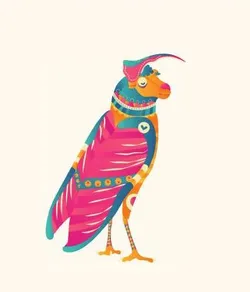
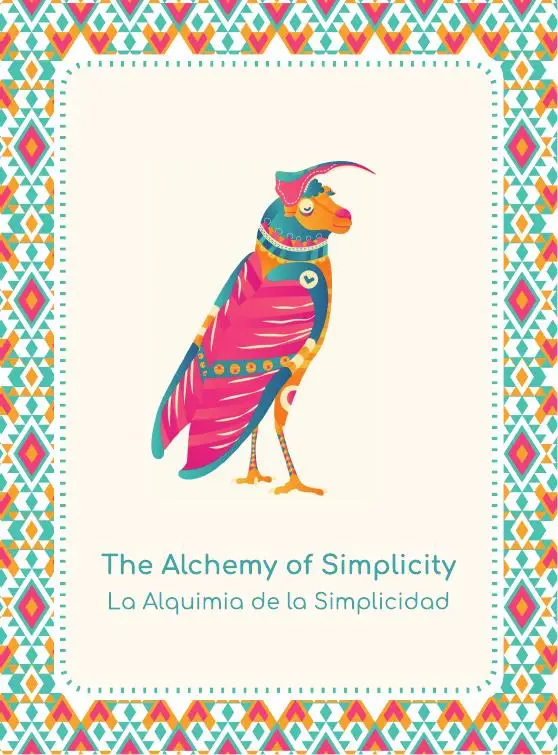
The Alchemy of Simplicity card
23The Alchemy of SimplicityI find the profound in the simple.

A hungry vetāla stops a ruler on his night rounds and fires six tangled riddles at him, each a puzzle wrapped in sheaths: the Complexity that is the Shadow of The Alchemy of Simplicity. The king smiles and climbs from fruit to forest to worlds to the one Lord, giving a single answer to all six, the Gift of Simplicity. The questioner falls quiet and forgets his hunger in that one awareness: Quintessence.

  1. Shadow · what you avoidComplexity

    Complexity is the question that devours: ‘What is that self-same thing, which passes from one dream to another… What is that pithy particle in bodies, which is enveloped under a hundred folds or sheaths’ (VI.1.70.14–15), asked by a demon whose price for a wrong answer is the whole city.

  2. Gift · what is hidden in itSimplicity

    Simplicity is the king’s smile and his ladder of containment, fruit within tree, tree within forest, worlds within one being, up to the one ‘which bears thousands of such Great Gods… in the manner of the hairs on his person’ (VI.1.71.16): one answer for every riddle.

  3. Essence · what you embodyQuintessence

    Quintessence is the Intelligence ‘quiet in its nature… reflect this in thyself and keep thy quiet’ (VI.1.72.11), and the vetāla, ‘quite absorbed in his fixed meditation… forgot at once his hunger and thirst’ (VI.1.73.2).

Is a hungry question pacing round your head tonight? Smile at it, as the king did. It may only need one simple answer. Then watch it sit down and forget it was hungry.

— Felicia
Today’s contemplation

Simplicity is the ultimate alchemy: which tangle of questions are you complicating that, like the vetāla’s six riddles, might share one quiet answer?

To close the night

Tonight, write one honest sentence about a question that kept you busy today, and the simplest true answer you have.

The Ally Journey · about 15 minutes

Light trance, eyes open if you prefer. For the full, deeper script, see “The practice” above and its cautions.

  1. Threshold. Sit comfortably and let your gaze rest low. Three slow breaths, the last one a long sigh out.
  2. The tale in one line: a hungry vetāla asks a king six riddles; one calm answer stills them all, and the demon forgets his hunger (VI.1.70–73).
  3. Meet The Alchemy of Simplicity. Look at the card’s art, find its simplest shape, and read: ‘I find the profound in the simple.’
  4. Shadow. Which question has been circling you this week, at night or between tasks? Let it ask itself a few times, in its own words, without answering.
  5. Gift. Smile slightly, as the king did, and breathe out. Picture your question inside a room, the room inside a city, the city inside a country, the earth inside a vast sky of awareness.
  6. Essence. Rest in that quiet sky, the one answer that holds every question, and notice any urge or hunger easing. Three breaths, then the affirmation.
  7. Return. Draw the attention back in, count up from one to five, open the eyes fully, and ‘do what thou hast to do’: one simple next act. Write the honest line.

The 30-day Bond

Simplicity is the ultimate alchemy: what am I complicating today that the vetāla’s king would answer with a smile?

The Sister · Tafrara

Berber / Amazigh · High Atlas, Morocco · Tafat, Tafat

Visit Tafrara, the Amazigh wisdom-keeper of the High Atlas, whose ‘Tafat, Tafat’ names light, close kin to the king’s answer that all things are particles of one sun of awareness.

Guided Meditation

#23 · The Alchemy of Simplicity

Voice & guidance: Prof. Luis Miguel GallardoWatch on YouTube (ES also available)
For facilitatorsA session with “The Vetāla's Riddles” and The Alchemy of Simplicity

Aim. To meet a ‘devouring’ question, craving or threatening inner voice with calm curiosity rather than combat, and to let a single shift of standpoint quieten what argument could not.

ITM 3 Gift Discovery. The tale is Gift Discovery: the king discovers that six riddles share one answer (VI.1.72.1–11), and that discovery, not victory, ends the threat.

The session (60–75 min)

  1. Arrival and Umbral: three breaths; ask which question, craving or inner voice ‘devours’ the client, and when (8 min)
  2. Tell the tale in a 4-minute version: the honest, hungry vetāla, the ruler on his rounds, the six riddles, the king’s smile and ladder, the single answer, the demon’s quiet; point to the tale page for the full retelling (6 min)
  3. The card: The Alchemy of Simplicity’s art, affirmation and koan; ask what the client is complicating (6 min)
  4. Shadow inquiry on Complexity: list the client’s questions as the vetāla’s riddles; look for the sense of fairness or need behind the hungry voice rather than fighting it (12 min)
  5. Trance practice: ‘The Riddle Induction’, following the full guided script on the tale page, at light to medium depth; keep the overload gentle and brief, and adapt the monster to a less frightening figure if needed (18 min)
  6. Gift and Essence integration: the client names the single simple answer they found, in their own words, and notes how the urge or hunger changed (12 min)
  7. Closing and Bond: assign the 30-day Bond with the varied koan; ‘do what thou hast to do’: count up, open the eyes, choose one simple next act (6 min)

Integration questions

  • What was the one answer, in your own words, and how did it feel in the body?
  • When the questions were allowed to pile up without reply, what happened to their urgency?
  • What is the hungry voice really asking for, and how could you feed it fairly?

In a circle

In a circle, invite everyone during the Umbral to write on a slip of paper the question that has been circling them, unsigned. Tell the tale, then read a handful of the slips aloud, one after another and without answering, so the room feels the pile-up of riddles. Pause, smile, and guide the ladder from room to sky at light depth for the whole group. Afterwards, ask people to write the single simplest answer they found on the back of their own slip and keep it. Close with the affirmation and one simple shared act, such as standing together.

Cautions

  • In obsessive-compulsive presentations, riddles can feed reassurance-seeking and mental checking; use a different tale.
  • Confusion techniques are unsuitable for clients with cognitive impairment or a strong fear of losing control.
  • Monster imagery may frighten children or trauma survivors; adapt the figure.

Training and certification in the Meta Pets Method: metapetsworld.org/facilitators ↗

The correspondence between tales and Meta Pets is contemplative: the Yoga Vāsiṣṭha does not contain the Meta Pets; each tale enacts its ally’s arc. Felicia is an artificial-intelligence companion; her words are contemplative reflections, not clinical advice.

The song

From the cycle The Sixty-Four Tales

Six Riddles, One Answer

Oṃ hrīṃ

Figure — The gigantic vetāla of the Vindhya wilds, who kills only from hunger and only when it is fair, and the king he stops on his night round.

Where in the text — Book VI (first half, Nirvāṇa-prakaraṇa), Mitra chapters 70–73.

Hypnotic phenomenon the song enacts — PARA and NEST, resolved in ABS: six riddles pile up quicker and lower until they overlap (confusion), one bright chord breaks them, a ladder of "a thousand such" climbs a step per line (nesting), and the questioner sinks into stillness and forgets his hunger.

Mantra — Oṃ hrīṃ (ॐ ह्रीं). Source: traditional bīja mantra — hrīṃ, the seed-syllable of māyā (the māyā-bīja, sacred to Bhuvaneśvarī, "Lady of the Worlds"). Meaning: the seed-sound of the shown world: every form the riddles ask about, folded into one syllable.


Lyrics (English)

Performance: verse 1 is call and answer, growl and tenor. In verse 2 the growl asks the riddles, each a little faster over a lower drone, until the last ones overlap. Then one bar of silence and a single bright chord: the king smiles. Each line of the chorus is set one step higher than the last. The bridge is both voices. In the outro the growl no longer asks; it hums beneath the tenor.

Verse 1 (growl, then tenor) Night in the Vindhya wilds, the king on his round. "Prince, you're my ration for today." "Kill me unjustly and I'll break your skull." "Not unjustly. A ruler must hear every petition. Hear mine."

Verse 2 (growl, quickening) Whose sun sheds the worlds like specks of light? What wind blows the dust of stars? What goes from dream to dream in a thousand forms and keeps its own? What pith lies under a hundred plantain sheaths? What unseen atom makes a universe, worlds its dust? What shapeless atom is the marrow under the rocks? Answer, or I eat you, and your people after.

(One bar of silence. One bright chord: the king smiles, and the lustre of his teeth lights the white vault of the sky.)

Chorus (tenor, one step higher each line) A granule in a dozen skins; a tree that bears a thousand such; a thousand trees, a forest; forests, hills; islands, rivers, cities, worlds; and one egg holds a thousand worlds.

Verse 3 (tenor, softly) The wind is the soul's own breath, bearing worlds as air bears scent. What walks through dreams unchanged is the one who sees. Each plantain sheath grows from the one within. Atom, since no eye can see it; mountain, since it fills all space.

Chorus (higher still) A thousand eggs, a thousand oceans; who holds the oceans is Viṣṇu; who strings such gods like pearls is Rudra; who wears great gods like the hairs on his body — he is the sun; each world, a speck of his light.

Bridge (mantra) (both voices) "Reflect this in yourself, young vetāla, and keep your quiet." Oṃ hrīṃ (the seed-sound of the shown world) Oṃ hrīṃ

Outro (the growl hums beneath the tenor) The vetāla held his peace and pondered, sank into stillness, and forgot his hunger and his thirst. Now do what you must, your mind as clear as the sky.


Letra (castellano cantable)

Interpretación: el verso 1 es pregunta y respuesta, gruñido y tenor. En el verso 2 el gruñido lanza los enigmas, cada uno un poco más rápido sobre un bordón más grave, hasta que los últimos se encabalgan. Luego un compás de silencio y un solo acorde luminoso: el rey sonríe. Cada verso del estribillo sube un escalón sobre el anterior. El puente lo cantan las dos voces. En el final el gruñido ya no pregunta: tararea bajo el tenor.

Verso 1 (gruñido, luego tenor) Noche en los montes Vindhya, el rey en su ronda. «Príncipe, eres mi ración de hoy». «Mátame sin justicia y te parto el cráneo». «Sin justicia, no. Un rey ha de oír toda petición. Oye la mía».

Verso 2 (gruñido, cada vez más rápido) ¿De qué sol son los mundos chispas de luz? ¿Qué viento arrastra el polvo de estrellas? ¿Qué pasa de sueño en sueño en mil formas y guarda la suya? ¿Qué médula hay bajo cien vainas de plátano? ¿Qué átomo invisible hace un universo, y los mundos su polvo? ¿Qué átomo sin forma es el tuétano bajo las rocas? Responde, o te como, y a tu pueblo después.

(Un compás de silencio. Un acorde luminoso: el rey sonríe, y el brillo de sus dientes ilumina la bóveda blanca del cielo.)

Estribillo (tenor, un escalón más alto cada verso) Un grano envuelto en doce pieles; un árbol que da mil como él; mil árboles, un bosque; bosques, montañas; islas, ríos, ciudades, mundos; y un huevo guarda mil mundos.

Verso 3 (tenor, en voz baja) El viento es el aliento del alma, lleva los mundos como el aire el perfume. Lo que cruza los sueños sin cambiar es el que mira. Cada vaina del plátano nace de la de dentro. Átomo, porque no hay ojo que lo vea; montaña, porque llena todo el espacio.

Estribillo (más alto aún) Mil huevos, mil océanos; quien sostiene los océanos es Viṣṇu; quien ensarta esos dioses como perlas es Rudra; quien lleva grandes dioses como el vello de su cuerpo: ese es el sol; cada mundo, una mota de su luz.

Puente (mantra) (las dos voces) «Refléjalo en ti, joven vetāla, y guarda tu calma». Oṃ hrīṃ (la semilla sonora del mundo que se muestra) Oṃ hrīṃ

Final (el gruñido tararea bajo el tenor) El vetāla calló, y meditó, se hundió en la quietud, y olvidó su hambre y su sed. Ahora haz lo que debas, con la mente clara como el cielo.


One line to carry

EN: One answer stills every riddle; even hunger forgets itself. ES: Una respuesta calma todo enigma; hasta el hambre se olvida.


Libreto note

A riddle contest at night in the Vindhya forest, but here the right answer does not slay the questioner, it quiets him. This vetāla is a just devourer — he kills only from hunger, only when he judges it fair — and he puts six dark questions to a king on his rounds. The king smiles and answers once, as a ladder: a seed, a tree, a forest, a world, an egg of worlds, an ocean, the gods, the one sun of which every world is a speck. Confusion first, then a single frame that holds it all. Growl and tenor; the questions crowd and overlap; one bright chord; the ladder climbs; and the hungry one hums, his hunger forgotten.


Source check

Source check (Mitra, Book VI first half)

  1. "A gigantic vetála in the vast wilderness of the Vindhya mountains"; the ruler "in his nightly round"; "thou… hast become my ration of this day"; "I will break thy skull"; "as thou art a ruler, it is thy duty to attend to the petition of every body": ch. 70, vv. 4, 8–11.
  2. The six riddles — the sun whose rays "glitter in the surrounding worlds"; the wind that "wafts these dusts of stars"; what "passes from one dream to another… and yet does not forsake its original form"; the pith under "a hundred folds or sheaths… like the coats or lamina of a plantain tree"; the atom "imperceptible to the eye" whose minutest particles are worlds and mountains; the "shapeless and formless… atom… the pith and marrow under the rocks"; "I will devour all thy people": ch. 70, vv. 13–18.
  3. "The Rájá smiled… the lustre of his pearly teeth, shed a brightness on the white vault of the sky"; the ladder — the granule "encrusted by a dozen of elemental sheaths"; the tree with thousands of such fruits; forests, mountains, islands, cities, worlds, mundane eggs, oceans; Viṣṇu; Rudra, who bears "thousands of such Gods, as a string of pearls"; the Lord who bears great gods "in the manner of the hairs on his person"; "all things in the universe are but particles of that uncreated sun": ch. 71, vv. 1–18.
  4. The soul "as the etherial air bears the fragrance from the cells of flowers"; the plantain stem "having its pith hidden in the inside"; "a minute atom, on account of… imperceptibility… the base of mountains… owing to the unboundedness of its extent"; "reflect this in thyself and keep thy quiet": ch. 72, vv. 2–4, 7, 11.
  5. "The vetála held his peace and quiet… being quite absorbed in his fixed meditation, he forgot at once his hunger and thirst"; "do what thou hast to do at any time… keep itself as clean as the clear firmament": ch. 73, vv. 1–2, 5–6.

Read the full text

Source: Vihari-Lala Mitra, The Yoga-Vasishtha Maharamayana of Valmiki (1891–99), public domain.

Collaborate on this research

Researchers, clinicians and institutions are welcome to write. Replication, data-sharing and site partnerships for the trials in progress are all open conversations.

Educational and scholarly content. Hypnotherapy and regression material is complementary and not a substitute for medical or psychiatric care.