ICEF

Tale 26 · The Vāsiṣṭha Atlas

Bhuśuṇḍa, the Crow at the Edge of Time

Nirvāṇa · first half · Mitra VI.1.14–27 · 23,718 words

Between the outgoing and returning breath, the crow outlives time.

Bhūmikā 6 · Padārthābhāvanī (melting of objects)DeepYour ally · The Ending of Time

The essence

Vasiṣṭha flies to Mount Meru to meet Bhuśuṇḍa, a crow older than the gods, who lives in the hollow of a wish-fulfilling mango tree. Born of the crow Caṇḍa, vehicle of the Mātṛkā goddess Alambuṣā, and of the geese that draw the goddess Brāhmī, he has outlived his twenty brothers and seen kalpa after kalpa dissolve. At each dissolution he holds himself by fixed attention, rests in a sleep beyond the world, and wakes to recognise the new creation by the stars. His secret is the breath. He watches the warm outgoing breath rise from the heart and set a short span beyond the nose, and the cool incoming breath rise there and set in the heart; between them lies the pause, and when that pause arises of itself, without effort, it is "the state of the most supreme". From this watching, carried into waking, dream and sleep, come his equanimity, his freedom from past and future, and a tenderness that rejoices in others' joy. It is the Yoga Vāsiṣṭha's own induction.

What it teaches

  1. 01

    The breath is both clock and doorway: the crow knows time "by the respirations of our breath" (VI.1.20.25), and by watching where each breath sets and the next is born he finds the still point between them (VI.1.25.49; 25.68a).

  2. 02

    Stillness is reached at the turning points of the breath, not by force: the highest kumbhaka is the one that arises within "without any efforts on the part of the adept" (VI.1.25.59).

  3. 03

    Release from past and future is the crow's medicine against decay: "I never think of the past and future, my sight is fixed only on the present" (VI.1.26.8), the opposite of rumination and worry.

  4. 04

    Equanimity is not coldness: the crow who stays "unmoved as a rock" in adversity also feels "happy at the happiness of others" and sorry at their misery (VI.1.26.34–35).

  5. 05

    A practice heals only when it pervades ordinary life: he keeps the breath-watching while working, eating, walking, sleeping and dreaming (VI.1.25.22–28; 26.3).

The Vāsiṣṭha Atlas

This tale’s coordinates

The wound and its virtue

Bhuśuṇḍa has outlived twenty brothers and watched kalpa after kalpa dissolve: finitude itself, and death, he says, overtakes the mind that rambles ‘like an ape from one tree to another’ (VI.1.23.11). What he embodies is Care in the paper’s sense, a watch on the breath kept ‘whether I am awake or asleep’ (VI.1.26.3) and a fellow feeling, glad at others’ gladness, that ‘has kept me alive’ (VI.1.26.34).

What it trains

The crow’s method is attention resting at the turning of the breath until the pause arises ‘without any efforts on the part of the adept’ (VI.1.25.59), the clearest case in the text of attention without suppression.

In other yogas

  • Vijñāna Bhairava Tantra · VBT 24

    The Tantra’s first dhāraṇā rests attention on the two places where the outgoing and incoming breaths arise and turn; Bhuśuṇḍa’s breath rising from the heart and setting twelve measures beyond it (VI.1.25.29–30) is the same practice, down to the point outside the body.

  • Patañjali · Yoga Sūtra · YS 2.50–51

    Patañjali describes breath held outside, inside and suspended, then a fourth that goes beyond outer and inner; the crow likewise distinguishes outer from inner kumbhaka and calls the one that arises effortlessly within ‘the state of the most supreme’ (VI.1.25.59).

  • Buddhist absorption · MN 118

    The Ānāpānasati Sutta develops mindfulness of breathing into calm, insight and release; Bhuśuṇḍa’s breath-watching likewise becomes his equanimity and his freedom from past and future.

  • Māṇḍūkya Upaniṣad · MāU 3–5

    His watch continues through waking, dream and deep sleep (VI.1.26.3), the three states the Māṇḍūkya names; what never slips from the mind across all three points to the fourth that witnesses them.

IEAF: Integrative Emotional Alchemy Framework (Gallardo, Frontiers in Psychology, 2026). FP20: the Fundamental Peace Scale. ITM: the Integrative Transformation Model. Parallels in other yogas are contemplative correspondences, not claims of influence.

The tale

Vasiṣṭha tells Rāma that once, at Indra's court, he heard a taciturn sage speak of a crow named Bhuśuṇḍa, longer-lived than the gods, who nested in a wish-fulfilling mango tree on the north-east summit of Mount Meru. Eager to learn the art of long life, Vasiṣṭha went there. The tree was heavy with flowers and fruit, full of Brahmā's goslings murmuring Om and Agni's parrots crying svāhā, and on a southern branch sat rows of crows. Among them was Bhuśuṇḍa, "as an entire sapphire shining prominent amongst fragments of glass", "heedful of the rule of the restriction of his respiration".

When Vasiṣṭha alighted like a meteor, the flock trembled; Bhuśuṇḍa, seer of the three times, did not. He rose, strewed flowers over his guest, offered a seat of fresh bark, water and honey, and agreed to answer.

His birth, he said, began with Śiva and the Mātṛkās, mother-goddesses garlanded with skulls. One of their eight leaders was Alambuṣā, whose vehicle was the great crow Caṇḍa. Revelling at the shrine of Tumburu and resolved to show Śiva their power, the Mātṛkās overpowered Umā "by some potent charm" and a sprinkling of water, detached her from his body, and offered her to him as food. Śiva was enraged; they brought her out of their bodies whole, and all were reconciled. Meanwhile their drunken vehicles danced, and Caṇḍa mated with seven geese that drew the car of Brāhmī. The geese laid twenty-one eggs in the lotus of Viṣṇu's navel, and twenty-one crows hatched. They served the goddess until she woke from her meditation and granted them knowledge; then their father sent them to his old nest on Meru, and they flew there by way of Brahmā's heaven.

Why is he alone? He was destined, he said, to remain and count the ages, and had watched all his brothers leave their bodies "as trifling straws". The tree has stood through every cataclysm. At the end of a kalpa he leaves the nest, holds firm by the mantras of Varuṇa, of "párvatí" and of the wind, passes beyond the visible world and rests "in a state of profound sleep" until Brahmā creates again; then, "After awaking from the insensibility of my trance", he recognises creation and finds Meru again by the stars. He remembers the earth bare, then deep in ashes, before sun and moon existed; the ocean churned twelve times; a hundred Kali ages; the Mahārāmāyaṇa published twelve times and forgotten; and Vasiṣṭha's own eight births.

How does death pass him by? Death, he says, does not take one who wears no necklace of desire, whose heart is not sawn by sighs or burned by care, who does not leap "like an ape from one tree to another". Then he gives the knowledge that "alleviates all my sorrows": the investigation of the breath. The body is a house moved by two airs, prāṇa and apāna. The outgoing breath rises from the lotus of the heart and sets twelve measures beyond the nose; the incoming breath rises at that point and sets in the heart. The one is warm like the sun, the other cool like moonlight. Where one sets the other is born, and between them lies the pause, kumbhaka, outside and inside. When it arises within "without any efforts", it is "the state of the most supreme". The crow then adores the intellect that shines at the junctures, "on the tip of the nose, at the point where the prána sets in, and the apána has not yet taken its rise".

He watches this so constantly that it never leaves him, "even in dream", though Meru shake beneath him. He lists what keeps him alive: no thought of yesterday or tomorrow, neither elation nor dejection, no one held as friend or foe, happiness at the happiness of others and sorrow at their misery.

Vasiṣṭha praised him and rose to go. The crow honoured him with flowers and a pearl and followed him a yojana through the air before turning back. That visit, Vasiṣṭha says, fell two hundred years into the golden age; he met the crow again only eight years ago, unchanged.

The text speaks

Passages from Mitra’s translation (1891–99), cited by book, chapter and verse.

“Being heedful of the rule of the restriction of his respiration and suppression of his voice, he was quite happy with his long longevity, and was renowned every where as a long lived passe (seer).”
VI.1.15.29The first sight of the crow already names breath restraint as the root of his state.
“Though our habitation in the cell of this Kalpatree, is ever illumined by the light of gems which are inlaid in it; yet we can know the course of time by the respirations of our breath, which as a chronometer informs us with the regular course of time.”
VI.1.20.25Breath as the inner measure of time, the hinge between this tale's induction and its time phenomena.
“Thus by watching the motion of those airs (i.e. of the prána and apána—inspiration and expiration for the whole of my lifetime); I find the course of my life to be as interminable, as that of the continuity of my breathings.”
VI.1.24.35The crow attributes his longevity to watching, not forcing, the breath.
“I know, O Brahman! the exhaling breath, to rise from its source of the lotus like heart, and stretch to the distance of twelve inches out of it, where it sets or stops.”
VI.1.25.29First half of the induction: the outgoing breath traced from the heart to its setting point outside.
“The apána or inhaling breath is taking in from the same distance of twelve inches, and is deposited in the cup of the lotus situated in the human heart.”
VI.1.25.30Second half: the incoming breath traced from that outer point back to the heart.
“Know ye intelligent men, that the apána breath becomes extinct, where the prána comes to be born; and the prána respiration is lost, where the apána takes its rise.”
VI.1.25.49The law of the turning points, where attention is to rest.
“The Kumbhaka taking place of itself on the out-side, is known as the divine state, but when it happens to occur in the in-side, and without any efforts on the part of the adept, it is said to be the state of the most supreme.”
VI.1.25.59The text ranks spontaneous, effortless retention above any willed holding of breath.
“I adore that intellect which trolls on the tip of the nose, at the point where the prána sets in, and the apána has not yet taken its rise.”
VI.1.25.68aThe witness located at the gap between breaths, the induction's culmination.
“Whether I am awake or asleep, or move about or remain unmoved in my seat, I am never at a loss of this meditation even in dream, nor does it slide a moment from my steadfast mind.”
VI.1.26.3The practice carried across waking, dreaming and sleep.
“I feel myself happy at the happiness of others, and am sorry to see the misery of other people; and this universal fellow feeling of mine with the weal and woe of my fellow creatures, has kept me alive and afresh at all times.”
VI.1.26.34Equanimity joined to compassion, the tale's link to Fundamental Peace.

What the trance sees

IND

Induction

VI.1.25.6–19; 25.29–35; 25.46–49

In the textThe outgoing breath (prāṇa) is known "to rise from its source of the lotus like heart, and stretch to the distance of twelve inches out of it, where it sets or stops"; the incoming (apāna) is taken in from there to the heart; the one is warm as the sun, the other cool as moonlight, and "the apána breath becomes extinct, where the prána comes to be born".

In the clinicA permissive breath-awareness induction: attention paced to the natural respiratory cycle and led to its turning points, with paired warm/cool imagery as anchors, rather than imposed breath control.

DEEP

Deepening

VI.1.25.23–24; 25.54–59

In the textPractising kumbhaka the adept "must remain calmly in this act of suppression"; as prāṇa and apāna subside "together with his thoughts of time and place", the pause comes "of itself", and inside "without any efforts" it is "the state of the most supreme".

In the clinicDeepening by utilisation of a spontaneous physiological change: the natural lengthening of the respiratory pause as attention settles is noticed and followed, not commanded.

WIT

Witness position / dis-identification

VI.1.20.23–28; 26.7; 26.40

In the text"...we look into the errors and delusions of the world, with out falling in them ourselves" (20.28); he witnessed "the perdition and reproduction of beings, without any change of the sedateness of my soul and mind" (26.7).

In the clinicThe observing self (Deikman, The Observing Self, 1982): a stable vantage point from which experience is seen without identification, used in dis-identification and acceptance work.

TD

Time distortion

VI.1.20.24–25; 24.36; 26.8; 27.17–19

In the textTime is known only "by the respirations of our breath"; in profound rest "his days glide on imperceptibly"; past and future are seen "as ever present"; the crow is unchanged across ages.

In the clinicTime distortion (Cooper & Erickson 1954) and its use for present-centred awareness: duration made subjective and anchored to the breath.

HYP

Hypermnesia

VI.1.21.28–52; 22.1–53

In the textDetailed recall of world-cycles: the earth bare and then full of ashes, the churning of the ocean twelve times, a hundred Kali ages, and "thy eight births" of Vasiṣṭha himself (22.8).

In the clinicHypnotic hypermnesia, the expansion of recall in trance, with the recognised caveat that hypnotically enhanced recall mixes accurate and confabulated material (Dywan & Bowers 1983).

EMG

Emergence / re-alerting

VI.1.21.15–21; 22.46–47

In the textAt each dissolution he rests "in a state of profound sleep" until creation resumes; then, "After awaking from the insensibility of my trance", he recognises all objects and fixes the position of Meru "from the positions of the stars".

In the clinicRe-alerting with active reorientation to time, place and surroundings, the standard close of a deep trance; the passage describes reorientation explicitly.

EGO

Ego-strengthening / resourcing

VI.1.26.13–38; 23.4–11

In the textA litany of over twenty sentences, each naming a quality (equanimity, freedom from fear, fellow-feeling, non-attachment) and ending "this has made me long-lived and undecaying" or a close variant.

In the clinicEgo-strengthening by repeated, cumulative positive statements of capacity (Hartland 1965), here spoken in the first person as a self-hypnotic script.

PHS

Post-hypnotic carry-over

VI.1.25.22; 25.26–28; 26.2–3

In the textThe breaths are restrained "even when he is employed in his work or is in his act of eating"; "Whether I am awake or asleep... I am never at a loss of this meditation even in dream".

In the clinicPost-hypnotic generalisation through a portable anchor: the breath becomes a cue that re-evokes the state in daily activity, as in self-hypnosis training.

Read upward — stage 1 at the bottom, stage 7 at the top

  1. Integration zone
    Perceptual shift — the boundaries of things soften; consciousness expands past its usual partitions.

A note on what this map claims. The alignment between stages of knowledge and trance depths is a clinical map — a heuristic correspondence proposed for research, not a claim of identity between contemplative attainment and hypnotic depth.

Bhūmikā 6 · Padārthābhāvanī

Objects have melted for him: he finds "the non-existence of the visible world as it appears to a sleeping man" (VI.1.26.32) and holds himself "quite asleep" to the world's bustle (26.23), yet he remains embodied and bound to his tree by destiny (22.42), so padārthābhāvanī rather than turyagā.

Zone · Deep

The prāṇa–apāna watch leads to the effortless inner kumbhaka, a deep absorbed stillness that still allows him to converse, act and welcome a guest; his pralaya sleep between kalpas (VI.1.21.20–21) is a plenary episode, not the ordinary state of the practice.

In Mitra’s words

In Calcutta in the 1890s, the translator chose the vocabulary of hypnotism to name these states. More →

  • holy trance samádhiThe perpetual rest of his meditative mind in holy trance samádhi, hath restored the world to rest; and the movement of his arms at intervals, is attended with the destruction of demons.VI.1.18.13
  • potent charm; spellThus determined the goddesses overpowered on Umá by some potent charm of theirs, and by sprinkling a little water upon her, as they do to captivate a beast, which they are going to sacrifice before the altar, and by this spell they succeeded both to change the fine features of Durga, as also to enervate her frame.VI.1.18.29
  • power of enchantmentThey succeeded also by their power of enchantment, to detach Umá from the body of Hara, and set her before them, with an imprecation of converting her fair form to their meat food.VI.1.18.30
  • profound sleepI then convey myself across this visible world, and rest in the holy state of the spotless spirit; and remain in a state of profound sleep, without any agitation of the body and mind.VI.1.21.20
  • torpid stateI remain in this torpid state, until the lotus-born Brahmà is again employed in his work of creation, and then I re-enter into the limits of the re-created world, where I settled again on this arbour of desire.VI.1.21.21
  • dháraná or fixed attentionVasishtha said: Tell me, O lord of birds, why the other Yogis do not remain as steady as you do by your dháraná or fixed attention.VI.1.21.22
  • insensibility of my tranceAfter awaking from the insensibility of my trance (at the beginning of another kalpa creation or of my generation), I saw and recognized all the objects of creation (as one comes to see and know the things about him after waking from the forgetfulness of his sleep)VI.1.22.46
  • heavenly reveryThe well composed mind, hath neither its rising nor setting, nor its recollection nor forgetfulness at any time or other. It has not its sleeping or waking state, but has its heavenly revery which is quite distinct from dreaming.VI.1.23.14
  • trance (gloss)The airs serve the body alike in all its states of waking, dreaming, and sound sleep, and his days glide on imperceptibly who remains in his state of profound sleep. (so the yogi remaining in his trance is utterly insensible of the course of time).VI.1.24.36
  • SamádhiON SAMÁDHI.VI.1.25 (title)
  • torpidity (gloss)The man that practises the Kumbhaka or suppression of his breathing within himself, cannot be employed in any action; but must remain calmly in this act of suppression, by giving all external thoughts and actions. (i.e., as in a state of torpidity).VI.1.25.23
  • as one in sleep (Kaivalya)I live as one in sleep and solely with myself. (This is the state of Kaivalya or solity).VI.1.26.9
  • quite asleepI think myself as quite asleep, and believe this world with all its bustle to be nothing in reality (but the false appearance of a dream); and this has made me long-lived and undecaying.VI.1.26.23

In the therapy room

Indications

  • Generalised anxiety, stress and burnout: a gentle, non-forcing breath induction that can be self-administered
  • Rumination about the past and worry about the future (VI.1.26.8; 26.18)
  • Insomnia and difficulty settling, using the cool incoming and warm outgoing breath as a soothing rhythm
  • Fear of ageing, illness and death, with the crow as a resource figure of serene longevity
  • Survivor grief in later life: the crow outlived all twenty brothers without losing his peace (VI.1.20.8–9)
  • Cultivating equanimity joined to compassion in carers and helping professionals (VI.1.26.34–35)

Cautions

  • Never instruct forced breath-holding: the text itself prizes the pause that comes "without any efforts" (VI.1.25.59); forced retention is contraindicated in cardiac or respiratory disease, uncontrolled hypertension, epilepsy and pregnancy
  • Breath focus can trigger interoceptive panic in panic disorder or trauma linked to breathing or suffocation; offer an external anchor and allow eyes open
  • Watch for hyperventilation or dizziness; keep the breath natural and unpaced
  • Mitra's prāṇa/apāna labels are inconsistent (VI.1.24.31 versus 25.29–35) and his "twelve inches" renders a measure of twelve finger-breadths; use plain words (outgoing, incoming, pause) in scripts
  • Hypermnesia and 'many-lives' recall can generate confabulated memory; do not use the breath state to retrieve or verify memories
  • The Mātṛkā episode (skull-garlanded goddesses, a spell that dismembers Umā) can disturb some clients; omit or reframe it as the restoration of what was split
From the bookThe full clinical note

Indications. Generalised anxiety, stress and burnout, through a gentle, non-forcing breath induction the client can learn in one session and use alone. Rumination and worry, using the crow's refusal of yesterday and tomorrow (VI.1.26.8, 18). Insomnia and difficulty settling, with the warm out-breath and cool in-breath as a soothing rhythm. Fear of ageing, illness and death, with the crow as a resource figure of serene longevity. Survivor grief in later life: the crow outlived all twenty brothers without losing his peace or his warmth (VI.1.20.8–9). Equanimity joined to compassion in carers and helping professionals (VI.1.26.34–35).

How to use it. As protocol, the practice below can be taught in the first session as self-hypnosis training and assigned daily; its ending trains carry-over into ordinary tasks, as the crow requires (VI.1.25.22). As metaphor, the crow suits older clients particularly well: a being who has seen everything, lost everyone, and remains kind. The chapter 26 litany can be adapted into first-person ego-strengthening with the client's own refrain. And the clinician may borrow Vasiṣṭha's move at VI.1.24.9: asking, with humility, a question whose answer the client already holds.

Cautions.

  • Never instruct forced breath-holding. The text prizes the pause that comes "without any efforts" (VI.1.25.59). Forced retention is contraindicated in cardiac or respiratory disease, uncontrolled hypertension, epilepsy and pregnancy.
  • Attention to the breath can provoke interoceptive panic in people with panic disorder (Clark 1986), and distress in those whose trauma involves breathing, choking or suffocation. Offer an external anchor, allow eyes open, and keep sessions short.
  • Watch for hyperventilation or dizziness; keep the breath natural and unpaced.
  • Mitra's labels for prāṇa and apāna are inconsistent: VI.1.24.25 and 24.31 treat apāna as the descending, expelled air, while VI.1.25.29–35 make prāṇa the outgoing and apāna the incoming breath, and VI.1.25.6–19 is tangled in the translation. Scripts follow VI.1.25.29–35 and 46–49, and use plain words: outgoing, incoming, pause.
  • Do not use the breath state to retrieve or verify memories; expanded recall in trance can be confabulated.
  • Do not promise longevity. "Death will not demolish the man" (VI.1.23.4) speaks of a mind freed from desire, not of a medical outcome.
  • The Mātṛkā episode, with its skull-garlanded goddesses and the spell that takes Umā apart (VI.1.18.29–30), can disturb some clients. Omit it, or tell it as the restoration of what was split (VI.1.19.9–10).
  • The crow's talk of destiny (VI.1.21.23–25; 22.42) should not be used to encourage fatalism in depressed clients.

The practice

Riding the Swan: the Prāṇa–Apāna Induction

  1. Settle and turn the face inward, as the crow does, "fixed firmly in the object I have at heart"; let the breath move by itself, without control (VI.1.26.4; 25.11).
  2. Follow the outgoing breath from the centre of the chest, warm like sunlight, out through the nose to a point about a hand's span in front of you, where it sets (VI.1.25.29; 25.32–34).
  3. From that same point receive the incoming breath, cool like moonlight, flowing down and settling into the heart (VI.1.25.30; 25.35).
  4. Notice the two turning points: the small pause outside after the out-breath and the small pause inside after the in-breath; do not hold, only notice where one breath ends and the other is born (VI.1.25.16; 25.49).
  5. Let the pauses lengthen on their own, and let thoughts of time and place fade with them (VI.1.25.55–59).
  6. Rest as the awareness that is present in the gap, "on the tip of the nose, at the point where the prána sets in, and the apána has not yet taken its rise" (VI.1.25.68a).
  7. Let the crow's sentences of strength sink in: neither elated nor cast down, no yesterday and no tomorrow, glad at the gladness of others (VI.1.26.13–34).
  8. Return like the crow at a new creation: let the breath deepen, recognise the room, the light and the body's position, open the eyes, and carry the quiet watching of the breath into walking, eating and work (VI.1.22.46; 25.22–28).

Practise with a qualified professional if you have a history of dissociation, trauma or psychosis.

From the book · to be read aloudThe full guided script

Riding the Swan: the Prāṇa–Apāna Induction

Read slowly, aloud, matching your voice to your own breathing; about fifteen to twenty minutes. Learn it with a guide, then practise it alone.

Before you begin. This is Bhuśuṇḍa's breath meditation from the Yoga Vāsiṣṭha, given as a gentle self-hypnosis practice. It never asks you to hold or control the breath; you only notice it. It is safe for most healthy adults. If you have panic disorder, asthma or another breathing condition, or if anything about the breath is linked for you to fear, practise with your eyes open, rest one hand on a solid surface as an anchor, keep the session short, and stop if you feel uneasy; better still, learn it first with a clinician. If you feel dizzy or light-headed at any point, let the breath return to its ordinary rhythm and open your eyes. Never practise while driving, operating anything, or in or near water.

How to return at any moment. Open your eyes, look at three things in the room, feel your feet on the floor, and take one ordinary breath. That is enough.


Sit comfortably, upright and at ease.

Let the hands rest. Let the eyes close, or let them rest half-open, looking softly down.

Turn the face inward, as the crow does, towards what you hold most dear.

And let the breath breathe itself. You are not going to change it. You are only going to watch it, as an old bird on a high branch watches the weather.

Notice the next out-breath.

Feel where it begins, somewhere in the centre of the chest, near the heart. Feel it rise and leave through the nose. It is warm, like sunlight. Follow it out, past the tip of the nose, out into the air in front of you, to a point about a hand's span away, where it fades and sets, the way the sun sets.

The crow calls this outgoing breath prāṇa.

And now, from that same point in front of you, the in-breath begins. Receive it. It is cool, like moonlight. Feel it come in at the tip of the nose, cool, and flow down, down into the chest, and settle in the heart, the way the moon sets.

The crow calls this incoming breath apāna.

Out from the heart, warm, to the point in front of you. In from that point, cool, down to the heart.

Out… warm… setting in the air.

In… cool… setting in the heart.

Let it go on by itself. You are only watching.

Now notice the turning points.

At the end of the out-breath there is a moment when the breath has set and the next one has not yet risen. A small stillness. Just notice it. Do not hold it, do not make it longer. It is there in every breath of every creature; the crow says only that the yogi notices it.

And at the end of the in-breath, when the cool breath has settled in the heart, there is another small stillness before the warm breath rises. Notice that one too.

Out… and the pause outside.

In… and the pause inside.

As you go on watching, the pauses may lengthen of their own accord. Let them, if they do. If they do not, that is fine too. Nothing needs to happen. The highest pause, the crow says, is the one that comes without any effort at all.

And as the breath slows, thoughts of time and place can fade with it. There is no yesterday in this breath. There is no tomorrow. Only this breath setting, and the next one not yet born.

Now rest your attention at the tip of the nose, at the threshold the breath crosses both ways. Rest there, at the point where the out-breath has set and the in-breath has not yet risen.

Something is present in that gap. It is quiet. It is awake. It is not the breath. It is what notices the breath.

Rest as that.

(Silence: two to four minutes.)


Now let a few sentences sink in, the way the crow spoke them, quietly, on the out-breath.

I am not lifted up by success, and I am not cast down by loss.

I do not carry yesterday. I do not borrow tomorrow.

I hold no one as enemy.

I am glad at the gladness of others, and I feel for their sorrow.

This keeps me fresh.

Let them settle where they settle.


And now, like the crow waking at the dawn of a new creation, it is time to come back and recognise the world.

Let the breath deepen a little, by itself. Let the in-breath grow fuller, and feel it reach the shoulders and the face.

The crow, waking, saw all the objects of creation and knew them again, and found his mountain by the stars. Find yours.

Feel the weight of the body on the seat. Feel the feet on the floor and press them down a little. Hear the sounds of the room and know them. Notice the light behind the eyelids.

I will count from one to five, and on five your eyes will open, clear and awake.

One. The breath is easy and full.

Two. Hands and feet are warm; move them.

Three. The room is around you, familiar.

Four. A deep breath in, and let the shoulders roll.

Five. Eyes open. Here. Now. Fully awake.

Look around and name three things you see. Say your name, the day and where you are. If you feel at all hazy, count to five again, stand up and walk a little. Do not drive or operate anything for ten minutes.

And as you go back to your work, your meals, your walking, keep a little of the watching with you. Out, warm. In, cool. The small stillness between. The crow never lost it, even in dream.


Meta Pets World · Your ally · Meta Pet 5

Bhuśuṇḍa the crow and the pause between breaths

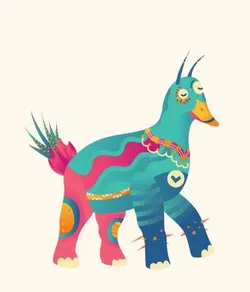
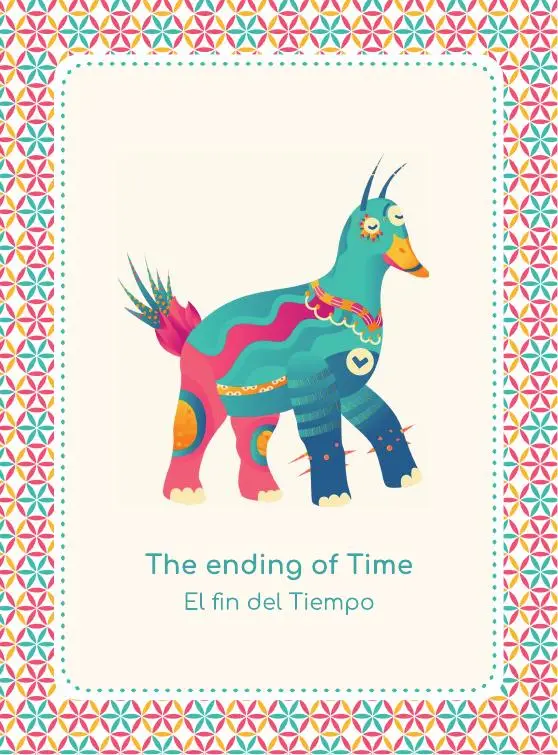
The Ending of Time card
05The Ending of TimeI release the illusion of time and embrace the eternal now.

Death, says the crow, takes the mind that rambles ‘like an ape from one tree to another’, always hurrying between yesterday and tomorrow: the Impatience that is The Ending of Time’s Shadow. Bhuśuṇḍa’s turning is Patience, watching where one breath sets and the next is born until the pause arises by itself. His arrival is Timelessness: no thought of past or future, outliving the ages unchanged.

  1. Shadow · what you avoidImpatience

    Impatience is the mind death overtakes, the one that does not stay ‘firm and sedate in the same posture’ but rambles ‘like an ape from one tree to another’ (VI.1.23.11), its heart sawn by sighs and burned by care.

  2. Gift · what is hidden in itPatience

    Patience is the crow’s watching: ‘the apána breath becomes extinct, where the prána comes to be born’ (VI.1.25.49), until the pause comes ‘without any efforts on the part of the adept’ (VI.1.25.59).

  3. Essence · what you embodyTimelessness

    Timelessness is a present that no longer needs a clock: the crow knows time only ‘by the respirations of our breath’ (VI.1.20.25), and keeps the watch ‘whether I am awake or asleep… even in dream’ (VI.1.26.3), glad at the gladness of others (VI.1.26.34).

In a hurry? The crow on Meru has been here since before the moon, and he never rushes. Watch one breath go out and one come in. There. You’ve just stepped outside the clock.

— Felicia
Today’s contemplation

When the clock stops and only the breath keeps time, as for the crow, what is left in the small pause between one breath and the next?

To close the night

Tonight, write one honest sentence about where you rushed today and what you missed by rushing.

The Ally Journey · about 15 minutes

Light trance, eyes open if you prefer. For the full, deeper script, see “The practice” above and its cautions.

  1. Threshold. Sit comfortably, eyes open or softly lowered. Three slow, natural breaths: no counting, no holding, just letting each one arrive.
  2. The tale in one line: on Mount Meru an ancient crow outlives the ages by watching where each breath ends and the next begins (VI.1.14–27).
  3. Meet The Ending of Time. Look at the card’s art for a few unhurried breaths and read: ‘I release the illusion of time and embrace the eternal now.’
  4. Shadow. Where did impatience live in your week? The queue, the slow reply, your own healing taking ‘too long’. Name one moment and where your body tightened.
  5. Gift. Follow one out-breath, warm, leaving the chest and fading a hand’s span from the nose; then one in-breath, cool, settling in the heart. Notice the small turning point between them. Do not hold it. Just notice.
  6. Essence. For three breaths rest in those turning points, no yesterday, no tomorrow. Then say the affirmation once, slowly.
  7. Return. Let the breath deepen a little. Feel your feet and hands, look round the room, notice the light, and open the eyes fully. Write the honest line.

The 30-day Bond

Time has ended for the crow who counts by breath: what is left when the clock stops and the next breath has not yet begun?

The Sister · Mei Lin Chen

Taiwanese-American · Brooklyn, New York · So Hum

Visit Mei Lin Chen, the Taiwanese-American painter of Brooklyn, whose mantra ‘So Hum’ rides the in-breath and the out-breath just as the crow’s watching does.

Guided Meditation

#5 · The Ending of Time

Voice & guidance: Prof. Luis Miguel GallardoWatch on YouTube (ES also available)
For facilitatorsA session with “Bhuśuṇḍa, the Crow at the Edge of Time” and The Ending of Time

Aim. To teach a gentle, non-forcing breath practice that loosens rumination and worry and can be carried into everyday activity.

ITM 4 Essence Embodiment. The crow’s practice is Essence Embodiment: it heals only because it pervades walking, eating, work and even dream (VI.1.26.3).

The session (60–75 min)

  1. Arrival and Umbral: three natural breaths; screen for panic disorder, breathing-related trauma and relevant medical conditions; offer eyes open and an external anchor if needed (10 min)
  2. Tell the tale in a 4-minute version: Vasiṣṭha’s visit to Meru, the crow among the crows, his long memory, the question of death, the teaching of the breath; point to the tale page for the full retelling (6 min)
  3. The card: The Ending of Time’s art, affirmation and koan (6 min)
  4. Shadow inquiry on Impatience: map where the client lives in yesterday and tomorrow, and what hurry protects them from feeling (12 min)
  5. Trance practice: ‘Riding the Swan: the Prāṇa–Apāna Induction’, following the full guided script on the tale page, at light to medium depth; use plain words (outgoing, incoming, pause), keep the breath natural and unpaced, and never instruct holding (18 min)
  6. Gift and Essence integration: choose three daily moments (walking, eating, a work transition) to notice one turning point of the breath; read the crow’s sentence ‘glad at the gladness of others’ together (12 min)
  7. Closing and Bond: assign the 30-day Bond with the varied koan; deepen the breath, recognise the room and body, open the eyes (6 min)

Integration questions

  • What did you notice at the turning point between breaths: stillness, space, or simply a moment without hurry?
  • Which worry about the future or replay of the past grew quieter while you watched?
  • Where in tomorrow’s ordinary activity will you meet the crow?

In a circle

In a circle, the crow’s breath works well as a shared rhythm, but each person keeps their own pace. After the Umbral and the tale, offer an external anchor for anyone uneasy with breath focus, such as the sound of the room or the feel of the hands. Guide the outgoing and incoming breath and the turning points at light depth for twelve minutes, then invite people to walk slowly round the room for two minutes, keeping the watch as the crow does in movement. Share in pairs one daily moment they will use, and close with the affirmation.

Cautions

  • Never instruct forced breath-holding; it is contraindicated in cardiac or respiratory disease, uncontrolled hypertension, epilepsy and pregnancy.
  • Breath focus can trigger panic in panic disorder or trauma linked to breathing or suffocation; offer an external anchor and allow eyes open.
  • Watch for hyperventilation or dizziness; keep the breath natural and unpaced.
  • Do not use the breath state to retrieve or verify memories; ‘many-lives’ recall can generate confabulated memory.

Training and certification in the Meta Pets Method: metapetsworld.org/facilitators ↗

The correspondence between tales and Meta Pets is contemplative: the Yoga Vāsiṣṭha does not contain the Meta Pets; each tale enacts its ally’s arc. Felicia is an artificial-intelligence companion; her words are contemplative reflections, not clinical advice.

The song

Read the full text

Source: Vihari-Lala Mitra, The Yoga-Vasishtha Maharamayana of Valmiki (1891–99), public domain.

Collaborate on this research

Researchers, clinicians and institutions are welcome to write. Replication, data-sharing and site partnerships for the trials in progress are all open conversations.

Educational and scholarly content. Hypnotherapy and regression material is complementary and not a substitute for medical or psychiatric care.