ICEF

Tale 24 · The Vāsiṣṭha Atlas

Bhāsa and Vilāsa

Upaśama · Dissolution · Mitra V.65–66 · 2,683 words

Grief stalled in solitude, released when two friends speak of "we".

Bhūmikā 1 · Śubhecchā (good desire)LightYour ally · Compassion

The essence

In Atri's hermitage on the Sahya mountain two boys, Bhāsa and Vilāsa, grow up with "one soul and mind in two bodies". When their parents die, grief freezes them: they sit "silent and inactive as pictures in a painting", then spend years in harsh austerities, apart, which, "Not attaining to true knowledge", only wear down their bodies. Old and spent, they meet again. Vilāsa asks the questions of a troubled mind: is your mind free of anxieties, are you in possession of yourself, have you found peace? Bhāsa, the more knowing, does not answer from above. He says "how can we expect to have our peace", and describes their shared condition: the "poisonous plant of worldliness" that flowers in old age and fruits in death, the mind "caught in the trap of its own fancies", the error of taking the body for the self. The tale models grief stalled by solitary effort and released in companionship; Vasiṣṭha adds at once (V.67.1) that both then gained knowledge and were liberated in life.

What it teaches

  1. 01

    Unprocessed grief can disguise itself as discipline: the brothers' austerities after their parents' death "served only to shatter their frames" (V.66.1–4).

  2. 02

    Isolation prolongs grief; the turning point is a meeting and a friend's questions (V.66.4–7).

  3. 03

    The wiser friend joins before he leads: Bhāsa speaks of "we" and "our" misery (V.66.9–12), pacing the other's state instead of correcting it.

  4. 04

    The mind's suffering lives in time, in "what it has done, what it is doing and what it is about to do" (V.66.35), and in labelling others friend or foe (V.66.36).

  5. 05

    Taking the body for the self and others as one's own is named the root of woe (V.66.38); knowledge of the soul is called "the greatest remedy against all diseases of the mind" (V.66.13).

The Vāsiṣṭha Atlas

This tale’s coordinates

The wound and its virtue

Bereaved, the two inseparable friends freeze ‘silent and inactive as pictures in a painting’ (V.65.31), then part into austerities that ‘served only to shatter their frames’ (V.66.4): Separation sealed by Repression’s numbness. The turn is Welcoming: Bhāsa answers with ‘we’ and ‘our’ (V.66.9), joining before he leads, and Care becomes the shared ground from which both are freed (V.67.1).

What it trains

Bhāsa names their shared condition from inside it and without judgment, the kind recognition of one’s own suffering that compassionate self-awareness asks for.

In other yogas

  • Buddhist absorption · SN 45.2

    In the Upaḍḍha Sutta the Buddha corrects Ānanda: spiritual friendship is not half but the whole of the holy life; the friends’ release begins not in solitary penance but at the meeting of two companions (V.66.4–7).

  • Bhagavad Gītā · BG 6.16–17

    Yoga, says the Gītā, is not for one who eats or fasts too much, sleeps or wakes too much, but for the measured; the friends’ years of harsh penance, which ‘served only to shatter their frames’ (V.66.4), are the excess it warns against.

  • Patañjali · Yoga Sūtra · YS 1.33

    Patañjali’s friendliness and compassion towards the suffering clarify the mind; Bhāsa’s ‘we’ is karuṇā offered sideways, between equals, and it steadies both of them.

IEAF: Integrative Emotional Alchemy Framework (Gallardo, Frontiers in Psychology, 2026). FP20: the Fundamental Peace Scale. ITM: the Integrative Transformation Model. Parallels in other yogas are contemplative correspondences, not claims of influence.

The tale

Vasiṣṭha tells Rāma that as long as a person does not break down the mind of his own accord and give up the sense of "mine", his misery has no end, like the endless succession of waves in the sea; and he illustrates it with an old story from the Sahya mountain.

The Sahya, he says, is mightier than the three worlds: its summit reaches the sky and its foot the netherworld. Cascades foam on its slopes, old bamboos whistle, bees hum, apsarases sing on the peaks, siddhas live in its caverns and lions on its crags. On its northern edge lies a table-land shaded by fruit trees, strewn with blossoms and set around a gem-bright lake fed by waterfalls, as delightful as the heavens of Brahmā and Śiva. Here the sage Atri had his hermitage.

In that hermitage lived two hermits, wise as the preceptors of the gods and of the demons, so close that they were "as of one flesh and soul". In time two boys were born to them, like two lotus buds in one bed: Bhāsa and Vilāsa. The boys had "one soul and mind in two bodies", inseparable as oil and sesamum, as flower and fragrance, and their parents were drawn still closer by their shared love for them. They grew up together like two bees over one lotus bed, and came into their youth like the sun and moon rising at once.

Then the aged parents left their infirm bodies "like a pair of birds quitting their broken nest". The young men drooped like lotuses in a dried channel, and the vigour went out of them. They performed the funeral rites and mourned long; they wailed over their parents' memory with tears, and then sat "silent and inactive as pictures in a painting", their hearts heavy with sobs.

They turned to rigorous austerities until their bodies were as withered as dead trees. With "cool apathy" in their minds they lived in the solitary forest like stags separated from each other and from home. Days, months and years passed, and they grew old. Because their practice did not bring true knowledge, it only shattered their frames and drained their strength.

At last they met again. Vilāsa greeted Bhāsa as "the best fruit of the tree of my life", seated in the recess of his heart, a sea of ambrosia. Where had he been all this time? Had his austerities borne fruit? Was his mind free of anxieties? Was he in possession of himself? Had he found peace?

Bhāsa, who is said to have reached consummate knowledge, answered with the respect of a friend for his dearest friend, and he answered with "we". How can we have rest while we remain in this world of strife, while the passions are unsubdued, while desires, hopes and fears infest our minds and are not weeded out "with the spade of our reason"? Without knowledge of the soul, "the greatest remedy against all diseases of the mind", there is no escape from the pestilence of the world. The poisonous plant of worldliness sprouts in childhood, leafs in youth, flowers in old age and fruits only in death. The body decays like a withered tree while relatives flutter about it like bees; grey hairs blossom; the swan of life flies away. The ungoverned mind is a furious elephant that never rests; it is a straw in an eddy, a fish on a hook, "a bewildered bird" fluttering between what it has done, is doing and will do, trapped by its own fancies. The thought that this one is my friend and that one my foe tears the heart as wind tears lotus leaves. And at the root of all woe lies one belief: taking the external body for the internal self, and others for our own. Like leaves on high hills, all mankind is scattered by the winds of age and death.

In the next chapter Vasiṣṭha adds that, having thus met and welcomed each other, the two brothers devoted themselves to divine knowledge and gained liberation while still living (V.67.1).

The text speaks

Passages from Mitra’s translation (1891–99), cited by book, chapter and verse.

“After performance of the obsequies, they were so overpowered by their grief and sorrow, that they continued to wail over their memory with piteous cries and tears. They sat silent and inactive as pictures in a painting, with their melancholy countenances and hearts heavy with sobs and sighs.”
V.65.31Grief that freezes into stillness: the starting point of the tale.
“Not attaining to true knowledge, their austerities served only to shatter their frames, and reduce their strength; till at last they happened to meet one another, and betook to their conversation in the following manner.”
V.66.4Effort without understanding wears the body down; the remedy begins with a meeting.
“Tell me whether thy mind is freed from anxieties, and whether thou art in possession of thy self (_i.e._ self-possessed by knowledge of thy soul). Say, hast thou obtained the reward of thy learning, and hast thou after all, got thy peace and quiet.”
V.66.7Vilāsa's questions, a ready-made opening for peer inquiry.
“Bhása replied:—O good friend! you are fortunately and happily met here this day; but how can we expect to have our peace and rest so long as we have to remain in this world of strife and vale of misery.”
V.66.9The wiser friend answers in the first person plural: pacing before leading.
“Without the knowledge of the soul and acquisition of true knowledge, which is the greatest remedy against all diseases of the mind, it is impossible to escape from the pestilence of the world.”
V.66.13Knowledge framed explicitly as medicine for the mind.
“The poisonous plant of worldliness, sprouts forth in our childhood; it shoots out in its leaves in our youth, it flowers in our old age, and never fructifies before our death.”
V.66.14The tale's governing metaphor for the life cycle of attachment.
“The mind like a bewildered bird, flutters between its various thoughts, of what it has done, what it is doing and what it is about to do; and is thus caught in the trap of its own fancies for evermore.”
V.66.35A precise image of rumination and worry spread across past, present and future.
“The belief of the external body for the internal self, is the cause of all our woe herein; and so the taking of others as our own is equally for our misery.”
V.66.38The diagnosis on which the following discourse on non-attachment (V.67) is built.

What the trance sees

GRIEF

Grief and loss work

V.65.28–31; V.66.1–4

In the textAfter the parents' death "they continued to wail over their memory with piteous cries and tears. They sat silent and inactive as pictures in a painting" (65.31); then years of austerities "with cool apathy in their minds" (66.2) that "served only to shatter their frames" (66.4).

In the clinicProlonged grief with numbing and withdrawal (prolonged grief disorder in ICD-11), in which effortful routines replace mourning; the tale marks the impasse that grief work must address and shows it yielding to renewed connection.

RAP

Rapport, pacing and leading; entering the other's world

V.66.5–12

In the textVilāsa greets Bhāsa as "the best fruit of the tree of my life" (66.5); Bhāsa replies "as respectfully as a friend doth to his dearest friend" (66.8) and speaks in the plural: "how can we expect to have our peace and rest" (66.9).

In the clinicPacing and leading (Bandler & Grinder 1975, describing Erickson's practice): the helper first matches the other's state and language, here by sharing the lament, before offering a way through.

MET

Therapeutic metaphor / reframe

V.66.14–15, V.66.20, V.66.33–35

In the textLife as "The poisonous plant of worldliness" that "flowers in our old age, and never fructifies before our death" (66.14); the mind as an elephant "without rest or sleep" (66.20), "a straw, in the eddy" (66.33), "a bewildered bird" trapped "in the trap of its own fancies" (66.35).

In the clinicTherapeutic metaphor (Gordon 1978): images that externalise ageing and rumination so that they can be looked at rather than suffered, a step toward the decentering the next chapter teaches.

Read upward — stage 1 at the bottom, stage 7 at the top

  1. Integration zone
    Therapeutic motivation — disillusionment with suffering becomes readiness for change. The first honest wish to be free is itself the induction.

A note on what this map claims. The alignment between stages of knowledge and trance depths is a clinical map — a heuristic correspondence proposed for research, not a claim of identity between contemplative attainment and hypnotic depth.

Bhūmikā 1 · Śubhecchā

Bhāsa's speech is the dispassion from which good desire is born, and it ends by naming the need for "true knowledge" (V.66.12–13); Mitra's first stage is "Enlightenment of the understanding by the study of the sástras and attendance on holy and wise men" (VI.1.120.1), which is what the meeting supplies to two ascetics who had practised "Not attaining to true knowledge" (V.66.4).

Zone · Light

No trance is described; the work is conversational and reflective, at the level of light trance or waking reverie, and the grief-stupor of V.65.31 is the only altered state in the tale.

In the therapy room

Indications

  • Prolonged or complicated grief, especially when the bereaved have thrown themselves into work, exercise or religious practice instead of mourning (V.66.1–4)
  • Bereaved siblings or friends who have grieved separately and need to meet
  • Peer-support and dyadic practice formats in which two practitioners guide each other
  • Older adults facing ageing and the sense of a life spent in vain (V.66.14–25)
  • Rumination and worry spread across past, present and future (V.66.35)

Cautions

  • Bhāsa's bleak imagery of ageing and death can deepen despair in depressed or elderly clients if offered without the companionship and hope that frame it
  • Do not hurry the bereaved toward detachment ("the taking of others as our own is equally for our misery", V.66.38) before grief has been felt and shared
  • In peer formats make sure at least one partner is resourced; two equally overwhelmed people can amplify each other's distress
From the bookThe full clinical note

Indications. Prolonged or complicated grief, especially where the bereaved have thrown themselves into work, exercise or religious practice instead of mourning (V.66.1–4). Bereaved siblings or friends who have grieved separately and need to meet. Peer-support and dyadic formats in which two practitioners guide each other. Older adults facing ageing and the sense of a life spent in vain (V.66.14–25). Rumination and worry spread across past, present and future (V.66.35).

How to use it. As a model for the first session: match before leading, speak of "we" before "you", and let images carry the diagnosis. As a peer format, using Vilāsa's questions verbatim.

Cautions. Bhāsa's imagery of ageing and death is bleak. Offered without the companionship and hope that frame it, and without the ending of V.67.1, it can deepen despair in depressed or elderly clients; screen for depression and suicidal thoughts before using it. Do not hurry the bereaved towards detachment, "the taking of others as our own is equally for our misery" (V.66.38), before grief has been felt and shared. In peer formats, make sure at least one partner is resourced: two equally overwhelmed people can amplify each other's distress, and a facilitator should be within reach.


The practice

The Peer Dialogue

  1. Two chairs facing: two people who share a loss or a concern sit together, and each names briefly what they have been carrying alone (V.66.1–4).
  2. The friend's questions: A asks B, slowly, Vilāsa's questions: Is your mind free of anxieties? Are you in possession of yourself? Have you found your peace? (V.66.7).
  3. Answer with "we": B answers honestly, speaking first of the condition both share, before any advice (V.66.9–12).
  4. Find the image: together, choose one image for what the mind does, the bird between past, present and future or the straw in the eddy (V.66.33–35).
  5. Locate the root: each says, without arguing, where they confuse the body with the self or others with "mine" (V.66.38).
  6. Exchange roles and repeat the questions and answers.
  7. Return: sit in silence for a minute with eyes closed, feel the breath and the presence of the other, open the eyes, name the day and the place, and agree on one small step each will take before meeting again.

Practise with a qualified professional if you have a history of dissociation, trauma or psychosis.

From the book · to be read aloudThe full guided script

The Peer Dialogue

Two people, two chairs, thirty minutes. One partner reads the instructions aloud.

Before you begin. This is a conversation practice for two adults who share a loss or a concern. It is not a substitute for therapy. If either of you is in acute crisis, has thoughts of suicide, or feels unable to bear the other's sadness today, stop and seek support from a professional. Agree before you start that either of you can end the dialogue at any moment by saying "pause", and that you will both then sit in silence for one minute before deciding whether to continue.

How to return at any moment. Say "pause", open your eyes if they are closed, put your feet flat, and each name one thing you can see in the room.


Sit facing each other, close enough to see each other's eyes, not so close as to touch.

Each, in turn, say in two or three sentences what you have been carrying alone. Only that. The other listens and does not reply.

Now one of you asks the friend's questions, slowly, leaving a breath between each.

Is your mind free of anxieties?

Are you in possession of yourself?

Have you found your peace?

The other answers honestly. Begin, if you can, with we: the condition you both share, before anything that sounds like advice. How can we have rest, while…

Together, choose one image for what your minds have been doing. A bird fluttering between what was done, what is being done, what is still to do. A straw in an eddy. A tree that flowers late. Name it. Look at it together, as if it stood between you.

Each say, without arguing, one place where you have taken the body for the self, or someone else for mine. Just name it. No one fixes it.

Change roles. Ask and answer again.


Now close your eyes together for one minute. Feel the breath. Feel the other person's presence across the space.

Open your eyes. Look at each other. Say the day and the place aloud, together.

Each name one small step you will take before you meet again. Write them down. Stand, stretch, and drink some water before going on with the day.


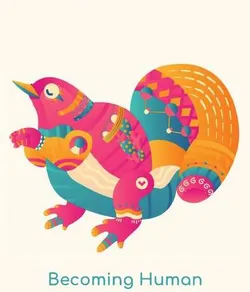
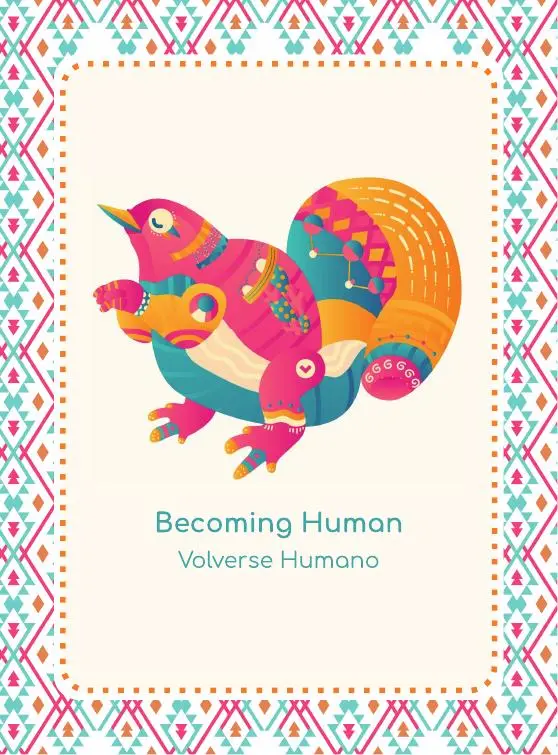
Meta Pets World · Your ally · Meta Pet 36

Bhāsa, Vilāsa and the word ‘we’

Compassion card
36CompassionCompassion flows from my heart effortlessly.

After their parents die, the two friends wail, then freeze, then punish their bodies in solitary austerities for years: grief both stormy and stalled, the Turbulence that is Compassion’s Shadow. When they meet, Bhāsa answers his friend with ‘we’, naming the condition they share, and that is the Gift of Humanity. Together they turn to knowledge and are freed in life: Compassion that lifts both.

  1. Shadow · what you avoidTurbulence

    Turbulence is grief that storms and then sets hard: they ‘wail over their memory with piteous cries’ and then sit ‘silent and inactive as pictures in a painting’ (V.65.31); their austerities ‘served only to shatter their frames’ (V.66.4).

  2. Gift · what is hidden in itHumanity

    Humanity is Bhāsa joining before he leads: ‘how can we expect to have our peace and rest so long as we have to remain in this world of strife’ (V.66.9). He answers Vilāsa’s questions (V.66.7) from inside their shared condition.

  3. Essence · what you embodyCompassion

    Compassion is the remedy shared between two: knowledge of the soul, ‘the greatest remedy against all diseases of the mind’ (V.66.13), to which both friends then turn, and both are freed while still living (V.67.1).

You don’t have to be strong alone tonight. Bhāsa didn’t fix his friend; he simply said ‘we’. Who could you say it to? And would you let someone say it to you?

— Felicia
Today’s contemplation

Compassion for all, but who has compassion for compassion: who says ‘we’ to the part of you that has been grieving alone?

To close the night

Tonight, write one honest sentence about something you have been carrying alone that someone else also carries.

The Ally Journey · about 15 minutes

Light trance, eyes open if you prefer. For the full, deeper script, see “The practice” above and its cautions.

  1. Threshold. Sit with one hand resting on your chest. Three slow breaths, letting the shoulders lower on each out-breath.
  2. The tale in one line: two friends grieve apart for years until one meets the other and says ‘we’ (V.65–66).
  3. Meet Compassion. Look at the card’s art and read the affirmation softly, as if to a friend: ‘Compassion flows from my heart effortlessly.’
  4. Shadow. Where has a sorrow or worry this week either stormed through you or frozen into busyness, discipline or silence? Name it, and how long you have carried it alone.
  5. Gift. Imagine a trusted friend sitting opposite. Let them ask Vilāsa’s questions: Is your mind free of anxieties? Have you found your peace? Answer honestly, beginning with ‘we’.
  6. Essence. Breathe in for yourself, breathe out for everyone who carries the same weight tonight. Three breaths like this, then say the affirmation again.
  7. Return. Feel your feet, your hands, the chair. Open the eyes fully and look round the room. Choose one person to contact this week. Write the honest line.

The 30-day Bond

Compassion for all: who has compassion for compassion, and to whom will I say ‘we’ today?

The Sister · Hayat

Yemeni · Sana'a, Yemen · Yā Ḥayy Yā Qayyūm

Visit Hayat, the Yemeni Sufi poet of Sana’a, whose ‘Yā Ḥayy Yā Qayyūm’ calls on the Living, a good word for two friends who had almost let grief stop their lives.

Guided Meditation

#36 · Compassion

Voice & guidance: Prof. Luis Miguel GallardoWatch on YouTube (ES also available)
For facilitatorsA session with “Bhāsa and Vilāsa” and Compassion

Aim. To bring grief that has been carried alone, or disguised as discipline, into a shared, paced dialogue where it can be felt and then held with others.

ITM 2 Conscious Recognition. The tale’s work is Conscious Recognition: frozen grief becomes speakable when it is recognised as a shared condition, ‘how can we expect to have our peace’ (V.66.9), before any teaching is offered.

The session (60–75 min)

  1. Arrival and Umbral: three breaths; the client names briefly what they have been carrying alone and how they have been coping with it (10 min)
  2. Tell the tale in a 3-minute version: the two families, the parents’ death, the years apart, the meeting and the word ‘we’; point to the tale page for the full retelling (5 min)
  3. The card: Compassion’s art, affirmation and koan; ask who has compassion for the client’s compassion (6 min)
  4. Shadow inquiry on Turbulence: map where grief has stormed and where it has frozen into work, exercise, practice or silence (12 min)
  5. Practice: ‘The Peer Dialogue’, following the full guided script on the tale page, in light trance or waking reverie only; the facilitator takes Vilāsa’s part with the three questions, the client answers with ‘we’, then roles are exchanged (20 min)
  6. Gift and Essence integration: choose together one image for what the mind does, the bird between past, present and future, and name one place where the client can let others be ‘ours’ without owning them (10 min)
  7. Closing and Bond: a minute of shared silence; assign the 30-day Bond and one small step before the next meeting; reorient to day and place (7 min)

Integration questions

  • What changed when you began your answer with ‘we’ instead of ‘I’?
  • Which of your disciplines has been doing the work of mourning for you?
  • Who is the Bhāsa or the Vilāsa in your life, and when will you meet them?

In a circle

This tale is made for circles. After the Umbral and the tale, pair people with care, never two newly bereaved together, and give each pair two facing chairs. Each partner asks Vilāsa’s three questions in turn and the other answers beginning with ‘we’; the facilitator times the exchange and moves between pairs. Bring the circle back for a minute of silence, then invite each person to say one sentence that starts with ‘we’. Close with the affirmation together and make sure anyone shaken has someone to speak to afterwards.

Cautions

  • Bhāsa’s bleak imagery of ageing and death can deepen despair in depressed or elderly clients if offered without companionship and hope; screen mood first.
  • Do not hurry the bereaved towards detachment before grief has been felt and shared.
  • In peer formats make sure at least one partner is resourced; two equally overwhelmed people can amplify each other’s distress.

Training and certification in the Meta Pets Method: metapetsworld.org/facilitators ↗

The correspondence between tales and Meta Pets is contemplative: the Yoga Vāsiṣṭha does not contain the Meta Pets; each tale enacts its ally’s arc. Felicia is an artificial-intelligence companion; her words are contemplative reflections, not clinical advice.

The song

From the cycle The Sixty-Four Tales

Two Friends at Dusk

Oṃ saha nāv avatu · saha nau bhunaktu · saha vīryaṃ karavāvahai

Figure — Bhāsa and Vilāsa, the two boys of Atri's hermitage on the Sahya mountain, "one soul and mind in two bodies".

Where in the text — Book V (Upaśama-prakaraṇa), Mitra chapters 65–66, resolved at V.67.1.

Hypnotic phenomenon the song enacts — GRIEF released through RAP: grief frozen in solitude ("pictures in a painting") begins to move when one friend paces the other's questions and leads with the word "we"; the two voices and two guitars start apart and converge into unison.

Mantra — Oṃ saha nāv avatu · saha nau bhunaktu · saha vīryaṃ karavāvahai (ॐ सह नाववतु । सह नौ भुनक्तु । सह वीर्यं करवावहै ।). Source: the peace invocation (śānti-pāṭha) of the Taittirīya Upaniṣad, at the opening of the Brahmānanda Vallī (2.1); also the śānti-pāṭha of the Kaṭha Upaniṣad. Spoken by teacher and student together, as equals, before study. Meaning: "May it protect us both together; may it nourish us both together; may we work together with strength."


Lyrics (English)

Performance: Verse 1 is sung by both voices in turn, one guitar left, one right. Verse 2 is Vilāsa, on a line that rises at every question. The chorus is Bhāsa: it begins on the word "we" and walks down. Verse 3 is Bhāsa over a slow descending figure. The guitars meet in the bridge, and the outro is sung in unison.

Verse 1 — both, apart On the Sahya, by a lake of waterfalls, two boys grew like two lotus buds in one bed. Then the old ones left their bodies like two birds leaving a broken nest, and the boys sat still like pictures in a painting.

Verse 2 — Vilāsa Years apart, like stray stags, till we were thin as withered trees. Bhāsa, best fruit of the tree of my life, is your mind free of its cares? Do you possess yourself at last? Have you found your peace?

Chorus — Bhāsa How can we have our rest, my friend, with hopes and fears like brambles in us? Come, we will dig them out together with the spade of our reason, you and I.

Verse 3 — Bhāsa This poison plant sprouts in our childhood, leafs in our youth, flowers in our grey hair, and bears its fruit in death. The mind's a wild elephant that never sleeps, a straw in the eddy, a bird caught in the trap of its own fancies. We took the body for the self; that is all our grief.

Chorus — both How can we have our rest, my friend, with hopes and fears like brambles in us? Come, we will dig them out together with the spade of our reason, you and I.

Bridge (mantra) (the guitars meet) Oṃ saha nāv avatu (may it keep us both together) saha nau bhunaktu (may it feed us both together) saha vīryaṃ karavāvahai (may we work with strength together)

Outro — unison So they met and welcomed each other, turned to knowing, side by side, and were free while they lived, where the fruit trees hang over the lake.


Letra (castellano cantable)

Interpretación: el verso 1 lo cantan las dos voces por turnos, una guitarra a la izquierda y otra a la derecha. El verso 2 es Vilāsa, en una línea que sube con cada pregunta. El estribillo es Bhāsa: empieza en la palabra "nosotros" y desciende. El verso 3 es Bhāsa sobre una figura lenta que baja. Las guitarras se encuentran en el puente, y el final se canta al unísono.

Verso 1 — los dos, separados En el Sahya, junto a un lago de cascadas, dos niños crecieron como dos capullos en un lecho de lotos. Luego los viejos dejaron sus cuerpos como dos pájaros que dejan un nido roto, y los muchachos se quedaron quietos como figuras de un cuadro.

Verso 2 — Vilāsa Años separados, como ciervos perdidos, hasta quedar flacos como árboles secos. Bhāsa, el mejor fruto del árbol de mi vida, ¿está tu mente libre de cuidados? ¿Eres dueño de ti, por fin? ¿Has hallado tu paz?

Estribillo — Bhāsa ¿Cómo vamos a descansar, amigo, si la esperanza y el miedo nos crecen como zarzas? Ven, las arrancaremos juntos con la azada de la razón, tú y yo.

Verso 3 — Bhāsa Esta planta venenosa brota en la niñez, echa hojas en la juventud, florece en las canas y da su fruto en la muerte. La mente es un elefante salvaje que no duerme, una paja en el remolino, un pájaro preso en la trampa de sus fantasías. Tomamos el cuerpo por el ser; esa es toda nuestra pena.

Estribillo — los dos ¿Cómo vamos a descansar, amigo, si la esperanza y el miedo nos crecen como zarzas? Ven, las arrancaremos juntos con la azada de la razón, tú y yo.

Puente (mantra) (las guitarras se encuentran) Oṃ saha nāv avatu (que nos guarde a los dos juntos) saha nau bhunaktu (que nos alimente a los dos juntos) saha vīryaṃ karavāvahai (que trabajemos juntos con fuerza)

Final — al unísono Así se encontraron y se dieron la bienvenida, se volvieron al saber, el uno junto al otro, y fueron libres en vida, donde los frutales se inclinan sobre el lago.


One line to carry

EN: Grief stalls alone; say "we", and it begins to move. ES: El duelo se estanca a solas; di «nosotros», y se mueve.


Libreto note

Two boys raised as one soul in two bodies; then their parents fly like birds from a broken nest, and grief freezes the sons into pictures in a painting. Years of solitary austerity only wither them. What moves the grief is a meeting: Vilāsa asks three plain questions, and Bhāsa, who has come to know, answers with one word, "we". That is rapport as the tradition understood it: no answer from above, but pacing and leading side by side. Two guitars, apart at first; a voice that rises to ask and a voice that steps down to answer; a peace invocation spoken by two equals; and both brothers free while still living.


Source check

Source check (Mitra, Book V)

  1. The two boys — the table-land "overhung by trees loaded with bunches of fruits, and also a gemming lake, formed by the waters of cataracts": ch. 65, v. 17; "two buds of lotuses growing in the same bed"; "one soul and mind in two bodies": ch. 65, vv. 22–24.
  2. The frozen grief — the parents "went to heaven like a pair of birds quitting their broken nest"; "They sat silent and inactive as pictures in a painting": ch. 65, vv. 28, 31. Austerities until "emaciated as two withered trees"; "as helpless as stray stags separated from each other": ch. 66, vv. 1–3.
  3. Vilāsa's questions — "the best fruit of the tree of my life"; "how and where you passed so long a time"; "whether thy mind is freed from anxieties, and whether thou art in possession of thy self… hast thou after all, got thy peace": ch. 66, vv. 5–7.
  4. Bhāsa's "we" and his images — "how can we expect to have our peace and rest"; desires, hopes and fears weeded out "like thorns and brambles… with the spade of our reason": ch. 66, vv. 9, 11; the poisonous plant that sprouts in childhood, leafs in youth, flowers in old age and fruits in death; "blossoming grey hairs": vv. 14–15; "The furious elephant of the ungoverned mind… without rest or sleep": v. 20; "as a straw, in the eddy": v. 33; "like a bewildered bird… caught in the trap of its own fancies": v. 35; "The belief of the external body for the internal self, is the cause of all our woe": v. 38.
  5. The resolution — "Having thus accosted and welcomed each other, the two brothers applied themselves to the acquisition of divine knowledge; and gained thereby their liberation in the living state": ch. 67, v. 1.

Read the full text

Source: Vihari-Lala Mitra, The Yoga-Vasishtha Maharamayana of Valmiki (1891–99), public domain.

Collaborate on this research

Researchers, clinicians and institutions are welcome to write. Replication, data-sharing and site partnerships for the trials in progress are all open conversations.

Educational and scholarly content. Hypnotherapy and regression material is complementary and not a substitute for medical or psychiatric care.