ICEF

Tale 18 · The Vāsiṣṭha Atlas

Puṇya and Pāvana

Upaśama · Dissolution · Mitra V.19–21 · 3,926 words

One loss, seen among thousands, loosens its grip.

Bhūmikā 3 · Tanumānasā (thinning of the mind)MediumYour ally · The Eye

The essence

On Mount Mahendra beside the Ganges the aged sage Dīrghatapas leaves his body, and his wife, long practised in yoga, leaves hers to follow him. The elder son, Puṇya, performs the funeral rites; the younger, Pāvana, ‘half awakened’, wanders the woods weeping. Puṇya finds him and widens the frame. Neither is she your mother nor he your father; you have had thousands of each, as many as streams in a forest. Then, by his ‘clear and all-viewing sight’, he recounts his brother’s former lives — stag, gander, tree, lion, fish, monkey, elephant, ant, millipede, a hill-woman’s suckling — and his own — parrot, frog, tiger, vulture, shark, prince. For whom shall one lament among so many? Friend and foe are made by thinking; rub out the vestiges of remembrance and witness like a lamp. Pāvana brightens ‘as the landscape at the dawn of day’; the brothers live on in the forest and in time reach nirvāṇa.

What it teaches

  1. 01

    Grief fastens on a single frame; widening it to the many parents and kin of countless lives loosens this one loss without pretending it did not happen (V.19.30–35; V.20.31–33).

  2. 02

    Puṇya acts before he speaks: he completes the funeral rites, then goes to find his brother; ritual care comes before reframing (V.19.23–25).

  3. 03

    ‘The thought of one as a friend, makes him a friend’: relationships are partly made of the mind’s labels, and labels can be revised (V.20.3).

  4. 04

    Remembering many lives is offered not as spectacle but as relief: the point of seeing so much is to be able to let it all go (V.20.24–34; V.20.43).

  5. 05

    Equanimity is modelled as a lamp that lights the room without being disturbed by what it lights (V.20.41).

The Vāsiṣṭha Atlas

This tale’s coordinates

The wound and its virtue

Pāvana’s grief for his parents shrinks the world to one lost bond, the Separation wound at its rawest; Puṇya first completes the rites, then widens the frame: ‘thousands of fathers and mothers in thy by-gone births’ (V.19.31). Care is that double gesture, and Pāvana discovers the gift folded inside his grief, a sight wide enough to hold every bond without clinging to one (V.20.23; V.21.1).

What it trains

Grief is neither suppressed nor allowed to flood: it is held inside a frame wide enough for thousands of lives, so the one loss and the larger view can stand together (V.19.35).

In other yogas

  • Bhagavad Gītā · BG 4.5

    Kṛṣṇa tells Arjuna that both have passed through many births, which he knows and Arjuna does not; Puṇya stands to Pāvana in the same relation, the one who remembers lending his sight to the one who weeps (V.20.23), and asks, like BG 2.28, what room is left for lament.

  • Buddhist absorption · SN 15

    The Anamatagga-saṃyutta teaches that the round of births has no discoverable beginning, that the tears shed across it exceed the oceans, and that it is hard to find a being who has not been one’s mother or father; like Puṇya’s streams in a forest (V.19.31), it widens grief in order to release it, not to deny it.

  • Patañjali · Yoga Sūtra · YS 3.18

    Patañjali states that direct perception of latent impressions yields knowledge of former births; Puṇya’s recall is likewise a seeing, ‘my clear and all-viewing sight’ (V.20.23), and its purpose, as in the Sūtra, is freedom rather than spectacle.

IEAF: Integrative Emotional Alchemy Framework (Gallardo, Frontiers in Psychology, 2026). FP20: the Fundamental Peace Scale. ITM: the Integrative Transformation Model. Parallels in other yogas are contemplative correspondences, not claims of influence.

The tale

Vasiṣṭha offers the story as an example of how friend and foe are distinguished. In Jambudvīpa rises Mount Mahendra, its peaks touching the sky, its caverns ringing with the Sāma hymns of sages and the roar of waterfalls. On a tableland near its summit flows the heavenly Ganges, and on its bank, in a grove of fruit trees, lived the sage Dīrghatapas with his wife and their two sons, Puṇya and Pāvana, ‘the meritorious and the holy’, as bright as the sons of Bṛhaspati. As they grew, the elder, Puṇya, surpassed the younger in every merit. Pāvana was half awakened, like a lotus half open at dawn, and uncertain in his understanding.

When Dīrghatapas had completed a century of years, he bade farewell to his desires and left his body in a grotto of the mountain, as a bird leaves its old nest, and his spirit passed like a flower’s fragrance into the tranquil void of pure intellect. His wife found the body, fell upon it and lay still; and having long practised yoga as he had taught her, she left her own undecayed body and followed him, unseen, as starlight vanishes at dawn.

Puṇya set about the funeral rites. Pāvana, overwhelmed, wandered the woods weeping. When the rites were done, Puṇya went to find him. Why, he asks, do you shed tears enough to blind yourself? Our father and mother have gone to the final blissful state, reunited with their own nature; why mourn what is not to be mourned? Neither is she your mother nor he your father, nor are you their only son. You have had thousands of fathers and mothers in past births, as many as the streams in every forest. If we lament for these two, why not for all those we have lost in all our past lives? Losses appear and disappear like water in a desert mirage; notions and desires paint them before us.

Who is father, who mother, who friend, Puṇya continues, but our notion of them? Thinking one a friend makes him a friend; thinking him an enemy makes him one. Think what you are: not the bones and flesh; there is no ‘I’ as Puṇya and ‘you’ as Pāvana. And if you have passed through many births, why not mourn your old companions too? You were a stag among deer in flowering plains, a gander among swans in a lotus pool, a tree among trees, a lion among lions on mountain crags, a fish in clear lakes. You were a monkey in Daśārṇa, a prince in the land of frost, a raven in Puṇḍra, an elephant, an ass, a dog, a pīpal tree on the Vindhyas, an insect in a banyan, a Brahmin in Kosala, an ant for six months under the bark of a Himalayan tree, a millipede in a dunghill for a year and a half, a hill-woman’s suckling at her breast — and now you are my younger brother. ‘I see all this by my nice discernment, and my clear and all-viewing sight.’

He remembers his own lives too: a parrot in Trigarta, a frog by a river, a hunter in the Vindhyas, a camel, a tiger in the forests of the Sahya hills, a vulture for ten years, a shark for five months, a lion for a century, a ruler in the snowy regions. In all of them he had fathers and mothers, brothers and friends by the hundred and the thousand. For whom shall he lament, and whom forget? These too will be buried in oblivion. So, he says, lay all pleasures and pains aside; know that you have no birth or death, no father or mother, no friend or foe; the world is a stage, and those who know the One remain to witness it, as lamps light a room without being touched by it. Rub out your wishes and the vestiges of remembrance, and see the serene spirit within.

Pāvana, so admonished, became as enlightened as a landscape at daybreak. The brothers lived on in that forest, perfected in knowledge, wandering as they pleased, and after a long time both reached nirvāṇa, like lamps whose oil is spent.

The text speaks

Passages from Mitra’s translation (1891–99), cited by book, chapter and verse.

“Thou hadst also thousands of fathers and mothers in thy by-gone births, in as much as there are the streams of running waters in every forest.”
V.19.31The widening of the frame in a single image.
“If we are to lament over the loss of our parents and children, that are dead and gone; then why not lament also for those, that we have lost and left behind in all our past lives?”
V.19.35The reframing question at the heart of the grief work.
“The thought of one as a friend, makes him a friend, and thinking one as an enemy makes him an enemy; the knowledge of a thing as honey and of another as poison, is owing to our opinion of it.”
V.20.3Relationships as constructions of thought, the tale’s stated subject.
“Thus I see the post states of thy existence, caused by the antecedent desires of thy soul; I see all this by my nice discernment, and my clear and all-viewing sight.”
V.20.23Puṇya’s recall is presented as a form of seeing, not inference.
“For whom shall I lament and whom forget among this number; shall I wail for them only that I lose in this life? But these also are to be buried in oblivion like the rest, and such is the course of the world.”
V.20.32Multiplicity used to dissolve the exclusivity of one loss.
“The knowers of God do their acts, without thinking themselves their actors; just as the lamps of night witness the objects around, without their consciousness of the same.”
V.20.41The witness image offered to the grieving brother.
“Pávana being admonished by Punya in the said manner, became as enlightened in his intellect, as the landscape at the dawn of day.”
V.21.1The outcome, stated as a dawn.

What the trance sees

GRIEF

Grief and loss work

V.19.23–35

In the textPāvana ‘was deeply absorbed in grief’ and wanders the woods wailing; Puṇya, after the rites, seeks him out and asks why he mourns ‘for what is not to be mourned for at all’.

In the clinicGrief intervention by perspective-broadening and decentring; it runs against the continuing-bonds model (Klass, Silverman & Nickman 1996), which a modern therapist would hold alongside it.

AR

Age regression / past-life regression

V.20.9–29

In the textPuṇya lists Pāvana’s former births by form and place, from stag and gander to ant and millipede to a Pulinda woman’s suckling, and then his own.

In the clinicPast-life regression material (cf. Newton 1994, Journey of Souls), here delivered by the guide as a narrated sequence the listener follows in imagination, rather than as recall the subject produces.

HYP

Hypermnesia

V.20.24; V.20.30

In the text‘I also remember the several births that I had to undergo’; ‘I remember the various customs and pursuits of different peoples on earth, that I had to observe and follow in my repeated transmigrations.’

In the clinicHypermnesia, with the caution that hypnotically enhanced recall raises confidence and false memories as well as true ones (Dywan & Bowers 1983).

MET

Therapeutic metaphor / reframe

V.19.31–34; V.20.9–13; V.20.39

In the textParents as many as ‘the streams of running waters in every forest’ and kin as the ‘fruits and flowers of a large tree’; the rhetorical ‘why not lament also’ for deer, swans and lions; ‘The world is a stage’.

In the clinicReframing (Watzlawick, Weakland & Fisch 1974, Change): the facts are kept and the frame that gives them their meaning is changed, here by repeated questions that make the narrow frame untenable.

WIT

Witness position / dis-identification

V.20.40–42

In the text‘Those that have known the True One, remain only to witness the course of nature’; they act ‘just as the lamps of night witness the objects around’ and as a mirror receives images.

In the clinicObserving-self position (Deikman 1982), offered as a place to stand once the frame has widened, so that feeling can be held without being swept away.

AMN

Amnesia

V.20.34; V.20.43

In the text‘Let us remain unmindful of all existence (whether past, present or future)’; ‘rub out all thy wishes and the vestiges of thy remembrance from thy mind’.

In the clinicSuggested amnesia; in grief work the safer modern form is attenuating intrusive images and rumination, not erasing memory of the dead.

Read upward — stage 1 at the bottom, stage 7 at the top

  1. Integration zone
    Progressive relaxation and deepening — the habitual self loosens enough for new pattern to take.

A note on what this map claims. The alignment between stages of knowledge and trance depths is a clinical map — a heuristic correspondence proposed for research, not a claim of identity between contemplative attainment and hypnotic depth.

Bhūmikā 3 · Tanumānasā

Puṇya’s work thins the mind’s attachments, to these parents and to the labels of friend and foe (V.20.2–4), and chapter V.21 closes on the suppression of desires (V.21.5, 21.28–29). Pāvana moves from ‘half awakened’ to enlightened, but his later stages are only summarised.

Zone · Medium

Pāvana listens, reflects and is persuaded; the many lives are narrated to him, not re-entered by him. Puṇya’s own recall implies a deeper capacity, but it is not described as a trance.

In Mitra’s words

In Calcutta in the 1890s, the translator chose the vocabulary of hypnotism to name these states. More →

  • motionlessThe wife of the sage finding his body lying lifeless on the ground, fell down upon it, and remained motionless like a lotus flower nipt from its stalk.V.19.20
  • practice of yoga (quitting the body)Having been long accustomed to the practice of yoga, according to the instruction of her husband; she quitted her undecayed body, as a bee flits from an unfaded flower to the empty air.V.19.21
  • clear and all-viewing sightThus I see the post states of thy existence, caused by the antecedent desires of thy soul; I see all this by my nice discernment, and my clear and all-viewing sight.V.20.23
  • unmindful of all existenceThere are no bounds, my boy, of our pleasures and pains in this sublunary world; lay them all aside, and let us remain unmindful of all existence (whether past, present or future)!V.20.34

In the therapy room

Indications

  • Bereavement for parents, especially when siblings grieve in different ways (one functions, one collapses)
  • Clients who seek past-life or Life Between Lives work and need a frame of meaning rather than spectacle
  • Rigid friend/enemy splitting in family or workplace conflict
  • Anticipatory grief in elderly couples, using the mother’s quiet following as a theme

Cautions

  • In acute grief, ‘neither is she thy mother’ can feel invalidating; pace and acknowledge the loss first, as Puṇya first completes the rites
  • Past-life narratives are not to be presented as verified memories; respect the client’s beliefs about rebirth
  • Do not suggest forgetting the deceased; adapt ‘rub out… remembrance’ to loosening rumination
  • The mother’s yogic departure must not be framed as a model in clients with suicidal thoughts after a loss
From the bookThe full clinical note

Indications. Bereavement for parents, especially when siblings grieve differently, one functioning and one collapsing. Clients who seek past-life or Life Between Lives work and need a frame of meaning rather than spectacle. Rigid friend/enemy splitting in families or workplaces (V.20.3). Anticipatory grief in elderly couples.

How to use it. Follow the text's order. Honour the rite before the reframe: ask what has been done for the dead, and what still needs doing (V.19.23–25). Then widen the frame gently, with images from the client's own surroundings, as Puṇya used the forest's streams. Offer the lives as images to be followed, not memories to be believed. End with the lamp.

Cautions. In acute grief, "neither is she thy mother" (V.19.30) can feel invalidating; pace the loss and acknowledge it first. Past-life narratives must never be presented as verified memories, and the client's own beliefs about rebirth must be respected. Do not suggest forgetting the dead; adapt "rub out … remembrance" (V.20.43) to the loosening of rumination. The mother's yogic departure to follow her husband (V.19.21) is suicide-adjacent material: never frame it as a model, and screen for suicidal thoughts in any recently bereaved client, above all an elderly widow or widower, before using this tale.


The practice

A Thousand Mothers: the Widened Frame

  1. Honour the rite first: name the loss and one concrete act of care already done or still to do (V.19.23–25).
  2. Settle into the breath and let the grief be present, as Pāvana wandering in the woods (V.19.24).
  3. Let an elder companion come and sit beside you, unhurried.
  4. Widen the frame: sense lines of fathers and mothers stretching back like the streams of a whole forest (V.19.31).
  5. Allow a few images of other forms of life to arise, stag, swan, tree, without needing to believe or judge them (V.20.9–11).
  6. Ask, for whom shall I lament among so many? and let this one loss rest within the many (V.20.32).
  7. Take the lamp’s place: witness the scene, warm and unmoved, as a lamp lights a room (V.20.41).
  8. Return as the landscape returns at dawn: feel the body and the ground, name the date and place, and open the eyes (V.21.1).

Practise with a qualified professional if you have a history of dissociation, trauma or psychosis.

From the book · to be read aloudThe full guided script

A Thousand Mothers: the Widened Frame

Twenty minutes. Best with a guide; it can be read aloud to oneself.

Before you begin. This practice is for grief that has been felt and is now stuck, not for the first raw weeks. If you have thoughts of ending your life, or of following the person you have lost, stop here and speak to a clinician or a crisis line today. If you have a dissociative disorder or a history of psychosis, use it only with a clinician. The lives that may appear are images, not claims about the past. Never practise while driving.

How to return at any moment. Open your eyes, put both hands flat on your thighs, say the date aloud.


Before anything else, name the one you have lost. Name one thing you have done for them since they died. And one thing still to do. Let that be the rite. It is honoured.

Sit, and breathe. Let the grief be here, as it is. You are walking in a wood. You do not have to stop crying.

Someone comes to sit beside you. An elder, unhurried. They do not tell you to stop. They sit.

Now look at the wood. See the streams running through it, more than you can count. Each stream is a father, a mother. As many as the streams in every forest. Let them run behind you, line after line.

If images come of other lives, a stag in a flowering plain, a swan diving in a lotus pool, a tree among trees, let them come. You need not believe them or judge them. Watch them, as one watches clouds.

And ask, softly: for whom shall I lament, among so many? Let this one loss rest among the many. It is not smaller. It is held.

Now take the lamp's place. A lamp in a room at night lights everything, the chair, the photograph, the tears, and is not shaken by what it lights. Be warm. Be still. Witness.

(Silence: two minutes.)


Now let the light come up, as a landscape comes up at dawn.

Feel the ground under your feet. Feel the weight of your body. Breathe in fully.

I will count from one to five. One: the breath. Two: hands and feet. Three: the sounds of the room. Four: a deep breath, shoulders rolling. Five: eyes open, awake, here.

Say your name, the date and the place. Name the person you have lost, once more, in an ordinary voice. Drink some water. If grief comes back strongly later, that is not failure; it is grief.


Meta Pets World · Your ally · Meta Pet 17

Puṇya, Pāvana and the eye that widens grief

The Eye card
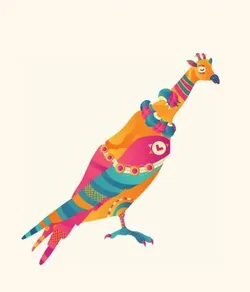
17The EyeI see clearly with the eye of truth.

Pāvana’s grief has shrunk the world to a single frame and fixed its labels, mother, father, friend, foe: that is the Shadow of The Eye, Opinion. Puṇya lends him Far-sightedness, thousands of lives and parents seen at once, and the brothers arrive at an all-viewing awareness that witnesses like a lamp: Omniscience, not as knowing everything, but as seeing without narrowing.

  1. Shadow · what you avoidOpinion

    Opinion is the frame that makes the world: ‘The thought of one as a friend, makes him a friend… the knowledge of a thing as honey and of another as poison, is owing to our opinion of it’ (V.20.3). Pāvana weeps in the woods, held inside one picture.

  2. Gift · what is hidden in itFar-sightedness

    Far-sightedness is Puṇya widening the frame: ‘Thou hadst also thousands of fathers and mothers in thy by-gone births, in as much as there are the streams of running waters in every forest’ (V.19.31). One loss, seen among thousands, loosens its grip.

  3. Essence · what you embodyOmniscience

    Omniscience is the ‘clear and all-viewing sight’ (V.20.23) that rests as the lamp that witnesses a room without being touched by it (V.20.41); Pāvana becomes ‘as enlightened… as the landscape at the dawn of day’ (V.21.1).

Here, take the card and the tale together. Your sorrow is real, and it is also standing in a forest full of streams. Let your eye step back one pace. Just one.

— Felicia
Today’s contemplation

The eye sees all: in the one loss or quarrel that fills your frame today, what is your opinion choosing not to see?

To close the night

Tonight, write one honest sentence about someone you labelled friend or foe today, and what the label left out.

The Ally Journey · about 15 minutes

Light trance, eyes open if you prefer. For the full, deeper script, see “The practice” above and its cautions.

  1. Threshold. Sit with your back supported and your feet on the floor. Three slow breaths, letting each out-breath be a little longer than the in-breath.
  2. The tale in one line: grieving brother Pāvana is shown, by Puṇya, a forest of lives in which this one loss can rest (V.19–21).
  3. Meet The Eye. Let your gaze rest on the card’s art, wide and soft, then read: ‘I see clearly with the eye of truth.’
  4. Shadow. Where this week did one feeling or one label fill the whole frame? A person you filed as ‘against me’, a setback that became ‘everything’. Name it plainly.
  5. Gift. With eyes open, picture that moment as a small window, then imagine stepping back until you see the whole wall, the street, a forest of streams. Ask gently: what else is here?
  6. Essence. Be the lamp in the room: warm, steady, lighting everything, touched by nothing. Three breaths, then the affirmation once more.
  7. Return. Feel the weight of your feet and hands, look at the nearest window or wall, and open the eyes fully to the room. Write tonight’s honest line when you are ready.

The 30-day Bond

The eye sees all, as Puṇya saw a forest of lives: today, what is your grief or your grudge choosing not to see?

The Sister · Áile

Sami · Inari, Sápmi (Lapland) · Eatnu, Eatnu

Visit Áile, the Sami yoik-singer and reindeer-herder of Inari, whose mantra ‘Eatnu, Eatnu’ calls the river, and let her far-seeing song sit beside Puṇya’s streams of running water.

Guided Meditation

#17 · The Eye

Voice & guidance: Prof. Luis Miguel GallardoWatch on YouTube (ES also available)
For facilitatorsA session with “Puṇya and Pāvana” and The Eye

Aim. To honour a loss or a rigid friend/foe split first, and then widen the frame until the client can hold it with warmth and less grip.

ITM 3 Gift Discovery. The tale is Gift Discovery in action: Pāvana already knows his pain; what he discovers is the far-seeing frame that changes his relation to it (V.19.31; V.20.32).

The session (60–75 min)

  1. Arrival and Umbral: three breaths; invite the client to name the loss or the conflict, and one concrete act of care already done or still to do, as Puṇya first completes the rites (10 min)
  2. Tell the tale in a 4-minute version, from Dīrghatapas’s departure to Pāvana’s dawn; point to the tale page for the full catalogue of lives (6 min)
  3. The card: The Eye’s art, affirmation and koan; ask what the client’s eye has been choosing not to see, without pressing (6 min)
  4. Shadow inquiry on Opinion: list the labels in play (mother, rival, traitor, saviour) and notice which one makes the story feel fixed (12 min)
  5. Trance practice: ‘A Thousand Mothers: the Widened Frame’, following the full guided script on the tale page, at light to medium depth; past-life images are offered as images only, never as memories to verify (18 min)
  6. Gift and Essence integration: the client takes the lamp’s place and describes the scene from there; agree one small act toward the person or the memory that the wider frame suggests (12 min)
  7. Closing and Bond: assign the 30-day Bond with the varied koan; reorient by naming date and place, as the landscape returns at dawn (6 min)

Integration questions

  • When the frame widened, what happened to the loss: did it shrink, soften or simply find company?
  • Which label, friend or foe, now looks more like an opinion than a fact?
  • What does the lamp’s view let you do this week that the window’s view did not?

In a circle

In a circle, begin by letting each person, if they wish, say the name of someone they have lost or someone they are at odds with, and nothing more. Tell the tale, then guide the widened-frame practice at light depth for everyone, keeping images of other lives optional and symbolic. Afterwards, invite small groups of three to share what the lamp’s view showed them, with the rule that no one interprets another’s images. Close with the affirmation together and a slow reorientation, and stay available afterwards for anyone the grief has touched strongly.

Cautions

  • In acute grief, ‘neither is she thy mother’ can feel invalidating; acknowledge and pace the loss first, as Puṇya first completes the rites.
  • Past-life narratives are not to be presented as verified memories; respect the client’s beliefs about rebirth.
  • Do not suggest forgetting the deceased; work only with loosening rumination.
  • Never frame the mother’s yogic departure as a model for a client with suicidal thoughts after a loss; screen for this before trance.

Training and certification in the Meta Pets Method: metapetsworld.org/facilitators ↗

The correspondence between tales and Meta Pets is contemplative: the Yoga Vāsiṣṭha does not contain the Meta Pets; each tale enacts its ally’s arc. Felicia is an artificial-intelligence companion; her words are contemplative reflections, not clinical advice.

The song

From the cycle The Sixty-Four Tales

A Thousand Mothers

Oṃ Śāntiḥ Śāntiḥ Śāntiḥ

Title: A Thousand Mothers Título: Mil madres

Figure: Puṇya and Pāvana, the two brothers, sons of the sage Dīrghatapas on the bank of the Ganges

Where in the text: Book V (Upaśama), Mitra chapters 19–21

Hypnotic phenomenon the song enacts: GRIEF (grief work) carried by AR (regression to multiplicity), held by the witness (WIT) — the single lost frame is widened until it holds thousands of mothers, and that widening is what lets the mourner stand up.

Mantra: Oṃ Śāntiḥ Śāntiḥ Śāntiḥ Source: the traditional closing of the Upanishadic śānti-pāṭha (peace invocations), e.g. Īśā and Taittirīya Upaniṣads. Meaning: "Peace, peace, peace" — spoken three times for the three places pain can come from: within oneself, from other beings, from what is beyond us.


Lyrics (English)

Verse 1 — Pāvana, the younger He set his body down in the cave of the mountain like a bearer laying his load beside the road. She fell across him, a lotus cut from its stalk, and followed, as the stars go out at dawn.

Verse 2 — Pāvana, then Puṇya I've walked these woods for days. I can't find home. My eyes are rain, brother. I am going blind. — I washed them. I burned them. I said the words. Then I came for you. Lift your face. Look.

Chorus — Puṇya You have had a thousand mothers, as many as the streams in any wood. A thousand fathers fell like autumn leaves, and not one of them is lost. Look how wide the forest is.

Verse 3 — Puṇya, the window of lives You were a stag in the flowering plain, running with the deer, a gander in the lotus pool, diving with the swans, a tree among the trees, an ant in the bark of a birch, a child at a hill-woman's breast, and now my younger brother. I was a parrot, a frog, a lion for a hundred years. Who shall I weep for, little one? Whom forget?

Chorus — both voices We have had a thousand mothers, as many as the streams in any wood. A thousand fathers fell like autumn leaves, and not one of them is lost. Look how wide the forest is.

Bridge — mantra, two voices in unison Oṃ Śāntiḥ Śāntiḥ Śāntiḥ (peace in me, between us, above us) Oṃ Śāntiḥ Śāntiḥ Śāntiḥ (for the stag, the swan, the ant)

Outro — both Light came back to him like dawn across the land. Two brothers stood up from the grass and walked into the fruit trees by the river, to their hearts' content.


Letra (castellano cantable)

Verso 1 — Pāvana, el menor Dejó su cuerpo en la cueva de la montaña como un porteador que deja su carga en el camino. Ella cayó sobre él, un loto cortado del tallo, y se fue, como se van las estrellas al alba.

Verso 2 — Pāvana, luego Puṇya Llevo días en el bosque. No encuentro casa. Mis ojos son lluvia, hermano. Me estoy quedando ciego. — Los lavé. Los quemé. Dije las palabras. Y vine por ti. Levanta la cara. Mira.

Estribillo — Puṇya Has tenido mil madres, tantas como arroyos hay en un bosque. Mil padres cayeron como hojas en otoño, y ninguno se ha perdido. Mira qué ancho es el bosque.

Verso 3 — Puṇya, la ventana de las vidas Fuiste ciervo en la llanura en flor, corriendo con los ciervos, ganso en el estanque de lotos, buceando con los cisnes, un árbol entre los árboles, hormiga en la corteza de un abedul, un niño al pecho de una mujer de la sierra, y ahora mi hermano menor. Yo fui loro, rana, león cien años. ¿Por quién voy a llorar, pequeño? ¿A quién olvidar?

Estribillo — las dos voces Hemos tenido mil madres, tantas como arroyos hay en un bosque. Mil padres cayeron como hojas en otoño, y ninguno se ha perdido. Mira qué ancho es el bosque.

Puente — mantra, dos voces al unísono Oṃ Śāntiḥ Śāntiḥ Śāntiḥ (paz en mí, entre nosotros, sobre nosotros) Oṃ Śāntiḥ Śāntiḥ Śāntiḥ (por el ciervo, el cisne, la hormiga)

Final — los dos Volvió la luz a él como el alba sobre la tierra. Dos hermanos se levantaron de la hierba y entraron en los frutales junto al río, a su entero contento.


One line to carry

EN: You have had a thousand mothers. Not one of them is lost. ES: Has tenido mil madres. Ninguna de ellas se ha perdido.


Libreto note

Two brothers on the bank of the Ganges, two deaths in one morning: the father sets his body down in the grotto like a bearer laying down his load; the mother follows him as stars go out at dawn. Puṇya does what must be done, then goes into the woods to find Pāvana, weeping himself blind. He offers not consolation but a wider room: you were a stag, a gander among swans, an ant in the bark of a birch, a child at a hill-woman's breast. Grief is the clinging of a single frame; widened, it releases. Two voices, one weeping, one steady; strings swelling as the lives open; and both brothers standing up, walking back into the fruit trees.


Source check

Source check (Mitra, Book V)

  1. The father quits his body in the grotto of the mount "as a water-bearer lays down the log of his burthen from his shoulders"; the mother falls on his body "like a lotus flower nipt from its stalk" and her soul follows his "as the light of the stars disappears in the air at the dawn of the day" — ch. 19, vv. 18–22.
  2. Puṇya performs the funeral rites, then seeks his brother wailing in the woods; the tears "as profusely as the showers of the rain, only to render thee blind" — ch. 19, vv. 23–26.
  3. "Thousands of fathers and mothers in thy by-gone births, in as much as there are the streams of running waters in every forest"; "unnumbered mothers … like the falling off of withered leaves"; "there is no loss of any body or thing in their true sense" — ch. 19, vv. 31, 37; ch. 20, v. 33.
  4. The lives: a stag among the deer of the flowery plains, a gander diving among swans in the lotus pool, a tree among trees, an ant for six months in the bark of a bhūrja (birch) in a Himalayan glen, the youngling at a Pulinda woman's breast "like the honey sucking bee on the pericarp of a lotus"; Puṇya a parrot, a frog at a river's beach, a lion for a full century — ch. 20, vv. 9–11, 19, 21, 25, 28.
  5. Pāvana "enlightened … as the landscape at the dawn of day"; the brothers remain in the forest and "wandered about in the woods to their hearts content" — ch. 21, vv. 1–2.

Read the full text

Source: Vihari-Lala Mitra, The Yoga-Vasishtha Maharamayana of Valmiki (1891–99), public domain.

Collaborate on this research

Researchers, clinicians and institutions are welcome to write. Replication, data-sharing and site partnerships for the trials in progress are all open conversations.

Educational and scholarly content. Hypnotherapy and regression material is complementary and not a substitute for medical or psychiatric care.