
Concept hub · Peace studies
Fundamental Peace
The state beneath every peace we negotiate: the inner ground from which a human being responds rather than reacts. Not the absence of conflict, not the presence of justice — a third peace, in the person, that can be trained and measured.
Definition
Fundamental Peace (n.) — a trainable, measurable state of the person, composed of flexible attentional control, emotional coherence across self-states, reduced self-referential rigidity and compassionate self-awareness, from which negotiated peace and structural justice become sustainable. Coined by Prof. Luis Miguel Gallardo.
The architecture of peace
Three layers, each resting on the one beneath it. Most peace work builds the top two and wonders why they keep collapsing.
- 1
First peace — the peace of arrangements
Ceasefires, treaties, settlements, apologies. Necessary, negotiated, and always only as durable as the arrangement itself.
- 2
Second peace — the peace of justice
Positive peace: fair institutions, dignity, access, repair. The structural conditions under which conflict stops regenerating.
- 3
Third peace — Fundamental Peace
The state in the person from which both of the above become buildable: the inner ground from which a human being responds rather than reacts. Trainable, losable in an argument, recoverable in a breath — and measurable.
The four capacities
The four capacities of Fundamental Peace
Each capacity is measured by five statements in the FP20 scale. Together they describe what is actually happening in a person who stays grounded under pressure.
Component 1
Flexible attentional control
The capacity to place attention where it is needed and to release it without force. Not concentration by clenching — steadiness that stays open.
What it looks like: You notice you have been pulled into a spiral, and returning costs you seconds rather than hours.
Component 2
Emotional coherence across self-states
The same person shows up in the boardroom, in the argument and at 3am. Feeling still moves — it simply stops fragmenting you into incompatible selves.
What it looks like: You can be angry and still recognisable to the people who love you.
Component 3
Reduced self-referential rigidity
The story about who you are loosens its grip. Identity becomes something you can hold rather than something that holds you.
What it looks like: Being wrong stops feeling like being erased.
Component 4
Compassionate self-awareness
Seeing yourself clearly without punishing what you see. Accuracy and kindness in the same movement — the condition for any change that lasts.
What it looks like: You can name your worst pattern out loud without collapsing or defending.
Measure your own ground
The FP20 takes five minutes and returns your four capacity scores. Take it once and the complete ePub of Fundamental Peace: The Source Book is yours, free.
Questions people ask
What is Fundamental Peace?
Fundamental Peace is the inner state from which a person responds rather than reacts — the ground beneath negotiated peace and the peace of justice. It is not the absence of conflict nor the presence of fairness, but a trainable and measurable capacity in the person, described across four components and measured by the FP20 scale.
What is the architecture of peace?
Peace has three layers: the peace of arrangements (treaties and settlements), the peace of justice (structures and dignity), and Fundamental Peace (the state in the person). Each layer rests on the one beneath it — arrangements fail when people have no inner ground to keep them.
What are the four capacities of Fundamental Peace?
Flexible attentional control, emotional coherence across self-states, reduced self-referential rigidity, and compassionate self-awareness. Each is measured by five statements in the FP20 scale, giving four component scores alongside a total.
How is Fundamental Peace measured?
With the FP20 (Fundamental Peace Scale): twenty statements rated 1–7, five per capacity, taking about five minutes. It returns four component scores and a total, and is designed to be retaken every ninety days as a mirror rather than a verdict.
Can Fundamental Peace be trained?
Yes. The Ground Route — ground, settle, focus, intend, witness, transmute, choose, return: eight movements, five of them a five-minute daily engine — is the daily method described in Fundamental Peace: The Source Book, together with the five-step alchemy that carries each of the six wounds toward the virtue it has been hiding.
Who coined the term Fundamental Peace?
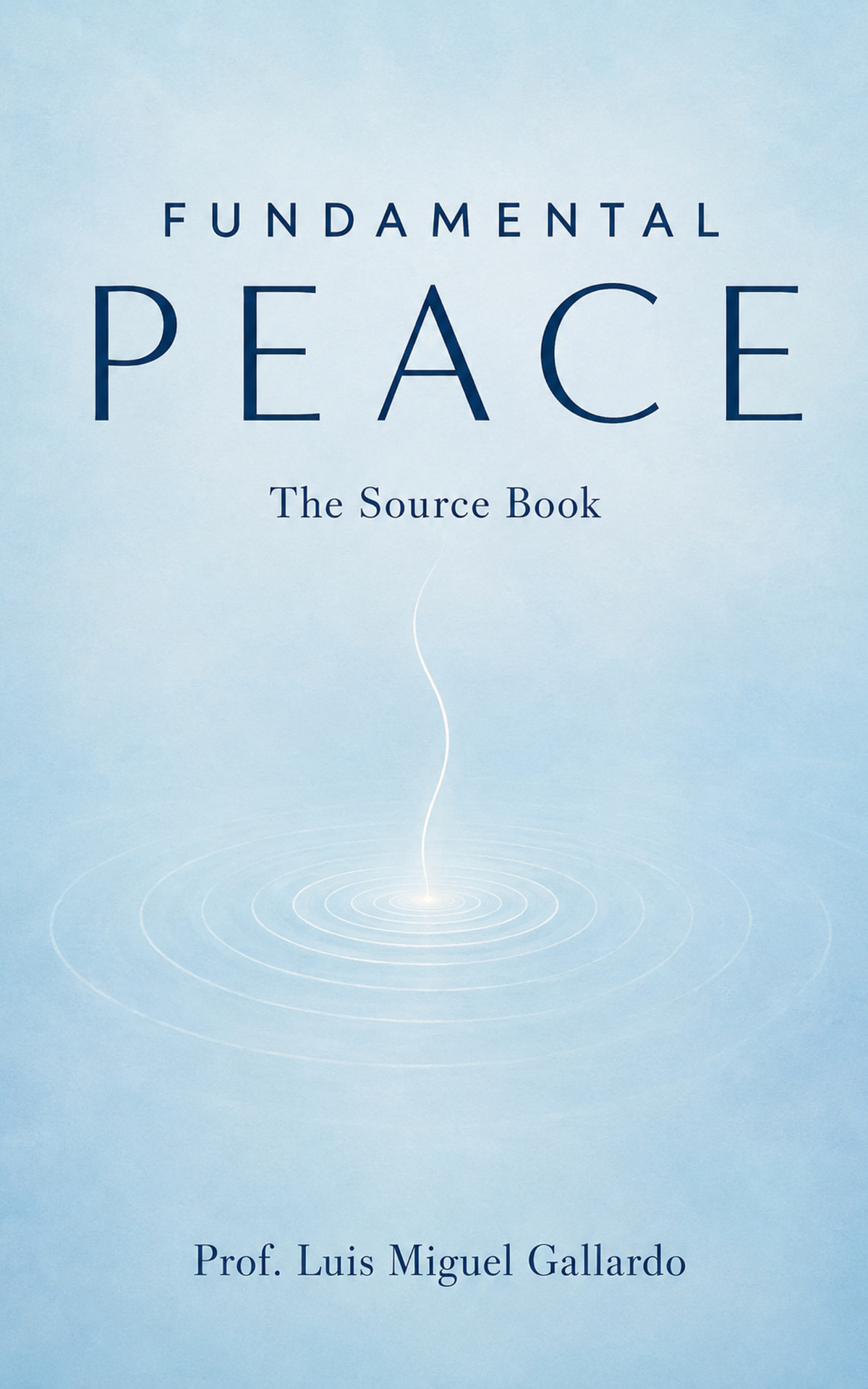
Prof. Luis Miguel Gallardo, founder of the World Happiness Foundation, coined and defined Fundamental Peace and authored the FP20 scale and Fundamental Peace: The Source Book, published for the International Day of Peace 2026.