Fundamental Peace · Essay
Addiction is misplaced devotion — the longing was always sacred
There is a particular kind of tired that only the addicted know. Not the tiredness of a long day, but the tiredness of a life spent reaching for one thing and waking, again, with another in your hand. You have tried discipline. You have tried hating yourself awake. You have tried bargains with God, with your partner, with the version of you that was supposed to be free by now. And still, in the small hours, something inside you leans, the way a flower leans toward a light it cannot name. That leaning is not your enemy. That leaning is the truest thing about you. It has only forgotten where it is going.
The reframe: Fundamental Peace
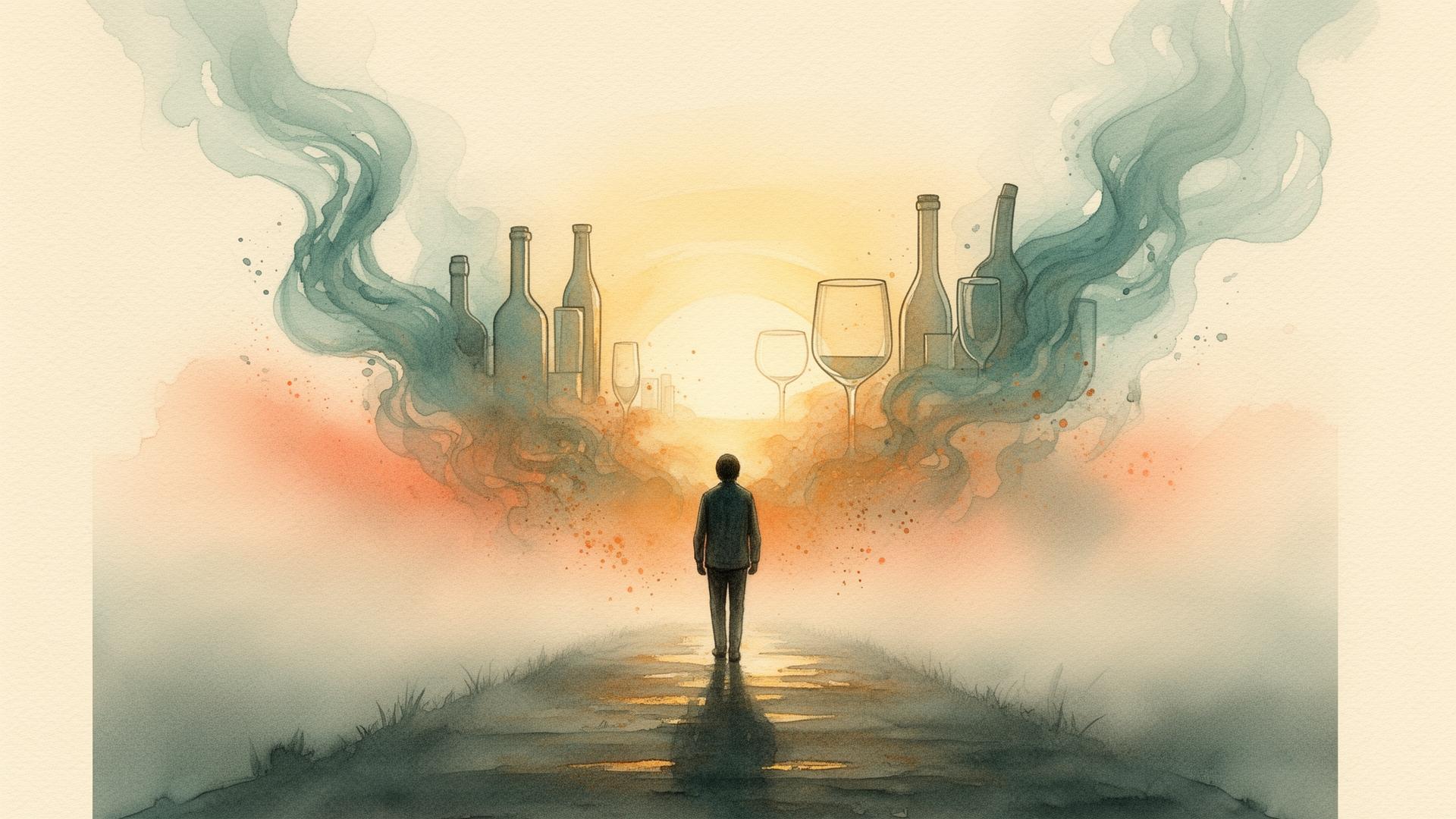
If the companion essay on this site says the opposite of addiction is contact, this one goes one layer deeper: addiction is what happens when a holy longing loses its address. The soul is built to lean toward something larger — presence, belonging, beauty, the sacred, whatever name you give it. When that direction is broken early — by abandonment, by ridicule, by trauma, by a culture that gave you stimulation instead of meaning — the leaning does not stop. It simply attaches to the nearest thing that quiets the ache. The substance, the screen, the body, the bottle, the win. Fundamental Peace does not ask you to crush the longing. It asks you to give it back its real direction. The drink was never the problem. The drink was a misaddressed letter to home.
Shadow · Gift · Essence
The shrinking life. The double life. The small lies that protect the using and slowly corrode the using person. The morning vow and the evening collapse. The body that no longer remembers stillness without a hand reaching for something. The quiet certainty that everyone else got an instruction manual for being human that you somehow missed.
A devotional capacity so fierce that it would rather burn down a life than live without meaning. Underneath every compulsion is a creature still capable of love at extraordinary depth — that is why the substitutes are so consuming. Nothing small ever calls a soul this hard. The addiction is the misuse of a real holiness.
Longing restored to its true direction. The same intensity that drove you toward the substitute, now turning — slowly, awkwardly at first — toward breath, toward another body that loves you, toward a practice, toward the sacred. Not white-knuckle abstinence, but a life finally large enough to hold the size of your wanting.
The practice
Redirecting the Longing — a 5-step practice for the leaning
Notice the leaning before the using. Sit, feet on the floor, and ask: 'What am I actually leaning toward right now?' Not the substance — the feeling-state under it. Calm. Closeness. Quiet. Aliveness. Permission to stop performing. Name it in one honest word.
Honour the longing out loud, in your own voice: 'This wanting is not shameful. It is the most alive part of me. It has just forgotten where home is.' Notice how the body softens, even slightly, when the longing stops being treated as the enemy.
Place a hand on the part of you that is leaning — chest, throat, gut. Breathe into it slowly, four in, six out, for one minute. You are not trying to make the longing leave. You are letting it know it has been heard for, perhaps, the first time.
Offer it a real address. Speak aloud one tiny, concrete redirection that fits the feeling-state you named in step one. 'For closeness, I will text one person tonight.' 'For quiet, I will sit five minutes in silence.' 'For aliveness, I will walk outside without a phone.' Small. True. Today.
Close with one written line in your journal: 'My longing today wanted ____. The substitute would have given me ____. The real direction is ____.' Do this for thirty days and the inner map redraws itself. Not because you stopped wanting — because the wanting finally knows where it was always trying to go.
When to seek more support
This essay is a companion to recovery, not a replacement for it. If a substance or behaviour is harming your body, your relationships, your work, your finances, or your freedom, please reach for real support today — a doctor, an addiction specialist, a 12-step or SMART Recovery community, IFS or trauma-informed therapy, or a residential programme if your situation calls for it. Some withdrawals (alcohol, benzodiazepines, opioids) can be physically dangerous and require medical supervision — do not stop alone. In immediate crisis call your local emergency number, in the US the SAMHSA National Helpline at 1-800-662-4357 (free, confidential, 24/7), in the UK Samaritans 116 123, in Spain dial 024. You are not broken. You are carrying a longing that was always too big for one person — including you — to hold alone.
Frequently asked
How is this essay different from the other one on addiction?
The companion essay frames addiction as the wrong answer to a real question — a pain that needs contact. This one goes underneath that pain and names what was driving the reach in the first place: a sacred longing for presence, belonging and meaning that lost its address. Together they describe the same wound from two angles — the unbearable feeling, and the holy direction underneath it.
Are you romanticising addiction by calling the longing sacred?
No. The using is not sacred — it costs lives, bodies, marriages and freedom, and it deserves real recovery infrastructure. What is sacred is the engine underneath: the capacity to lean toward something larger than yourself. Honouring that engine is not permission to keep using; it is what finally makes a different direction possible.
What if I have no sense of the sacred — no God, no spirituality, nothing?
You do not need any tradition for this. 'Sacred' here means simply: that which is large enough to hold the size of your longing. For some it is silence. For some it is the ocean, music, a child, a craft, a beloved, a cause. The point is not the label. The point is that your wanting was built to reach toward something real, and any substitute will eventually fail it.
Where does FP20 fit in this view?
Misplaced longing usually shows up as low Inner Wisdom (cut off from the quiet voice that knows what you actually need), low Emotional Coherence (feelings unbearable without the substitute), and a wobbling Sense of Self. FP20 will not run your recovery for you, but it will show you, with surprising precision, which of those four grounds most needs your attention this season.
Measure where your inner peace stands today
FP20 is the Fundamental Peace Scale — 20 questions, about 4 minutes. It reveals which of the four components (including Emotional Coherence) most needs your attention right now, with a personal reading from Luis.
Take FP20 →Continue reading