
Fundamental Peace · Essay
The opposite of addiction is not sobriety — it is contact
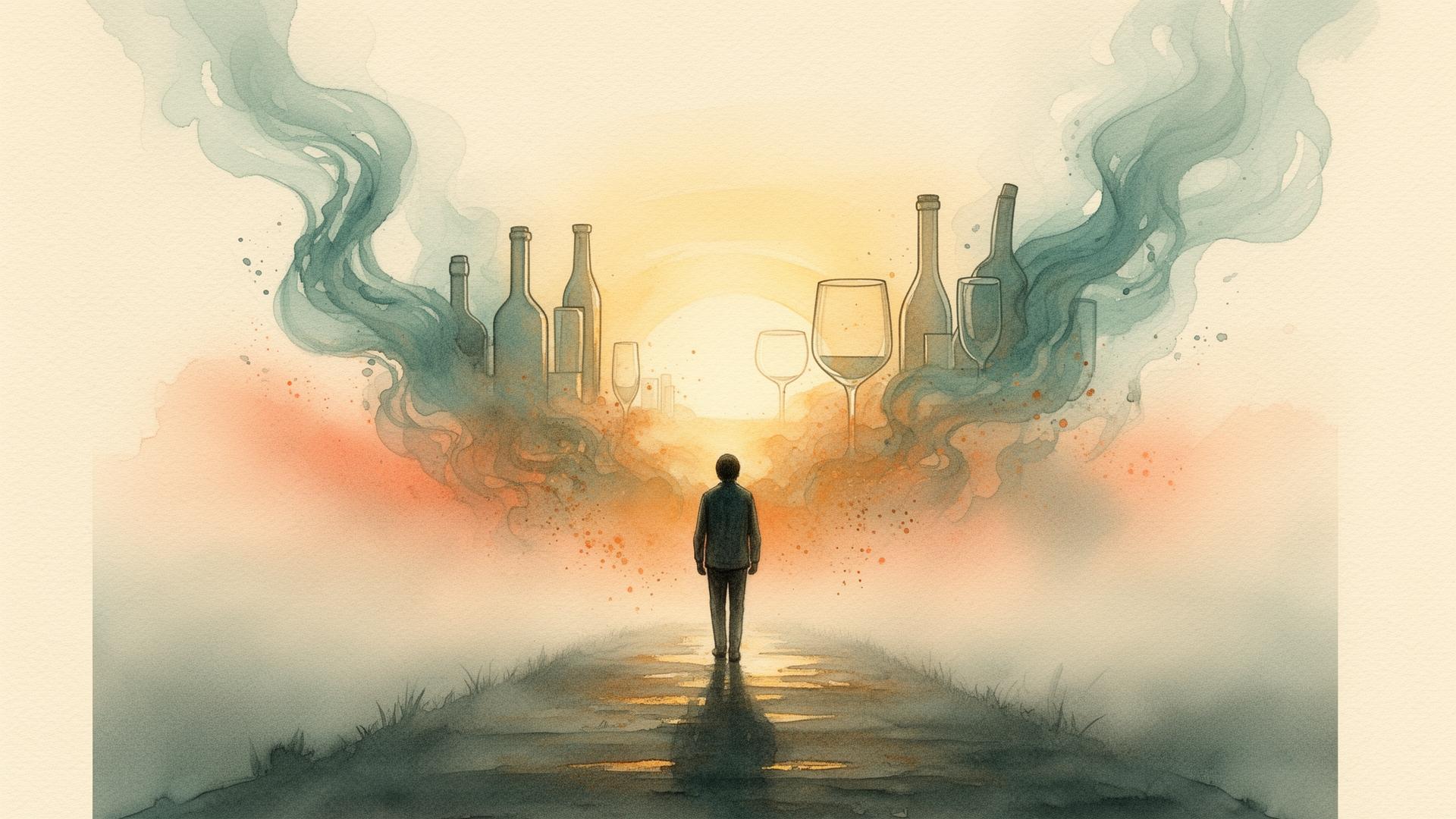
You said this was the last time. You meant it. You said it again last week, and the week before. The substance, the scroll, the drink, the food, the porn, the gambling, the relationship — the thing you keep returning to that you also keep promising to leave. Between the using and the regret there is a small, exhausted hope that someday you will simply stop wanting it. Then the wanting returns, and you wonder what is wrong with you.
The reframe: Fundamental Peace
From the perspective of ICEF and FP20, addiction is rarely a failure of willpower and rarely a sign that you are broken. It is the wrong answer to a real and unbearable question — usually a feeling, a loneliness, a memory, an emptiness, a pain that no one ever helped you hold. The substance or behaviour works, at first, because it does something nothing else has done: it lets you breathe. Fundamental Peace does not shame the answer. It looks for the question underneath, so that the real ache can finally be met by something that does not also cost you your life.
Shadow · Gift · Essence
The promise broken again, the secret keeping, the body that keeps paying, the shrinking world, the certainty that something is fundamentally wrong with you that everyone else somehow avoided.
A precise, uncomfortable signal pointing at a feeling or wound that has never been met. The behaviour is showing you exactly where care needs to go — not as accusation, but as map.
A life met from inside, where the old ache is held by real contact — with breath, with body, with another person, with what is sacred — and the substitute slowly loses its grip because the original need is finally being honoured.
The practice
The Pause Before — a 4-minute practice for the urge
When the urge rises, do not fight it and do not act on it immediately. Set a timer for 4 minutes. The promise is small: 4 minutes of pause. After that, you decide.
Place a hand on your chest and one on your belly. Breathe in for four, out for six. Three rounds. Say silently: 'The urge is here. The urge is not me. I can be with it for four minutes.'
Ask one quiet question, without expecting a clean answer: 'What feeling is this urge trying to take me away from right now?' Loneliness. Boredom. Anger. Grief. Shame. Emptiness. The wave of an old memory. Name it in one word, even if you are unsure.
Place a hand where that feeling lives in your body and say to it: 'I see you. You make sense. I am not leaving you with this alone anymore.' Stay with the feeling, not the urge, for the rest of the four minutes.
When the timer ends, decide consciously. Sometimes you will still use; sometimes you will not. Either way, write one line: 'I paused. I named the feeling underneath.' That pause, repeated, is what eventually changes the pattern — far more than willpower ever does.
When to seek more support
Addiction is rarely healed alone. If a substance or behaviour is harming your body, relationships, work, finances, or freedom — or if you cannot stop even when you genuinely want to — please reach out for real support: a doctor, an addiction specialist, a 12-step or SMART Recovery community, or a therapist trained in addiction and trauma. In an immediate crisis call your local emergency number or, in the US, SAMHSA's National Helpline at 1-800-662-4357 (free, confidential, 24/7). You are not weak. You are carrying something that needs more than one person — including you alone — can hold.
Frequently asked
Is this practice a substitute for treatment?
No. This is a contemplative companion, not a clinical intervention. For substance use disorders, behavioural addictions that are damaging your life, or any withdrawal that could be physically dangerous (alcohol, benzodiazepines, opioids), you need medical and therapeutic support. Use this practice alongside that, not instead of it.
Why does shame seem to make my using worse?
Because shame is itself one of the most intolerable feelings, and addiction is, in part, a strategy for not feeling intolerable feelings. The more you shame yourself, the more pressure builds on the very system that uses to escape. The path through is honesty without contempt — accountability held by compassion.
How does FP20 help with addiction recovery?
Addictive patterns commonly involve very low Emotional Coherence (feelings unbearable), low Relational Trust (no one to bring it to), and a shaken Sense of Self. FP20 will not replace recovery work, but it can show you which inner ground to keep rebuilding while you do that work.
Sources & further reading
- NIH NIDA — Drugs, brains, and behavior: The science of addiction
- SAMHSA — Find help
- WHO — Alcohol, drugs and addictive behaviours
These references are provided for educational purposes. Hypnotherapy complements, and does not replace, medical or psychological care.
Measure where your inner peace stands today
FP20 is the Fundamental Peace Scale — 20 questions, about 4 minutes. It reveals which of the four components (including Emotional Coherence) most needs your attention right now, with a personal reading from Luis.
Take FP20 →Continue reading


From Luis's essay archive
2 related essays by Luis on this topic.