

Transpersonal Leadership · Essay
Mastering Koshas Leadership: A Daily Integration Map for Executives
Explore how integrating the five koshas—physical, energetic, mental, wisdom, and bliss—offers a profound pathway for leaders to cultivate a holistic, resonant, and deeply impactful presence in their organizations.
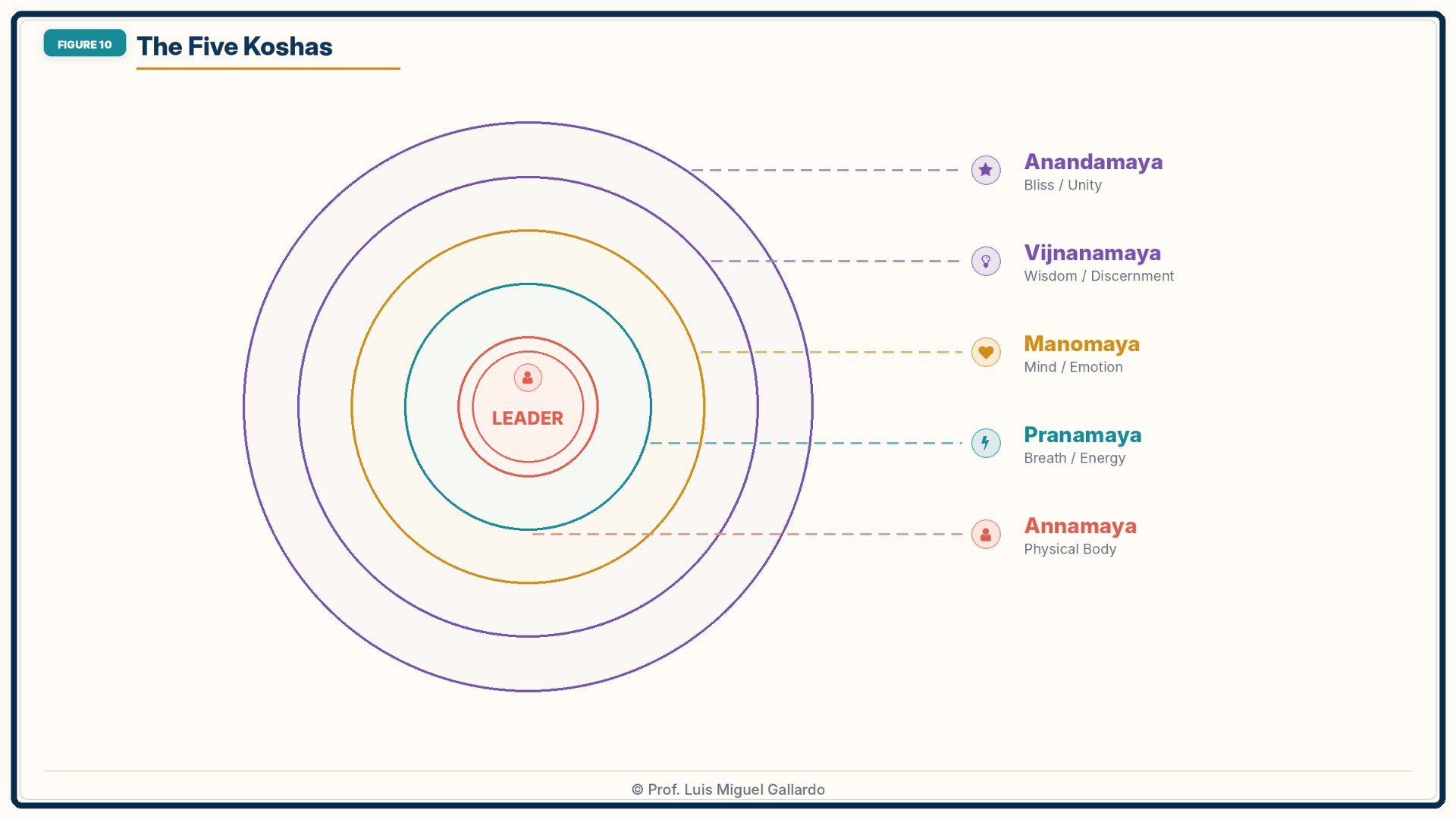
In my work on transpersonal leadership, I often find myself drawn to ancient wisdom traditions that offer models for understanding the multifaceted nature of human experience. One such framework, particularly resonant for comprehensive leader development, is the concept of the five koshas from the yogic tradition. These five sheaths, or layers of being, provide a powerful lens through which executives can cultivate a more integrated and impactful koshas leadership approach. As depicted in Figure 10 of The Transpersonal Leader, these koshas move from the outermost physical layer to the innermost core of bliss, each offering unique opportunities for self-awareness and skillful action.
The Annamaya Kosha: Leading with Embodied Presence
The Annamaya Kosha is the physical body, our most tangible sheath. For leaders, this isn't merely about personal health, though that is foundational. It's about embodied presence – how we inhabit our physical form and communicate through it. A leader who is physically drained or disengaged projects an influence very different from one who is vibrant and centered. Our ability to process stress, maintain focus during long meetings, or even simply stand with an open posture, all stem from this kosha. Daniel Siegel's work on interpersonal neurobiology reminds us how our non-verbal cues profoundly impact others, illustrating the direct link between our physical state and relational effectiveness. To neglect the body is to weaken the very instrument through which we lead. A daily practice might involve mindful movement, nourishing foods, and ensuring adequate rest—simple yet often overlooked anchors for a strong leadership presence.
Pranamaya & Manomaya Koshas: Energetic Flow and Mental Clarity
Moving inward, we encounter the Pranamaya Kosha, the energetic or vital sheath, and the Manomaya Kosha, the mental or emotional sheath. These two are intimately intertwined. The pranamaya kosha governs our breath, vitality, and emotional regulation. When our energy is scattered, our thoughts often follow suit, leading to reactive decisions and diminished resilience. Stephen Porges' Polyvagal Theory illuminates the direct link between our physiological state (our vagal tone) and our capacity for connection and regulation. As leaders, understanding our energetic rhythms allows us to manage our stamina and emotional responses more effectively. Practices like conscious breathing or short periods of silence can dramatically shift our energetic state.
"The quality of our attention shapes the world we collectively create. Where attention goes, energy flows, and results show."
The Manomaya Kosha encompasses our thoughts, emotions, and sensory perceptions. This is where our narratives, beliefs, and judgments reside. A leader's mental clarity, emotional intelligence, and ability to hold complex perspectives are all functions of this sheath. Unchecked mental clutter or emotional reactivity can lead to poor decision-making and strained relationships. Here, practices of mindfulness, journaling, or engaging in reflective dialogue with trusted advisors can help to discern habitual patterns and cultivate greater mental agility. Together, these two koshas speak to the dynamic interplay between our inner state and our external output, forming the bedrock of conscious koshas leadership.
Vijnanamaya & Anandamaya Koshas: Wisdom, Intuition, and Purpose
The Vijnanamaya Kosha is the wisdom or intellectual sheath, often associated with intuition, insight, and the capacity for discernment. This is not merely about accumulating knowledge, but about the ability to synthesize information, perceive underlying patterns, and make wise judgments that transcend purely rational analysis. It is the faculty that enables us to grasp the 'bigger picture,' to understand systemic dynamics, and to lead with foresight rather than just hindsight. Profound strategic thinking and ethical leadership often emerge from this sheath. Engaging in contemplative practices, seeking diverse perspectives, and allowing space for insights to emerge are vital for cultivating this deep wisdom.
Finally, at the innermost core lies the Anandamaya Kosha, the bliss or causal sheath. This is our inherent sense of well-being, interconnectedness, and pure joy—not contingent on external circumstances but an intrinsic state of being. For a leader, accessing this kosha means leading from a place of genuine purpose, compassion, and unwavering inner peace. It's the source of true inspiration and resilience, enabling one to navigate challenges with grace and cultivate a positive, transformative influence on others. It's where the leader's highest self resides, informing all other layers with an authentic sense of belonging and contribution. By consciously nurturing all five koshas, leaders can not only enhance their personal well-being but also profoundly amplify their capacity to inspire, innovate, and lead with genuine presence and purpose.
With an embrace, Luis Miguel.