

Transpersonal Leadership · Essay
Healing Leadership Wounds: From Frozen Responses to Conscious Action
Explore how core human wounds like rejection or betrayal manifest as defensive leadership styles and discover eight conscious pathways to transform these reactions into resilient, transformative leadership, fostering true healing and growth.
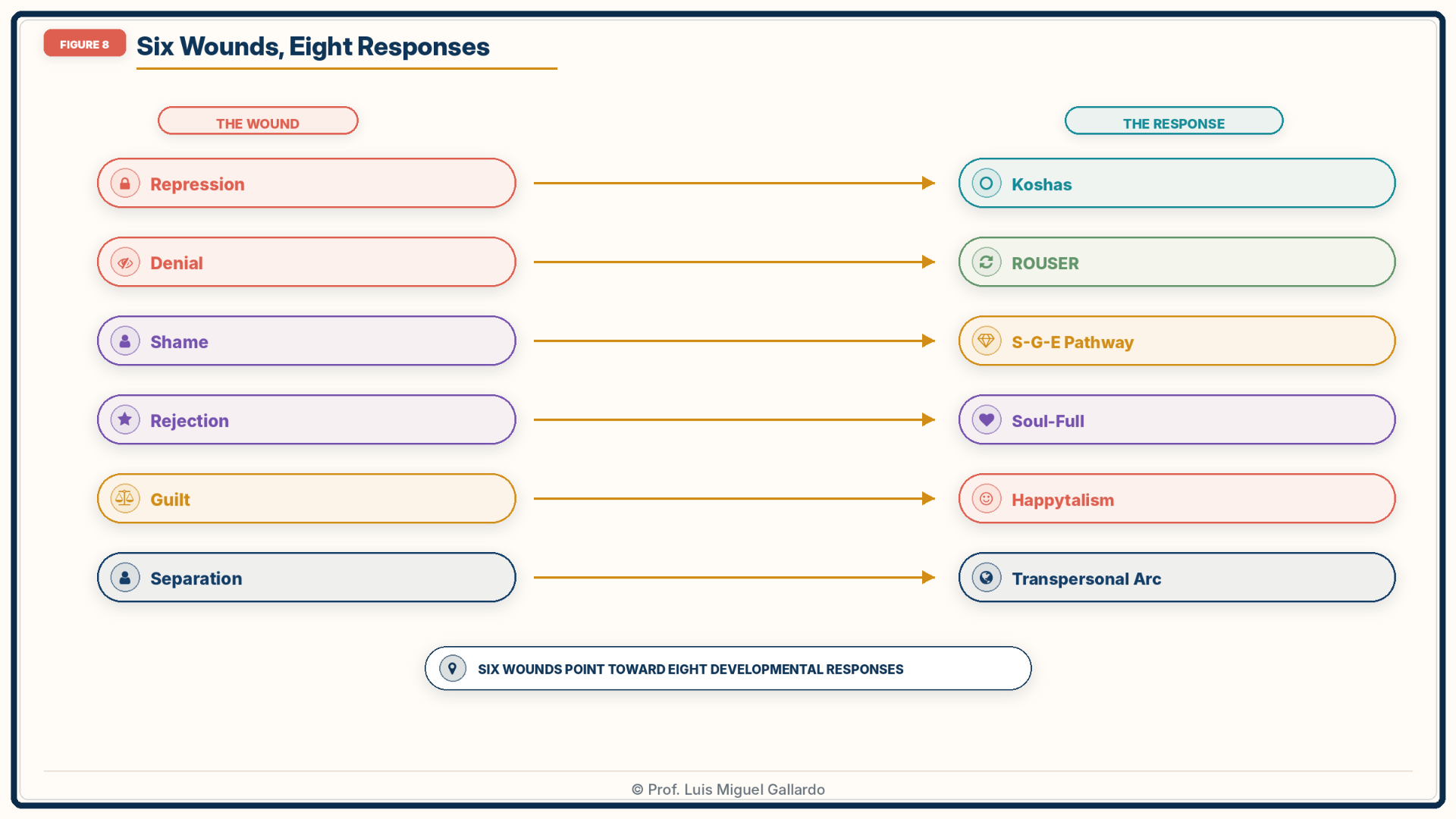
In my work on transpersonal leadership, particularly in Chapter 3, I delve into the often-unseen roots of our leadership styles: our deepest human wounds. These are not mere psychological quirks but profound imprints from our life's journey that, left unaddressed, can freeze us into reactive patterns. Understanding how these historical pains shape our present leadership is the first step towards healing leadership wounds.
The Six Core Leadership Wounds
Drawing from a rich tapestry of psychological and spiritual traditions, I've identified what I call the Six Core Wounds that profoundly influence our leadership. These aren't abstract concepts but visceral experiences that, when triggered, can hijack our most well-intentioned efforts:
- Rejection: The pain of feeling unwanted, unloved, or excluded. Leaders carrying this wound may become overly people-pleasing, constantly seeking external validation, or conversely, defensively aloof and highly critical to avoid perceived rejection.
- Abandonment: The deep fear of being left alone, unsupported, or unsupported. This can manifest as micro-managing, an inability to delegate, or desperate attempts to maintain control, fearing that if they release the reins, others will leave.
- Humiliation: The profound shame of feeling degraded, ridiculed, or inadequate. Leaders with this wound might either become authoritarian and controlling, imposing their will through fear, or withdraw, avoiding visibility and responsibility to escape potential embarrassment.
- Betrayal: The anguish of having trust violated, leading to deep suspicion and a guarded heart. Such leaders often struggle with delegation, assume the worst intentions in others, or demand unswerving loyalty, becoming punitive when trust is perceived to be broken.
- Injustice: The searing pain of fundamental unfairness, leading to a rigid adherence to rules or, paradoxically, a rebellious disregard for them. These leaders might become overly critical, demanding perfection, or feel perpetually misunderstood, struggling with empathy for differing perspectives.
- Invisibility: The silent suffering of feeling unseen, unheard, or unvalued, with one's contributions overlooked. This can lead to a desperate need for recognition, constantly seeking the spotlight, or a complete withdrawal, fearing that their voice doesn't matter anyway.
These wounds, while deeply personal, invariably cast long shadows over our leadership. They shape our default responses, create blind spots, and can inadvertently perpetuate cycles of dysfunction within teams and organizations. Our leadership behaviors, therefore, are often unwitting attempts to protect these tender places.
Moving from Reaction to Conscious Response
The good news is that these reactions are not our destiny. As depicted in Figure 8, "Six Wounds, Eight Responses," in my book, we can consciously choose to move beyond these frozen, defensive postures. This requires intentional self-awareness, deep empathy, and a commitment to personal growth – the very essence of transpersonal leadership. Here are the eight conscious responses that facilitate the healing leadership wounds process:
- Cultivating Presence (Mindfulness): As Otto Scharmer's work on Theory U highlights, being present to what is truly emerging, rather than reacting from past conditioning, is foundational. This allows us to observe our triggers without immediate judgment.
- Embracing Compassion (Self & Other): This is about extending kindness and understanding, both to ourselves for our imperfections and to others for theirs. It dismantles the harsh inner critic born from wounds like injustice or humiliation.
- Fostering Courage (Vulnerability & Authenticity): Showing up as our true selves, even with our imperfections, is a powerful antidote to the need for approval or the fear of rejection. It reclaims the self often hidden by the wound of invisibility.
- Practicing Forgiveness (Release & Renewal): Letting go of past grievances, whether towards self or others, frees emotional energy locked in the pain of betrayal or abandonment. It's a pathway to genuine renewal.
- Building Trust (Reliability & Openness): Trust is rebuilt through consistent, transparent actions. For leaders wary due to betrayal wounds, this means modeling trustworthiness first, fostering psychological safety.
- Seeking Justice (Equity & Fairness): This response moves beyond mere rules to an active pursuit of what is equitable and fair for all, addressing the deep sensitivity of the injustice wound with proactive solutions.
- Nurturing Connection (Belonging & Interdependence): Countering the isolation of abandonment or rejection, this involves actively creating environments where everyone feels valued, seen, and interconnected, recognizing our shared humanity.
- Embodying Vision (Purpose & Inspiration): A clear, expansive vision provides direction beyond personal pain, transforming self-focused concerns into a commitment to a larger purpose. It reorients the drive for recognition (from invisibility) into collective impact.
This isn't about eradicating the wounds – they are part of our human story. Rather, it's about acknowledging them, understanding their influence, and developing conscious strategies to prevent them from dictating our leadership. By actively choosing these eight responses, we move from being led by our scars to leading with intentionality, wisdom, and genuine care. This is the path to truly healing leadership wounds and unlocking our full potential as transpersonal leaders.
With an embrace, Luis Miguel.