Fundamental Peace · Essay
Uncertainty: the demand for certainty is the suffering
You do not know if the test results will be benign. If the relationship will hold. If the job will still be there in six months. If the country, the climate, the parent, the child will be alright. The not-knowing has a particular texture — a low tightness behind the sternum, an itch to do something, anything, to make it stop. You have tried planning, researching, controlling, refusing to think about it. None of it has produced what you actually want, which is a guarantee. There is no guarantee.
The reframe: Fundamental Peace
From the perspective of ICEF and FP20, uncertainty is not the enemy of peace. It is the texture of being alive. What hurts is not the not-knowing — it is the demand that we know, the inner contract we signed long ago that says 'I will be safe only when I am certain'. Fundamental Peace does not promise certainty. It does something better: it teaches the nervous system to keep its centre while the ground keeps moving. From that ground, action is still possible, often clearer, because it is not contaminated by the panic of trying to make life sit still for you.
Shadow · Gift · Essence
Endless tabs, endless plans, endless rehearsing. The 3am 'what if'. The decisions postponed for years 'until things are clearer'. The strange fatigue of having lived the catastrophe in your mind a hundred times before it had a chance to actually happen — or not.
A precise teacher of what is yours and what is not. Uncertainty is the line in the sand between the life you can shape and the life that will keep being weather. Knowing that line is freedom, not loss.
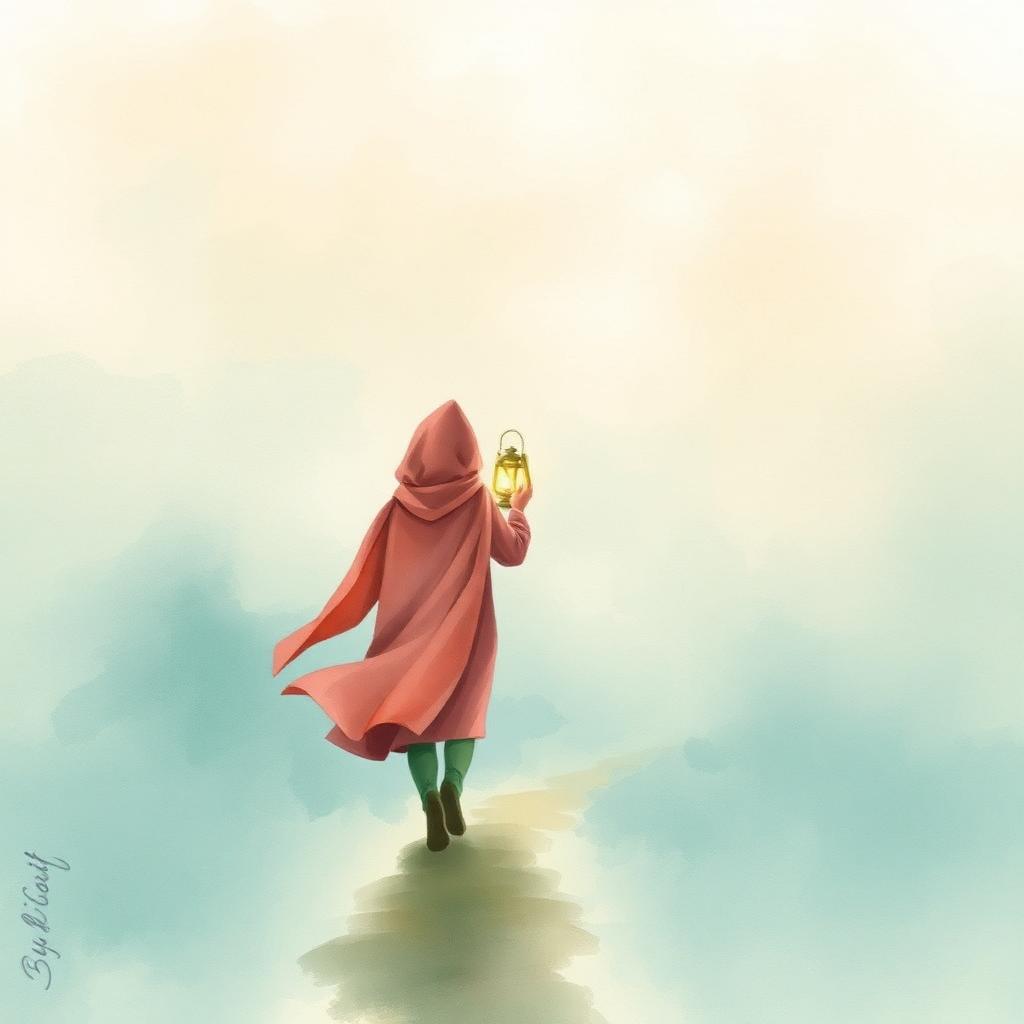
A person who can step forward without a guarantee, who acts cleanly inside her sphere of influence, who lets the outcome belong to the world without contempt for it. Peace that does not depend on the next chapter being written yet.
The practice
Two Lists, One Step — a 5-minute practice for the not-knowing
Name the uncertainty in one sentence. Out loud or on paper. Not the whole story — the actual question whose answer you do not have. 'I do not know if X will Y.' Naming it is half the relief.
Draw two columns. Left: 'What is mine to do.' Right: 'What is not mine to do.' Be ruthless. Most of what you have been carrying lives in the right column. Underline the items there and read them aloud.
Place a hand on your chest. Say silently: 'These belong to life, not to me. I release them — not because I do not care, but because I cannot do their work.' Three slow breaths. Feel the small space that opens.
Look at the left column. Pick one thing. Not the biggest. The one you could actually do today. Plan one concrete step — call, email, conversation, draft. Put it on the calendar in the next 24 hours.
Take the step. When uncertainty rises again — and it will — return to this practice. The freedom is not in finally knowing. The freedom is in being able to move and breathe before you do.
When to seek more support
If uncertainty has tipped into clinical anxiety, panic, OCD-style intrusive doubting, or a health scare you cannot stop ruminating about — please reach to a therapist (CBT and ACT are particularly well-studied for intolerance of uncertainty) and your GP. If a real crisis is unfolding (illness, divorce, displacement, loss), ask for accompanied decision-making — friends, family, a coach, a community. Some uncertainties are too heavy to hold in one body. They were never meant to be.
Frequently asked
Isn't planning prudent?
It is — until it is not. Healthy planning happens once and frees the body. Anxious planning happens forty times for the same situation and consumes the body. The first uses the future to act; the second uses the future to suffer.
How do I act when I really do not know what to do?
Pick the next smallest reversible step in the direction of what you most value. Reversible matters. Action restores agency; agency restores capacity; capacity reveals the next, less small step. You do not need the whole staircase to take the first stair.
Where does FP20 come in?
Intolerance of uncertainty almost always shows up as low Emotional Coherence and an over-extended Sense of Self (you are trying to be the author of things that are not yours). FP20 names which inner ground most needs care so you can act from a centre that is yours, not from the panic of needing to know.
Sources & further reading
- APA — Building your resilience
- Harvard Business Review — Leading through anxiety
- Greater Good Science Center — How to cope with uncertainty
These references are provided for educational purposes. Hypnotherapy complements, and does not replace, medical or psychological care.
Measure where your inner peace stands today
FP20 is the Fundamental Peace Scale — 20 questions, about 4 minutes. It reveals which of the four components (including Emotional Coherence) most needs your attention right now, with a personal reading from Luis.
Take FP20 →Continue reading