
Fundamental Peace · Essay
Your sensitivity was never the problem
You stand at the door before you go in. You rehearse the first sentence on the way to the meeting. You replay the conversation for hours afterwards, certain you said the wrong thing. You cancel plans and feel both relief and grief in the same breath. From the outside it can look like avoidance; from the inside it feels like trying to breathe in a room where everyone else seems to have learned the choreography but you.
The reframe: Fundamental Peace
From the perspective of ICEF and FP20, social anxiety is not a flaw in your character. It is a sensitive nervous system bracing for an old danger — being judged, being too much, being too little, being unwanted — long after that danger has passed. Fundamental Peace does not ask you to perform extroversion. It asks you to bring your system back to safety so that, when you do meet others, you are meeting them, not the memory of an old rejection.
Shadow · Gift · Essence
The pre-event dread, the silent self-monitoring, the post-event spiral, the conviction that everyone noticed the wobble in your voice, the long quiet retreat afterwards.
A finely tuned attunement to other people. Your system reads rooms with a precision most people lack. It just needs to be soothed enough to use that gift instead of being flooded by it.
Presence with another person from a settled body — meeting them as they are, instead of bracing for how they might receive you.
The practice
The Threshold Practice — 3 minutes before any social moment
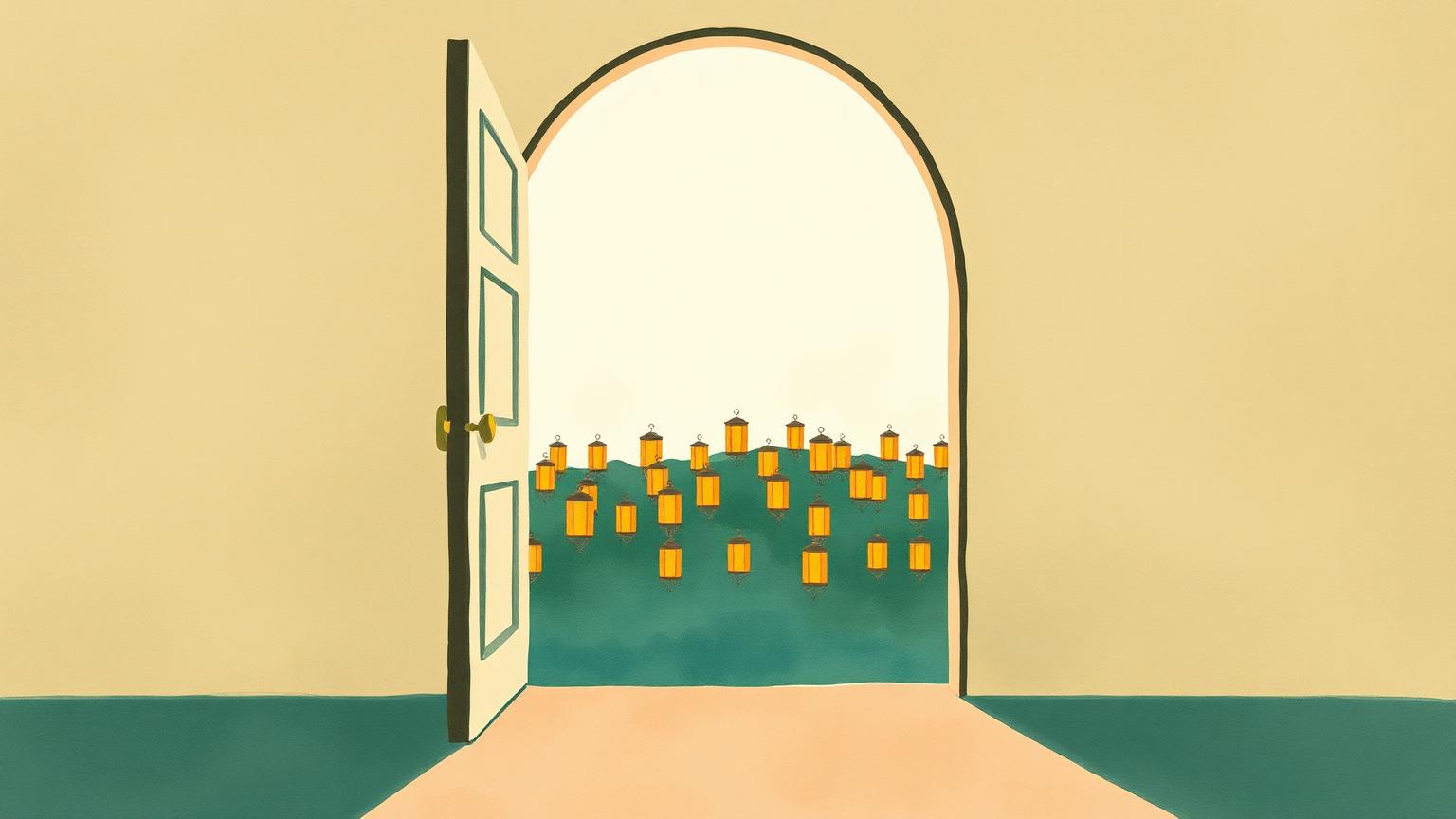
Before you enter the room, the call, the meeting, stop at the threshold (literal or figurative). Place both feet flat. Feel the floor for one full breath. You are here. The room has not happened yet.
Place a hand low on your belly. Breathe in for four, out for six. Three rounds. The long exhale tells your nervous system that this is not a threat, just a room. Let your shoulders drop a centimetre.
Name one true intention for the next 30 minutes — not 'be impressive,' not 'do not say anything stupid,' but something honest and small: 'I want to actually listen to one person,' or 'I want to leave when I am tired.' Anchor to that intention.
Remind yourself of one fact: most people in the room are also somewhat self-conscious; almost none are watching you the way you are watching yourself. The spotlight you feel is internal, not external.
Enter. When the anxiety spikes, return to the long exhale (in 4, out 6) without trying to hide that you are doing it. Afterwards, write one line: 'I went. I stayed for X. I am safe now.' Repeated, this practice shrinks anticipatory dread and the post-event spiral together.
When to seek more support
If social anxiety stops you from working, studying, or maintaining relationships you want, or pairs with panic attacks, depression, or significant avoidance, please involve a therapist trained in CBT, ACT, or somatic approaches to social anxiety. Many people find clear, lasting change with the right support — you do not have to live the rest of your life inside this.
Frequently asked
Am I just an introvert, or is this social anxiety?
Introversion is about how you recharge — quiet time restores you. Social anxiety is about fear of judgement and being seen, with anticipatory dread before and rumination after. Many introverts have no social anxiety, and many extroverts do. The two can coexist, but they are not the same thing.
What if cancelling plans actually feels good?
Relief after cancellation is the system getting what it asked for — short-term safety. The cost is that avoidance teaches the nervous system the situation really was dangerous, which makes it harder next time. The path through is small, soothed exposures, not white-knuckled bravery and not chronic avoidance.
How does FP20 help with social anxiety?
Social anxiety typically shows up across multiple FP20 components: low Emotional Coherence (the bracing), low Sense of Self (the worth-on-the-line feeling), and low Relational Trust (other people experienced as risk). Your reading shows where to begin.
Sources & further reading
- NIMH — Social anxiety disorder
- Mayo Clinic — Social anxiety disorder (social phobia)
- NHS — Social anxiety (social phobia)
These references are provided for educational purposes. Hypnotherapy complements, and does not replace, medical or psychological care.
Measure where your inner peace stands today
FP20 is the Fundamental Peace Scale — 20 questions, about 4 minutes. It reveals which of the four components (including Emotional Coherence) most needs your attention right now, with a personal reading from Luis.
Take FP20 →Continue reading



From Luis's essay archive
1 related essays by Luis on this topic.