Fundamental Peace · Essay
The need to control: fear in a manager's uniform
Control feels like responsibility, but underneath it is almost always fear that learned to be useful. You plan the trip three times. You re-write the email twice. You manage everyone's calendar, including the ones who did not ask. People praise you for it. You are praised, and you are exhausted, and you cannot really receive help, because help has unpredictable edges, and unpredictable edges feel unsafe.
The reframe: Fundamental Peace
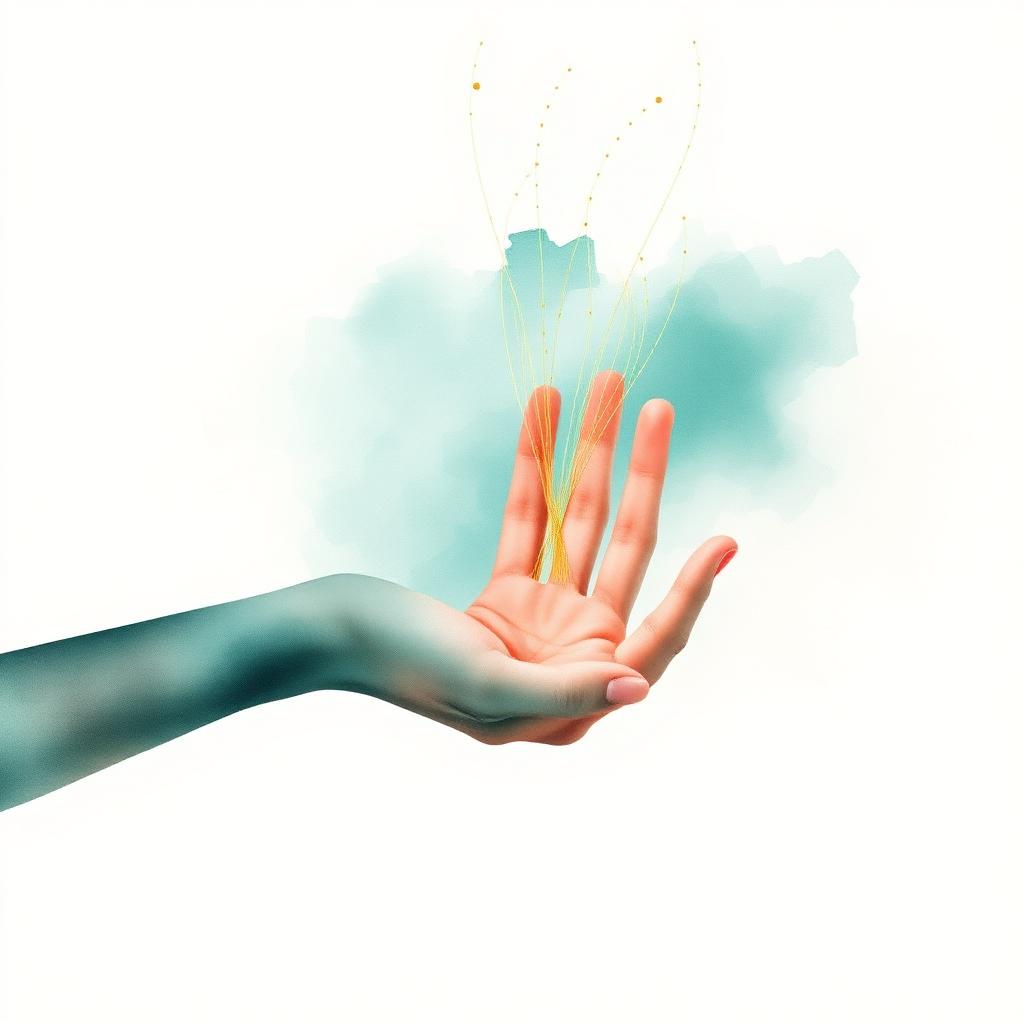
From ICEF and FP20, the need to control is the body's old solution to a world that once felt genuinely unsafe — emotionally, financially, relationally. The grip is intelligent: it kept you ahead of harm. But what kept you alive at twelve becomes a tax at forty. Fundamental Peace does not ask you to become careless. It asks you to upgrade the protector — from a tight hand that grips everything, to a steady hand that opens at the right moments and trusts that you will respond, even when life moves on its own.
Shadow · Gift · Essence
The micro-managing. The advance worry. The inability to delegate without re-doing. The exhaustion that comes from holding everyone's ropes. The hidden anger at the people who 'made' you carry them.
An exceptional capacity to anticipate, to organise, to keep promises. Used inside its right size, this is leadership and care. Used outside its size, it is the same hand strangling the very life it was trying to hold.
A self that trusts both its own response and life's intelligence. Plans become tools, not armour. The hand opens and life does not, in fact, collapse — often it breathes for the first time.
The practice
Opening the Hand, Once a Day — a 5-step practice
Each morning name one specific thing today you usually try to control that is, honestly, not yours. A colleague's tone. A partner's mood. The weather. The traffic.
Write the sentence: 'Today I am willing to let ___ be the size it actually is.' Read it once aloud. The body needs to hear you give it permission.
Notice the first moment the grip rises — usually a tightening in the jaw, the shoulders, or the breath. Place a hand there. Say silently: 'Thank you. I have got it from here.'
Do one small act of trust — send the email without re-reading it a fourth time, leave the dishes for an hour, let the conversation end without a final summary. The body learns through small, survivable letting-go.
At night, log what you let be. Not what went right or wrong — what you let be. The Empowerment pillar grows in the soil of voluntary surrender, not in the soil of force.
When to seek more support
Chronic control sometimes sits on top of OCD, generalised anxiety, or unresolved trauma from a chaotic childhood. If the grip is so tight that letting go produces panic, intrusive thoughts, or compulsive checking, a CBT, ERP, or trauma-aware therapist will move you faster than willpower alone — and far more kindly.
Frequently asked
Isn't being in control just being responsible?
Responsibility is choosing what is yours and doing it well. Control is trying to manage what was never yours so it cannot hurt you. One creates rest at night. The other does not.
What if I let go and things actually fall apart?
Some things fall apart because they were only standing because you were holding them. That is information, not failure. What stands without your grip is what was actually yours to do.
Where does FP20 fit?
Control usually shows up as low Equanimity and a vigilant Sense of Self. FP20 names which inner ground most needs softening, so the hand can open without the floor falling away.
Measure where your inner peace stands today
FP20 is the Fundamental Peace Scale — 20 questions, about 4 minutes. It reveals which of the four components (including Emotional Coherence) most needs your attention right now, with a personal reading from Luis.
Take FP20 →Continue reading

From Luis's essay archive
2 related essays by Luis on this topic.
Hypnosis & Hypnotherapy, Revisited.
Hypnosis & Hypnotherapy, Revisited: What the Evidence (2018–2026) Really Shows For many people, the word hypnosis still brings up stage shows, swinging watches, and the fear of…
Managing Anger with Hypnotherapy
Managing Anger A Path to Calm and Control Anger is a natural emotion that everyone experiences from time to time.