
Fundamental Peace · Essay
Codependency: the long echo of the wound of separation
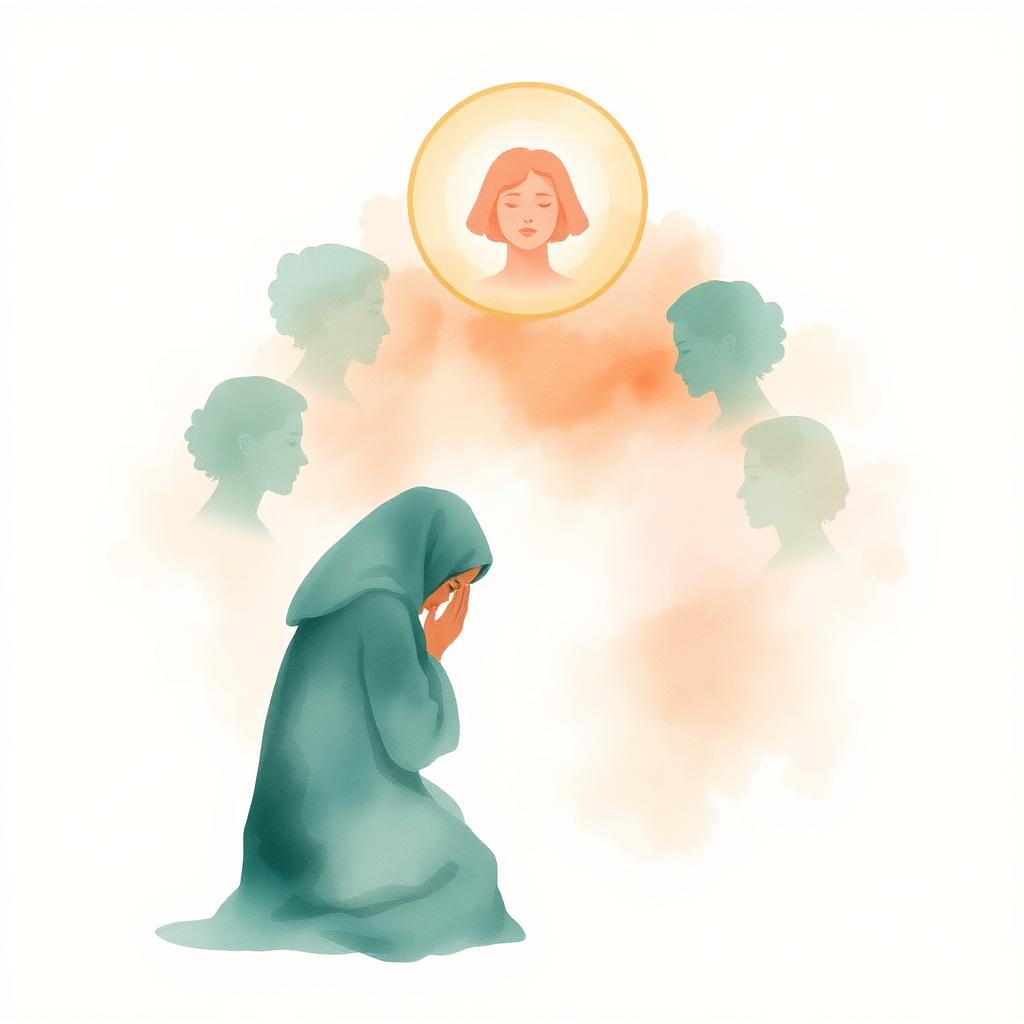
Codependency rarely looks like illness from the outside. It looks like the person who always answers. The partner who reads the room before reading themselves. The friend who can describe everyone else's needs in fine detail and goes oddly quiet when asked about their own. There is real beauty inside it — attunement, devotion, a heart that has practised love until it became second nature. There is also a quieter ache: the suspicion that, if you stopped tending to everyone, you would disappear. That ache is older than any of your current relationships. It is the long echo of the wound of separation.
The reframe: Fundamental Peace
From the ICEF and FP20 lens, codependency is not love that loves too much. It is a nervous system that learned, very early, that closeness was conditional — that to be safe, seen and kept, you had to merge with the emotional weather of the people around you. The original wound is not 'I was unloved.' It is 'I had to leave myself to be loved.' Fundamental Peace does not ask you to love people less. It asks you to come back from where you went when love first felt unsafe, and to discover that you can stay with yourself and stay in love with another at the same time. Connection without self-abandonment. Care without disappearing.
Shadow · Gift · Essence
The reflex to manage someone else's mood before noticing your own. The 'I'm fine' that arrives before the question lands. The quiet rage of having over-given, again. The terror, in a moment of healthy distance, that you are being abandoned — when really you are just briefly alone with yourself for the first time in years.
An exquisitely tuned instrument for connection. Codependent attunement is real attunement, only pointed away from the one person it was meant to start with — you. Underneath the over-functioning is a deep, uncynical capacity for love.
Interdependence. A self that stays at home in its own body while loving someone else's. A nervous system that no longer confuses 'we are separate beings' with 'I am being left.' Love without merger, intimacy without self-erasure.
The practice
Coming home from the merge — a 5-step practice
Pick one relationship where you tend to disappear. Before the next contact, sit for two minutes. Put a hand on your chest. Ask, gently: 'What is true for me right now — body, mood, need?' Write three honest sentences. This is the self you keep losing.
Notice the moment of leaving. In the conversation, watch for the small inner click when you stop tracking yourself and start tracking them. Do not judge it. Just name it silently: 'I just left.' Naming, not stopping, is the practice.
Practise the smallest honest sentence. One micro-truth per contact — 'I'm tired today', 'I don't know yet', 'That doesn't quite work for me'. The smaller and truer, the better. Codependent systems heal at the speed of small, frequent honesties, not big declarations.
Sit with the abandonment lurch. After a healthy 'no', a delay, or a moment of holding your own ground, the old wound will rise — chest tight, panic that you have ruined it, urge to call back and over-explain. Breathe out for six. Say silently: 'This is the old wound, not the present moment. I am not being left. I am just here, with myself.'
Return to the person whole. Once the lurch passes, come back into contact — warm, present, still in your own skin. Over time the nervous system learns the new pattern: you can be separate and still be loved, you can stay with yourself and still stay in love.
When to seek more support
If the codependency is woven through childhood trauma, addiction (yours or a loved one's), an abusive relationship, or sustained anxiety and depression, please do not walk this alone. Trauma-informed therapy, IFS, somatic work, Al-Anon or CoDA groups, and skilled couples therapy each carry a long lineage of helping. If you are in an unsafe relationship, your first move is safety, not insight — reach a local helpline or a trusted person today.
Frequently asked
Isn't being attentive to others just kindness?
Yes — and codependency is what happens when that kindness becomes the only place you are allowed to live. The test is simple: can you say a real no, hold a difference, or sit in someone's discomfort without rushing to fix it, and still feel like yourself afterwards? If the answer is no, the kindness has cost you the home it was meant to come from.
How is codependency linked to the wound of separation?
The wound of separation is the early, often pre-verbal experience that closeness was unreliable or required self-erasure — a caregiver who was inconsistent, intrusive, frightened, or absent. The child concludes, wordlessly, that staying merged is safer than being a separate self. Adult codependency is that strategy still running, decades later, in love, work and friendship.
Will I become cold or selfish if I stop being codependent?
No — this is the most common fear and almost never the outcome. People who heal codependency usually become more present, not less loving. The care is still there; it just no longer comes from fear. The people who truly love you will feel met. The ones who only loved your over-functioning will object — and that information is, itself, a gift.
Where does FP20 fit?
Codependency most often touches Sense of Self and Emotional Coherence. FP20 shows you which is weakest right now, with a personal reading from Luis, so the work is precise rather than generic.
Sources & further reading
- Mental Health America — Co-dependency
- APA — Codependency (dictionary entry)
- Co-Dependents Anonymous (CoDA)
These references are provided for educational purposes. Hypnotherapy complements, and does not replace, medical or psychological care.
Measure where your inner peace stands today
FP20 is the Fundamental Peace Scale — 20 questions, about 4 minutes. It reveals which of the four components (including Emotional Coherence) most needs your attention right now, with a personal reading from Luis.
Take FP20 →Continue reading