

ICEF · Peer-reviewed foundation
Hypnosis as a Mechanism of Emotion Regulation and Self-Integration
An Integrative Review of Neural, Cognitive, and Experiential Pathways to Fundamental Peace.
Luis Miguel Gallardo & Saamdu Chetri · Behavioral Sciences 2026, 16(3), 395 · Published 9 March 2026 · Special Issue: Hypnosis and the Brain — Emotion, Control, and Cognition · Open Access. doi.org/10.3390/bs16030395
Abstract
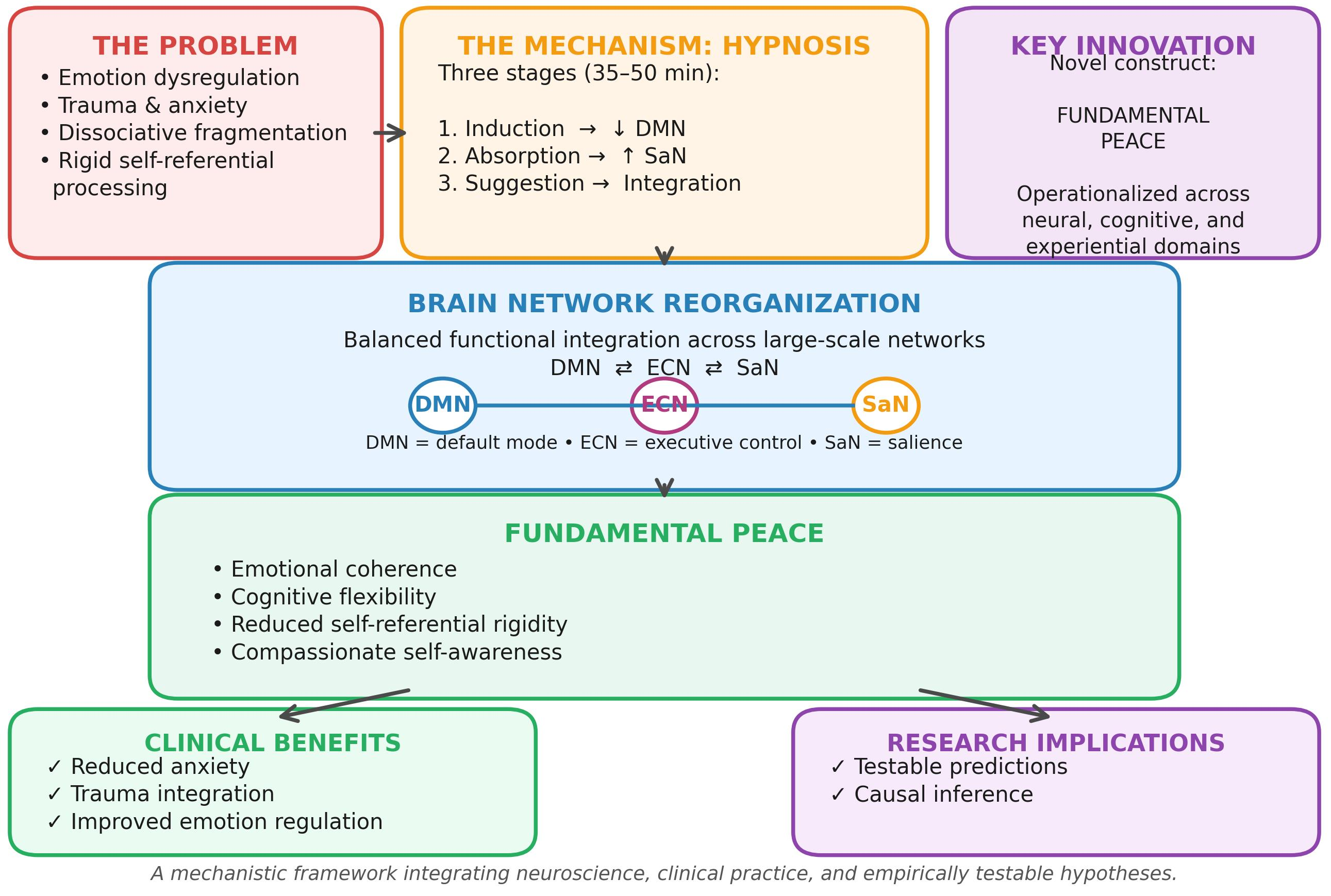
Hypnosis has traditionally been conceptualised as a clinical technique for reducing physiological symptoms (pain, nausea) and psychological symptoms (anxiety, intrusive thoughts), yet emerging neuroscientific evidence suggests it operates through the fundamental mechanisms of emotional regulation and self-integration.
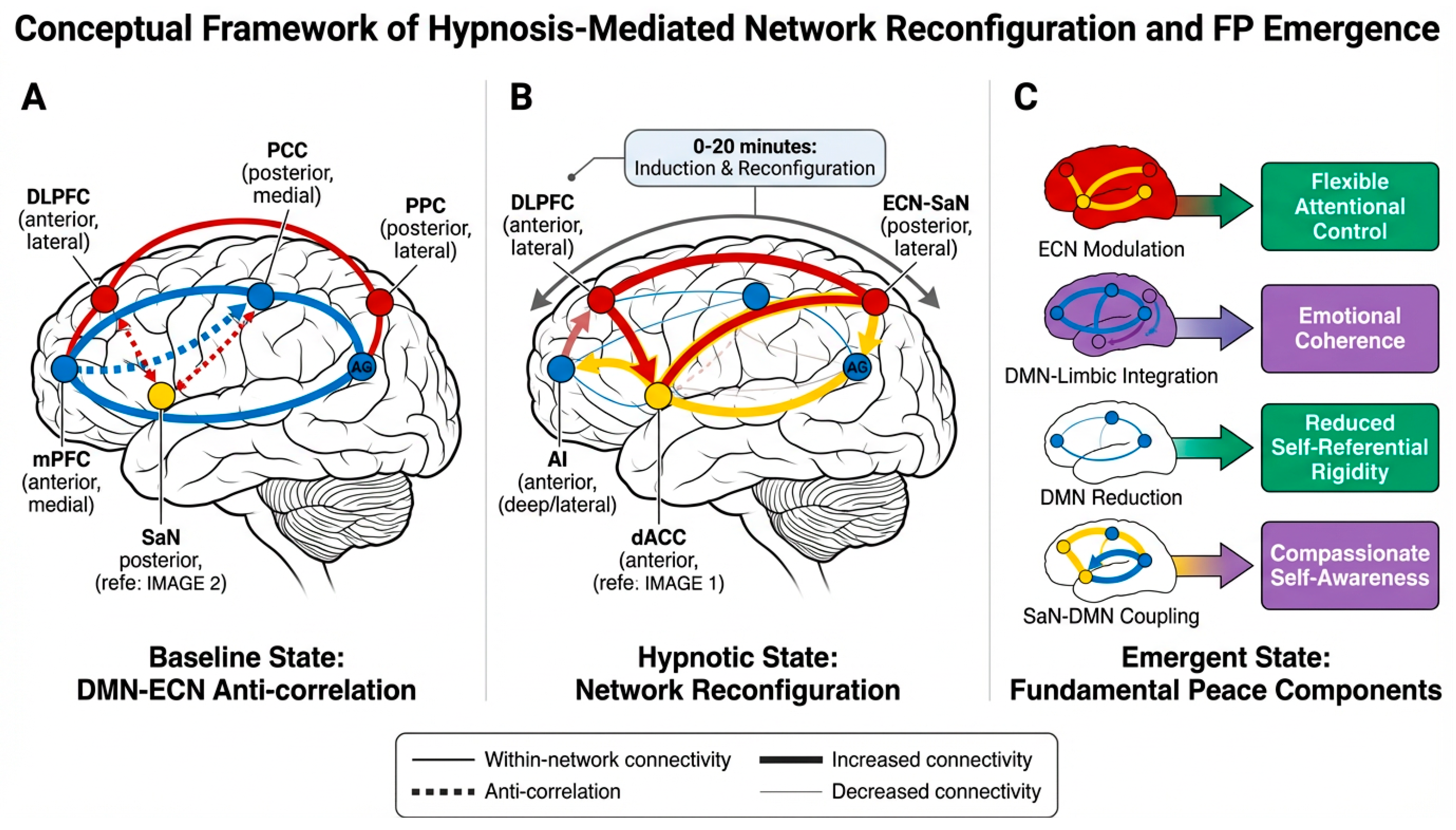
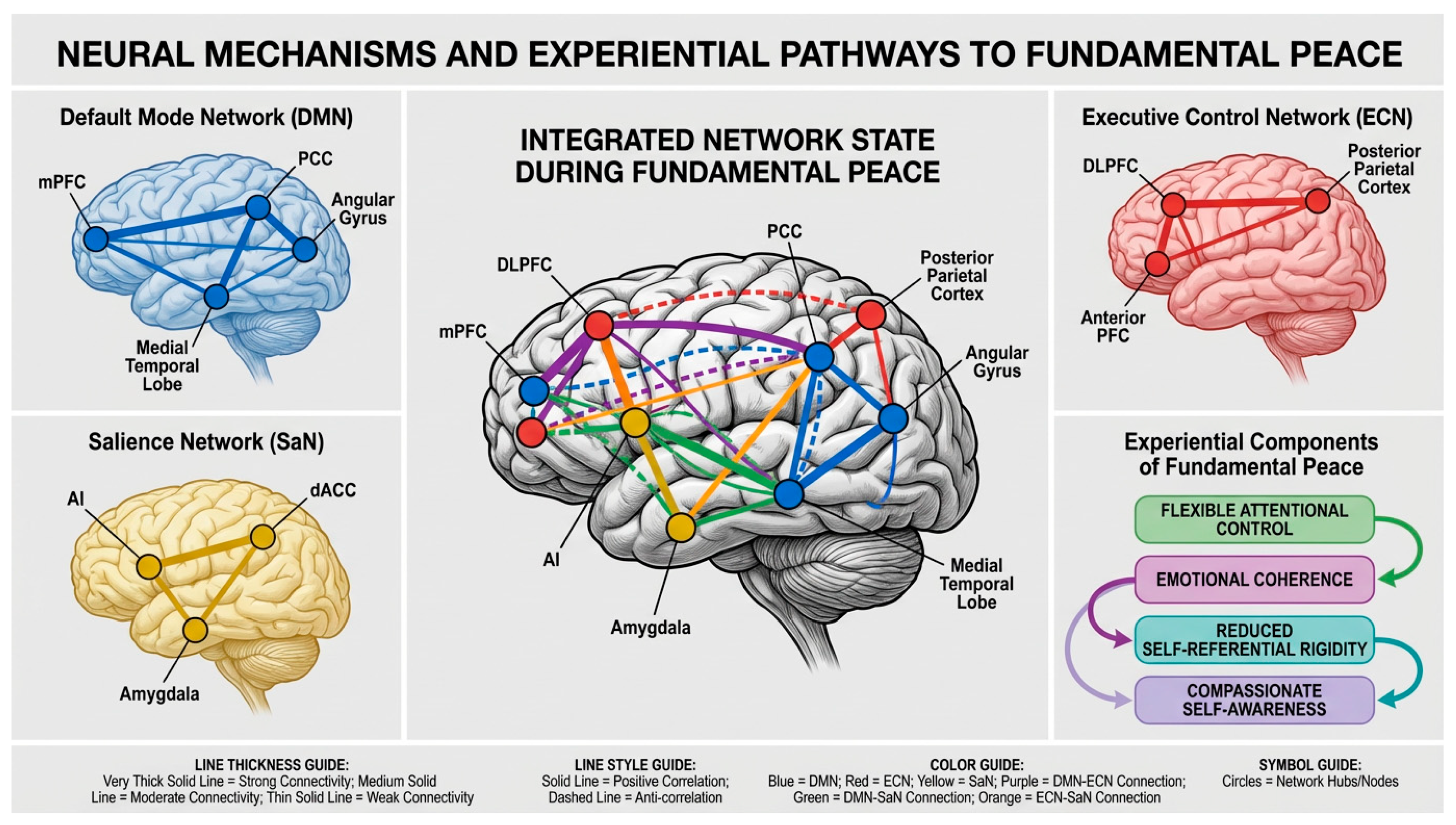
This integrative review synthesises research on clinical hypnosis from cognitive neuroscience, affective science and clinical practice to examine how hypnotic phenomena modulate large-scale brain networks — particularly the Default Mode Network (DMN), Executive Control Network (ECN) and Salience Network (SaN) — to reorganise emotional experience and self-referential processing.
Central to this framework is the construct of Fundamental Peace (FP), operationalised as a dynamic neuro-experiential state characterised by: (1) flexible attentional control without effortful suppression; (2) emotional coherence across self-states; (3) reduced self-referential rigidity; (4) compassionate self-awareness. Unlike equanimity (affective neutrality) or well-being (positive evaluation), Fundamental Peace represents integrated regulatory capacity under changing conditions.
Meta-analytic evidence from 85 controlled experimental trials shows robust pain reduction effects, while clinical studies document improvements in trauma-related dissociation and emotional dysregulation. The paper specifies testable predictions, evaluates the framework against alternative theories (dissociated control, cold control, predictive processing, social-cognitive models), and discusses implications for trauma treatment, clinical implementation and future research.
From paper to practice
Why this paper is the spine of ICEF, FP20 and ROUSER
Every measurement in our platform traces back to this peer-reviewed model. The FP20 directly operationalises the four components defined here. ROUSER's six pillars apply the same network-level logic to leadership. The Hypnotherapy Practice translates the model into session protocols.
- FP20Self-report instrument for the four FP components (items 1–5, 6–10, 11–15, 16–20).
- ROUSERSix pillars of transpersonal leadership that emerge from sustained FP capacity.
- HypnotherapyClinical pathway that cultivates DMN–ECN–SaN reconfiguration session by session.
How to cite
Gallardo, L. M., & Chetri, S. (2026). Hypnosis as a Mechanism of Emotion Regulation and Self-Integration: An Integrative Review of Neural, Cognitive, and Experiential Pathways to Fundamental Peace. Behavioral Sciences, 16(3), 395. https://doi.org/10.3390/bs16030395